
The word “recyclable” appears on many container liner data sheets today, but the gap between a product label and what actually enters a recycling stream can be wide. As pressure to document sustainability grows, buyers need to know which liner constructions can realistically be processed after use and which ones end up as waste despite their marketing claims. This guide explains what makes a container liner genuinely recyclable, which certifications provide useful evidence, and how to ask suppliers the right questions to confirm recyclability for your specific cargo — without sacrificing the protection your shipment requires.
What Makes a Container Liner Recyclable?
Recyclability starts with material composition, not with the word printed on a tag. A mono‑material liner — one built entirely from a single polymer family — has the clearest path to industrial reprocessing. Polyethylene (PE) film liners that use one grade of LDPE or HDPE throughout, without laminated layers of other plastics, can typically be re‑pelletised at the end of life. The same applies to uncoated woven polypropylene (PP) liners, where the fabric, stitching thread, and sewn‑in accessories are all PP.
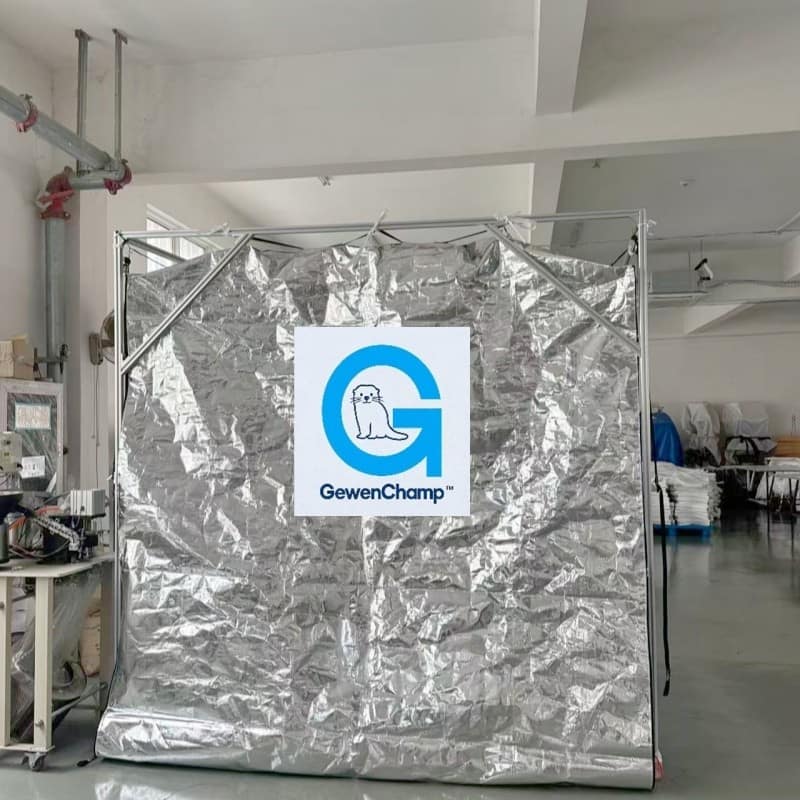
The trouble arrives with multi‑layer structures. Most thermal container liners combine aluminum foil, MPET film, EPE foam, and PE or PET layers bonded together. In theory, each layer is recyclable on its own. In practice, the adhesives and heat‑lamination processes make separation uneconomical for standard material recovery facilities, so the entire liner is directed to incineration or landfill. Additives such as UV stabilisers, anti‑static agents, or flame retardants further reduce recyclability because they introduce chemicals that reprocessors cannot easily remove. Even a small percentage of carbon black pigment can exclude a PE liner from near‑infrared sorting systems, forcing it into the residual waste stream.
In our manufacturing work, we have seen cases where a customer requested a recyclable liner and the supplier proposed a standard PE film liner with a “recyclable” symbol, ignoring the fact that a heavy print layer contained non‑polyethylene inks. That liner would fail both sorting and reprocessing tests. A truly recyclable liner needs a documented material declaration, listing every component by polymer type and percentage, so the buyer can check compatibility with local recycling infrastructure.
Which Certifications Matter for Recyclability Claims?
No single global regulation defines recyclability for industrial bulk packaging, so buyers must read multiple documents. Third‑party standards fill the gap. The European standard EN 13430, referenced by the EU Packaging and Packaging Waste Directive, sets requirements for packaging to be considered recyclable. Certification marks from bodies such as DIN CERTCO (Germany) or Cyclos‑HTP (Germany) issue recyclability certificates that test a material’s behaviour in real sorting and reprocessing facilities. In North America, the How2Recycle label provides standardised consumer‑facing instructions, but for B2B packaging, APR (Association of Plastic Recyclers) design guidance is more relevant.
Food‑contact certifications such as FDA 21 CFR and EU Regulation 1935/2004 demonstrate that the raw materials are safe for food, but they do not address end‑of‑life recyclability. The same applies to REACH and RoHS compliance — they confirm the absence of restricted substances, which is necessary for a safe waste stream, but they are not a recyclability guarantee. A supplier who only lists ISO 9001 and FDA is not providing recyclability evidence.
Buyers should request a test report conducted to ISO 14021 (self‑declared environmental claims) or a third‑party recyclability certificate that names the specific liner construction, not just the base resin. At Giant Flexpack, when we develop a mono‑material PE liner intended for recycling, we provide the material composition breakdown and, where the volume warrants, we can arrange third‑party recyclability evaluation so the buyer has independent documentation for their own ESG reporting.
How Do PE Film and Woven PP Liners Compare for Recycling?
Both PE film and woven PP liners can be recyclable, but they reach the recycling stream through different routes and with different conditions.
| Liner-Typ | Materialstruktur | Recyclability Potential | Key Limitation |
|---|---|---|---|
| PE Film Liner (DBL‑F01 type) | Single‑layer LDPE or LLDPE, 120–160µm | High — if free of coatings, heavy printing, and mixed‑polymer fittings | Carbon black or metallic pigments can cause sorting rejection |
| Woven PP Liner, uncoated (DBL‑W05 type) | Woven PP fabric, PP stitching and webbing | High — monomaterial when all accessories are PP | Lamination or PE coating of any percentage blocks standard PP recycling |
| Woven HDPE Liner, coated (DBL‑W01 type) | HDPE fabric with PE coating | Low — the PE layer contaminates the HDPE recycling stream | Separation is not practically achievable in most facilities |
| Multi‑layer Thermal Liner (TL‑01, TL‑02, etc.) | PE, aluminum foil, MPET, EPE foam combined | Negligible — composite structure resists separation | Adhesion and lamination prevent any single‑polymer recovery |
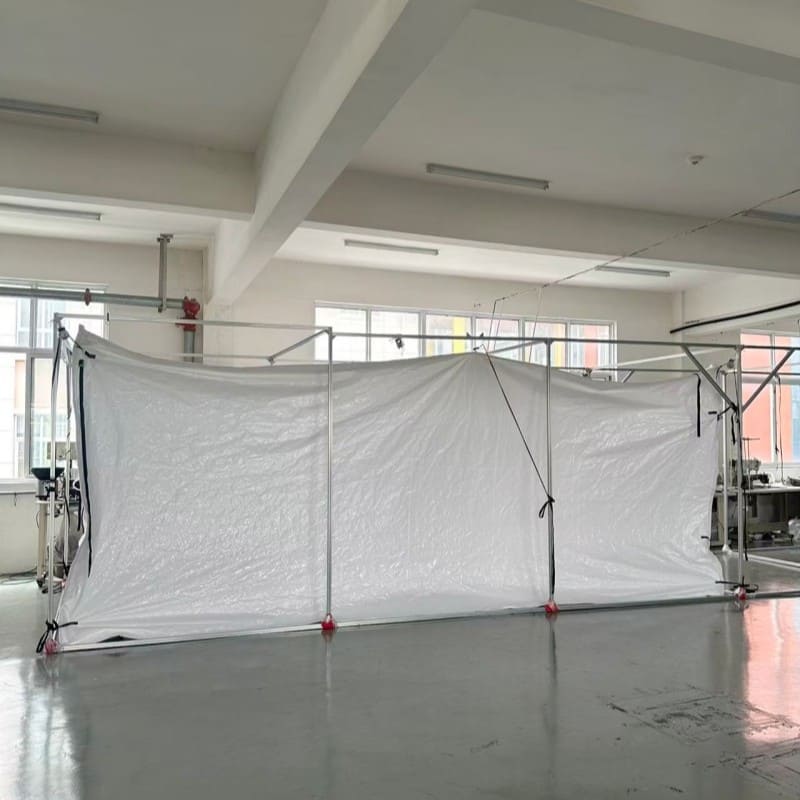
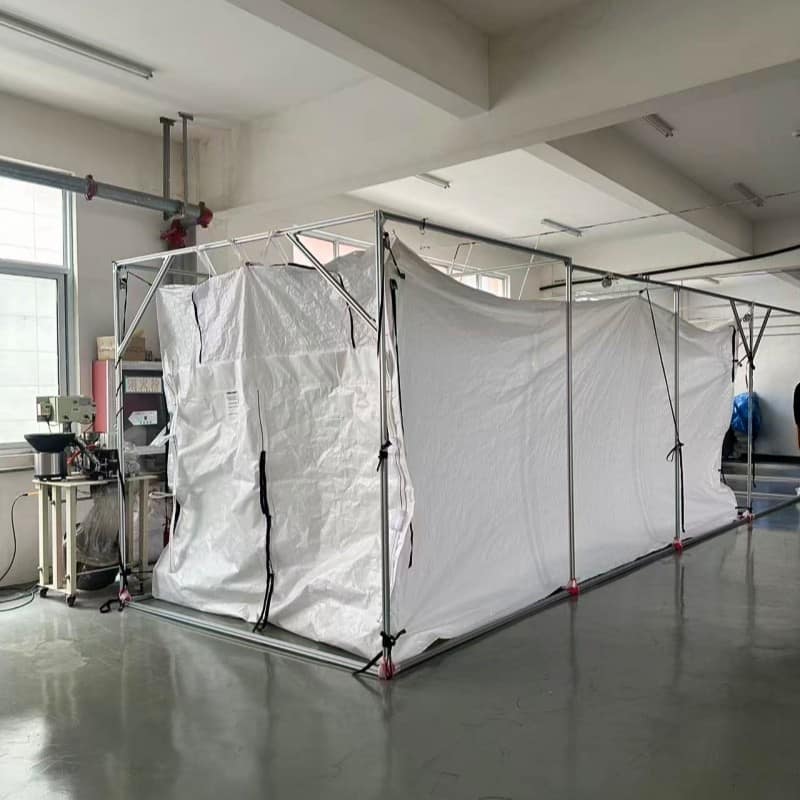
For dry bulk commodities that do not need thermal protection, an uncoated woven PP liner or a clean PE film liner is the strongest candidate for recycling. We supply uncoated woven PP barless liners for agricultural products that contain only polypropylene — the fabric, the seams, and the lifting loops are all the same polymer type. These liners can be baled directly with other PP packaging at the destination and enter the mechanical recycling stream without disassembly.
PE film liners are even simpler when designed with recyclability in mind. A clear, unpigmented LDPE liner without print and with LDPE‑only spouts can be handled by many polyethylene reclaimers. However, the liner must be clean of product residue, which means the recyclability path works best for dry, non‑sticky powders or granules that can be fully discharged.
If your cargo involves long sea routes or high humidity and you need a coated liner for moisture protection, recyclability becomes more difficult. A thin PE coating on a woven PP liner may still be accepted by some recycling programs if the coating percentage is very low, but the threshold differs by facility. Buyers should verify with the recycler before committing.
What Questions Should You Ask a Supplier About Recyclability?
A supplier who is serious about recyclability will have data to back the claim, not just a statement on a brochure. The following five questions surface the difference between genuine recyclability and marketing language.
First, “What is the exact material specification for this liner, including all layers, adhesives, and additives?” The answer should specify polymer types, thicknesses, and any coatings. A data sheet that only says “PE liner” without distinguishing LDPE from LLDPE or listing additives is insufficient.
Second, “Is this liner a mono‑material construction, or do any components contain a different polymer?” Even a small patch of PET‑based velcro or a nylon thread can make the entire liner unrecyclable. The safest construction uses the same polymer for every element.
Third, “Can you provide a third‑party recyclability certificate or test report for this specific product?” Certificates should reference the product code and the testing standard, such as EN 13430 or the DIN CERTCO scheme. Generic certificates for the raw resin are not proof of the finished liner’s recyclability.
cURL Too many subrequests by single Worker invocation. To configure this limit, refer to https://developers.cloudflare.com/workers/wrangler/configuration/#limits
cURL Too many subrequests by single Worker invocation. To configure this limit, refer to https://developers.cloudflare.com/workers/wrangler/configuration/#limits
cURL Too many subrequests by single Worker invocation. To configure this limit, refer to https://developers.cloudflare.com/workers/wrangler/configuration/#limits
cURL Too many subrequests by single Worker invocation. To configure this limit, refer to https://developers.cloudflare.com/workers/wrangler/configuration/#limits
cURL Too many subrequests by single Worker invocation. To configure this limit, refer to https://developers.cloudflare.com/workers/wrangler/configuration/#limits
cURL Too many subrequests by single Worker invocation. To configure this limit, refer to https://developers.cloudflare.com/workers/wrangler/configuration/#limits
cURL Too many subrequests by single Worker invocation. To configure this limit, refer to https://developers.cloudflare.com/workers/wrangler/configuration/#limits
cURL Too many subrequests by single Worker invocation. To configure this limit, refer to https://developers.cloudflare.com/workers/wrangler/configuration/#limits
cURL Too many subrequests by single Worker invocation. To configure this limit, refer to https://developers.cloudflare.com/workers/wrangler/configuration/#limits
cURL Too many subrequests by single Worker invocation. To configure this limit, refer to https://developers.cloudflare.com/workers/wrangler/configuration/#limits
cURL Too many subrequests by single Worker invocation. To configure this limit, refer to https://developers.cloudflare.com/workers/wrangler/configuration/#limits
cURL Too many subrequests by single Worker invocation. To configure this limit, refer to https://developers.cloudflare.com/workers/wrangler/configuration/#limits
cURL Too many subrequests by single Worker invocation. To configure this limit, refer to https://developers.cloudflare.com/workers/wrangler/configuration/#limits
cURL Too many subrequests by single Worker invocation. To configure this limit, refer to https://developers.cloudflare.com/workers/wrangler/configuration/#limits
cURL Too many subrequests by single Worker invocation. To configure this limit, refer to https://developers.cloudflare.com/workers/wrangler/configuration/#limits
cURL Too many subrequests by single Worker invocation. To configure this limit, refer to https://developers.cloudflare.com/workers/wrangler/configuration/#limits
cURL Too many subrequests by single Worker invocation. To configure this limit, refer to https://developers.cloudflare.com/workers/wrangler/configuration/#limits
cURL Too many subrequests by single Worker invocation. To configure this limit, refer to https://developers.cloudflare.com/workers/wrangler/configuration/#limits
cURL Too many subrequests by single Worker invocation. To configure this limit, refer to https://developers.cloudflare.com/workers/wrangler/configuration/#limits
cURL Too many subrequests by single Worker invocation. To configure this limit, refer to https://developers.cloudflare.com/workers/wrangler/configuration/#limits
cURL Too many subrequests by single Worker invocation. To configure this limit, refer to https://developers.cloudflare.com/workers/wrangler/configuration/#limits
 German
  English
  Spanish