
Container liner recycling programs are gaining traction across global supply chains, but knowing which liners can actually be recycled and how to participate in a meaningful program remains a gap for many logistics professionals. With over 15 years manufacturing thermal and dry bulk container liners, I’ve seen the disconnect between sustainability goals and the practical realities of material recovery. This article cuts through the aspirational talk and provides a technical, manufacturer-informed guide to identifying recyclable container liner types, evaluating real-world recycling programs, and taking concrete steps to integrate liner recycling into your bulk transport operations.
Why Container Liner Recycling Matters Beyond the Sustainability Claims
The environmental argument for container liner recycling is straightforward: millions of polyethylene and woven polypropylene liners enter the waste stream each year after a single use. But the business case is just as compelling. Shippers who participate in structured recycling programs can reduce disposal costs, meet evolving customer ESG requirements, and in some cases recover material value that offsets procurement spend. A food-grade PE film liner used once for sugar transport still retains high-quality polymer that qualified recyclers can reprocess into non-food packaging or industrial film. The missing link is rarely the technology. It is the logistics of collection and the lack of standardized post-use handling across shipping lanes. 
The more nuanced driver, from a manufacturer’s perspective, is the shift toward extended producer responsibility frameworks in Europe and North America. Suppliers who can demonstrate a closed-loop or semi-closed-loop material pathway are better positioned for long-term contracts with multinational buyers. This is not about green marketing. It is about building supply chain resilience around material circularity that actually works at the port and the loading dock.
Which Container Liner Types Can Realistically Be Recycled
Not all container liners are equally recyclable. The ability to reprocess depends on material composition, coating layers, and contamination levels after use.
| Liner-Typ | Materialzusammensetzung | Practical Recyclability | Key Condition |
|---|---|---|---|
| PE Film Liners (DBL-F01, DBL-F02) | Single-polymer LDPE or LLDPE film | Hoch | Must be free of food residue and separated from woven liners |
| Woven PP/HDPE Liners (DBL-W01, DBL-W05) | Uncoated woven polypropylene or HDPE | Mäßig | Recycling facilities require large bales of uniform material |
| Coated Woven Liners (DBL-W02, DBL-W06) | Woven fabric with LDPE/PE coating | Niedrig | The coating layer complicates separation; advanced recyclers may accept |
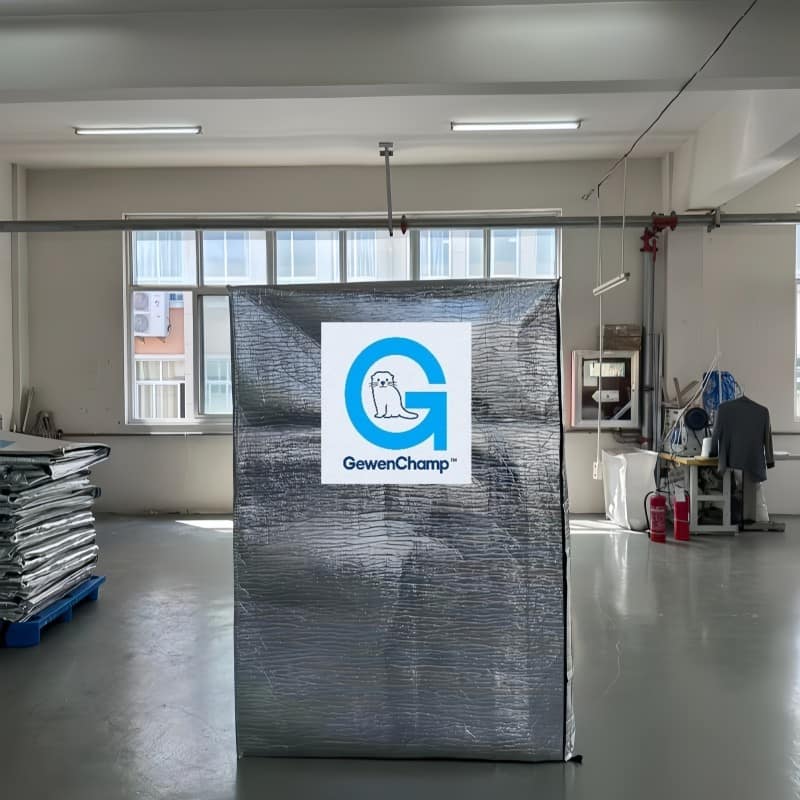
| Thermal Liners (TL-01, TL-02, TL-03, TL-04) | Multi-layer composites with aluminum foil, EPE foam, MPET | Very low | Currently no mainstream mechanical recycling pathway for these composites |
Single-polymer PE film liners offer the cleanest path. Because they are 100% polyethylene, they can be ground, washed, and pelletized without complex delamination. Several recyclers in China, Southeast Asia, and Europe now accept post-industrial PE liner waste if it is sorted and baled correctly. The 140-micron LDPE liner commonly used for plastic pellets and agricultural cargo is a strong candidate for closed-loop repurchase programs where the manufacturer buys back clean liner film at a negotiated rate.
Woven PP and HDPE liners present a different challenge. Their tensile strength makes them valuable for recyclers, but sorting infrastructure is not yet universal. Uncoated woven liners used for grains and coffee beans are the easiest to recycle because the fabric can be shredded directly. Coated or laminated versions, such as those used for malt or sift-proof powdered chemicals, require an additional delamination step that only a limited number of recyclers handle at scale. If your operation uses a high volume of coated woven liners, ask your supplier whether a take-back channel exists that connects to a recycler with that capability.
Thermal liners are the most difficult case. The combination of aluminum foil, polyethylene bubble insulation, and woven layers makes them effectively unrecyclable through conventional mechanical means. Chemical recycling or pyrolysis could theoretically handle these materials, but commercial-scale operations are still in early stages. That does not mean thermal liners cannot be part of a sustainability strategy. Our GewenChamp™️ TL-01 and TL-02 thermal liners are designed for 3–5 reuse cycles before end-of-life, and reuse remains the most practical way to reduce the carbon footprint of temperature-controlled shipping. Still, a transparent conversation about end-of-life disposal should happen at the procurement stage. 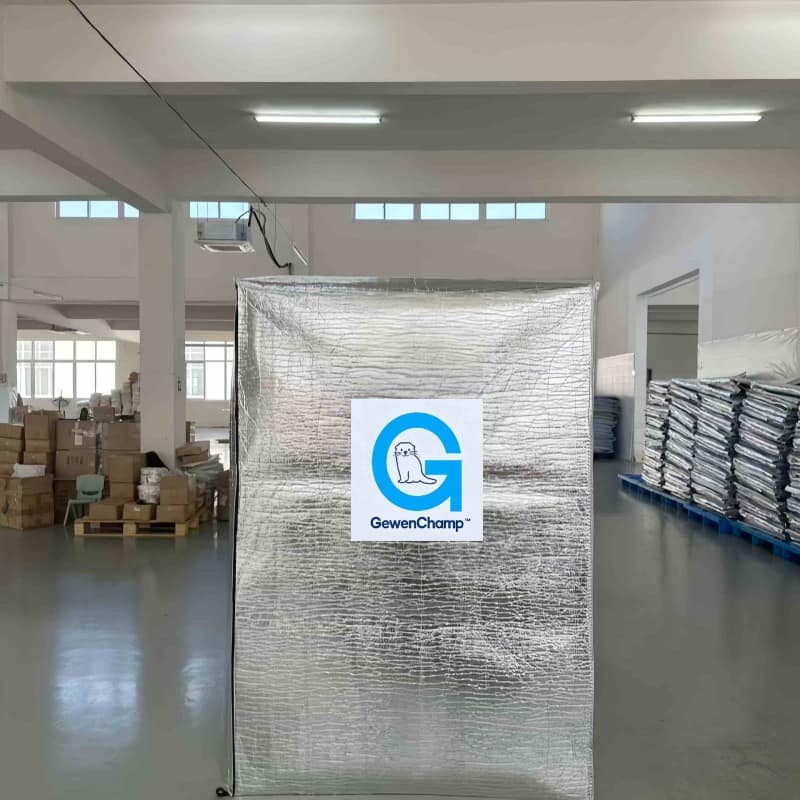
What Container Liner Recycling Programs Are Available Today
The most accessible programs are manufacturer-led or facilitated through industry consortia. Giant Flexpack, for example, offers a PE film liner buy-back program for high-volume customers shipping clean, single-resin cargo such as plastic pellets, sugar, or salt. The process is simple: emptied liners are kept clean, inspected by our logistics partner at the destination port, consolidated, and sent to our contracted recycler. The recycled pellet is then used in non-food-grade industrial film, creating a closed-loop transaction within the packaging ecosystem. Program details, including minimum volume thresholds and per-tonne rebates, are provided after a site audit.
Beyond manufacturer programs, third-party recyclers operating near major hub ports are accepting container liner waste. They typically require liners to be decontaminated, sorted by material, and compacted into bales of 500 kg or more. Shippers with enough volume to fill a full container of liner waste can negotiate direct recycling contracts. For lower volumes, consolidation services through freight forwarders or waste brokers are an option, though the economics become less favorable.
Regional industry initiatives are also emerging. In Europe, several packaging alliances are piloting collection networks for agricultural and chemical packaging, which increasingly include flexible intermediate bulk containers and container liners. Participation is often tied to membership and reporting requirements, but these networks can provide a standardized, auditable recycling pathway for importers needing documented chain-of-custody for their ESG reporting.
How to Evaluate a Container Liner Recycling Program Before Committing
Before signing onto any program, verify four things:
1. Material qualification and pre-treatment requirements. The recycler or program operator will specify what liners they accept, what contamination thresholds they tolerate, and how liners must be prepared. Ask for a written specification sheet. If the program cannot tell you at what moisture content or residue level a liner is disqualified, the process is not yet mature.
2. Downstream material traceability. A credible program provides documentation showing where the recycled material goes: pellet type, end product, and volume. Without this, you are paying for a disposal service, not a recycling program.
3. Logistics and cost allocation. Some programs offer free take-back at designated consolidation points. Others charge per-tonne handling fees that can exceed local landfill costs. Calculate the total landed cost of participation, including labor for sorting and cleaning, before framing the program to your finance team as a cost-saver.
4. Volume and geographic feasibility. cURL Too many subrequests by single Worker invocation. To configure this limit, refer to https://developers.cloudflare.com/workers/wrangler/configuration/#limits
cURL Too many subrequests by single Worker invocation. To configure this limit, refer to https://developers.cloudflare.com/workers/wrangler/configuration/#limits
cURL Too many subrequests by single Worker invocation. To configure this limit, refer to https://developers.cloudflare.com/workers/wrangler/configuration/#limits
cURL Too many subrequests by single Worker invocation. To configure this limit, refer to https://developers.cloudflare.com/workers/wrangler/configuration/#limits
cURL Too many subrequests by single Worker invocation. To configure this limit, refer to https://developers.cloudflare.com/workers/wrangler/configuration/#limits cURL Too many subrequests by single Worker invocation. To configure this limit, refer to https://developers.cloudflare.com/workers/wrangler/configuration/#limits
cURL Too many subrequests by single Worker invocation. To configure this limit, refer to https://developers.cloudflare.com/workers/wrangler/configuration/#limits cURL Too many subrequests by single Worker invocation. To configure this limit, refer to https://developers.cloudflare.com/workers/wrangler/configuration/#limits
cURL Too many subrequests by single Worker invocation. To configure this limit, refer to https://developers.cloudflare.com/workers/wrangler/configuration/#limits cURL Too many subrequests by single Worker invocation. To configure this limit, refer to https://developers.cloudflare.com/workers/wrangler/configuration/#limits
cURL Too many subrequests by single Worker invocation. To configure this limit, refer to https://developers.cloudflare.com/workers/wrangler/configuration/#limits cURL Too many subrequests by single Worker invocation. To configure this limit, refer to https://developers.cloudflare.com/workers/wrangler/configuration/#limits 
cURL Too many subrequests by single Worker invocation. To configure this limit, refer to https://developers.cloudflare.com/workers/wrangler/configuration/#limits cURL Too many subrequests by single Worker invocation. To configure this limit, refer to https://developers.cloudflare.com/workers/wrangler/configuration/#limits
cURL Too many subrequests by single Worker invocation. To configure this limit, refer to https://developers.cloudflare.com/workers/wrangler/configuration/#limits
cURL Too many subrequests by single Worker invocation. To configure this limit, refer to https://developers.cloudflare.com/workers/wrangler/configuration/#limits
cURL Too many subrequests by single Worker invocation. To configure this limit, refer to https://developers.cloudflare.com/workers/wrangler/configuration/#limits
cURL Too many subrequests by single Worker invocation. To configure this limit, refer to https://developers.cloudflare.com/workers/wrangler/configuration/#limits
cURL Too many subrequests by single Worker invocation. To configure this limit, refer to https://developers.cloudflare.com/workers/wrangler/configuration/#limits
cURL Too many subrequests by single Worker invocation. To configure this limit, refer to https://developers.cloudflare.com/workers/wrangler/configuration/#limits
cURL Too many subrequests by single Worker invocation. To configure this limit, refer to https://developers.cloudflare.com/workers/wrangler/configuration/#limits
cURL Too many subrequests by single Worker invocation. To configure this limit, refer to https://developers.cloudflare.com/workers/wrangler/configuration/#limits
cURL Too many subrequests by single Worker invocation. To configure this limit, refer to https://developers.cloudflare.com/workers/wrangler/configuration/#limits
cURL Too many subrequests by single Worker invocation. To configure this limit, refer to https://developers.cloudflare.com/workers/wrangler/configuration/#limits
 German
  English
  Spanish