
Moisture damage is the most quietly destructive force in container shipping, and condensation is its primary delivery mechanism. I have worked on thermal packaging for over fifteen years, and across every industry segment from polymer resins to food-grade powders, the same pattern repeats: cargo arrives wet, the buyer rejects it, and the insurance claim drags on. Anti-sweat container liners are not a desiccant substitute; they are a physical barrier designed to stop condensation from forming on the cargo in the first place. This article explains how they work, which material construction actually matters, and how to evaluate them against the real-world conditions your cargo will face on a forty-day sea voyage.
How Container Condensation Damages Bulk Cargo
The physics inside a shipping container is straightforward. Warm, humid air enters during loading in a tropical port. When the container crosses into a cooler climate, the interior air near the walls drops below its dew point and liquid water forms on the ceiling and side walls—what the industry calls container rain. That water then drips onto the cargo. At the same time, the cargo itself absorbs moisture from the air, especially hygroscopic materials like cocoa beans, sugar, or kaolin clay. The result is caking, mold growth, oxidation, and in the worst case, a full reject of the load at the destination port.
Temperature fluctuations are the root cause. A standard 20-foot container baking under midday sun on deck can see interior surface temperatures above 60°C, then drop to below 20°C at night. This wide daily swing pushes the interior environment through multiple condensation cycles, even before the vessel hits a cool-water route. Desiccants help, but they only absorb moisture that has already become airborne. They do not stop the physical transfer of heat through the container walls that drives condensation in the first place.
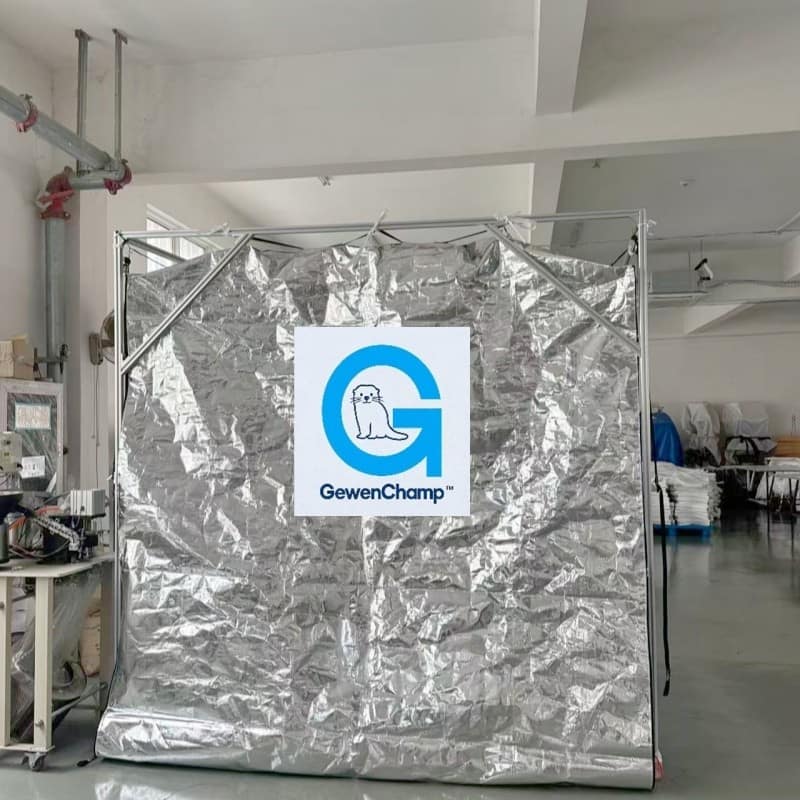
How an Anti-Sweat Liner Interrupts the Condensation Cycle
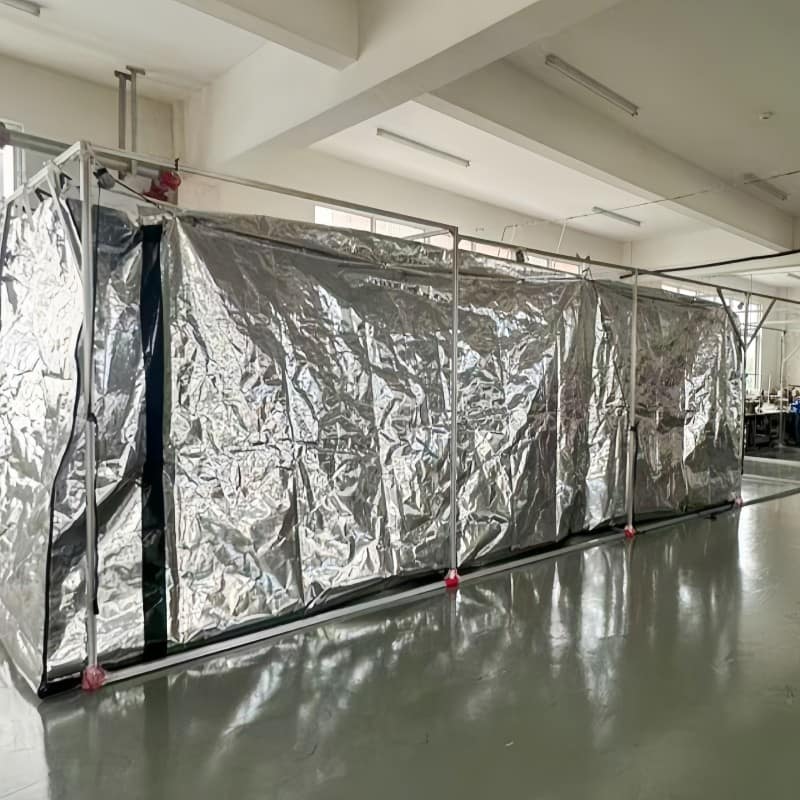
An anti-sweat container liner works through two mechanisms that operate simultaneously. First, it provides a thermal break. By lining all six interior walls of the container with a low-thermal-conductivity material, the liner reduces the rate of heat transfer into the interior. When the outside wall temperature spikes, the interior surface of the liner warms up far less, keeping the air near the cargo further from its dew point. Second, it acts as a moisture vapor barrier. If the material has a sufficiently low moisture vapor transmission rate (MVTR), water vapor simply cannot pass through the liner to condense on the cold metal walls behind it. The liner captures the vapor on the cargo side and holds it in the interior air space, where it does not condense because the liner’s inner surface stays warmer than an uninsulated metal wall.
This is fundamentally different from a desiccant strategy. A desiccant bag passively pulls water out of the air, but the condensation source—the cold wall—remains active. The liner changes the thermal profile of the cargo space. In practice, a well-installed thermal liner can maintain the interior temperature variance within ±5°C of the cargo’s loading temperature, even when external fluctuations exceed 30°C. When the interior temperature stays stable, the dew point stays stable, and condensation cannot start.
Thermal Liner Materials and Their Sweat-Stopping Capability
Not every thermal liner is an anti-sweat liner. The key metric is moisture vapor transmission rate coupled with thermal resistance. The table below compares four liner constructions from the GewenChamp TL series, focusing on the properties that matter for condensation control.
| Liner Model | Materialstruktur | MVTR | Thermal Control |
|---|---|---|---|
| TL-01 | Woven PE + dual-sided aluminum foil lamination | Moderate (aluminum foil provides physical barrier) | Maintains interior within -20°C to 60°C, variance ±5°C |
| TL-02 | PET aluminum foil / woven PE / 3mm EPE foam / PET aluminum foil | ≤0,033 g/(m²·h·kPa) | Operating range -50°C to 80°C, thermal conductivity ≤0.038 W/(m·K) |
| TL-03 | MPET / Doppelblasenpolster / PET MPET | Low (MPET layers reflect 98% radiant heat) | Bubble layer provides secondary static air insulation |
| TL-04 | Metallized PET film + PE film composite | Moderate (thinner material) | Hält -10°C bis 30°C für 24–48 Stunden bei 25°C Umgebungstemperatur |
For routes known to produce heavy condensation—Southeast Asia to Northern Europe winter, or West Africa to South America—the TL-02 construction with a 3mm EPE foam core and dual aluminum foil layers consistently outperforms lighter alternatives. The foam core not only slows conductive heat transfer but also adds a physical thickness that raises the inner wall temperature above the dew point more reliably. The low MVTR of 0.033 g/(m²·h·kPa) means that even in near-saturated interior air, the amount of moisture reaching the cold metal wall behind the liner is negligible.
The TL-03 with its double bubble layer is a strong alternative when shock absorption matters alongside condensation control, but the bubble structure has more void space that can allow some moisture migration if the installation is not perfectly sealed. TL-01 and TL-04 work well for cargoes that are not highly sensitive to moisture or on routes where the temperature differential is mild.
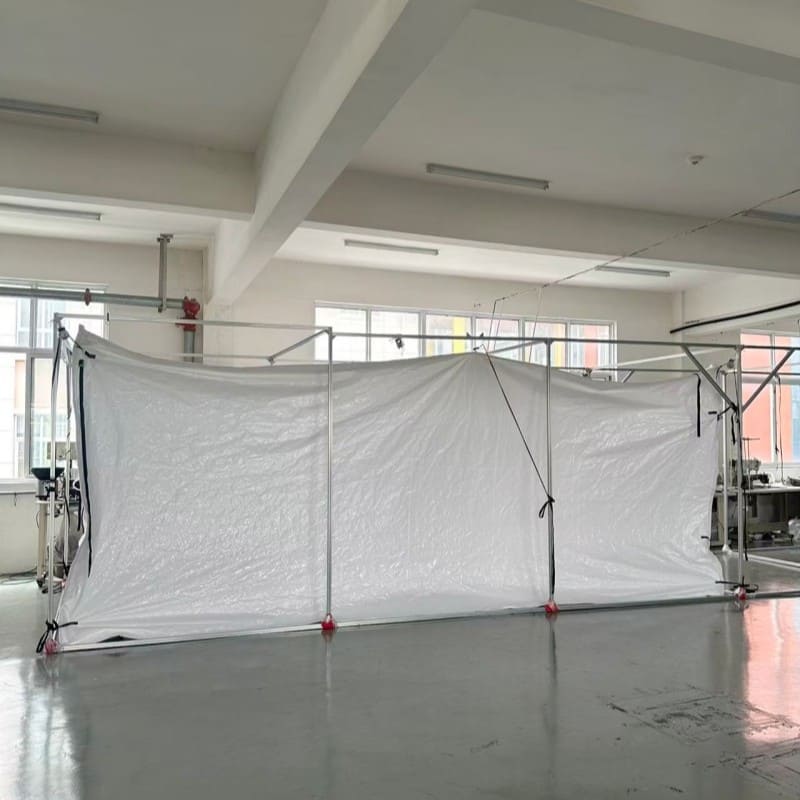
Installing an Anti-Sweat Liner for Full Condensation Protection
The performance ceiling of any anti-sweat liner is set by the installation, not the material spec. I have seen a liner with an MVTR under 0.04 g/(m²·h·kPa) fail to prevent condensation because installers left a 20-centimeter gap at the door header or did not seal the corners correctly. The liner must cover the full six walls and wrap around the door frame so that there is no direct path for humid interior air to touch the steel container wall.
Best practices we require in our own installation guides include: pre-inspecting the container for sharp edges or protrusions that could puncture the liner film; taping all seams with a moisture-resistant adhesive tape rated for the same temperature range as the liner; ensuring the floor liner extends up the side walls at least 30 centimeters to create a sealed basin; and checking the door gasket condition because a leaking gasket introduces outside air that overwhelms the liner’s moisture capacity. When the liner is correctly sealed, the only air circulation is inside the liner envelope, and that air has no cold metal surface to condense on.
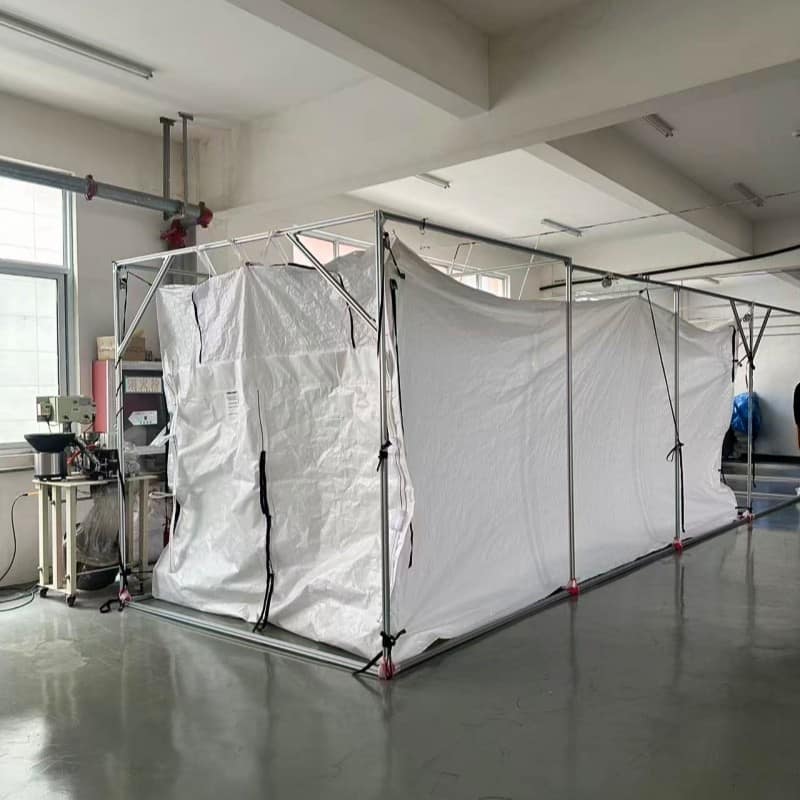
What Desiccants and Anti-Sweat Liners Each Do Best
If your cargo is dry and non-hygroscopic, adding silica gel or clay desiccants inside a well-installed anti-sweat liner may be unnecessary. The liner’s barrier function prevents condensation from forming, and any residual moisture in the interior air is usually absorbed by the cargo itself or dissipates through normal air changes during loading. For hygroscopic cargoes like sugar, coffee beans, or titanium dioxide powder, combining a low-MVTR liner with a calculated desiccant placement provides a defense-in-depth strategy. The desiccant handles humidity that enters during the loading process; the liner handles the condensation that would otherwise form during transit.
One mistake I often correct is the assumption that more desiccant can replace a liner’s thermal function. It cannot. A container without a thermal barrier will still cycle through the dew point multiple times per day. The desiccant may delay the onset of visible water, but once saturated, it stops working. The liner continues to function as a barrier as long as it remains intact. For long-haul routes exceeding thirty days, the liner-only strategy is structurally more robust because it does not have a finite adsorption capacity.
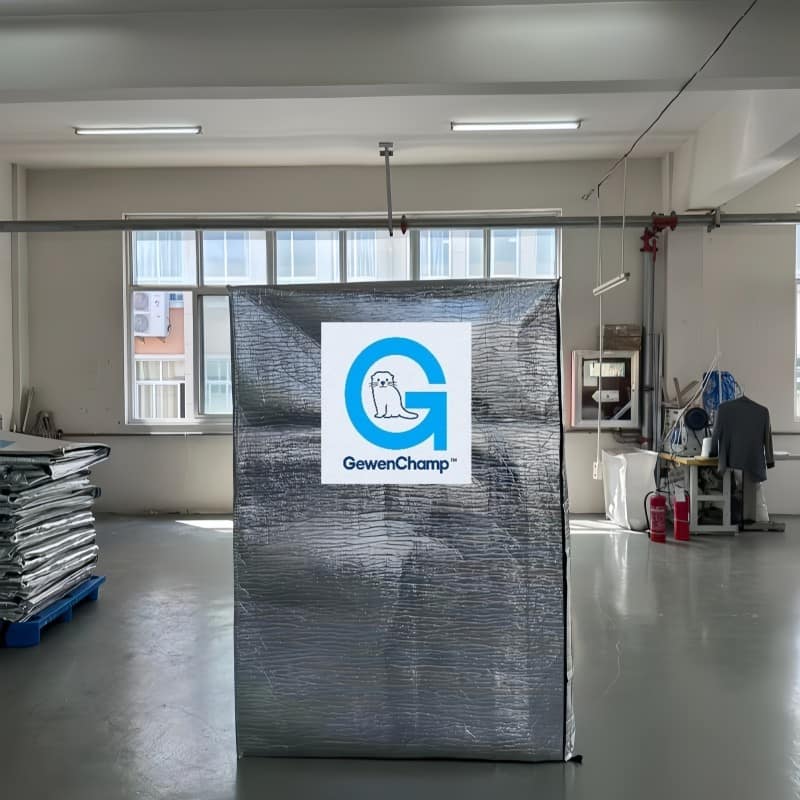
Selecting the Right Anti-Sweat Liner for a Specific Route and Cargo
Start with the route’s temperature envelope and the cargo’s moisture sensitivity. If the outside ambient temperature will swing more than 25°C during the voyage, choose a liner with a thick insulative core—the TL-02 with 3mm EPE foam or equivalent—because the higher the temperature differential, the more thermal resistance you need to keep the interior wall above the dew point. If the cargo is an organic material with a high equilibrium moisture content, like cocoa beans or starch, prioritize the lowest possible MVTR. In that case, the aluminum foil lamination on TL-02 or TL-03 provides the most effective moisture block.
For light industrial cargoes such as polymer pellets or building materials, a standard woven thermal liner like TL-01 can be sufficient, provided the installation is tight. The cost difference between a TL-01 and a TL-02 on a per-container basis is modest relative to the value of a rejected load, so I encourage logistics buyers to calculate the total cost of a moisture claim before choosing the liner grade. We have seen clients in the chemical sector reduce moisture-related cargo claims by over 80% after switching from desiccant-only to a sealed anti-sweat liner system, but the exact figure depends on the cargo and route.
Common Questions About Anti-Sweat Container Liners
Are anti-sweat liners effective on short-haul routes under 7 days?
They are effective, but the condensation risk on short routes is generally lower unless the route crosses a rapid climate shift, such as loading in a humid port and unloading in a cold port with a high temperature drop. For short hauls with mild conditions, a basic PE barrier liner may be adequate. For any route where the temperature difference between loading and discharge exceeds 15°C, a thermal liner still offers clear protection.
Can a partial liner installation—like only the ceiling—stop condensation?
It can reduce ceiling drips but does not stop condensation on the side walls or floor. Condensation forms on any cold surface inside the container, and leaving the side walls exposed means moisture will condense there, pool on the floor, and still reach the cargo. Full six-wall coverage is the minimum standard for reliable condensation prevention.
Which liner material has the lowest water vapor transmission?
In the GewenChamp series, the TL-02 with its 3mm EPE foam core and dual aluminum foil lamination achieves a measured MVTR of ≤0.033 g/(m²·h·kPa), which is among the lowest available for passive container liners. This effectively blocks water vapor migration under standard sea freight conditions.
Is it possible to reuse an anti-sweat liner for multiple trips?
Yes, provided the liner is not damaged during unloading. The TL-01, TL-02, and TL-03 models are rated for 3–5 reuses under normal handling. However, each reuse increases the risk of pinholes or seam fatigue, so a full inspection between trips is required. For cargoes that demand zero moisture exposure, a fresh liner is the safer choice.
If I ship mixed loads with both hygroscopic and non-hygroscopic goods, does the liner selection change?
It depends on the proportion of hygroscopic cargo. If more than 20% of the load is hygroscopic, the moisture released by that material during temperature swings will increase the interior humidity, and a low-MVTR liner (such as TL-02) becomes more important. For mixed loads dominated by non-hygroscopic goods, a standard thermal barrier liner combined with a moderate desiccant program is usually sufficient. If you are unsure about your cargo’s moisture behavior, send us the material data sheets and typical route timeline, and we can recommend a liner specification matched to your exact conditions. Reach Daniel Wu and the Giant Flexpack engineering team at [email protected] or call +86 523 87683880.
 German
  English
  Spanish