
For any exporter moving dry bulk or temperature-sensitive cargo, packaging choices directly shape your environmental footprint. Most green packaging discussions focus on consumer goods, but international container shipping generates far more single-use material. I’ve spent 15 years designing container liners and thermal insulation systems, and the practical path to sustainability isn’t a future material — it’s what’s already moving containers today: reusable liners and passive temperature control. These options cut plastic waste and carbon emissions without demanding every link in the cold chain to retool. Here’s how they work and what to look for when you need your packaging to protect both cargo and the planet.
What Is Green Packaging in International Shipping?
Green packaging for international shipping means solutions that reduce waste, lower carbon emissions, and use materials that are recyclable or reusable. For bulk container transport, this almost always comes down to two practical strategies: eliminating single-use packaging and reducing energy spent on active cooling. A standard ISO container loaded with bagged goods might consume over a thousand 25 kg bags, each ending up as waste. A single reusable bulk container liner can replace all those bags for five or more trips, fundamentally shrinking the waste stream. Meanwhile, passive thermal liners keep cargo within safe temperature windows without the diesel-powered refrigeration units a reefer demands. The International Maritime Organization’s push for decarbonisation makes these choices not just environmentally sound but commercially strategic.
Reusable Dry Bulk Container Liners as a Practical Green Foundation
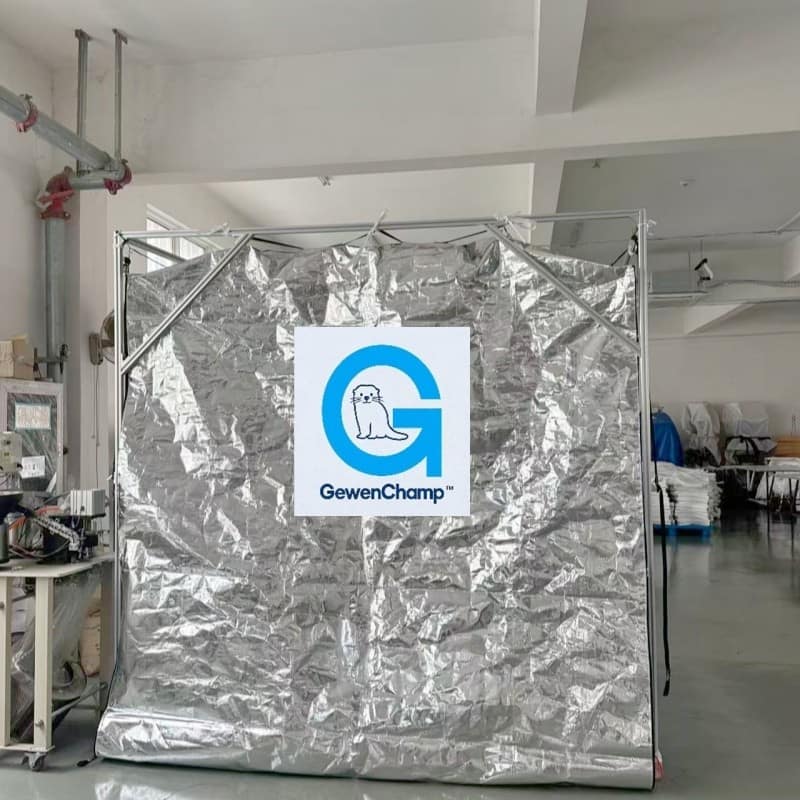
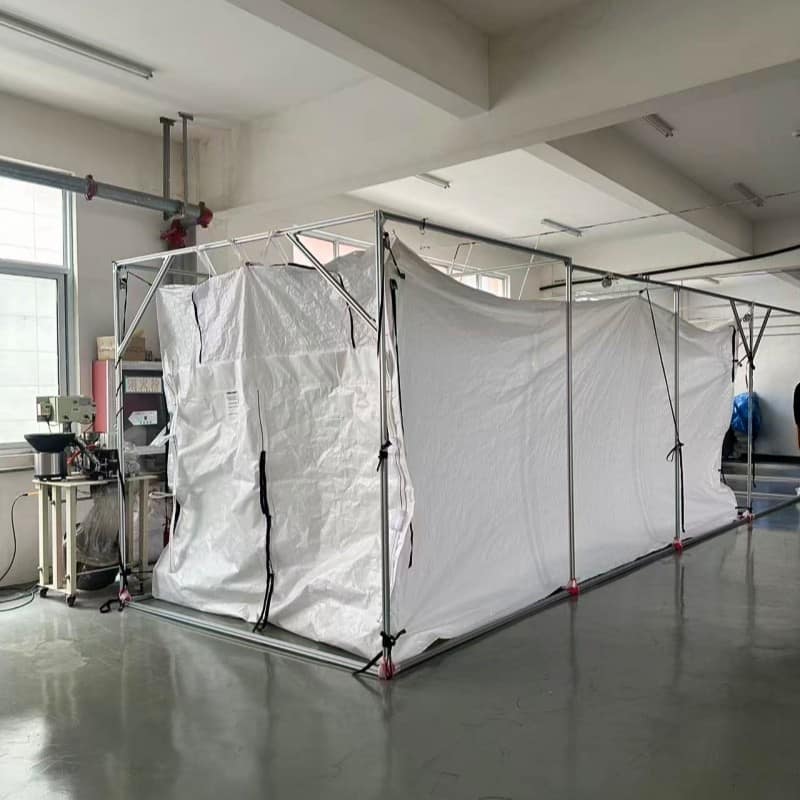
The simplest green packaging upgrade for dry flowable cargo is a reusable woven bulk container liner. Unlike single-use plastic sacks or FIBCs that often end up in landfill after one journey, a well-made liner can be recovered, cleaned, and used for three to five shipments. Take a product like the DBL-W01 standard dry bulk liner. Constructed from high-density polyethylene woven fabric with moisture resistance above 98%, one unit holds 10 to 30 tonnes of goods such as plastic pellets, grains, or minerals. Instead of sending roughly 1,000 individual 25 kg bags to waste on a single voyage, one liner handles the same cargo with a fraction of the material and labour. After unloading, the liner can be folded and returned, or recycled through HDPE waste streams. For shippers serious about reducing packaging waste, starting with a reusable bulk liner provides immediate, measurable improvement without complex process changes.
Thermal Container Liners: Cutting the Carbon Cost of Temperature Control
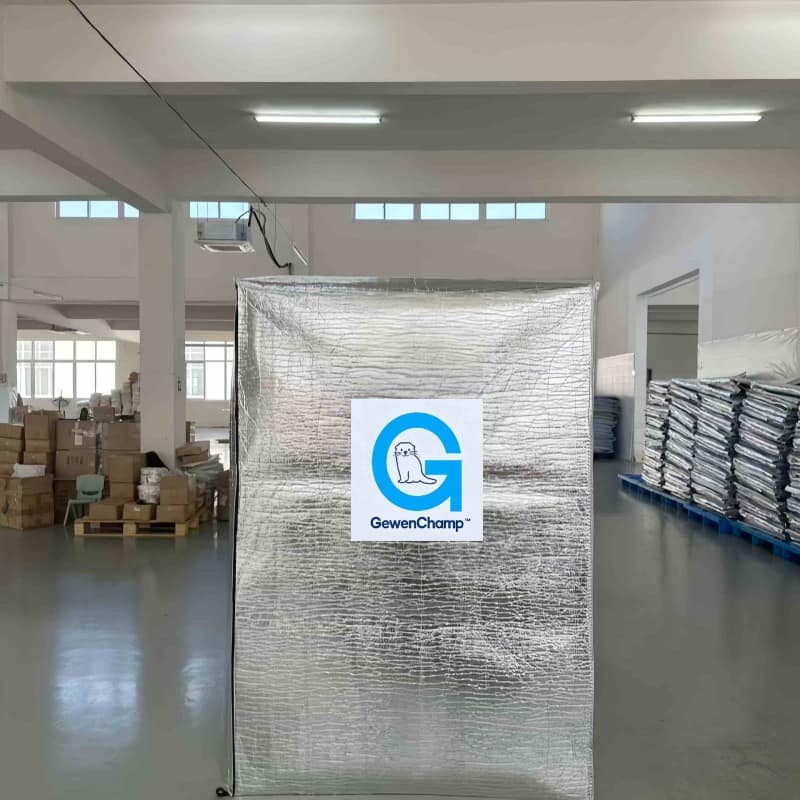
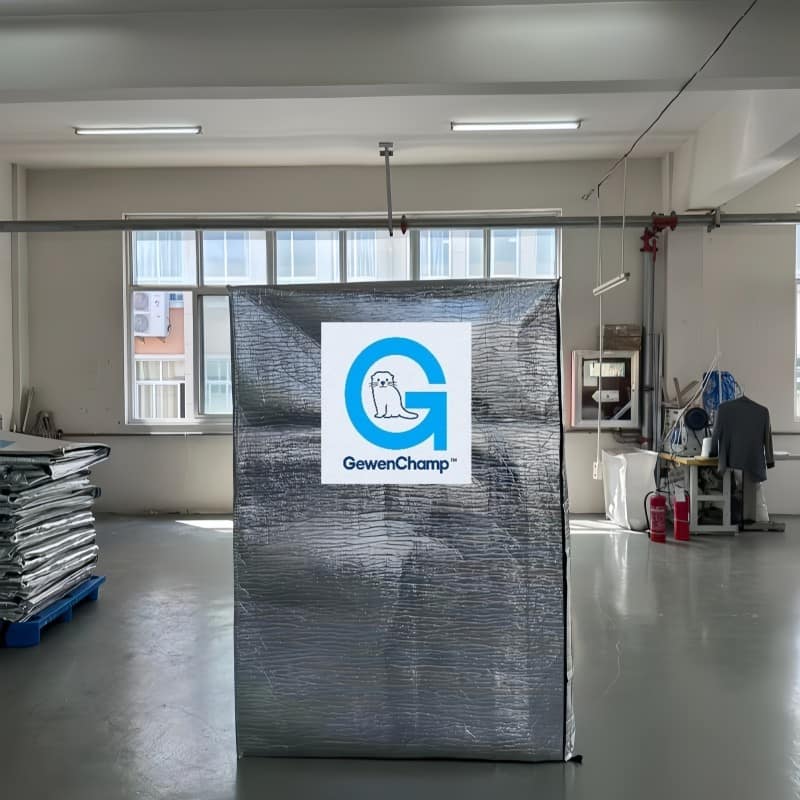
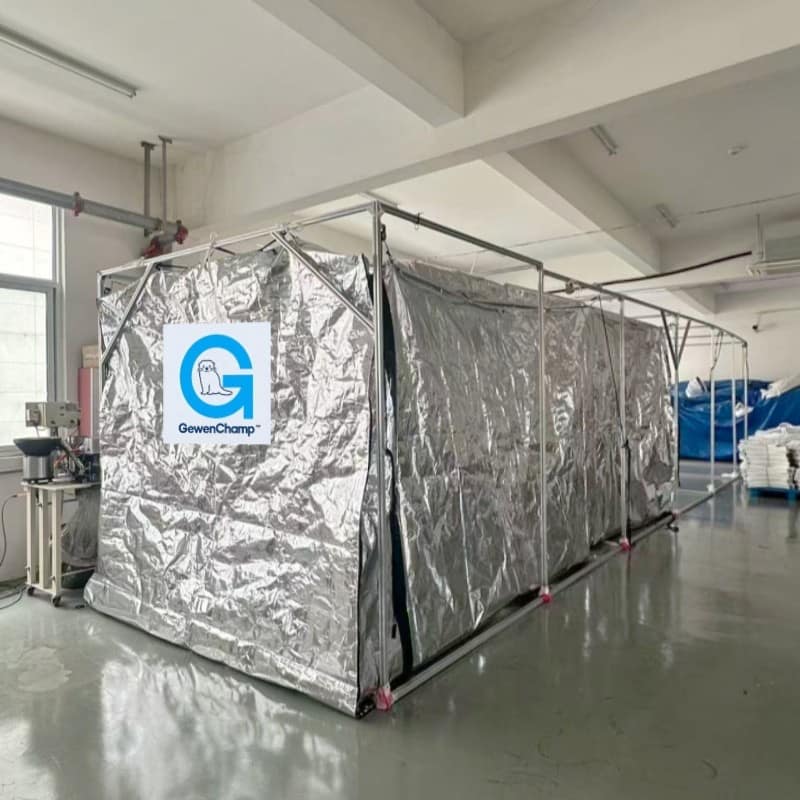
For temperature-sensitive cargo — food ingredients, pharmaceuticals, chemicals — the standard green packaging challenge is different: how to keep cargo stable without burning fuel. Reefer containers are effective but energy-intensive, relying on diesel-powered gensets that produce direct emissions. A passive thermal container liner, such as the TL-03 MPET/Double Bubble/MPET liner, tackles this by reflecting up to 98% of radiant heat away from the cargo and trapping still air in a 5 mm double bubble layer, cutting conductive and convective heat transfer. In many routes for shelf-stable goods that need only moderate temperature control, a thermal liner can reduce or eliminate reefer dependency. A single TL-03 liner can be reused three to five times, and its recyclable MPET and polyethylene layers make disposal less of a burden than expanded polystyrene or rigid foam options. That combination — less fuel, less single-use insulation — directly lowers the carbon footprint of each shipment.
How to Evaluate Green Packaging Claims for Bulk Transport
Not every “eco-friendly” label holds up under global shipping conditions. Here’s what I look at when separating meaningful green packaging from marketing:
- Wiederverwendbarkeit: Can the liner withstand multiple uses without tearing or delaminating? Three cycles is a good starting point; five or more is better.
- Material and end-of-life: Is the liner recyclable? For woven PP or PE liners, check if your region has a collection stream. Avoid mixed-material composites that cannot be separated for recycling unless the vendor offers a take-back program.
- Certification foundation: Look for REACH and RoHS compliance as baseline chemical safety; FDA or LFGB for food-contact shipments. These aren’t green certifications per se, but they confirm the material is safe and doesn’t introduce contamination risks that could lead to cargo rejection — a huge waste in itself.
- Performance data: For thermal liners, ask for the R-value or the temperature difference the liner can maintain over 48 hours under defined conditions. Without measured performance, you can’t verify the carbon reduction claim.
| Factor | Reusable Bulk Liner | Single-Use Bags | Thermal Liner (Passive) | Active Reefer |
|---|---|---|---|---|
| Typical reuses | 3–5 | 1 | 3–5 | Not applicable |
| Waste per 20 t shipment | <5 kg liner material | 1,000+ bags (~10 kg each) | <10 kg | None, but high fuel |
| Carbon impact | Low: reduced packaging production | High: continuous bag consumption | Low: eliminates or reduces reefer runtime | High: diesel genset emissions |
| Cargo suitability | Dry bulk, granules, powders | Any bagged cargo | Temperature-sensitive solids, liquids | All temperature-controlled |
If your route involves both temperature swings and high humidity, it’s worth confirming the thermal liner’s moisture vapor transmission rate (MVTR) before finalizing your buying decision. A liner with an MVTR above 0.05 g/(m²·h·kPa) may not prevent condensation damage in tropical climates, despite strong thermal performance. I’m happy to share MVTR data for our GewenChamp liners — contact me at [email protected].
Integrating Green Packaging into Your Supply Chain
cURL Too many subrequests by single Worker invocation. To configure this limit, refer to https://developers.cloudflare.com/workers/wrangler/configuration/#limits
cURL Too many subrequests by single Worker invocation. To configure this limit, refer to https://developers.cloudflare.com/workers/wrangler/configuration/#limits
cURL Too many subrequests by single Worker invocation. To configure this limit, refer to https://developers.cloudflare.com/workers/wrangler/configuration/#limits
cURL Too many subrequests by single Worker invocation. To configure this limit, refer to https://developers.cloudflare.com/workers/wrangler/configuration/#limits
cURL Too many subrequests by single Worker invocation. To configure this limit, refer to https://developers.cloudflare.com/workers/wrangler/configuration/#limits
cURL Too many subrequests by single Worker invocation. To configure this limit, refer to https://developers.cloudflare.com/workers/wrangler/configuration/#limits
cURL Too many subrequests by single Worker invocation. To configure this limit, refer to https://developers.cloudflare.com/workers/wrangler/configuration/#limits
cURL Too many subrequests by single Worker invocation. To configure this limit, refer to https://developers.cloudflare.com/workers/wrangler/configuration/#limits
cURL Too many subrequests by single Worker invocation. To configure this limit, refer to https://developers.cloudflare.com/workers/wrangler/configuration/#limits
cURL Too many subrequests by single Worker invocation. To configure this limit, refer to https://developers.cloudflare.com/workers/wrangler/configuration/#limits
cURL Too many subrequests by single Worker invocation. To configure this limit, refer to https://developers.cloudflare.com/workers/wrangler/configuration/#limits
 German
  English
  Spanish