
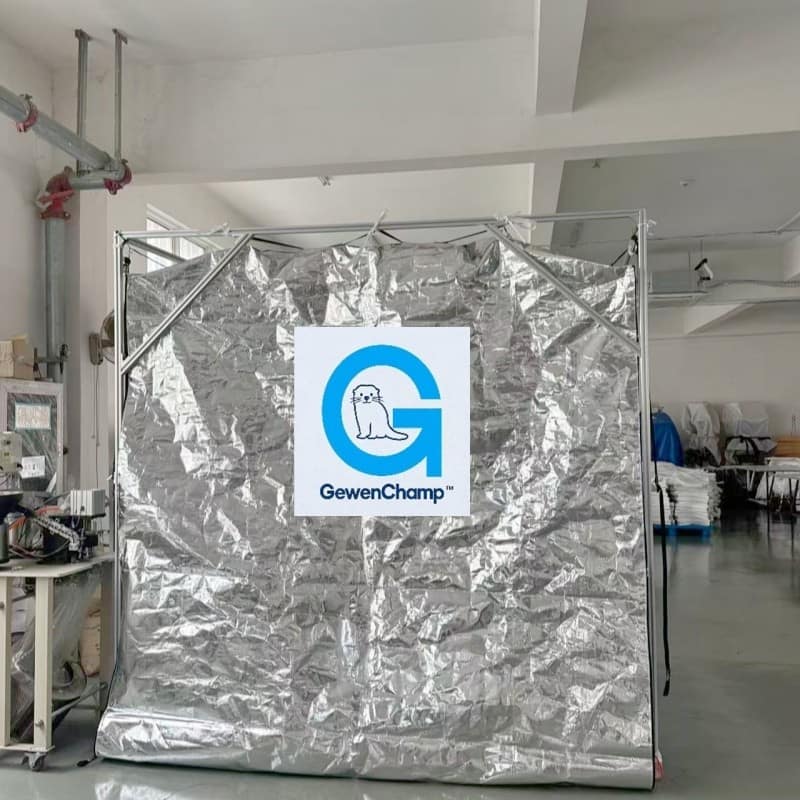
The logistics industry accounts for a significant share of global greenhouse gas emissions, and refrigerated shipping is among the most energy-intensive activities in the cold chain. Thermal container liners offer a direct path to carbon reduction by maintaining cargo temperatures passively, eliminating the need for energy-hungry reefer containers on many routes. As an engineer who has spent fifteen years designing and deploying these insulation systems, I have seen firsthand how the right liner can cut shipment-related emissions without sacrificing cargo integrity. This article explains the mechanism, compares carbon impact with active refrigeration, and provides the performance data logistics and sustainability teams need to make informed decisions.
The Carbon Cost of Cold Chain Logistics
Reefer containers depend on gensets that burn diesel to power continuous cooling. A 40-foot reefer genset typically consumes 2 to 4 liters of diesel per hour, which means a 25-day trans-Pacific voyage can burn 1,200 to 2,400 liters of fuel, releasing roughly 3,200 to 6,400 kilograms of CO2 per container. Multiply that across a shipping fleet, and the climate burden becomes substantial — and that calculation does not yet include the carbon footprint of maintaining reefers, refrigerant leakage, or the energy used at port-side plug-in points. For logistics providers and shippers under pressure to meet Science Based Targets or respond to customer sustainability questionnaires, this single operational line item represents a significant reduction opportunity.
When temperature excursions occur despite active cooling, the result is cargo spoilage. Re-shipping damaged goods doubles or triples the carbon impact of that transaction, while also incurring insurance costs and damaging supplier relationships. A passive approach that reduces the risk of temperature variance thus has a compounding carbon benefit.
How Thermal Container Liners Eliminate Reefer Energy Demand
The core mechanism is straightforward: a properly specified thermal container liner reflects radiant heat, slows conductive heat transfer, and blocks moisture, creating a stable thermal environment inside an otherwise unpowered standard dry container. No diesel genset, no ongoing electricity, no refrigerant. The energy that would have powered a refrigeration unit is simply not burned.
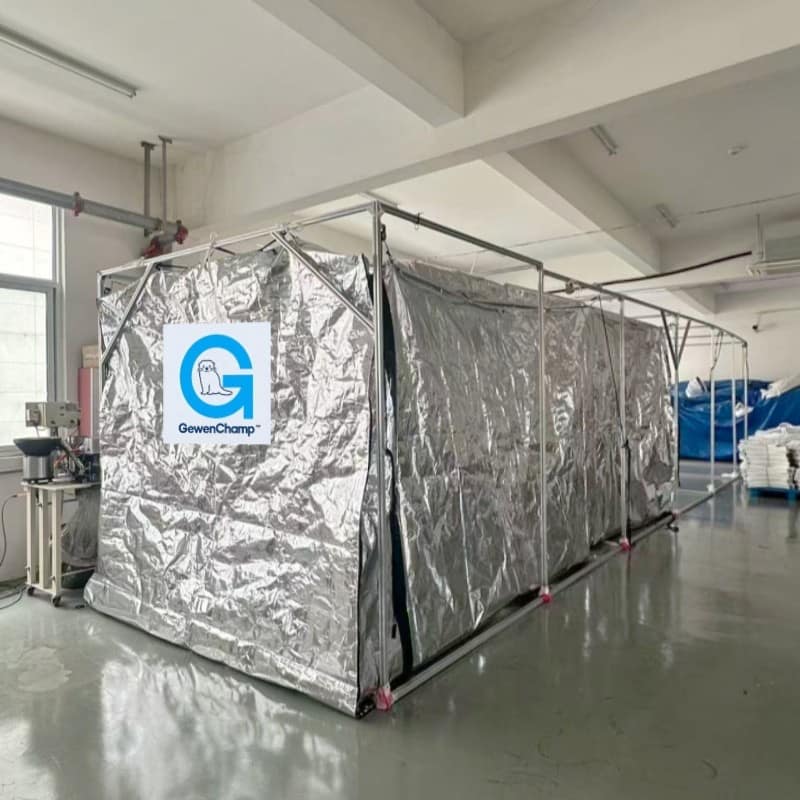
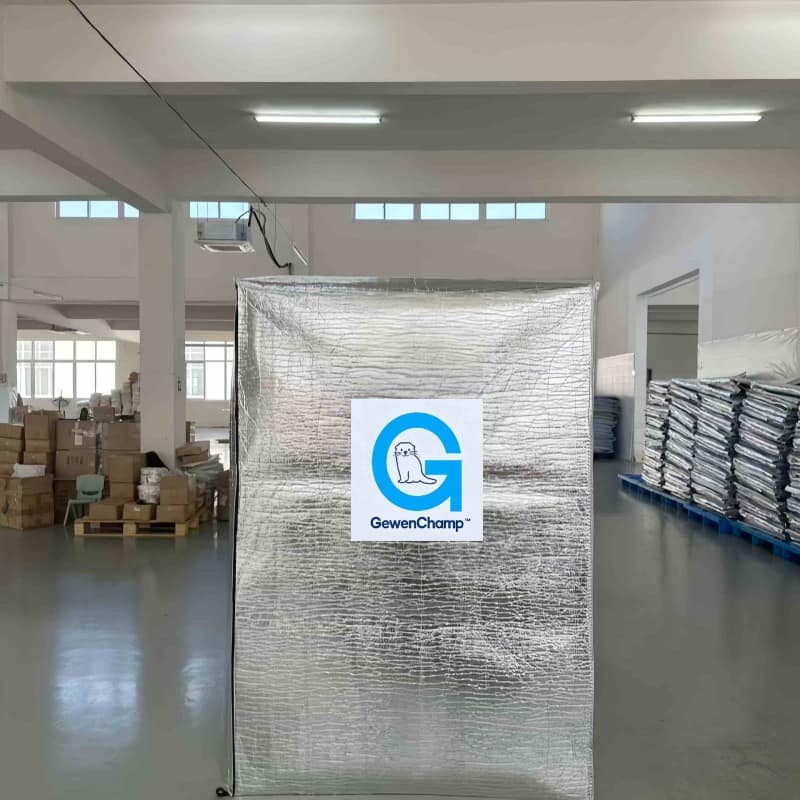
Take the GewenChamp TL-02, a four-layer composite liner. Its outer and inner layers are PET aluminum foil with 95–97% radiant heat reflectivity. Sandwiched between them is a 3-millimeter EPE foam core with a thermal conductivity of ≤0.038 W/(m·K), plus a woven polyethylene layer for structural strength. The result: a cargo space that remains within its temperature stability window for days or weeks depending on the starting condition and ambient profile. For a shipment of temperature-sensitive polymer resins moving from Southeast Asia to Northern Europe, the TL-02 can hold temperatures steady without ever drawing a watt of external power.
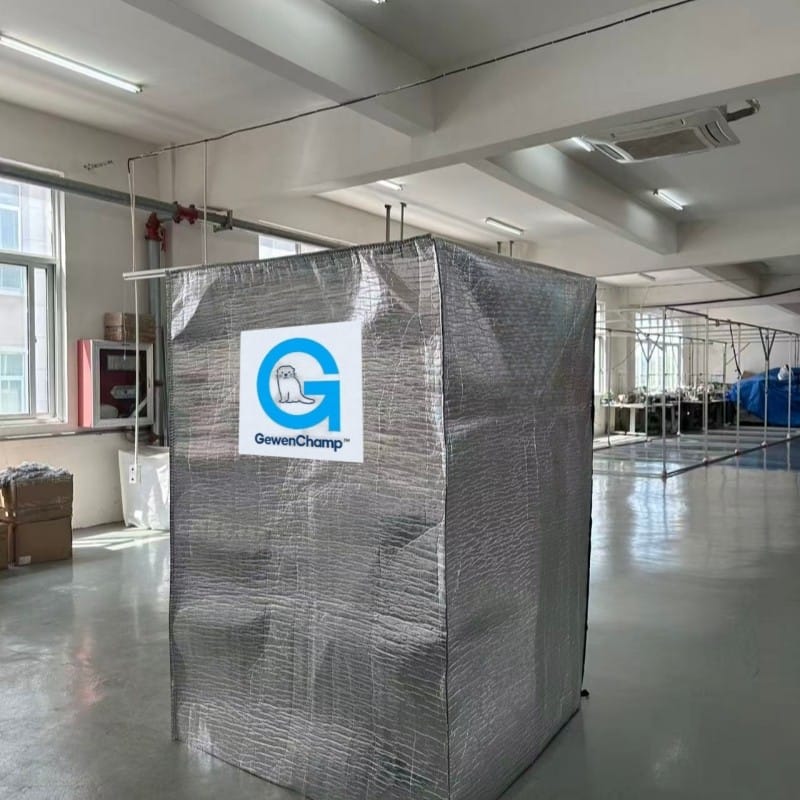
Eliminating the genset directly removes the largest source of carbon emissions in that shipment leg. For one customer switching from a full reefer setup to TL-02 liners on a regular Asia–Europe route, we calculated that each container avoided approximately 4 to 6 metric tons of CO2 over the voyage — a figure derived from the diesel consumption we documented on the original reefer lanes. Across an annual volume of several hundred containers, that translates into a meaningful and reportable Scope 3 reduction for the cargo owner.
Thermal Liners vs. Reefers: Quantifying the Carbon Difference
A side-by-side comparison clarifies where passive liners excel and where reefer containers remain necessary.
| Factor | Active Reefer Container | Passive Thermal Liner (e.g., TL-02) |
|---|---|---|
| Energy Source | Diesel genset or electric plug-in | None — passive insulation only |
| CO2 per Voyage (40-ft, 25 days) | 3,200–6,400 kg (diesel genset) | 0 kg (in use) |
| Temperature Control | Active, precise | Passive, ±5°C range maintained |
| Cargo Suitability | All temperature ranges, including deep-frozen | Perishables, pharma, chemicals within thermal limits |
| Upfront Carbon Footprint | High (reefer manufacturing, genset production) | Moderate (liner manufacturing, amortized over 3–5 uses) |
| Operational Complexity | Fuel logistics, genset maintenance | Simple installation, no ongoing maintenance |
It is the combination of zero operational energy and multi-use durability that gives thermal liners their carbon advantage. The TL-02 liner can be reused three to five times before replacement, spreading its manufacturing footprint across multiple shipments. While reefers offer precise temperature setpoints and can handle frozen goods down to –20°C or lower, a large share of temperature-sensitive cargo — cocoa beans, bulk wine, pharmaceutical intermediates, electronics — needs only to stay within a moderate range that passive liners maintain comfortably. For these cargo types, the carbon math strongly favors insulation over refrigeration.
If your cargo requires a specific temperature band and you are weighing the reefer trade-off, we can help you evaluate whether a passive liner can maintain your stability window for the intended route. Send your program details to [email protected] and we will provide performance modeling to support your decision.
Real-World Thermal Liner Performance Data
The following table summarizes key specifications for Giant Flexpack’s GewenChamp thermal container liner range, each designed to address different thermal protection needs.
| Modell | cURL Too many subrequests by single Worker invocation. To configure this limit, refer to https://developers.cloudflare.com/workers/wrangler/configuration/#limits | cURL Too many subrequests by single Worker invocation. To configure this limit, refer to https://developers.cloudflare.com/workers/wrangler/configuration/#limits | cURL Too many subrequests by single Worker invocation. To configure this limit, refer to https://developers.cloudflare.com/workers/wrangler/configuration/#limits | cURL Too many subrequests by single Worker invocation. To configure this limit, refer to https://developers.cloudflare.com/workers/wrangler/configuration/#limits | Beste Anwendung |
|---|---|---|---|---|---|
| TL-01 | cURL Too many subrequests by single Worker invocation. To configure this limit, refer to https://developers.cloudflare.com/workers/wrangler/configuration/#limits | cURL Too many subrequests by single Worker invocation. To configure this limit, refer to https://developers.cloudflare.com/workers/wrangler/configuration/#limits | cURL Too many subrequests by single Worker invocation. To configure this limit, refer to https://developers.cloudflare.com/workers/wrangler/configuration/#limits | 3–5 | cURL Too many subrequests by single Worker invocation. To configure this limit, refer to https://developers.cloudflare.com/workers/wrangler/configuration/#limits |
| TL-02 | cURL Too many subrequests by single Worker invocation. To configure this limit, refer to https://developers.cloudflare.com/workers/wrangler/configuration/#limits | cURL Too many subrequests by single Worker invocation. To configure this limit, refer to https://developers.cloudflare.com/workers/wrangler/configuration/#limits | cURL Too many subrequests by single Worker invocation. To configure this limit, refer to https://developers.cloudflare.com/workers/wrangler/configuration/#limits | 3–5 | cURL Too many subrequests by single Worker invocation. To configure this limit, refer to https://developers.cloudflare.com/workers/wrangler/configuration/#limits |
| TL-03 | cURL Too many subrequests by single Worker invocation. To configure this limit, refer to https://developers.cloudflare.com/workers/wrangler/configuration/#limits | cURL Too many subrequests by single Worker invocation. To configure this limit, refer to https://developers.cloudflare.com/workers/wrangler/configuration/#limits | cURL Too many subrequests by single Worker invocation. To configure this limit, refer to https://developers.cloudflare.com/workers/wrangler/configuration/#limits | 3–5 | cURL Too many subrequests by single Worker invocation. To configure this limit, refer to https://developers.cloudflare.com/workers/wrangler/configuration/#limits |
| TL-04 | cURL Too many subrequests by single Worker invocation. To configure this limit, refer to https://developers.cloudflare.com/workers/wrangler/configuration/#limits | cURL Too many subrequests by single Worker invocation. To configure this limit, refer to https://developers.cloudflare.com/workers/wrangler/configuration/#limits | cURL Too many subrequests by single Worker invocation. To configure this limit, refer to https://developers.cloudflare.com/workers/wrangler/configuration/#limits | cURL Too many subrequests by single Worker invocation. To configure this limit, refer to https://developers.cloudflare.com/workers/wrangler/configuration/#limits | cURL Too many subrequests by single Worker invocation. To configure this limit, refer to https://developers.cloudflare.com/workers/wrangler/configuration/#limits |
cURL Too many subrequests by single Worker invocation. To configure this limit, refer to https://developers.cloudflare.com/workers/wrangler/configuration/#limits
cURL Too many subrequests by single Worker invocation. To configure this limit, refer to https://developers.cloudflare.com/workers/wrangler/configuration/#limits
cURL Too many subrequests by single Worker invocation. To configure this limit, refer to https://developers.cloudflare.com/workers/wrangler/configuration/#limits
cURL Too many subrequests by single Worker invocation. To configure this limit, refer to https://developers.cloudflare.com/workers/wrangler/configuration/#limits
cURL Too many subrequests by single Worker invocation. To configure this limit, refer to https://developers.cloudflare.com/workers/wrangler/configuration/#limits
cURL Too many subrequests by single Worker invocation. To configure this limit, refer to https://developers.cloudflare.com/workers/wrangler/configuration/#limits
cURL Too many subrequests by single Worker invocation. To configure this limit, refer to https://developers.cloudflare.com/workers/wrangler/configuration/#limits
cURL Too many subrequests by single Worker invocation. To configure this limit, refer to https://developers.cloudflare.com/workers/wrangler/configuration/#limits
cURL Too many subrequests by single Worker invocation. To configure this limit, refer to https://developers.cloudflare.com/workers/wrangler/configuration/#limits
cURL Too many subrequests by single Worker invocation. To configure this limit, refer to https://developers.cloudflare.com/workers/wrangler/configuration/#limits
cURL Too many subrequests by single Worker invocation. To configure this limit, refer to https://developers.cloudflare.com/workers/wrangler/configuration/#limits
cURL Too many subrequests by single Worker invocation. To configure this limit, refer to https://developers.cloudflare.com/workers/wrangler/configuration/#limits
cURL Too many subrequests by single Worker invocation. To configure this limit, refer to https://developers.cloudflare.com/workers/wrangler/configuration/#limits
cURL Too many subrequests by single Worker invocation. To configure this limit, refer to https://developers.cloudflare.com/workers/wrangler/configuration/#limits
cURL Too many subrequests by single Worker invocation. To configure this limit, refer to https://developers.cloudflare.com/workers/wrangler/configuration/#limits
cURL Too many subrequests by single Worker invocation. To configure this limit, refer to https://developers.cloudflare.com/workers/wrangler/configuration/#limits
cURL Too many subrequests by single Worker invocation. To configure this limit, refer to https://developers.cloudflare.com/workers/wrangler/configuration/#limits
cURL Too many subrequests by single Worker invocation. To configure this limit, refer to https://developers.cloudflare.com/workers/wrangler/configuration/#limits
cURL Too many subrequests by single Worker invocation. To configure this limit, refer to https://developers.cloudflare.com/workers/wrangler/configuration/#limits
cURL Too many subrequests by single Worker invocation. To configure this limit, refer to https://developers.cloudflare.com/workers/wrangler/configuration/#limits
cURL Too many subrequests by single Worker invocation. To configure this limit, refer to https://developers.cloudflare.com/workers/wrangler/configuration/#limits
cURL Too many subrequests by single Worker invocation. To configure this limit, refer to https://developers.cloudflare.com/workers/wrangler/configuration/#limits
 German
  English
  Spanish