
The environmental impact of container liners is rarely as simple as the material label on the spec sheet suggests. Over fifteen years supporting bulk shippers across food, chemical, and pharmaceutical supply chains, I have watched procurement teams select liners marketed as recyclable or biodegradable, then discover months later that the liner they passed over, a heavier construction they dismissed as using too much material, would have prevented a five-tonne cargo loss on a single voyage. The environmental cost embedded in that spoiled cargo dwarfed the liner’s material footprint by a factor of twenty or more. Evaluating container liner sustainability honestly means weighing material input against the cargo losses and energy consumption the liner eliminates, because in bulk shipping, the most meaningful environmental gains come from the damage that never reaches a destination port.
Understanding the Full Environmental Picture of Container Liners
Shipping a container of cocoa beans from West Africa to Europe without a liner exposes the cargo to condensation cycles that can claim 2 to 8 percent of the load before it clears customs. The environmental cost of growing, harvesting, processing, and transporting those lost tonnes is already fully incurred before the container doors open. A liner weighing perhaps 15 to 40 kilograms prevented that loss. When procurement frameworks treat liner material as an isolated environmental liability rather than as part of a system that prevents far larger waste streams, the arithmetic stops reflecting reality.
Most sustainability discussions around container liners fixate on whether the material can be recycled or will biodegrade. Those are legitimate questions, but they address only one side of the balance sheet. The other side is what the liner does during the voyage: it isolates dry bulk cargo from moisture, blocks oxidation, prevents contamination, and, in the case of thermal liners, maintains stable temperature envelopes without burning diesel in a reefer unit for weeks at sea. A liner’s net environmental contribution is its material footprint minus the environmental damage it prevents. For most shipping programs we have analyzed, that number runs strongly negative, because the liner prevents far more harm than it creates.
Material Composition and Environmental Footprint of Common Liners
Container liners fall into several broad material families, each carrying a distinct environmental profile that changes depending on how the liner is actually used in service. PE film liners, typically 120 to 160 micron LDPE, are the most common choice for dry bulk food and chemical transport. They are technically recyclable through standard LDPE recovery streams, but only when they emerge from the container clean and uncontaminated, a condition that depends heavily on the cargo type and unloading method. In practice, many single-use PE liners enter general waste streams or, in regions with waste-to-energy infrastructure, are incinerated for energy recovery. The material is not the limiting factor; the recovery infrastructure at the destination port usually is.
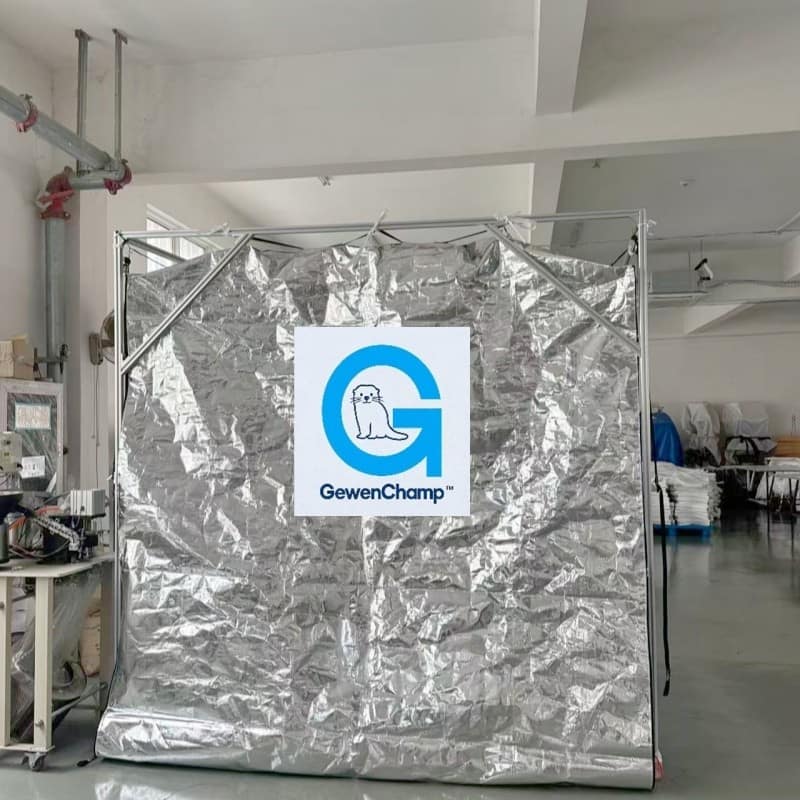
Woven PP and HDPE liners, often coated for moisture resistance, provide greater tensile strength and can be reused 3 to 8 times depending on cargo abrasiveness and handling care. Each additional voyage divides the material footprint per tonne shipped, making reuse the single most effective environmental lever available with current materials. The complication is that laminated or coated woven constructions layer different polymers together, making mechanical separation and recycling commercially impractical at today’s volumes.
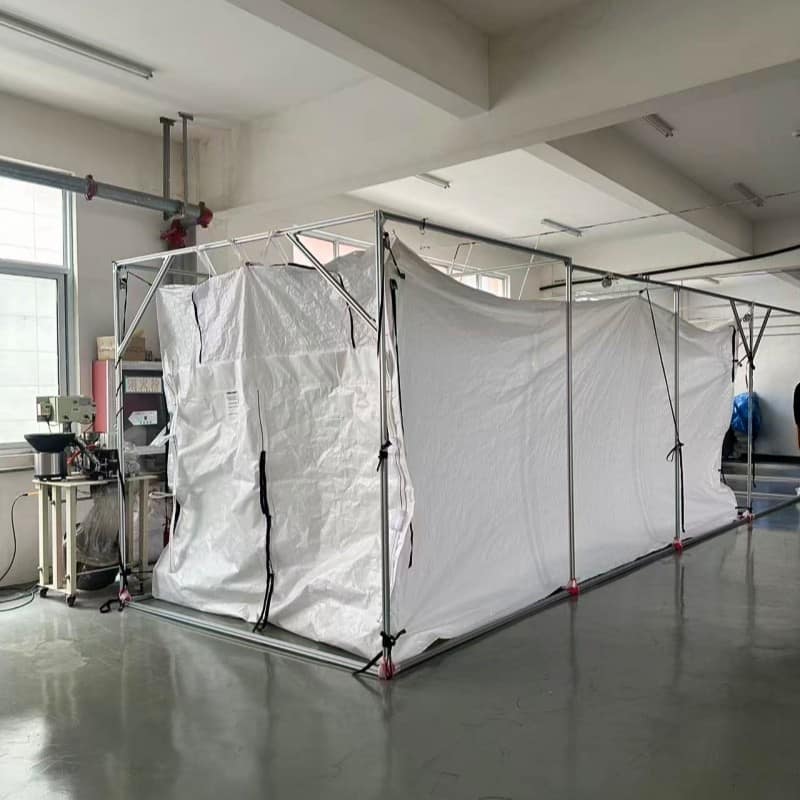
Thermal liners introduce a different calculation entirely. Multi-material composites like the TL-02, with its 3mm EPE foam core laminated between PET aluminum foil layers, or the TL-03, built from MPET and double-bubble cushioning, are not designed for end-of-life material recovery. Their environmental value must be measured in operational energy displaced. A TL-02 liner weighing 25 to 40 kilograms and reusable 3 to 5 times can eliminate the diesel consumption of a reefer container burning 3 to 6 liters per hour across a two-week ocean crossing. The carbon arithmetic favors the liner decisively, but only when the analysis includes prevented fuel consumption and not solely material disposal.
| Material Type | Recyclability | Ciclos de Reutilización Típicos | Primary Environmental Factor |
|---|---|---|---|
| LDPE Film (120 to 160μ) | Technically yes; contamination-dependent | 1 (single-use) | Lowest material mass per container; waste-to-energy viable |
| Woven PP/HDPE (coated) | Limited by lamination layers | 3 to 8 times | Durability divides per-voyage material footprint |
| Aluminum Foil / Woven PE | Multi-layer; not separable | 3 to 5 times | Eliminates reefer energy without operational fuel |
| EPE Foam Composite | Not recyclable | 3 to 5 times | Highest displaced energy per kilogram of material |
| MPET / Bubble / MPET | Not recyclable | 3 to 5 times | Strongest passive thermal performance; maximum reefer substitution |
How Container Liners Prevent Cargo Waste and Deliver Environmental Gains
The most overlooked environmental statistic in bulk shipping is the tonnage of cargo that arrives degraded. Industry data suggests that 2 to 5 percent of containerized food shipments experience moisture-related quality loss, and a fraction of those containers are rejected outright at destination. Every rejected shipment represents not just a commercial claim but embedded environmental waste: the water, fertilizer, processing energy, and transport fuel invested in goods that never enter usable commerce.
Container liners prevent this through moisture barrier performance that is measurable and specifiable. A properly selected PE film liner with moisture vapor transmission below 0.5 grams per square meter per 24 hours effectively isolates cargo from container wall condensation and humidity ingress during the temperature cycles that occur on every ocean crossing. Woven liners with double-sided LDPE lamination, such as the DBL-W02 specified for malt transport, add odor barrier properties alongside complete moisture protection. The 15 to 40 kilograms of material in these liners should be evaluated against the tonnes of cargo they keep within specification. For a 20-tonne cocoa bean shipment, preventing just 2 percent spoilage saves 400 kilograms of product. The embedded carbon in 400 kilograms of an agricultural commodity, from cultivation through inland logistics to the port, exceeds the carbon footprint of the liner material by a factor of 10 to 30, depending on the commodity and its origin.
We have observed this trade-off directly in shipping programs we support. A food exporter replaced lightweight single-use liners with heavier laminated woven liners and reduced arrival moisture claims by over 60 percent. The additional 10 kilograms of liner material per container eliminated an average of 300 kilograms of rejected product per shipment. That ratio, roughly 30 to 1 in prevented waste versus additional packaging, represents the environmental equation that matters but rarely appears in procurement spreadsheets.
If your cargo program involves high-value food commodities or moisture-sensitive powders where even modest spoilage rates carry significant embedded carbon costs, confirming the right liner specification against your actual loss data is a worthwhile exercise. Reach out at [email protected] with your commodity and route details, and we can help quantify the net environmental balance of your current liner program.
Thermal Container Liners Cut Energy Use in Cold Chain Logistics
The environmental case for thermal container liners rests on a comparison that is straightforward to model. A reefer container on a two-week voyage from Shanghai to Rotterdam burns roughly 500 to 1,000 liters of diesel to hold temperature set points, varying with ambient conditions and cargo requirements. A passive thermal container liner achieves comparable temperature stability during the same voyage while consuming zero operational energy.
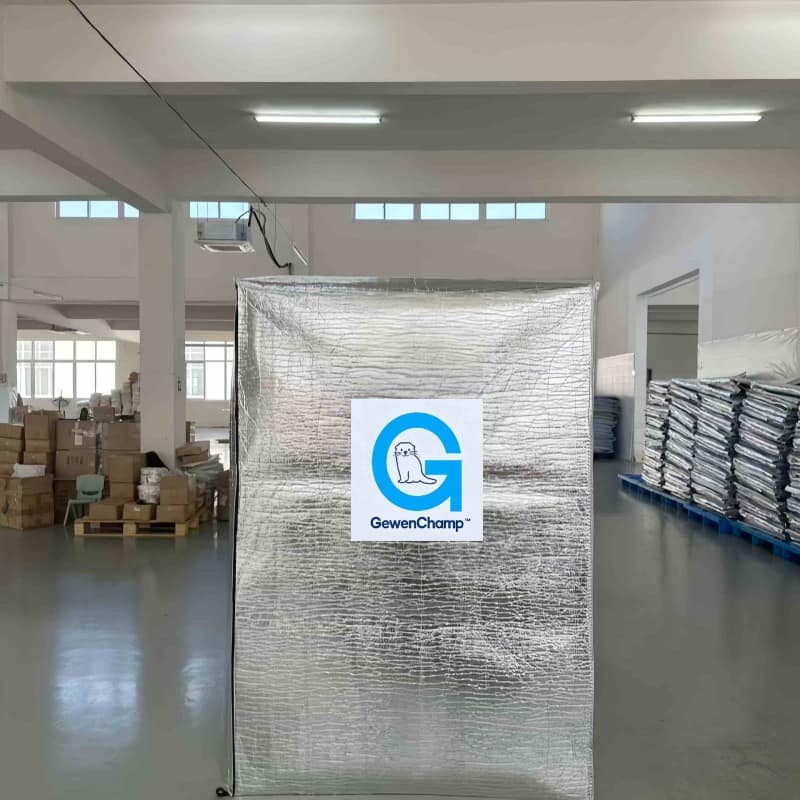
The GewenChamp TL-03 liner reflects up to 98 percent of radiant heat through its outer MPET layers, while the 5mm double-bubble air core provides a static insulation barrier. In controlled testing, this configuration holds internal temperatures within plus or minus 5 degrees Celsius of loading temperature for 24 to 48 hours under standard ambient conditions, extending to 72 hours when ice packs supplement the thermal mass. The TL-02, with its 3mm EPE foam core achieving thermal conductivity at or below 0.038 watts per meter-Kelvin, extends protection across an operating range from minus 50 to 80 degrees Celsius.
The net carbon saving is substantial enough to change procurement economics. A single TL-03 liner weighing approximately 30 kilograms, deployed across three shipments, replaces roughly 1,500 to 3,000 liters of reefer diesel consumption, equivalent to 4 to 8 tonnes of CO₂ avoided. Even after accounting for the liner’s manufacturing energy and end-of-life handling, the carbon payback occurs within the first voyage for most temperate routes. For shippers moving temperature-sensitive cargoes like chocolate, pharmaceuticals, or specialty chemicals on lanes where ambient temperatures remain between 15 and 35 degrees Celsius, thermal liners deliver one of the most cost-effective carbon reductions available in logistics today.
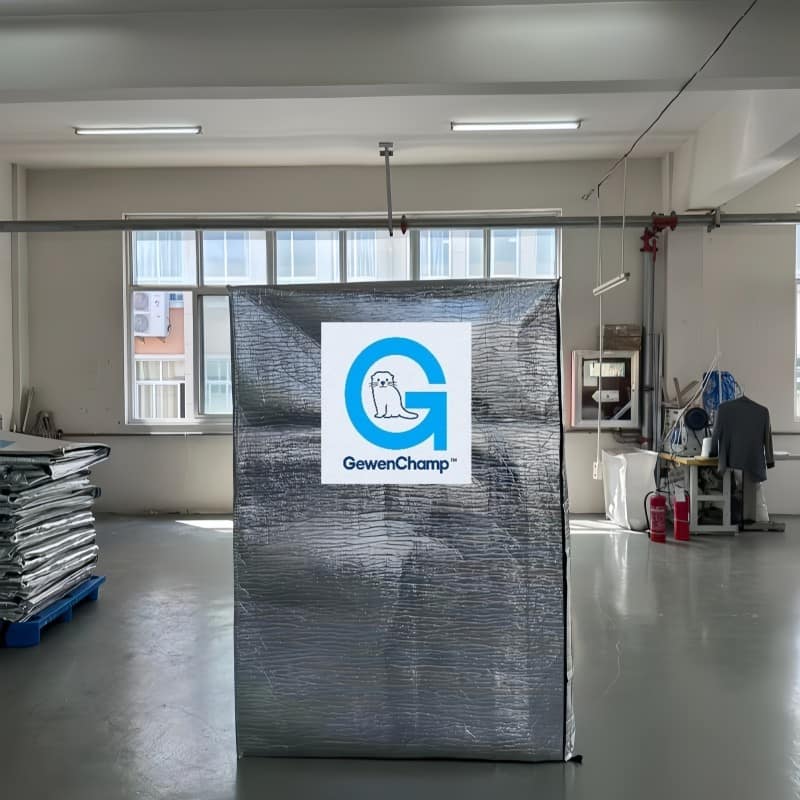
The limitation deserves honest acknowledgement. Thermal liners are not a universal replacement for active refrigeration. On routes with sustained ambient temperatures above 40 degrees Celsius, or for cargo requiring precise sub-zero control throughout the voyage, reefer containers remain necessary. But for the substantial middle ground of cargo needing protection from temperature swings rather than absolute cooling, which describes a large share of global cold chain volume, passive thermal packaging eliminates operational emissions entirely while using a fraction of the energy over its lifecycle.
cURL Too many subrequests by single Worker invocation. To configure this limit, refer to https://developers.cloudflare.com/workers/wrangler/configuration/#limits
cURL Too many subrequests by single Worker invocation. To configure this limit, refer to https://developers.cloudflare.com/workers/wrangler/configuration/#limits
cURL Too many subrequests by single Worker invocation. To configure this limit, refer to https://developers.cloudflare.com/workers/wrangler/configuration/#limits
cURL Too many subrequests by single Worker invocation. To configure this limit, refer to https://developers.cloudflare.com/workers/wrangler/configuration/#limits
cURL Too many subrequests by single Worker invocation. To configure this limit, refer to https://developers.cloudflare.com/workers/wrangler/configuration/#limits
cURL Too many subrequests by single Worker invocation. To configure this limit, refer to https://developers.cloudflare.com/workers/wrangler/configuration/#limits
cURL Too many subrequests by single Worker invocation. To configure this limit, refer to https://developers.cloudflare.com/workers/wrangler/configuration/#limits
cURL Too many subrequests by single Worker invocation. To configure this limit, refer to https://developers.cloudflare.com/workers/wrangler/configuration/#limits
cURL Too many subrequests by single Worker invocation. To configure this limit, refer to https://developers.cloudflare.com/workers/wrangler/configuration/#limits
cURL Too many subrequests by single Worker invocation. To configure this limit, refer to https://developers.cloudflare.com/workers/wrangler/configuration/#limits
cURL Too many subrequests by single Worker invocation. To configure this limit, refer to https://developers.cloudflare.com/workers/wrangler/configuration/#limits
cURL Too many subrequests by single Worker invocation. To configure this limit, refer to https://developers.cloudflare.com/workers/wrangler/configuration/#limits
cURL Too many subrequests by single Worker invocation. To configure this limit, refer to https://developers.cloudflare.com/workers/wrangler/configuration/#limits
cURL Too many subrequests by single Worker invocation. To configure this limit, refer to https://developers.cloudflare.com/workers/wrangler/configuration/#limits
cURL Too many subrequests by single Worker invocation. To configure this limit, refer to https://developers.cloudflare.com/workers/wrangler/configuration/#limits
cURL Too many subrequests by single Worker invocation. To configure this limit, refer to https://developers.cloudflare.com/workers/wrangler/configuration/#limits
cURL Too many subrequests by single Worker invocation. To configure this limit, refer to https://developers.cloudflare.com/workers/wrangler/configuration/#limits
cURL Too many subrequests by single Worker invocation. To configure this limit, refer to https://developers.cloudflare.com/workers/wrangler/configuration/#limits
cURL Too many subrequests by single Worker invocation. To configure this limit, refer to https://developers.cloudflare.com/workers/wrangler/configuration/#limits
cURL Too many subrequests by single Worker invocation. To configure this limit, refer to https://developers.cloudflare.com/workers/wrangler/configuration/#limits
cURL Too many subrequests by single Worker invocation. To configure this limit, refer to https://developers.cloudflare.com/workers/wrangler/configuration/#limits
 Spanish
  English
  German