
Most sustainability guides treat container liner reuse as a simple packaging swap. In practice, reusability depends on material engineering, international certifications, and after-trip maintenance. Factors that determine whether a liner actually lasts two trips or ten. Drawing on fifteen years of manufacturing thermal and dry bulk liners, I outline the specific criteria logistics teams need to evaluate reusable container liners, from ISO 9001 quality systems to REACH compliance for repeated food contact. This article skips the generalities and focuses on what makes a liner reusable in the real world.
Assessing Container Liner Reusability
A reusable container liner is one that completes multiple shipping cycles without losing its protective performance. Single-use polyethylene film liners, while recycled in some programs, are not designed for repeated use. They often suffer from pinholes, moisture absorption, or contamination after a single trip. In contrast, multi-layer woven and thermal liners are built with reusability in mind. Their materials resist tearing, maintain barrier integrity, and withstand cleaning protocols.
The reusability of a container liner depends on three factors: raw material durability, seam and seam-sealing technology, and compatibility with sanitization processes. A liner that survives one ocean voyage may fail on the second if the inner coating degrades from aggressive cleaning agents or the woven fabric loses tensile strength. When I evaluate liner reusability for a client, I look at the fabric construction and any lamination or coating that seals the surface against moisture and cargo residue.
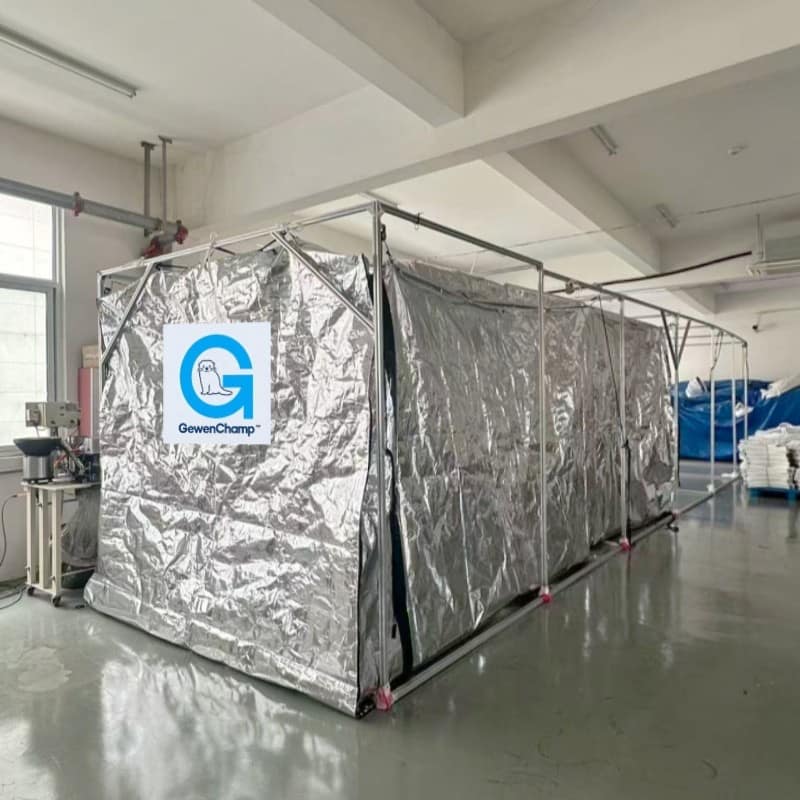
Several dry bulk container liners, such as the DBL-W01 woven model, are manufactured from 140 gsm high-density polyethylene woven fabric. The fabric alone resists heavy loads, but reusability extends when the liner is coated with polyethylene or aluminium foil. The coating prevents cargo particles from embedding in the weave, which would otherwise make cleaning nearly impossible. Thermal liners like the GewenChamp series add reflective and insulating layers that also need to survive repeated folding and installation stress.
Material Durability and Reuse Potential
Different material constructions deliver very different reuse potential. The table below compares common liner types based on field experience and manufacturer specifications.
| Tipo de forro | Material | Ciclos de Reutilización Típicos | Key Certification Basis |
|---|---|---|---|
| Uncoated woven PP | 110 gsm polypropylene | 1 | Optional FDA |
| HDPE woven with PE coating | 140 gsm HDPE plus double-sided PE coating | 3–5 | ISO 9001, FDA |
| Thermal woven with aluminium foil | Woven PE plus double-sided PE aluminium foil lamination (TL-01 style) | 3–5 | FDA, LFGB |
| EPE foam thermal | PET aluminium foil / woven PE / 3mm EPE foam / PET aluminium foil (TL-02 style) | 3–5 | FDA, LFGB, ISO 9001 |
| PE film (standard) | 140-micron LDPE | 1 | REACH, RoHS |
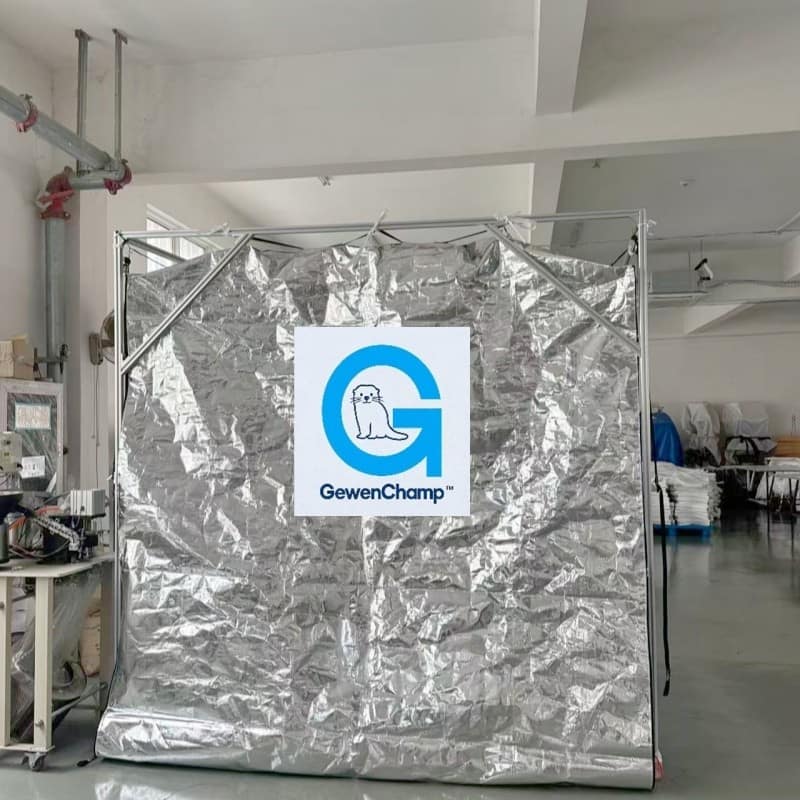
The woven PE liners with double-sided PE coating achieve 3 to 5 trips because the coating protects the fabric from abrasive cargo and moisture ingress. The coating itself can be wiped down or lightly washed without delaminating. Thermal liners that use aluminium foil or metalized PET layers reflect heat and also resist moisture. The TL-02 liner, with its EPE foam core, adds insulation that remains effective over several trips provided the outer foil remains intact. In projects where crews handle liners carefully and avoid sharp tools against the walls, these liners regularly reach five uses.
PE film liners, despite their cost advantage per unit, rarely survive a second trip. They tear at the seam or absorb odours from food cargo, making them unsuitable for multi-use cycles even if washed. The choice between a cheap single-use liner and a durable reusable liner is therefore not just a cost calculation but a material science decision.
Certifications That Enable Reuse
Reusability does not end with physical durability. Liners that come into contact with food, pharmaceutical ingredients, or high-purity chemicals must hold certifications that remain valid across multiple trips. A certification is granted to the manufactured product based on its material composition. It does not automatically expire after one use, but regulators expect the liner to remain compliant if it undergoes cleaning and re-inspection.
For food-grade applications, FDA and LFGB certifications confirm that the liner materials do not migrate harmful substances into the cargo. A reusable liner must retain this property even after repeated exposure to fats, acids, or moisture. ISO 9001 certification provides the manufacturing quality system that ensures each liner is consistent. In my manufacturing environment, every batch of thermal and woven liners is tested for tensile strength, seam integrity, and barrier properties before release. This quality record supports reusability claims because it proves the liner started with known specifications and can be benchmarked again after several uses.
REACH and RoHS compliance covers chemical safety and is relevant for industrial cargo that may leave chemical residues. In the European market, importers often require REACH documentation even for reusable liners to confirm that no prohibited substances remain after contact with previous cargo. If you ship across multiple jurisdictions, keeping a liner’s compliance file up to date is as important as the physical condition of the liner itself.
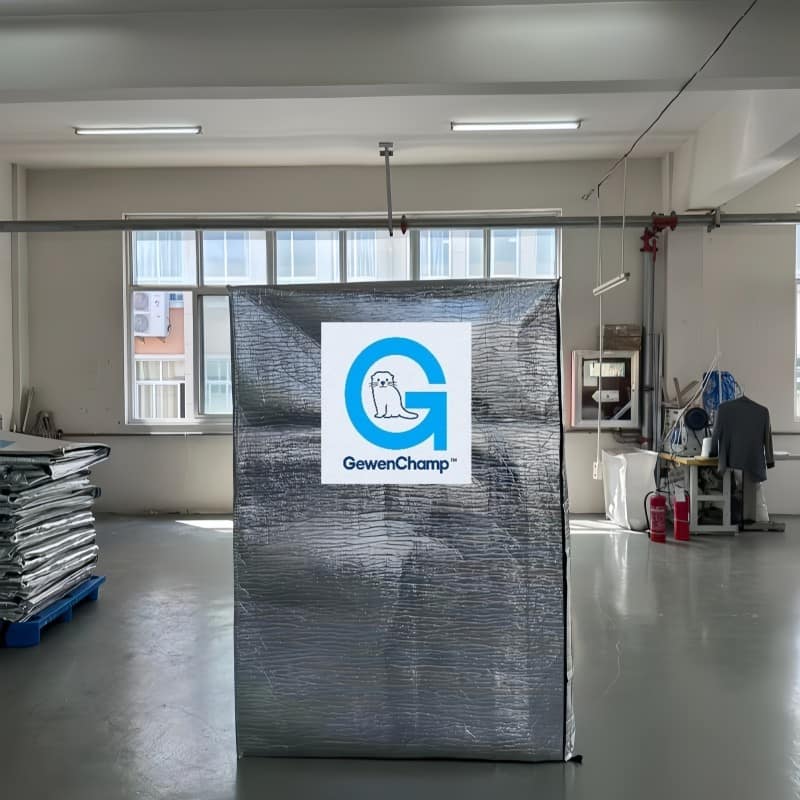
When auditing a reusable liner program, I check for third-party test reports that measure the liner’s performance after simulated multi-use cycles. These reports confirm that the liner’s technical specifications, such as moisture vapour transmission rate or tensile strength, still meet the required threshold after 3–5 trips. Without such documentation, reusability is a verbal claim rather than a verifiable attribute.
Cleaning and Sanitization Protocols
A reusable liner programme fails if the cleaning process is neglected or poorly executed. The cleaning method depends on the liner material and the cargo type. For woven liners with PE coating, a mild detergent and water rinse followed by drying in a controlled environment works well. Abrasive pads or strong solvents damage the coating and shorten service life dramatically.
Thermal liners with aluminium foil surfaces require even more care. The foil must not be scrubbed. A damp cloth with a neutral cleaning agent suffices for non-oily residues. For food-grade applications, a sanitizing step with an approved food-contact sanitizer eliminates bacterial contamination without attacking the foil. After cleaning, the liner must be fully dried. Residual moisture trapped between layers can cause delamination or mould growth during storage.
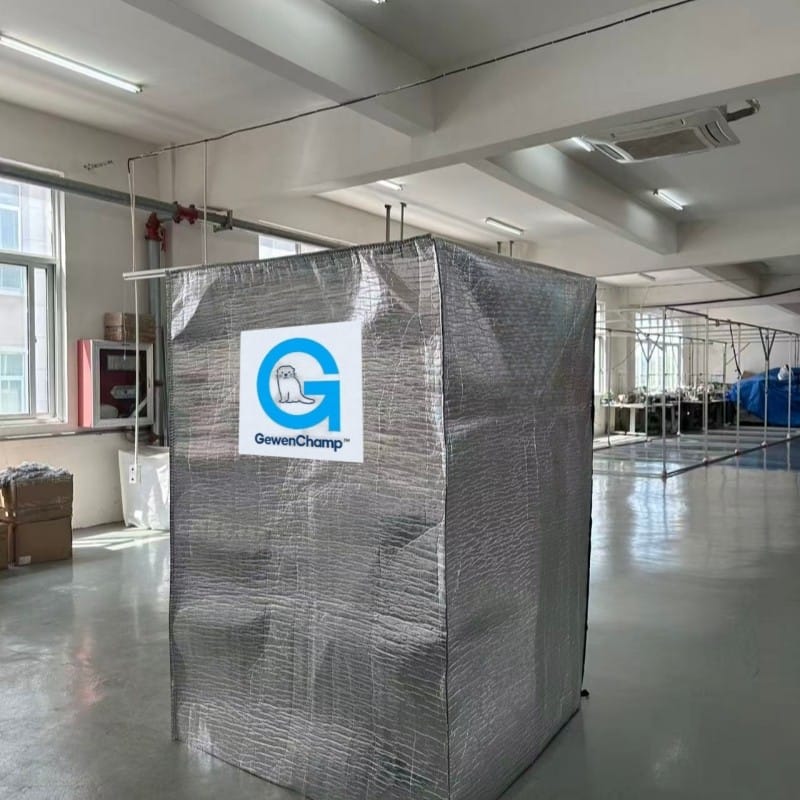
Operators who attempt to reuse liners without a documented cleaning protocol often see performance degrade after the second trip. I recommend creating a simple checklist: inspect for tears or seam separation after each trip, remove any solid cargo residue, apply the specified cleaning agent, rinse, sanitize if needed, and dry completely. Tracking liner usage with a serial number or barcode helps identify when a liner reaches its wear limit.
Professional cleaning services exist in many major ports. They charge per liner based on size and contamination level. Even accounting for cleaning costs, a reusable liner typically delivers a lower per-trip cost than a single-use liner when amortized over three or more trips. The real saving, however, comes from avoiding the disposal fees and environmental levies associated with single-use plastic packaging.
Cost Analysis and ROI of Reusable Liners
Comparing the per-shipment cost of a single-use liner against a reusable liner requires an honest look at purchase price, cleaning expense, and expected trips. A standard 40ft PE film liner costs roughly USD 80–120 per unit. The equivalent thermal woven liner might cost USD 400–500, five times more. But if the thermal liner survives four trips, its per-trip cost falls to USD 100–125, similar to the single-use cost. From trip five onward, the reusable liner generates pure savings.
More importantly, the reusable liner eliminates the waste stream entirely for those additional trips. For companies facing extended producer responsibility regulations or carbon reporting obligations, reducing single-use packaging waste carries a financial value beyond the liner purchase price. In my experience, clients who switch to reusable thermal liners for bulk food exports report that the avoided waste management costs and the improved sustainability profile contribute to winning contracts with retailers that demand circular economy commitments.
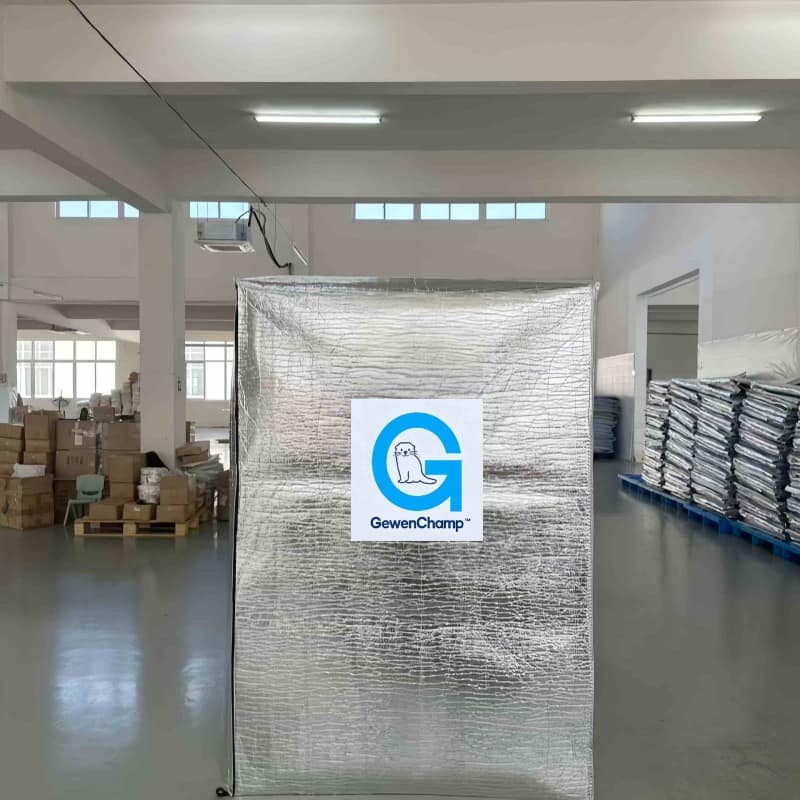
The ROI exercise does not end with direct cost. Reusable liners also reduce supply chain risk. Having a stock of reusable liners means you are not dependent on spot purchases during peak season. This reliability often outweighs the marginal cost difference. For commodity traders moving large volumes of cocoa, sugar, or plastic pellets, a multi-trip liner programme transforms packaging from an unpredictable consumable into a capital asset.
Integrating Reusable Liners Into Your Logistics Operations
cURL Too many subrequests by single Worker invocation. To configure this limit, refer to https://developers.cloudflare.com/workers/wrangler/configuration/#limits
cURL Too many subrequests by single Worker invocation. To configure this limit, refer to https://developers.cloudflare.com/workers/wrangler/configuration/#limits
cURL Too many subrequests by single Worker invocation. To configure this limit, refer to https://developers.cloudflare.com/workers/wrangler/configuration/#limits
cURL Too many subrequests by single Worker invocation. To configure this limit, refer to https://developers.cloudflare.com/workers/wrangler/configuration/#limits
cURL Too many subrequests by single Worker invocation. To configure this limit, refer to https://developers.cloudflare.com/workers/wrangler/configuration/#limits
cURL Too many subrequests by single Worker invocation. To configure this limit, refer to https://developers.cloudflare.com/workers/wrangler/configuration/#limits
cURL Too many subrequests by single Worker invocation. To configure this limit, refer to https://developers.cloudflare.com/workers/wrangler/configuration/#limits
cURL Too many subrequests by single Worker invocation. To configure this limit, refer to https://developers.cloudflare.com/workers/wrangler/configuration/#limits
cURL Too many subrequests by single Worker invocation. To configure this limit, refer to https://developers.cloudflare.com/workers/wrangler/configuration/#limits
cURL Too many subrequests by single Worker invocation. To configure this limit, refer to https://developers.cloudflare.com/workers/wrangler/configuration/#limits
cURL Too many subrequests by single Worker invocation. To configure this limit, refer to https://developers.cloudflare.com/workers/wrangler/configuration/#limits
cURL Too many subrequests by single Worker invocation. To configure this limit, refer to https://developers.cloudflare.com/workers/wrangler/configuration/#limits
cURL Too many subrequests by single Worker invocation. To configure this limit, refer to https://developers.cloudflare.com/workers/wrangler/configuration/#limits
cURL Too many subrequests by single Worker invocation. To configure this limit, refer to https://developers.cloudflare.com/workers/wrangler/configuration/#limits
cURL Too many subrequests by single Worker invocation. To configure this limit, refer to https://developers.cloudflare.com/workers/wrangler/configuration/#limits
 Spanish
  English
  German