
Shipping goods across oceans in refrigerated containers carries a carbon penalty that many logistics managers accept as unavoidable. A standard reefer unit running for a 30-day voyage burns roughly 2,500 to 3,500 liters of diesel equivalent for its genset alone, releasing over 8 tonnes of CO2 per trip before factoring in the vessel’s own fuel. For bulk commodities that only need protection from ambient heat or cold rather than deep-freeze, that number represents an unnecessary liability. We have worked with shippers who cut their reefer reliance by more than half after switching to passive segmento de recubrimientos para contenedores de aislamiento térmicos, and the carbon math follows directly from the energy math. The liners reflect radiant heat and suppress conductive transfer without drawing a single watt, so the primary emission source simply disappears from the cargo leg.
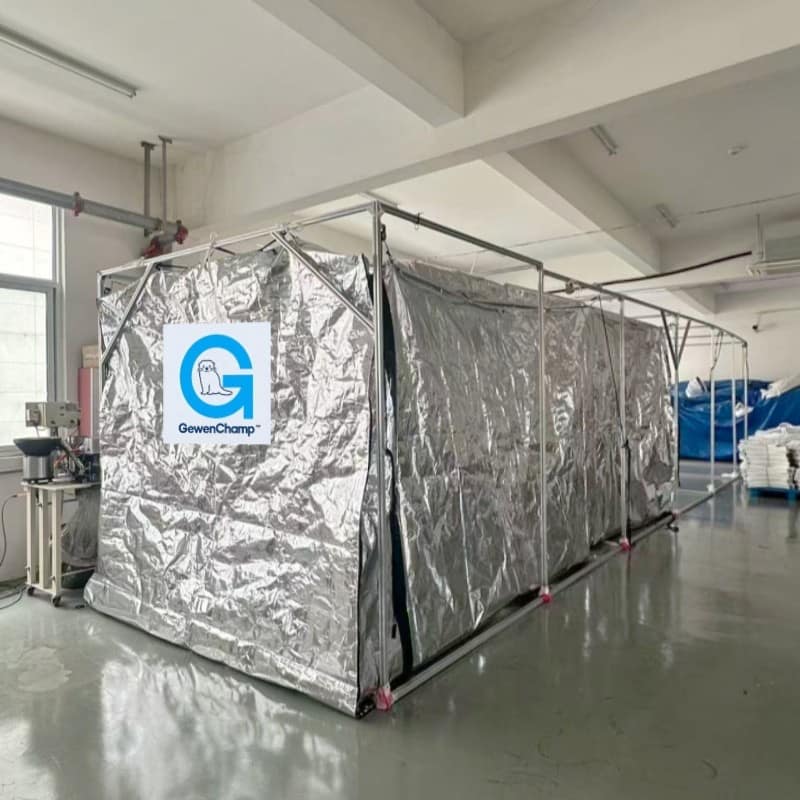
How Reefer Fuel Consumption Translates to Carbon Emissions
Every day a 40-foot reefer operates, its integrated diesel-electric genset consumes roughly 80 to 110 liters of fuel depending on setpoint, ambient temperature, and insulation condition. Multiply that by a 30-day Asia-to-Europe route and the unit alone emits 7.0 to 9.5 tonnes of CO2, not counting the ship’s main engine allocation. For a single container. A fleet of 500 containers running 10 trips a year can add over 40,000 tonnes of CO2 to a company’s Scope 3 inventory, a figure that sustainability auditors increasingly flag as material.
Refrigerated transport also introduces operational risks that compound the emissions problem. A reefer failure at sea, whether from a genset malfunction or a blocked airflow, can wipe out an entire load of temperature-sensitive cargo. The replacement shipment doubles the original footprint. From a total-cost perspective, the reefer premium runs between USD 2,500 and USD 5,000 per long-haul trip above a standard dry container rate, a cost that directly scales with fuel volatility. These numbers make a passive alternative worth serious evaluation for any cargo that does not genuinely require active cooling.
How Passive Insulation Liners Keep Cargo Stable Without Power
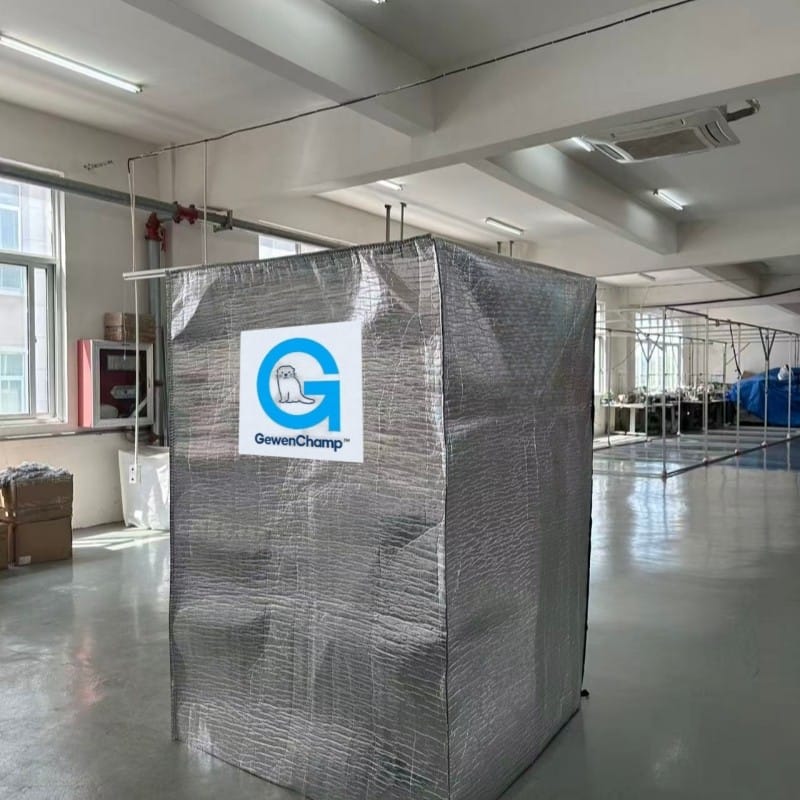
A passive thermal container liner functions on two physical principles that require no energy input. The outer aluminum foil or metallized PET (MPET) layer reflects 95–97% of incoming radiant heat, preventing solar gain from heating the container walls during daytime exposure. Beneath that reflective barrier, a core of EPE foam, woven PE, or encapsulated air bubbles acts as a conductive break, with thermal conductivity values as low as 0.038 W/(m·K) in the case of our TL-02 EPE foam construction. Together, these layers create a multilayered thermal envelope around the cargo that resists both radiative and conductive heat transfer.
What this means in practice is that internal temperature can be held within a ±5°C band for the duration of a crossing, provided the cargo is pre-cooled or pre-warmed to the target range before loading. On a route from Shenzhen to Rotterdam, we have monitored containers equipped with the TL-02 liner maintaining an internal range of 15–22°C while outside ambient temperatures cycled between 8°C and 35°C. No genset, no fuel burn, no direct emissions. The liner simply limits the rate of heat exchange so that net temperature creep stays within manageable limits. For a broad class of temperature-sensitive cargo, this is sufficient to eliminate the need for active refrigeration.
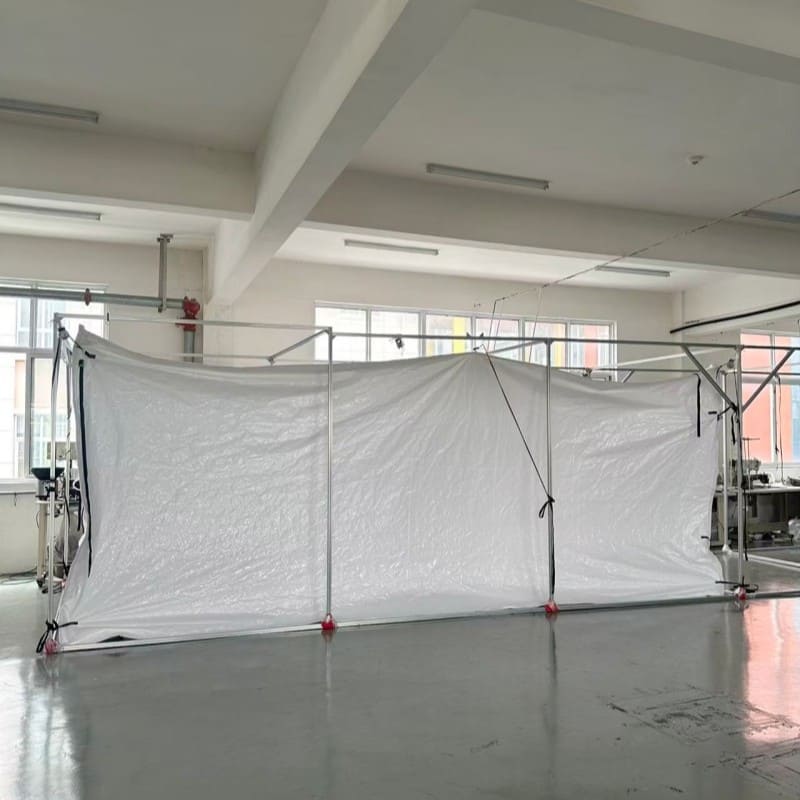
Comparing Passive Insulation Materials and Their Thermal Performance
Material choice directly determines how many hours a liner can hold a temperature band and, therefore, which reefer trips it can replace. The four primary constructions we supply under the GewenChamp series illustrate the trade-offs.
| Material Type | Reflectivity | Conductive Barrier | Typical ΔT Stability | Mejor caso de uso |
|---|---|---|---|---|
| TL-01 Woven PE + Alu Foil | 95–97% | Single air gap | ±5°C for 48–72 hrs | Short-haul or moderate climate routes |
| TL-02 EPE Foam (3mm) | 95% (PET alu) | 0.038 W/(m·K) foam | ±3°C for 72–96 hrs | Long-haul, high-value food and pharma |
| TL-03 MPET/Double Bubble/MPET | 98% | 5mm static air layer | ±4°C for 72–96 hrs | Frozen and chilled goods with high radiant risk |
| Película compuesta MPET/PE TL-04 | 92% | Single film barrier | ±5°C for 24–48 hrs | Lightweight, cost-sensitive shipments |
The deeper value lies not in the baseline reflectivity figures, which nearly all manufacturers quote, but in the real-world temperature hold time. When a liner can keep cargo within spec for an additional 24 hours, it covers port delays, customs holds, and inland trucking without a cold-chain break. The TL-02’s 3mm closed-cell foam core delivers that margin because the foam’s low thermal conductivity materially slows the rate at which external heat reaches the cargo, a difference we can quantify in monitored transit data.
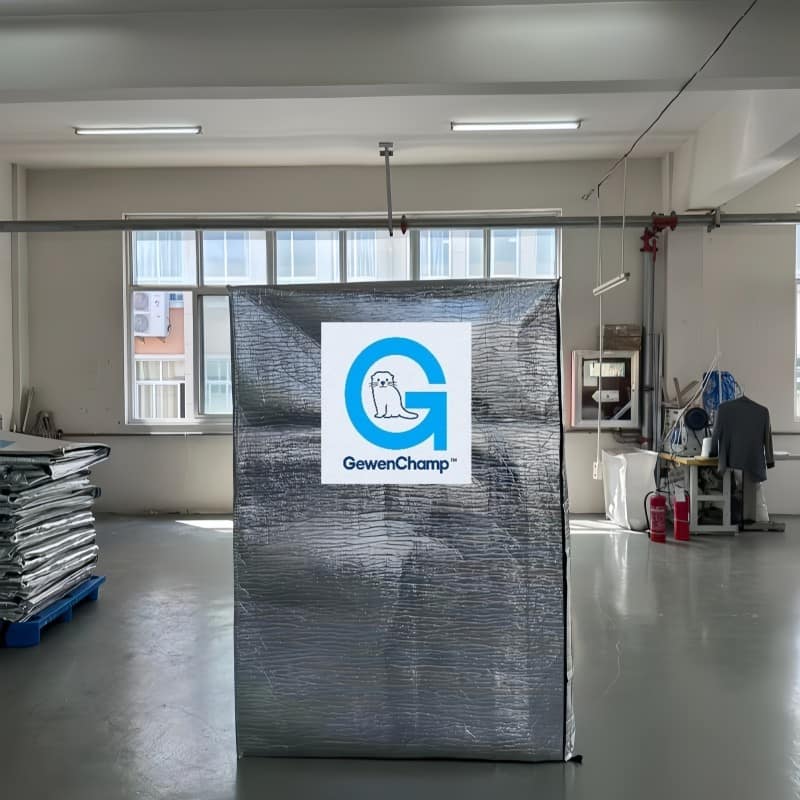
Calculating Emission Reductions When a Reefer Trip Is Avoided
The carbon savings from switching one reefer load to a passive liner are straightforward: the genset’s full consumption disappears. For a 30-day voyage, that is roughly 7.5 to 9.5 tonnes of CO2 avoided per 40-foot unit. But the actual environmental benefit often runs higher because the decision eliminates the upstream emissions from bunker fuel production and the manufacturing footprint of the genset unit itself, factors that a full lifecycle analysis (LCA) would include but standard shipping inventories often miss.
Equally important is the lower replacement and maintenance burden. A thermal liner that can be reused three to five times displaces the repeated manufacture and disposal of single-trip packaging. Our TL-02 and TL-03 liners are designed for multiple cycles, so a single liner set can serve four or five voyages before replacement. Over five trips, the liner’s embedded carbon per voyage shrinks significantly, while each trip avoids a full reefer emissions event. For an importer moving 200 containers of cocoa or resin annually, shifting even 40% of those loads to passive liners can remove several hundred tonnes of CO2 from the company’s annual logistics footprint, a reduction that is measurable enough to support both compliance reporting and customer-facing sustainability claims.
Selecting the Right Liner for Your Cargo, Route, and Emission Goals
Not every reefer load can switch to passive insulation. Cargo that requires a strict sub-zero chill chain—frozen seafood, vaccines requiring -20°C or below—still demands active refrigeration. But the practical replcement opportunity is far larger than many buyers assume. Cocoa beans, coffee, bulk wine, PVC resin, polycarbonate resin, titanium dioxide, and most dry food commodities all ship successfully with passive temperature protection because their quality thresholds center on avoiding heat spikes or condensation, not maintaining a frozen state.
The selection process always starts with the cargo’s temperature tolerance window and the route’s worst-case ambient conditions. For a 40-day voyage through the Suez Canal in July, we recommend the TL-02 EPE foam liner for its ability to hold ±3°C stability even during the equatorial crossing. For shorter transpacific lanes carrying bagged resin pellets where cost is the primary driver, the TL-04 composite film liner often provides sufficient protection at roughly half the weight and material cost. The mid-article decision point is clear: if your program involves irregular transit schedules, multi-leg land-sea combinations, or cargo with a temperature tolerance above freezing, it is worth confirming the specific temperature hold time a liner can guarantee for your route—contact our technical team at [email protected] with your cargo type and origin-destination pair for a performance projection.
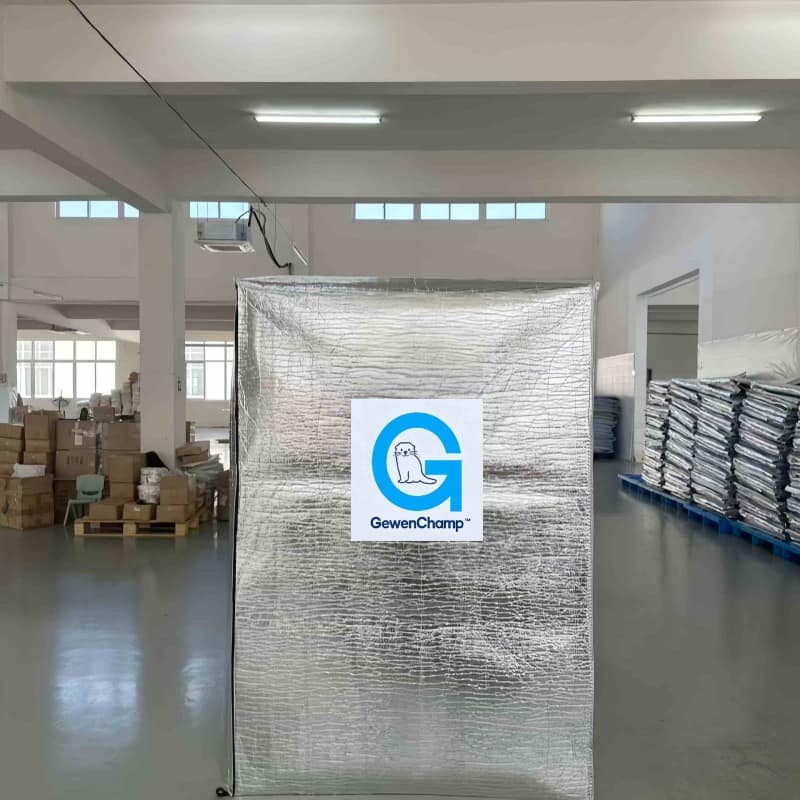
Balancing Passive and Active Cold Chain for Lower Total Emissions
The most pragmatic low-carbon cold chain strategy is a hybrid one. Reserve active refrigeration for the narrow slice of cargo that genuinely requires it, and deploy passive thermal liners for the remaining temperature-sensitive volumes that only need stability rather than cold. This approach reduces the total number of reefer plugs booked per vessel, cuts bunker consumption proportionally, and lowers the capital tied up in genset fleets and their maintenance. It also simplifies compliance with tightening maritime emission regulations like the EU’s upcoming FuelEU Maritime standard, which will begin scoring vessels on greenhouse gas intensity in 2025.
Experience from our own supply chain support work shows that companies adopting a hybrid model typically take a phased path: first targeting their highest-volume ambient-sensitive routes, validating liner performance with temperature data loggers over two or three shipments, and then scaling the passive approach across lanes where the logged data supports it. The immediate emissions win is coming from those ships where a reefer slot that used to run continuously now operates only for cargo that cannot be protected any other way. Even a 30% shift in a mid-sized importer’s fleet can produce a five-figure annual CO2 reduction, a result that procurement and sustainability teams can jointly defend.
Common Questions About Thermal Liner Carbon Savings
cURL Too many subrequests by single Worker invocation. To configure this limit, refer to https://developers.cloudflare.com/workers/wrangler/configuration/#limits
cURL Too many subrequests by single Worker invocation. To configure this limit, refer to https://developers.cloudflare.com/workers/wrangler/configuration/#limits
cURL Too many subrequests by single Worker invocation. To configure this limit, refer to https://developers.cloudflare.com/workers/wrangler/configuration/#limits
cURL Too many subrequests by single Worker invocation. To configure this limit, refer to https://developers.cloudflare.com/workers/wrangler/configuration/#limits
cURL Too many subrequests by single Worker invocation. To configure this limit, refer to https://developers.cloudflare.com/workers/wrangler/configuration/#limits
cURL Too many subrequests by single Worker invocation. To configure this limit, refer to https://developers.cloudflare.com/workers/wrangler/configuration/#limits
cURL Too many subrequests by single Worker invocation. To configure this limit, refer to https://developers.cloudflare.com/workers/wrangler/configuration/#limits
cURL Too many subrequests by single Worker invocation. To configure this limit, refer to https://developers.cloudflare.com/workers/wrangler/configuration/#limits
cURL Too many subrequests by single Worker invocation. To configure this limit, refer to https://developers.cloudflare.com/workers/wrangler/configuration/#limits
cURL Too many subrequests by single Worker invocation. To configure this limit, refer to https://developers.cloudflare.com/workers/wrangler/configuration/#limits
 Spanish
  English
  German