
Moisture damage in container shipping is not just a quality issue, it is a direct financial drain. Over fifteen years of helping global shippers protect bulk commodities from condensation, I have seen single spoiled container loads result in losses exceeding $10,000—not just in cargo replacement but in insurance claims, customer rejection, and supply chain delays. Most shippers underestimate the real cost until they face a shipment refusal. This article explains exactly how condensation creates hidden costs and how specific moisture barrier liners, backed by measurable performance data, turn these expenses into predictable protection.
The Hidden Cost of Moisture Damage per Container Shipment
When a shipping container is loaded in a warm, humid port and then crosses a colder ocean, condensation forms on the interior walls and ceiling, dripping onto cargo. That cargo is often food-grade powder, resin pellets, or cocoa beans—commodities that become worthless the moment they get wet. The direct loss of product is the obvious cost. But the financial impact extends further.
I have worked with food exporters who lost entire shipments of sugar because of what looked like minor container sweating. The sugar caked, the entire batch was rejected, and the buyer demanded compensation. Insurance adjusters often classify such damage as improper packaging, leaving the shipper liable. Besides replacement, there are freight costs, disposal fees, and opportunity cost of delayed fulfilment. For a single 20ft container of high-value cocoa, these indirect costs can rival the cargo value itself.
The real cost of moisture damage in container shipping is the sum of repeated small losses across a supply chain. A procurement manager who does not factor in adequate moisture protection ends up paying higher insurance premiums, managing more claims, and constantly risking customer relationships. In contrast, a moisture barrier liner that costs a few hundred dollars can prevent these chain reactions entirely.
How Condensation Damages Bulk Cargo Inside Containers
Moisture damage inside containers starts with a simple physics phenomenon: dew point. When warm, moisture-laden air inside the container comes into contact with a cold surface—the container roof or walls—it cools to its dew point and releases water as condensation droplets. This process, often called “container rain,” can drench the top layer of cargo even if the container itself is closed.
Bulk powders like titanium dioxide or kaolin clay are particularly vulnerable. Once moisture penetrates, powders clump, discolor, or become microbiologically contaminated. Even plastic resins, which seem inert, can absorb moisture and cause processing problems for the manufacturer. I have had customers report that just a small amount of condensation in one corner of a container led to a full load of PE resin being downgraded, costing tens of thousands in lost margin.
The key metric that governs moisture entry is the moisture vapor transmission rate. A cheap, thin plastic sheet may have an MVTR of 10 g/(m²·day) or more, allowing significant vapor to pass through, while a properly engineered liner with multi-layer lamination can achieve rates as low as 0.033 g/(m²·h·kPa). This difference is what separates cargo that arrives in specification from cargo that arrives ruined. Understanding this mechanism moves the discussion from “do I need a liner” to “what performance does my cargo and route demand.”
Moisture Barrier Container Liners That Stop Condensation
A moisture barrier container liner is not a simple bag. It is an engineered system designed to isolate the cargo from the container’s metal surfaces, create a continuous waterproof barrier, and, in many cases, also provide thermal insulation.
There are three principal categories, each suited to different cargo sensitivity and route conditions:
PE Film Liners: Made from low-density polyethylene, these liners give you 100% moisture and dust barrier performance. They are the most cost-effective choice for dry bulk commodities like grains, plastic pellets, and minerals. A 140-micron LDPE liner, for example, can handle loads up to 35 tons in a 20ft or 40ft container. The smooth surface prevents cargo adhesion, so unloading is fast and contamination-free. For food-grade applications, liners can carry FDA and EU certifications.
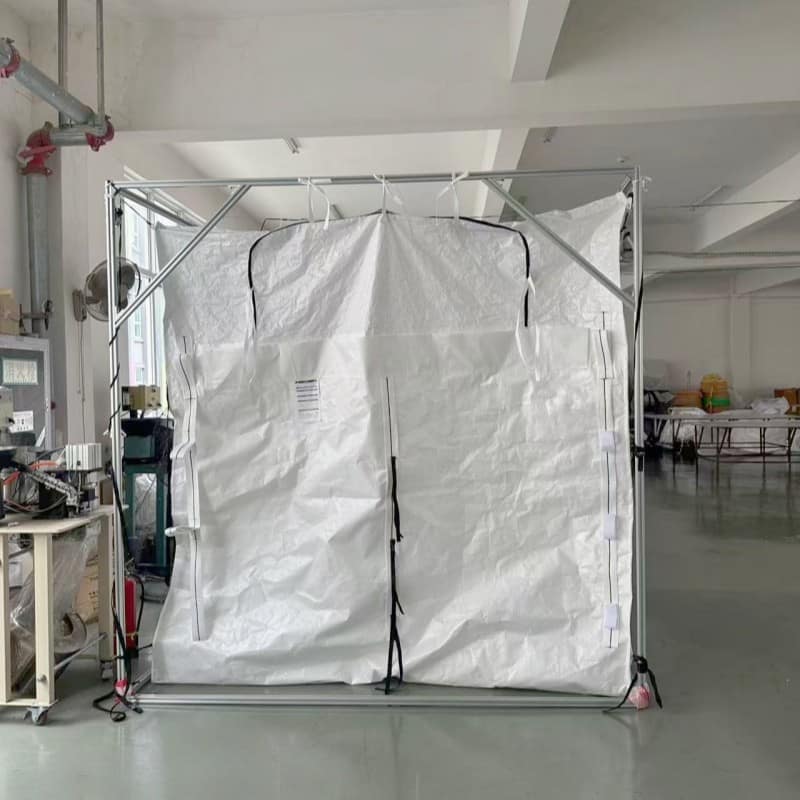
Woven Dry Bulk Liners: Constructed from high-density polyethylene woven fabric, often with a PE coating or lamination, these offer higher tensile strength (warp ≥1,800 N/5cm) and greater durability. They are ideal for abrasive or heavy cargo like cement, lime powder, or sand, where puncture resistance is critical. A double-sided PE coating can deliver near-perfect moisture resistance, and additional features like PU tape-sealed seams make them virtually sift-proof for fine powders.
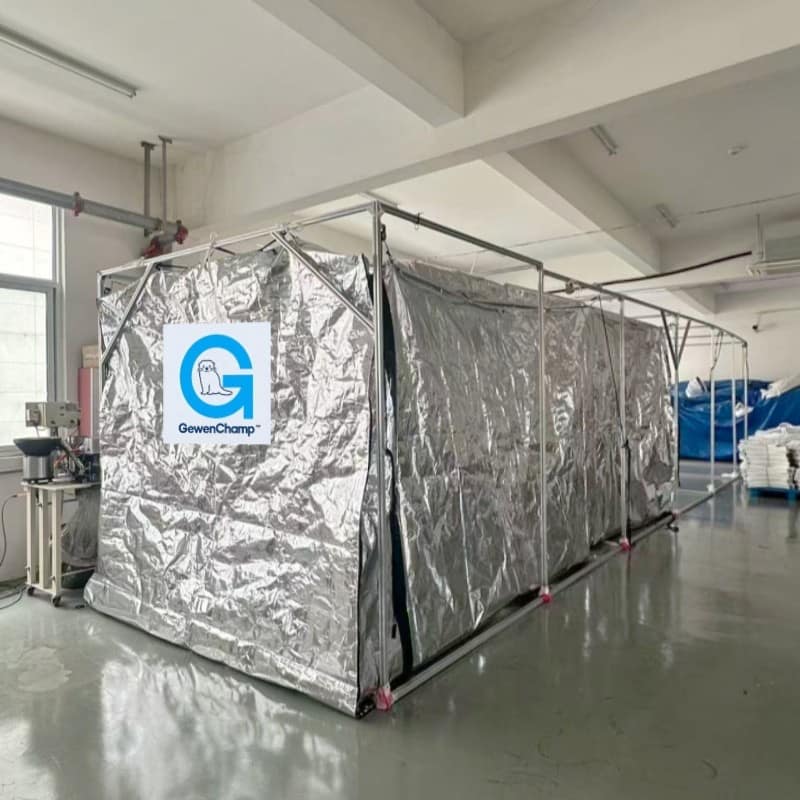
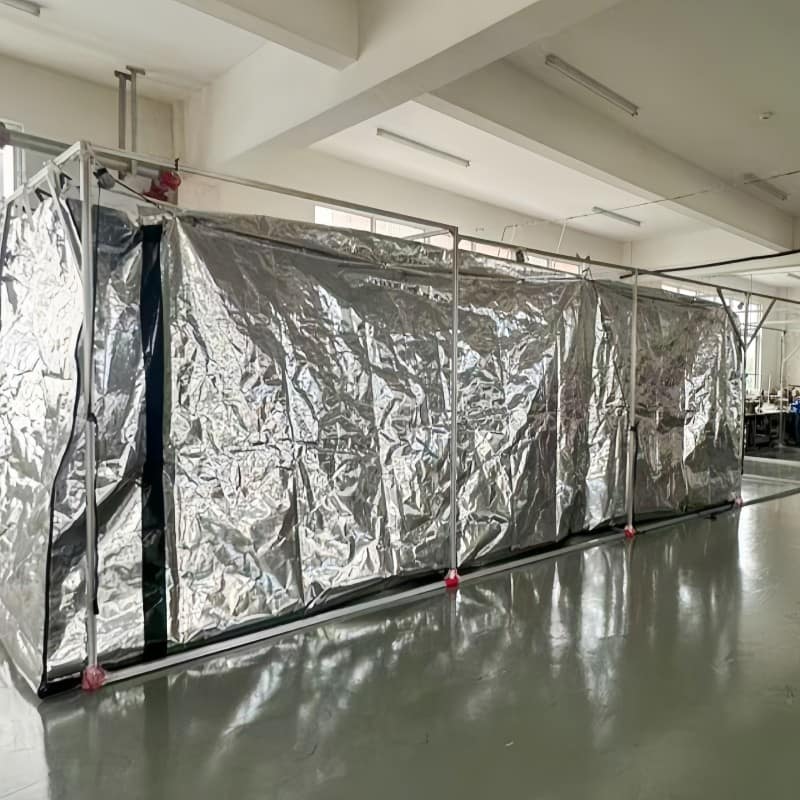
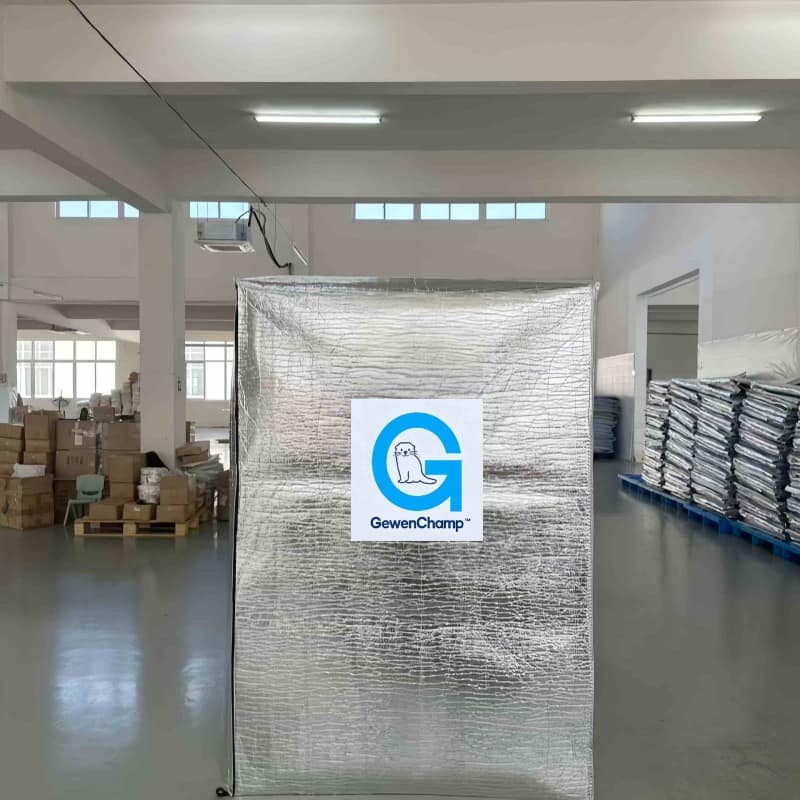
Thermal Insulated Liners: These combine moisture barrier properties with temperature control using multi-layer composites of aluminum foil, polyethylene, and insulating cores like EPE foam or bubble cushion. For example, a liner with a dual aluminum foil skin and 3mm EPE foam core can maintain temperature stability within ±5°C over long voyages while keeping MVTR below 0.033 g/(m²·h·kPa). This actively prevents container rain because the insulated surface stays closer to cargo temperature, reducing condensation risk.
How PE Film Liners Create a Continuous Moisture Barrier
A PE film liner works by physically separating the cargo from the container interior. The LDPE film is extruded as a seamless tube or heat-welded into one piece, eliminating leakage points. Our factory supplies 140-micron standard liners that achieve 100% moisture and dust blocking, verified by third-party testing. For sensitive cargo like sugar or milk powder, a food-grade PE liner with FDA compliance gives you the assurance that no moisture or contamination reaches the product.
When Woven and Thermal Liners Offer Extra Protection
Woven liners are the choice when cargo weight or abrasive texture demands mechanical strength. I have recommended woven liners to mining companies shipping kaolin clay in 40ft containers because the fabric withstands the lateral forces during discharge. Thermal liners, on the other hand, are invaluable for routes with extreme temperature swings. A shipment from Southeast Asia to Northern Europe in winter can experience deck temperatures below freezing while cargo was loaded at 35°C. Without thermal insulation, condensation is inevitable. We have seen the GewenChamp™ series with dual aluminum foil and EPE foam eliminate moisture complaints on such routes entirely.
| Tipo de forro | Key Material | MVTR Performance | Mechanical Strength | Typical Use Case |
|---|---|---|---|---|
| Película de PE (Estándar) | 140μm LDPE | <0.5 g/(m²·h·kPa) | Tensile ≥1,500 N/5cm | Food grains, plastic pellets |
| Woven Dry Bulk | HDPE woven + PE coating | <0.1 g/(m²·h·kPa) | Tensile ≥1,800 N/5cm | Minerals, cement, abrasive powders |
| Thermal Insulated (EPE foam) | Multi-layer Alu foil + EPE | ≤0.033 g/(m²·h·kPa) | Tensile ≥1,800 N/5cm | Temperature-sensitive foods, pharma, confectionery |
cURL Too many subrequests by single Worker invocation. To configure this limit, refer to https://developers.cloudflare.com/workers/wrangler/configuration/#limits
cURL Too many subrequests by single Worker invocation. To configure this limit, refer to https://developers.cloudflare.com/workers/wrangler/configuration/#limits
cURL Too many subrequests by single Worker invocation. To configure this limit, refer to https://developers.cloudflare.com/workers/wrangler/configuration/#limits
cURL Too many subrequests by single Worker invocation. To configure this limit, refer to https://developers.cloudflare.com/workers/wrangler/configuration/#limits
- cURL Too many subrequests by single Worker invocation. To configure this limit, refer to https://developers.cloudflare.com/workers/wrangler/configuration/#limitscURL Too many subrequests by single Worker invocation. To configure this limit, refer to https://developers.cloudflare.com/workers/wrangler/configuration/#limits
- cURL Too many subrequests by single Worker invocation. To configure this limit, refer to https://developers.cloudflare.com/workers/wrangler/configuration/#limitscURL Too many subrequests by single Worker invocation. To configure this limit, refer to https://developers.cloudflare.com/workers/wrangler/configuration/#limits
- CertificacionescURL Too many subrequests by single Worker invocation. To configure this limit, refer to https://developers.cloudflare.com/workers/wrangler/configuration/#limits
cURL Too many subrequests by single Worker invocation. To configure this limit, refer to https://developers.cloudflare.com/workers/wrangler/configuration/#limits
cURL Too many subrequests by single Worker invocation. To configure this limit, refer to https://developers.cloudflare.com/workers/wrangler/configuration/#limits
cURL Too many subrequests by single Worker invocation. To configure this limit, refer to https://developers.cloudflare.com/workers/wrangler/configuration/#limits
cURL Too many subrequests by single Worker invocation. To configure this limit, refer to https://developers.cloudflare.com/workers/wrangler/configuration/#limits
cURL Too many subrequests by single Worker invocation. To configure this limit, refer to https://developers.cloudflare.com/workers/wrangler/configuration/#limits
cURL Too many subrequests by single Worker invocation. To configure this limit, refer to https://developers.cloudflare.com/workers/wrangler/configuration/#limits
cURL Too many subrequests by single Worker invocation. To configure this limit, refer to https://developers.cloudflare.com/workers/wrangler/configuration/#limits
cURL Too many subrequests by single Worker invocation. To configure this limit, refer to https://developers.cloudflare.com/workers/wrangler/configuration/#limits
cURL Too many subrequests by single Worker invocation. To configure this limit, refer to https://developers.cloudflare.com/workers/wrangler/configuration/#limits
cURL Too many subrequests by single Worker invocation. To configure this limit, refer to https://developers.cloudflare.com/workers/wrangler/configuration/#limits
cURL Too many subrequests by single Worker invocation. To configure this limit, refer to https://developers.cloudflare.com/workers/wrangler/configuration/#limits
cURL Too many subrequests by single Worker invocation. To configure this limit, refer to https://developers.cloudflare.com/workers/wrangler/configuration/#limits
cURL Too many subrequests by single Worker invocation. To configure this limit, refer to https://developers.cloudflare.com/workers/wrangler/configuration/#limits
cURL Too many subrequests by single Worker invocation. To configure this limit, refer to https://developers.cloudflare.com/workers/wrangler/configuration/#limits
cURL Too many subrequests by single Worker invocation. To configure this limit, refer to https://developers.cloudflare.com/workers/wrangler/configuration/#limits
cURL Too many subrequests by single Worker invocation. To configure this limit, refer to https://developers.cloudflare.com/workers/wrangler/configuration/#limits
 Spanish
  English
  German