
For logistics and procurement professionals managing international bulk shipments, choosing the right packaging system isn’t just about cost—it’s about cargo safety, regulatory compliance, and supply chain efficiency. Two of the most widely adopted solutions for ISO containerised transport are container liners y flexitanks. While both enable shippers to convert standard 20ft or 40ft containers into bulk transport units, they serve fundamentally different cargo types and operational requirements. This comparison draws on over fifteen years of bulk packaging engineering and field support to help you determine which system fits your specific product, route, and handling infrastructure.
What Is a Container Liner?
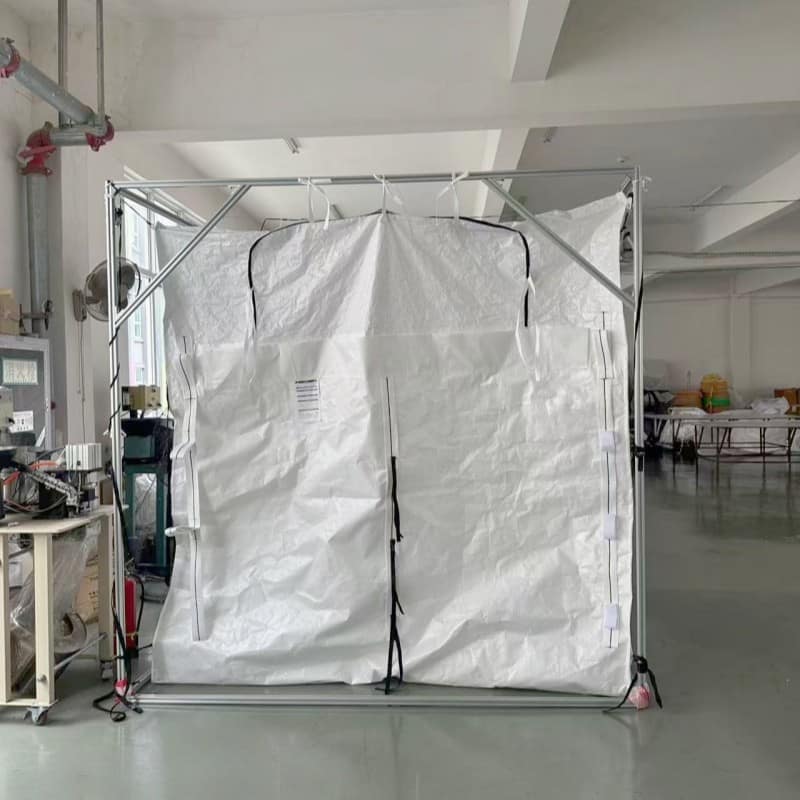
A container liner is a large, flexible barrier bag installed inside a standard ISO shipping container to protect dry bulk cargo from moisture, contamination, and mechanical damage. Liners are typically made from woven polypropylene (PP), woven high-density polyethylene (HDPE), or multi-layer PE film, and are secured to the container walls using straps or integrated lifting loops. They transform an ordinary container into a sealed, hygienic bulk transport vessel for powders, granules, pellets, and other free-flowing dry goods.
Container liners are available in multiple configurations:
– Forros de lona seca tejida with top loading spouts and bottom discharge outlets for cement, grains, plastic resins, and minerals.
– Fundas de película de PE providing a 100% moisture and dust barrier, often specified for food-grade applications.
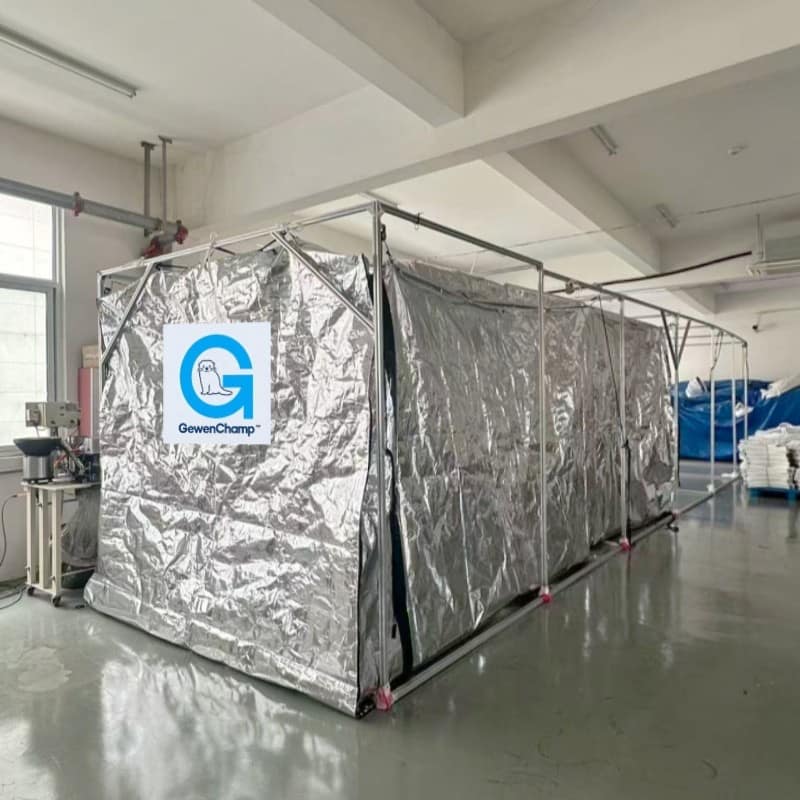
– Thermal insulated container liners that combine radiant heat reflection and insulating cores (EPE foam, bubble cushion, or metallised PET film) to maintain stable temperatures during transit.
– Sift-proof liners with sealed seam construction for ultra-fine powders.
Giant Flexpack’s GewenChamp™ thermal container liners y woven dry bulk liners are engineered for demanding routes where temperature excursions or moisture ingress could compromise cargo value. Materials are certified to FDA, LFGB, REACH, and RoHS standards, ensuring compliance for food, pharmaceutical, and chemical supply chains.
What Is a Flexitank?
A flexitank is a sealed, flexible bladder designed to fit inside a 20ft container for the bulk transport of non-hazardous liquids. Constructed from multiple layers of polyethylene with an outer woven PP shell, flexitanks can carry up to 24,000 litres of liquid cargo. They are loaded through a top valve and discharged via a bottom valve using gravity or a pump. Common commodities include wine, edible oils, fruit juices, liquid chemicals (non-hazardous), and industrial fluids.
Flexitanks eliminate the need for ISO tank containers, drums, or IBCs, providing a cost-effective and single-use solution for liquid logistics. However, they require careful loading procedures, container compatibility (no internal protrusions), and proper bracing to prevent movement. Temperature-sensitive liquids may need active or passive temperature control, as most standard flexitanks provide no thermal protection.
Quick Comparison at a Glance
| Característica | Container Liner | Flexitank |
|---|---|---|
| Primary Cargo Type | Dry bulk (powders, granules, pellets) | Non-hazardous liquids |
| Typical Load Capacity | 15–35 tonnes (varies by liner type and container size) | 14,000–24,000 litres |
| Materials | Woven PP, woven HDPE, multi-layer PE film, thermal composites | Multi-layer PE film with outer PP woven shell |
| Thermal Protection | Optional thermal liner variants (e.g., EPE foam, bubble foil) available | cURL Too many subrequests by single Worker invocation. To configure this limit, refer to https://developers.cloudflare.com/workers/wrangler/configuration/#limits |
| Barrera contra la Humedad | cURL Too many subrequests by single Worker invocation. To configure this limit, refer to https://developers.cloudflare.com/workers/wrangler/configuration/#limits | cURL Too many subrequests by single Worker invocation. To configure this limit, refer to https://developers.cloudflare.com/workers/wrangler/configuration/#limits |
| Reutilizabilidad | cURL Too many subrequests by single Worker invocation. To configure this limit, refer to https://developers.cloudflare.com/workers/wrangler/configuration/#limits | cURL Too many subrequests by single Worker invocation. To configure this limit, refer to https://developers.cloudflare.com/workers/wrangler/configuration/#limits |
| cURL Too many subrequests by single Worker invocation. To configure this limit, refer to https://developers.cloudflare.com/workers/wrangler/configuration/#limits | cURL Too many subrequests by single Worker invocation. To configure this limit, refer to https://developers.cloudflare.com/workers/wrangler/configuration/#limits | cURL Too many subrequests by single Worker invocation. To configure this limit, refer to https://developers.cloudflare.com/workers/wrangler/configuration/#limits |
| cURL Too many subrequests by single Worker invocation. To configure this limit, refer to https://developers.cloudflare.com/workers/wrangler/configuration/#limits | cURL Too many subrequests by single Worker invocation. To configure this limit, refer to https://developers.cloudflare.com/workers/wrangler/configuration/#limits | cURL Too many subrequests by single Worker invocation. To configure this limit, refer to https://developers.cloudflare.com/workers/wrangler/configuration/#limits |
| cURL Too many subrequests by single Worker invocation. To configure this limit, refer to https://developers.cloudflare.com/workers/wrangler/configuration/#limits | cURL Too many subrequests by single Worker invocation. To configure this limit, refer to https://developers.cloudflare.com/workers/wrangler/configuration/#limits | cURL Too many subrequests by single Worker invocation. To configure this limit, refer to https://developers.cloudflare.com/workers/wrangler/configuration/#limits |
cURL Too many subrequests by single Worker invocation. To configure this limit, refer to https://developers.cloudflare.com/workers/wrangler/configuration/#limits
cURL Too many subrequests by single Worker invocation. To configure this limit, refer to https://developers.cloudflare.com/workers/wrangler/configuration/#limits cURL Too many subrequests by single Worker invocation. To configure this limit, refer to https://developers.cloudflare.com/workers/wrangler/configuration/#limits
- cURL Too many subrequests by single Worker invocation. To configure this limit, refer to https://developers.cloudflare.com/workers/wrangler/configuration/#limits cURL Too many subrequests by single Worker invocation. To configure this limit, refer to https://developers.cloudflare.com/workers/wrangler/configuration/#limits cURL Too many subrequests by single Worker invocation. To configure this limit, refer to https://developers.cloudflare.com/workers/wrangler/configuration/#limits
- cURL Too many subrequests by single Worker invocation. To configure this limit, refer to https://developers.cloudflare.com/workers/wrangler/configuration/#limits cURL Too many subrequests by single Worker invocation. To configure this limit, refer to https://developers.cloudflare.com/workers/wrangler/configuration/#limits cURL Too many subrequests by single Worker invocation. To configure this limit, refer to https://developers.cloudflare.com/workers/wrangler/configuration/#limits
cURL Too many subrequests by single Worker invocation. To configure this limit, refer to https://developers.cloudflare.com/workers/wrangler/configuration/#limits cURL Too many subrequests by single Worker invocation. To configure this limit, refer to https://developers.cloudflare.com/workers/wrangler/configuration/#limits cURL Too many subrequests by single Worker invocation. To configure this limit, refer to https://developers.cloudflare.com/workers/wrangler/configuration/#limits TL-02 EPE Foam Liner or cURL Too many subrequests by single Worker invocation. To configure this limit, refer to https://developers.cloudflare.com/workers/wrangler/configuration/#limitscURL Too many subrequests by single Worker invocation. To configure this limit, refer to https://developers.cloudflare.com/workers/wrangler/configuration/#limits
cURL Too many subrequests by single Worker invocation. To configure this limit, refer to https://developers.cloudflare.com/workers/wrangler/configuration/#limits
cURL Too many subrequests by single Worker invocation. To configure this limit, refer to https://developers.cloudflare.com/workers/wrangler/configuration/#limits TL-01 cURL Too many subrequests by single Worker invocation. To configure this limit, refer to https://developers.cloudflare.com/workers/wrangler/configuration/#limits
cURL Too many subrequests by single Worker invocation. To configure this limit, refer to https://developers.cloudflare.com/workers/wrangler/configuration/#limits
cURL Too many subrequests by single Worker invocation. To configure this limit, refer to https://developers.cloudflare.com/workers/wrangler/configuration/#limits
cURL Too many subrequests by single Worker invocation. To configure this limit, refer to https://developers.cloudflare.com/workers/wrangler/configuration/#limitscURL Too many subrequests by single Worker invocation. To configure this limit, refer to https://developers.cloudflare.com/workers/wrangler/configuration/#limits
- cURL Too many subrequests by single Worker invocation. To configure this limit, refer to https://developers.cloudflare.com/workers/wrangler/configuration/#limitscURL Too many subrequests by single Worker invocation. To configure this limit, refer to https://developers.cloudflare.com/workers/wrangler/configuration/#limits
- cURL Too many subrequests by single Worker invocation. To configure this limit, refer to https://developers.cloudflare.com/workers/wrangler/configuration/#limitscURL Too many subrequests by single Worker invocation. To configure this limit, refer to https://developers.cloudflare.com/workers/wrangler/configuration/#limits Recubrimiento para contenedor de película PEcURL Too many subrequests by single Worker invocation. To configure this limit, refer to https://developers.cloudflare.com/workers/wrangler/configuration/#limits
- cURL Too many subrequests by single Worker invocation. To configure this limit, refer to https://developers.cloudflare.com/workers/wrangler/configuration/#limitscURL Too many subrequests by single Worker invocation. To configure this limit, refer to https://developers.cloudflare.com/workers/wrangler/configuration/#limits
cURL Too many subrequests by single Worker invocation. To configure this limit, refer to https://developers.cloudflare.com/workers/wrangler/configuration/#limits
cURL Too many subrequests by single Worker invocation. To configure this limit, refer to https://developers.cloudflare.com/workers/wrangler/configuration/#limits revestimientos de película de PE en contenedores cURL Too many subrequests by single Worker invocation. To configure this limit, refer to https://developers.cloudflare.com/workers/wrangler/configuration/#limits
One advantage of container liners is the broad spectrum of compliance attainable from a single manufacturer. Giant Flexpack’s dry bulk liners and thermal solutions are audited under ISO 9001 quality management systems, with full traceability from resin to finished liner. This integrated quality approach is harder to achieve when sourcing flexitanks, liners, and insulation from different suppliers.
How to Decide: A Practical Decision Framework
Use this step-by-step guide to evaluate your requirements:
- Cargo type (liquid vs. solid): If it flows as a liquid at ambient temperature and is non-hazardous, a flexitank may be suitable. If it is granular, powder, or pellet, a container liner is the correct path.
- Temperature sensitivity: Dry cargo requiring precise temperature control should be shipped in a thermal container liner. Liquid cargo that cannot tolerate heat may need a flexitank combined with external insulation or a refrigerated container — which adds complexity and cost. Compare the landed cost of a thermal liner plus standard container versus a flexitank plus reefer.
- Route and duration: Long-haul ocean routes through tropical zones amplify condensation risk. Container liners with anti-sweat properties (such as the TL-03 MPET/Double Bubble construction prevent “container rain” from damaging cargo, whereas a flexitank’s liquid cargo is already sealed; however, condensation on the container ceiling can still corrode the container and affect operations.
- Reusability and environmental goals: If your company prioritizes waste reduction, reusable thermal container liners (rated for 3–5 re-uses) provide a tangible sustainability improvement over single-use flexitanks.
- Destination infrastructure: Confirm that the unloading facility can handle flexitank discharge (hoses, containment) or dry bulk liner discharge (gravity, pneumatic). In emerging markets, dry bulk unloading equipment is often simpler and more widely available.
The Bottom Line
Container liners are the industry-standard solution for dry bulk commodities requiring moisture protection, contamination control, and — with thermal options — temperature management without active refrigeration. Flexitanks are the go-to for non-hazardous liquids where a cheap, single-use bladder can replace expensive ISO tanks. There is no universal “better” choice; the right system is defined by your cargo’s physical form, thermal vulnerability, and total logistics cost.
If your business ships dry bulk products — especially those sensitive to heat, humidity, or contamination — Giant Flexpack’s engineering team can help you select the appropriate container liner, from food-grade PE film to advanced thermal composites. Our GewenChamp™ liners are manufactured under ISO 9001 quality systems and backed by FDA, LFGB, and REACH certifications, providing the compliance transparency global buyers expect.
For a personalised consultation on your next bulk shipment, contact our bulk packaging specialists at [email protected] or call +86 523 87683880. We’ll help you match the liner technology to your cargo, destination, and operational reality — so your goods arrive exactly as they were loaded.
Frequently Asked Questions
Can a container liner be used for liquid cargo?
No. Container liners are designed for dry bulk materials. Their seams and material structure are not sealed for hydrostatic pressure; attempting to fill a dry bulk liner with liquid will cause immediate failure. For liquids, a flexitank or ISO tank is required.
Is a flexitank more expensive than a container liner?
Not necessarily — cost depends on volume, material thickness, and additional features. However, when comparing total landed logistics costs, a container liner for dry cargo is typically more economical because it leverages existing dry bulk handling infrastructure and avoids specialised liquid discharge equipment.
How long does it take to install a container liner?
Experienced teams can install a standard dry bulk liner or thermal liner in 10–15 minutes. The process involves unfolding the liner inside the container, securing it with integrated straps and loops, and attaching loading/discharge spouts. Flexitank installation takes slightly longer due to container inspection and bracing requirements.
Do thermal container liners work for all climates?
High-performance thermal liners like the TL-02 (EPE foam core) or TL-03 (double bubble with MPET) are validated to protect cargo within a -50°C to +80°C operating range. They are effective on tropical, desert, and cold-climate routes, often eliminating the need for refrigerated containers. Always provide your route details to your liner manufacturer so they can recommend the appropriate R-value and material stack-up.
What certifications should I look for in a container liner?
At minimum, ensure the manufacturer holds ISO 9001 for quality management. For food contact, request FDA and/or EU LFGB compliance certificates. For industrial cargo, REACH and RoHS declarations are standard. Giant Flexpack provides a full compliance dossier with every shipment, including third-party test reports when required.
 Spanish
  English
  German