
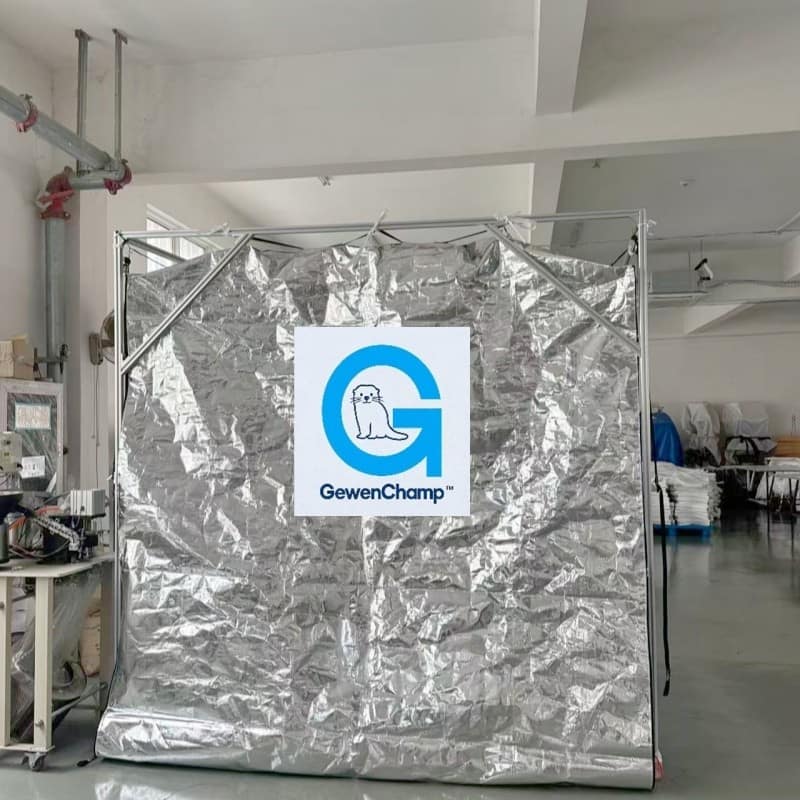
When steel cargo arrives at a destination port covered in rust, the cost is immediate—rejected delivery, insurance claims, and a broken supply chain. Preventing rust and corrosion in container shipping is not about reacting to moisture after it forms; it is about stopping the condensation cycle before it starts. Most shippers rely on desiccants and anti-rust coatings, but an often overlooked defense is the passive thermal barrier created by an insulated container liner. These liners stabilize internal temperatures, block radiant heat from the container roof, and keep cargo surfaces above the dew point for days, cutting the conditions that corrosion needs to develop. In my work at Giant Flexpack, I have seen this single change reduce rust-related claims to near zero for cargoes that previously corroded on every voyage.
The Ideal Conditions for Rust in Container Shipping
A shipping container behaves like a steel oven and a refrigerator combined. During the day, the roof can heat to over 60°C under direct sun, warming the air inside and raising the moisture holding capacity. At night, the container shell cools rapidly while the air inside stays warm and humid. When the wall temperature drops below the dew point, moisture condenses on every cold surface—the container walls, the cargo, and the packaging. This is container rain, and it happens not once but every day of a two-week ocean crossing. For steel coils, machinery, and metal components, even a few hours of condensation can initiate surface rust. Salt-laden sea air accelerates the process, turning minor oxidation into deep pitting.
The Limits of Reactive Rust Prevention Methods
Desiccants, vapor-phase inhibitors, and protective coatings all have a role, but they treat the symptom rather than the source. Desiccant bags absorb moisture from the air once condensation has already begun. They need to be sized correctly for the container volume and voyage duration, and on long hauls through the tropics, they can become saturated before the trip ends. Surface coatings work well for uniform metal surfaces but do not protect crevices, threaded areas, or any spot where the coating is scratched during loading. Neither desiccants nor coatings stop the temperature swing that drives the condensation cycle. They are a safety net, not the first line of defense.
How Thermal Liners Interrupt the Condensation Cycle
A thermal container liner works on a different principle. By lining all six walls with a low-emissivity and insulated barrier, it reflects radiant heat away from the cargo space and dramatically reduces the rate of heat transfer through the container walls. The internal air temperature stays closer to the average rather than swinging 15–20°C between day and night. Without extreme temperature drops, the container wall rarely falls below the dew point, and condensation does not occur on the cargo. This is a physical prevention of the rust starting condition, not a chemical mitigation after the fact.
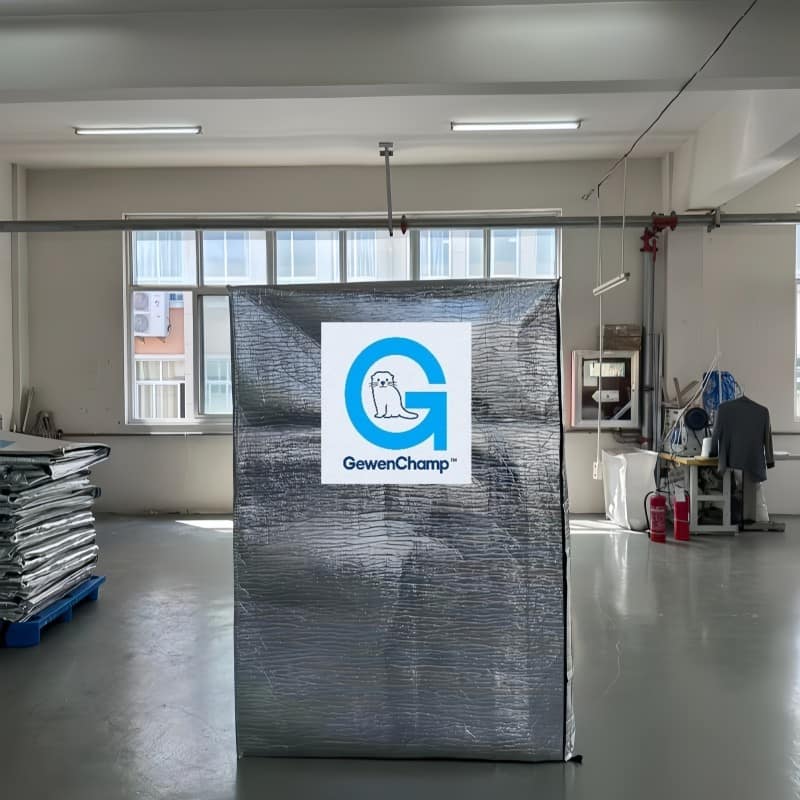
The mechanism becomes clearer when you examine the moisture vapor transmission rate of the liner material. The GewenChamp TL-02 EPE Foam Liner, for example, has a thermal conductivity ≤0.038 W/(m·K) and a moisture vapor transmission rate ≤0.033 g/(m²·h·kPa). That means even if humid air exists inside, very little moisture passes through the liner to condense on the cold container wall. The result is a dry microclimate around the cargo even as the external humidity cycles through extremes.
Choosing a Thermal Liner for Corrosion Control
Not every insulated liner provides the same level of moisture protection. For corrosion-sensitive cargo, the priority is a liner with a strong moisture vapor barrier and sufficient insulation to flatten the temperature cycle. The following table compares the key properties of GewenChamp thermal liner options relevant to rust prevention:
| Liner Model | Insulation Core | Conductividad térmica | Moisture Vapor Barrier | Typical Use |
|---|---|---|---|---|
| TL-01 Woven Thermal Fabric | Woven PE + Alu Foil 2-layer | Moderado | Basic | Mild routes, general cargo |
| TL-02 EPE Foam 4-layer | 3mm EPE Foam + Alu PET | ≤0.038 W/(m·K) | ≤0.033 g/(m²·h·kPa) | High-humidity routes, steel, machinery |
| TL-03 MPET/Double Bubble/MPET | Double Bubble + MPET | Bajo | Alto | Frozen and pharma; secondary rust control |
| TL-04 MPET/PE Composite | MPET/PE film composite | Basic | Moderado | Short trips, lower cost |
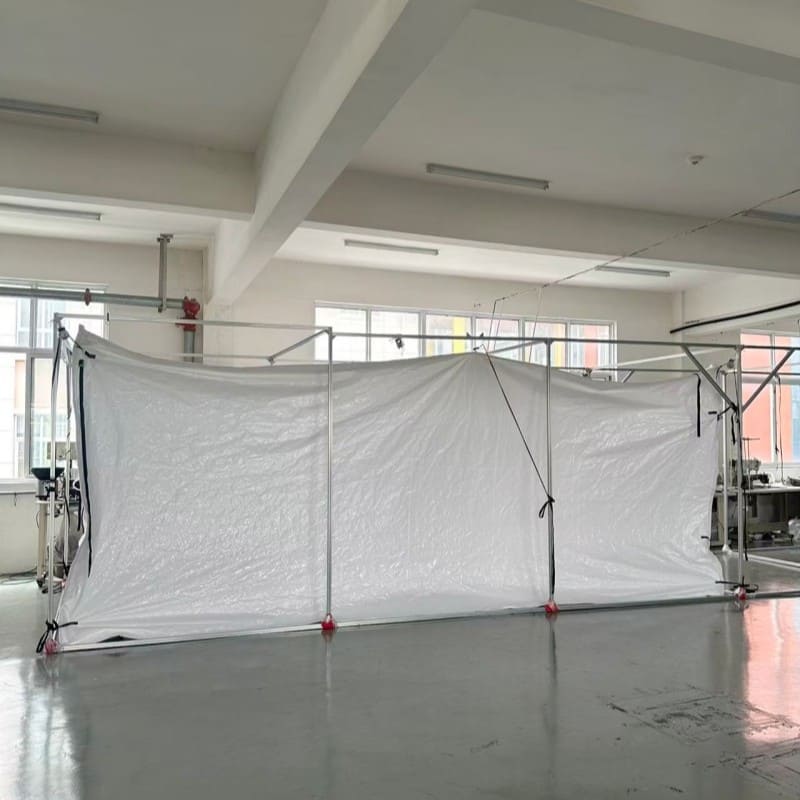
For steel exports crossing the equator, the TL-02 with its 4-layer construction and low MVTR is typically the right starting point. The foam core adds insulation that single-layer reflective liners cannot match, reducing temperature swing amplitude enough that condensation becomes rare. If cost constraints prevent a 4-layer liner, a double bubble foil liner (TL-03) can still provide meaningful rust reduction, though with slightly less moisture blocking capacity.
If your cargo route includes extended port waiting time under direct sun or multiple climate zones, the right liner choice can prevent corrosion without active ventilation or reefer units. That is the point where the liner pays for itself in avoided damage claims.
Integrating Thermal Liners with Protective Practices
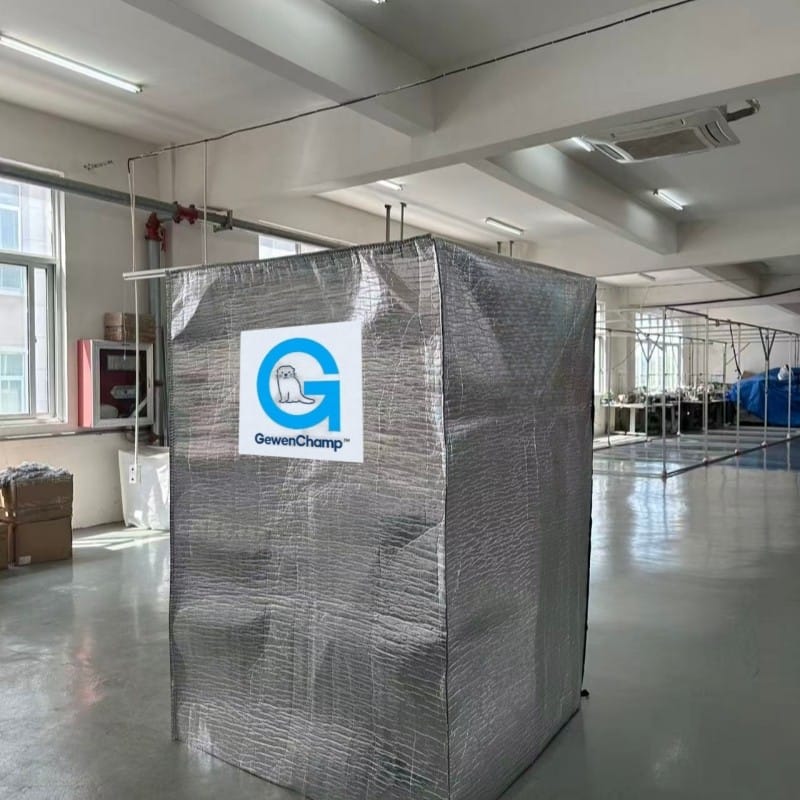
A thermal liner works best as part of a layered defense. Pre-loading checks matter: the container should be dry, with no residual moisture or previous condensation stains. Even a high-performance liner cannot overcome a container that already holds standing water. Goods should be loaded at ambient temperature to avoid a cold cargo hitting warm humid air, which can cause immediate condensation.
Desiccants still have a place. In my experience, placing a reduced number of desiccant bags inside a thermally lined container provides a valuable backup: they absorb any minor moisture introduced during loading or from cargo that was not fully conditioned. The liner handles the big temperature-driven condensation, and the desiccants handle the remainder. This hybrid approach routinely outperforms either method used alone.
Sealing the liner at the loading spouts and discharge areas with tape or ties is a small step that prevents humid outside air from leaking into the protected space during the voyage. For high-value steel and machinery, I also recommend placing a humidity indicator card near the cargo to confirm that the interior stayed dry throughout transit—this is simple to do and provides proof of protection for insurance documentation.
Real-World Impact of Thermal Liners on Rust Claims
The cost of a thermal liner typically falls between 200 and 500 USD for a 20‑foot container, depending on the model and route. Against a single rejected shipment of steel coils worth tens of thousands of dollars, the investment is a fraction of a percent of cargo value. I have worked with shippers who were averaging a 10–15% claim rate on metal goods traveling from South China to the Middle East in summer. After switching to a lined container protocol with TL-02 and a handful of desiccant bags, the rust claims dropped to zero across the next twelve sailings. The liners were reusable for multiple trips, bringing the per-voyage cost even lower.
That kind of result changes the logistics discussion from “how much desiccant do we need” to “how do we prevent the condensation from forming at all.” It also reduces the administrative burden of claims processing and improves buyer confidence—a benefit that goes beyond the immediate financial saving.
Common Questions About Shipping Container Rust Prevention
Rust damage is a product of condensation driven by temperature swings. A thermal liner is the most direct way to break that cycle, so for the majority of sea freight routes, it is the single most impactful measure you can take. That said, you still need a dry container and properly conditioned cargo. On very short voyages in mild weather, careful desiccant use alone may be adequate, but the longer and hotter the transit, the more the liner becomes essential.
For steel coils and heavy machinery, the TL-02 EPE Foam Liner is a frequent recommendation because the foam insulation flattens the temperature cycle more effectively than reflective-only liners. Machinery with irregular shapes may also benefit from additional anti-corrosion wrapping on sharp edges to protect the liner itself from puncture. For flat steel products like coil, the liner can be combined with a vapor‑phase inhibitor sheet as an extra safeguard without adding significant cost.
cURL Too many subrequests by single Worker invocation. To configure this limit, refer to https://developers.cloudflare.com/workers/wrangler/configuration/#limitscURL Too many subrequests by single Worker invocation. To configure this limit, refer to https://developers.cloudflare.com/workers/wrangler/configuration/#limits
cURL Too many subrequests by single Worker invocation. To configure this limit, refer to https://developers.cloudflare.com/workers/wrangler/configuration/#limits cURL Too many subrequests by single Worker invocation. To configure this limit, refer to https://developers.cloudflare.com/workers/wrangler/configuration/#limits
cURL Too many subrequests by single Worker invocation. To configure this limit, refer to https://developers.cloudflare.com/workers/wrangler/configuration/#limits cURL Too many subrequests by single Worker invocation. To configure this limit, refer to https://developers.cloudflare.com/workers/wrangler/configuration/#limits
 Spanish
  English
  German