
Moisture damage in food commodity exports is a recurring, costly problem that erodes profit margins and compromises cargo quality. From cocoa beans caking into solid blocks to sugar turning into syrup, uncontrolled humidity during transit can turn a profitable shipment into a total loss. While desiccants and basic packaging help, stopping moisture at the source requires understanding how temperature fluctuations create condensation and selecting the right container liner to block it. For food exporters, combining thermal insulation with a certified moisture barrier is the most reliable single investment to protect cargo integrity. Drawing on fifteen years of container liner manufacturing, this guide details the practical methods that consistently keep shipments dry and compliant.
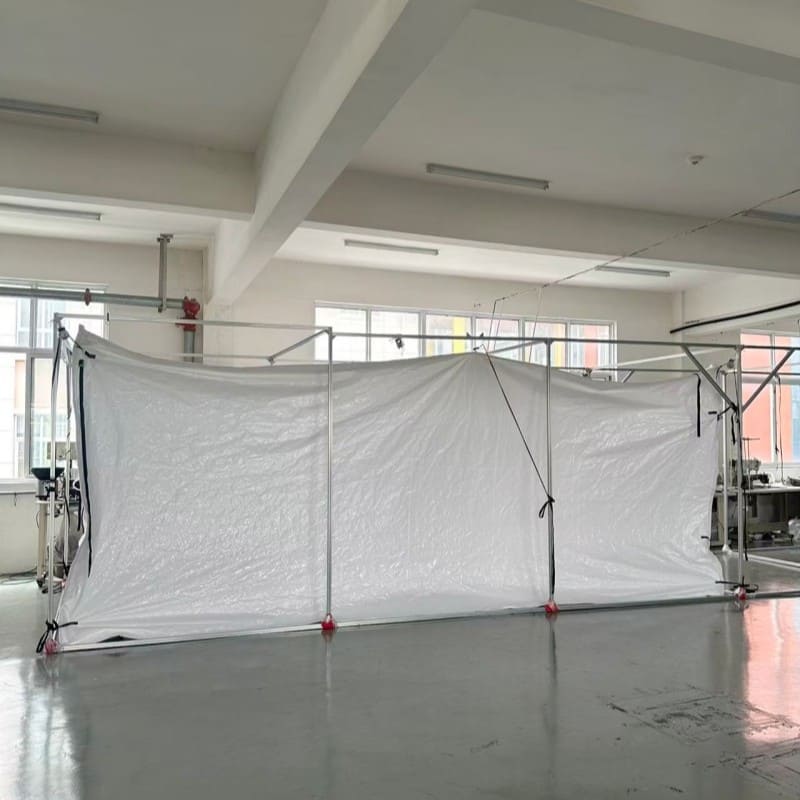
Understanding Moisture Risks in Shipping Food Commodities
An ISO container traveling from Southeast Asia to Europe passes through multiple climate zones. Daytime temperatures inside can exceed 60°C, while at night they drop sharply. When warm, moisture-laden air contacts the cooler container walls at night, relative humidity rises past the dew point and water condenses onto the cargo or container skin. This phenomenon, often called container rain, is not a defect of the container but a predictable physics-driven event. Hygroscopic food commodities like sugar, cocoa powder, flour, and grains absorb this water, leading to caking, mold growth, or irreversible quality degradation.
The financial impact escalates quickly. A single container of premium cocoa beans worth $50,000 can be rejected at destination if moisture content exceeds 8%, and insurance claims often fail to cover the full commercial loss when condensation is deemed an “inherent vice” of the cargo. For shippers routing through the Panama Canal or the South China Sea, where daily temperature swings of 15–20°C are routine, the risk is particularly acute. Understanding this thermal-condensation link is the foundation for choosing an effective moisture protection strategy, because addressing humidity without stabilizing temperature is only half the solution.
Container Liners as the Primary Moisture Barrier
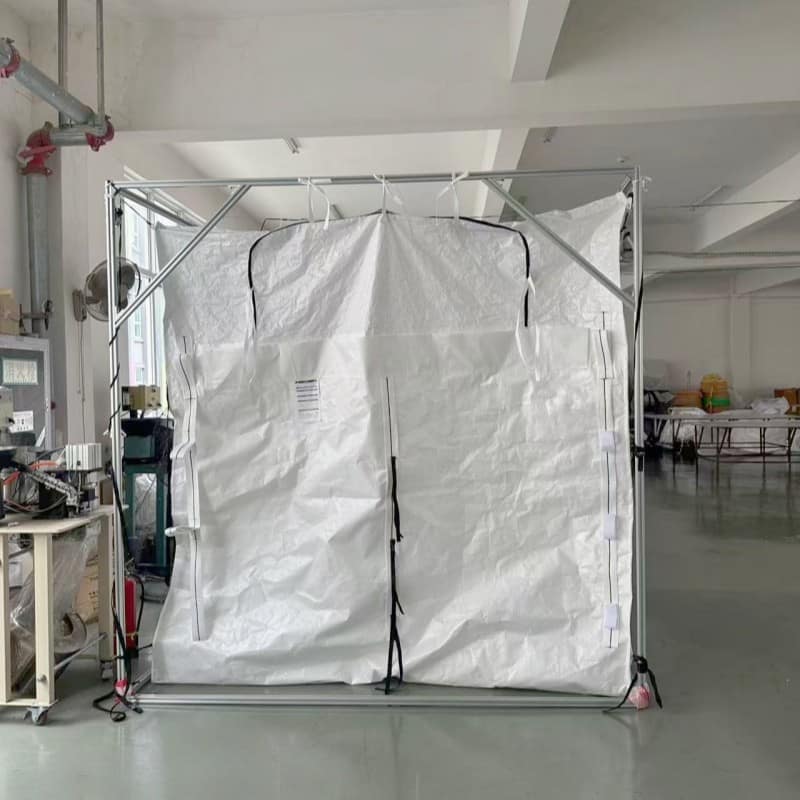
A bulk container liner is not merely a bag; it is a fully sealed envelope that physically isolates the cargo from the container’s metal walls and floor. When sized and secured correctly, a liner prevents moisture in the ambient air from reaching the product and stops condensation that forms on the container skin from dripping back onto the load. The key performance metric is moisture vapor transmission rate (MVTR), measured in g/(m²·h·kPa). A standard 140-micron LDPE film liner can achieve near-zero MVTR when properly installed with sealed loading and discharge spouts, creating a 100% physical barrier against bulk water and humidity.
However, the barrier only works as well as its installation. We have seen shipments where a poorly tensioned liner allowed cargo to press against the container wall, creating a thermal bridge that condensed moisture directly onto the film from the outside. In those cases, the liner functioned like a condensation collector rather than a barrier. Proper strapping, anti-slip sheeting, and verifying that the liner’s seams are PU-taped or heat-sealed are equally critical to the material specification itself. For food-grade applications, the liner must also be manufactured from FDA-compliant or LFGB-certified raw materials, with documentation tracing the resin batch to the finished product.
Material Selection for Food-Grade Container Liners
The choice of liner material determines both moisture barrier effectiveness and regulatory compliance. The table below summarizes common material options for dry bulk food commodities.
| Material del Recubrimiento | Typical Construction | Moisture Barrier Performance | Key Food Safety Standards |
|---|---|---|---|
| LDPE Film (standard) | 140–175 µm single-layer | 100% moisture barrier; MVTR <0.1 g/(m²·h·kPa) | FDA, LFGB, EU 10/2011 |
| HDPE Woven Coated | Woven 140 gsm + PE lamination | 100% barrier; plus high tear resistance | FDA, REACH, RoHS |
| Woven Barless PP (uncoated) | 110 gsm breathable fabric | Partial barrier; allows moisture vapor exchange to prevent condensation | FDA (material), not airtight |
| Thermal Composite (EPE foam) | PET foil / woven PE / 3mm foam / PET foil | ≤0.033 g/(m²·h·kPa); blocks radiant heat + moisture | FDA, LFGB, ISO9001 |
Woven barless liners work well for grains like soybeans that tolerate some air exchange, but they are unsuitable for hygroscopic powders. We have guided multiple European food ingredient importers away from breathable liners for milk powder shipments after laboratory tests showed moisture uptake exceeding 1% over a 28-day voyage. The right choice hinges on the commodity’s equilibrium moisture content tolerance, transit duration, and climatic routing. If your program involves shipping hygroscopic commodities like cocoa or sugar on high-humidity routes, confirming the liner’s MVTR and food-grade certification before finalizing your BOM is critical. Contact us at [email protected] to verify the right specification.
Thermal Liners: Dual-Action Protection Against Moisture and Temperature
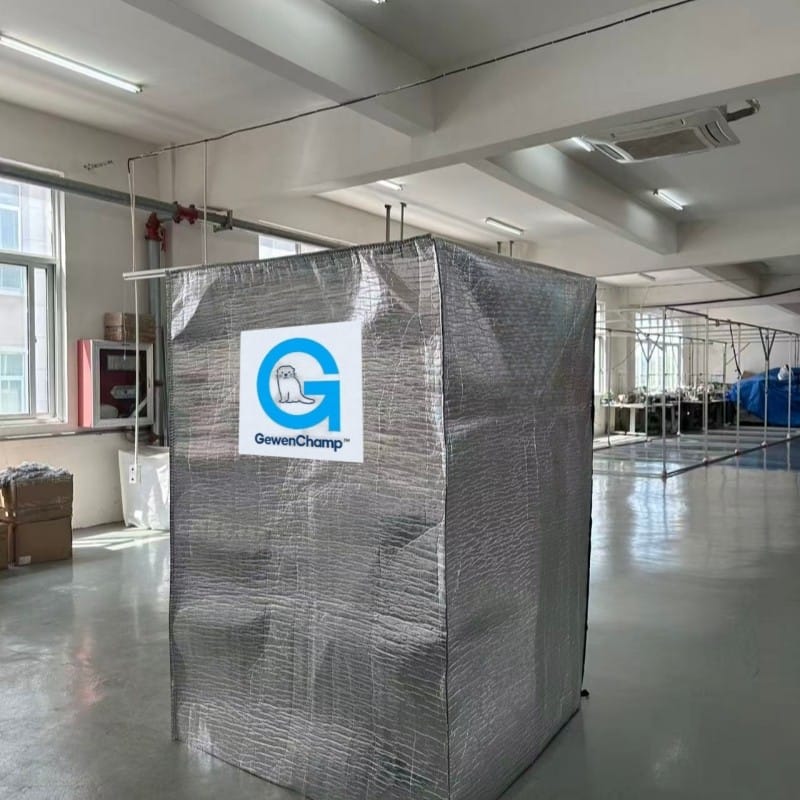
Thermal container liners add a layer of passive insulation that directly addresses the temperature swings responsible for condensation. A liner like the TL-03 MPET/Double Bubble/MPET structure reflects up to 98% of radiant heat while the 5mm bubble layer traps still air, creating a secondary thermal break. The TL-02, with its 3mm EPE foam core, achieves thermal conductivity ≤0.038 W/(m·K) and an MVTR ≤0.033 g/(m²·h·kPa), effectively decoupling the interior cargo microclimate from the container wall temperature.
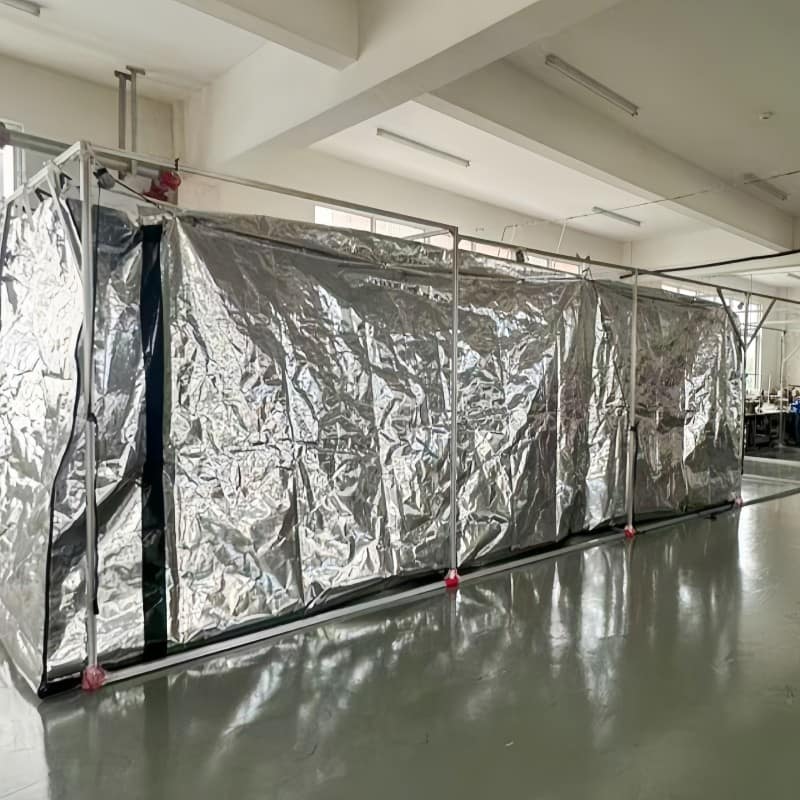
This dual action means the same liner prevents heat damage and also keeps the inner surface temperature above the dew point, eliminating condensation even when the exterior container skin is cold. I have personally reviewed temperature log data from a shipment of polycarbonate resin going from Shanghai to Hamburg where the TL-02 maintained an internal temperature variance within ±5°C over 38 days, while an uninsulated control container swung 22°C and returned soggy, caked product. The investment in thermal insulation paid for itself multiple times over by avoiding rejection and rework.
For food commodities, thermal liners must also carry food-contact certifications. All GewenChamp series liners pass FDA and LFGB testing, and the manufacturing facility is ISO9001 certified, ensuring batch consistency. The key decision is not whether to use a thermal liner but which thermal liner matches the thermal budget and moisture sensitivity of the cargo. A high-value shipment of cocoa beans transiting the tropics justifies the four-layer TL-02; a short-haul European shipment of sugar in autumn may be adequately served by the TL-04 composite film.
Best Practices for a Watertight, Moisture-Free Export
Integrating moisture protection into a standard operating procedure prevents the last-minute oversights that cause damage. Based on our experience equipping bulk food shipments, these five steps form a reliable checklist:
- Pre-load container inspection: Verify door seals are intact, floor vents are closed, and interior walls are free of condensation or rust. A wet container floor guarantees liner failure.
- Liner installation and strapping: Unfold the liner completely, align the discharge spout with the container rear, and strap the liner tightly using at least six fixing points. Any slack creates pockets where condensation pools.
- Load with dry cargo only: Confirm moisture content of the commodity before loading. For cocoa beans, the optimal loading moisture is 6.5–7.5%. Exceeding 8% at origin means even a perfect liner cannot prevent internal mold growth.
- Close and seal the liner: Heat-seal or tie off loading spouts, then tape the discharge spout closed. A single pinhole can allow moisture ingress over several weeks at sea.
- Consider supplemental desiccants: For exceptionally hygroscopic cargo or voyages exceeding 30 days, place food-grade calcium chloride desiccant strips inside the liner near the top to capture any residual moisture, but never rely on desiccants as the primary defense.
cURL Too many subrequests by single Worker invocation. To configure this limit, refer to https://developers.cloudflare.com/workers/wrangler/configuration/#limits
cURL Too many subrequests by single Worker invocation. To configure this limit, refer to https://developers.cloudflare.com/workers/wrangler/configuration/#limits
cURL Too many subrequests by single Worker invocation. To configure this limit, refer to https://developers.cloudflare.com/workers/wrangler/configuration/#limits
cURL Too many subrequests by single Worker invocation. To configure this limit, refer to https://developers.cloudflare.com/workers/wrangler/configuration/#limits
cURL Too many subrequests by single Worker invocation. To configure this limit, refer to https://developers.cloudflare.com/workers/wrangler/configuration/#limits
cURL Too many subrequests by single Worker invocation. To configure this limit, refer to https://developers.cloudflare.com/workers/wrangler/configuration/#limits
cURL Too many subrequests by single Worker invocation. To configure this limit, refer to https://developers.cloudflare.com/workers/wrangler/configuration/#limits
cURL Too many subrequests by single Worker invocation. To configure this limit, refer to https://developers.cloudflare.com/workers/wrangler/configuration/#limits
cURL Too many subrequests by single Worker invocation. To configure this limit, refer to https://developers.cloudflare.com/workers/wrangler/configuration/#limits
cURL Too many subrequests by single Worker invocation. To configure this limit, refer to https://developers.cloudflare.com/workers/wrangler/configuration/#limits
cURL Too many subrequests by single Worker invocation. To configure this limit, refer to https://developers.cloudflare.com/workers/wrangler/configuration/#limits
cURL Too many subrequests by single Worker invocation. To configure this limit, refer to https://developers.cloudflare.com/workers/wrangler/configuration/#limits
cURL Too many subrequests by single Worker invocation. To configure this limit, refer to https://developers.cloudflare.com/workers/wrangler/configuration/#limits
 Spanish
  English
  German