
When a shipment of certified organic soybeans arrives at a European port and the receiver’s quality inspection flags traces of non-organic residue on the container walls, the entire load can lose its organic status before it ever reaches the processing line. That reversal is not theoretical. I have seen bulk organic food exporters face rejected shipments, recertification costs, and broken buyer relationships because the container liner, a component many procurement teams treat as interchangeable with any food-grade barrier, was never evaluated against the specific segregation and documentation demands of organic certification programs. Container liner compliance for organic food bulk export requires more than a food-grade label. It demands material traceability, GMO contamination prevention, and alignment with the certification framework the exporter operates under, whether that is the USDA National Organic Program, the EU organic regulation, or a bilateral equivalence arrangement.
Why Organic Exports Demand More Than Standard Food-Grade Liners
Most bulk food shipments rely on food-grade container liners that meet general safety requirements. An exporter shipping conventional soybeans or sugar can specify an FDA-compliant PE film liner and move on. Organic certification programs change the evaluation criteria in three ways that standard food-grade certification does not address.
First, organic certification requires full supply chain segregation. A container liner that meets FDA 21 CFR indirect food contact standards tells you the material itself is safe. It does not tell you whether the liner was manufactured in a facility that also processes non-organic materials, whether cross-contact with conventional product occurred during fabrication, or whether the liner’s raw resin suppliers maintain organic-compatible handling procedures. For a USDA NOP-certified exporter, the liner is part of the organic handling chain, and the certifier may ask for evidence that the liner does not compromise organic integrity.
Second, GMO contamination prevention operates separately from food safety. A liner can be perfectly safe for food contact while providing zero assurance that it prevents commingling of GMO and non-GM product. In practice, the liner’s function as a physical barrier inside the container is the primary defense against GMO cross-contamination during transport, especially when containers have previously carried GM grain, animal feed, or conventional oilseeds.
Third, organic certification bodies increasingly expect documentation that goes beyond a supplier’s declaration of food-grade compliance. We have responded to auditor requests for production batch records, resin source verification, and confirmation that the liner manufacturing line was cleaned between non-organic and organic production runs. These documentation requirements are not standardized across all certifiers, which creates a gap between what a liner manufacturer typically provides and what the exporter’s organic certification audit may demand.
FDA and LFGB Food-Grade Standards as the Baseline
Before organic-specific requirements enter the discussion, the container liner must pass the food-grade standards applicable to the destination market. For exports to the United States, FDA 21 CFR provides the framework. For the European Union, LFGB (Lebensmittel- und Futtermittelgesetzbuch) and the EU Framework Regulation (EC) No 1935/2004 set the requirements. Many of our clients ship to both markets and need a single liner specification that satisfies both frameworks.
The GewenChamp TL-01 Thermal Container Liner and the DBL-F01 Revestimiento de Contenedor de Película de PE both hold FDA and LFGB certifications, making them applicable across US and EU organic supply chains. The DBL-F01, constructed from 140-micron LDPE film, provides a 100% moisture and dust barrier with a smooth internal surface that prevents product adhesion during discharge. For organic grains, oilseeds, and pulses shipped in 20ft or 40ft containers, this liner eliminates the most common contamination pathway: residual conventional product left in the container from a previous load.
What I emphasize when exporters contact us is that food-grade certification is the starting point, not the endpoint. An FDA-compliant liner manufactured without documented organic-compatible handling procedures may still create a compliance gap during the exporter’s annual organic audit. The certifier will want to see that the liner supplier understands organic requirements, even if the certifier does not directly audit the liner factory.
| Estándar | Alcance | What It Covers for Container Liners |
|---|---|---|
| FDA 21 CFR | United States | Indirect food contact material safety; migration limits |
| LFGB | Germany / EU | Food contact material safety; sensory and compositional requirements |
| EU 1935/2004 | European Union | General safety of food contact materials; traceability |
| USDA NOP | United States (organic) | Supply chain segregation; GMO prevention; approved materials |
| EU 2018/848 | European Union (organic) | Organic production rules; contamination prevention; import requirements |
For exporters shipping organic food to multiple regulatory zones, we recommend selecting liners that hold both FDA and LFGB certification, then addressing organic-specific documentation as a separate workstream with the manufacturer.
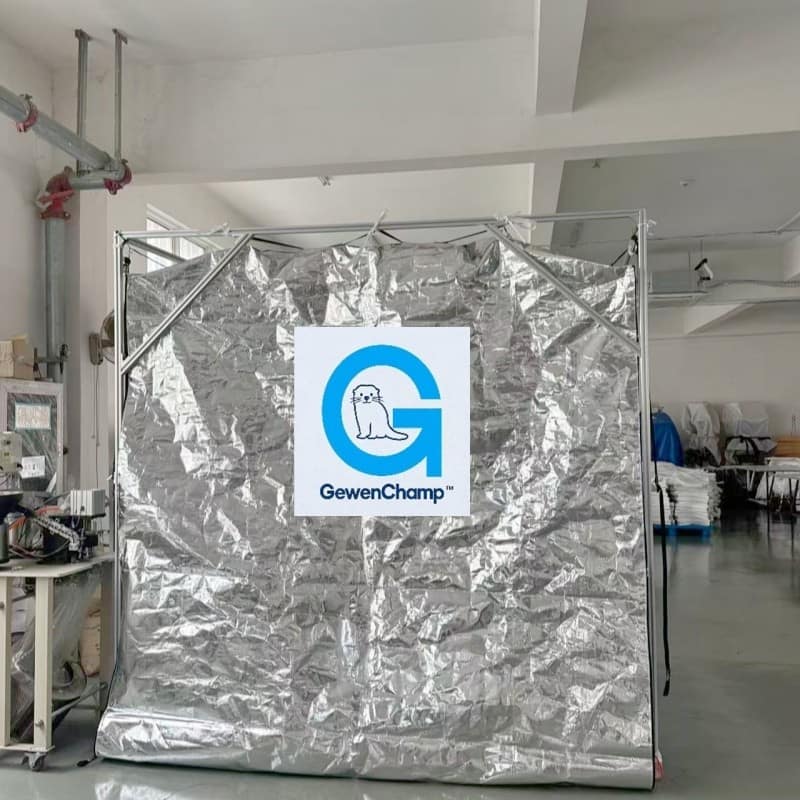
GMO Prevention and the Physical Barrier Function
The most practical contribution a container liner makes to organic compliance is physical segregation. When a bulk container previously transported GM corn, soy, or cottonseed, the interior surfaces carry dust and residue that can commingle with an organic load. Washing the container reduces the risk but does not eliminate it, particularly in the container floor channels, door seals, and corner castings where fine particles accumulate.
A properly installed dry bulk container liner creates a sealed internal envelope. The DBL-W01 Dry Bulk Container Liner, made from 140 gsm HDPE woven fabric, covers all six interior walls of the container, including the floor and doors. With a top loading spout and bottom discharge spout, the product enters and exits without ever contacting the container structure. For organic grain exporters, this physical separation is the single most important contamination control measure in the logistics chain.
Heat-welded seam construction on liners like the DBL-W06 Sift-Proof Container Liner adds a second layer of protection. Sewn seams can pass fine particulate under pressure, especially with powdery organic products such as flour, milk powder, or ground spices. The DBL-W06 uses PU tape-sealed seams rated for 100% sift-proof performance at particle sizes of 50 mesh and above. For an organic flour exporter, a sewn-seam liner that allows organic product to sift into the container environment is a compliance risk because it also means conventional residue from a previous load could sift inward if the container is not perfectly clean.
If your program involves shipping organic powders with particle sizes below 100 mesh or products with strong odor absorption characteristics, it is worth confirming the liner’s seam construction and barrier properties with the manufacturer before finalizing your packaging specification. Reach out at [email protected] with your product details and we can confirm the right liner specification.
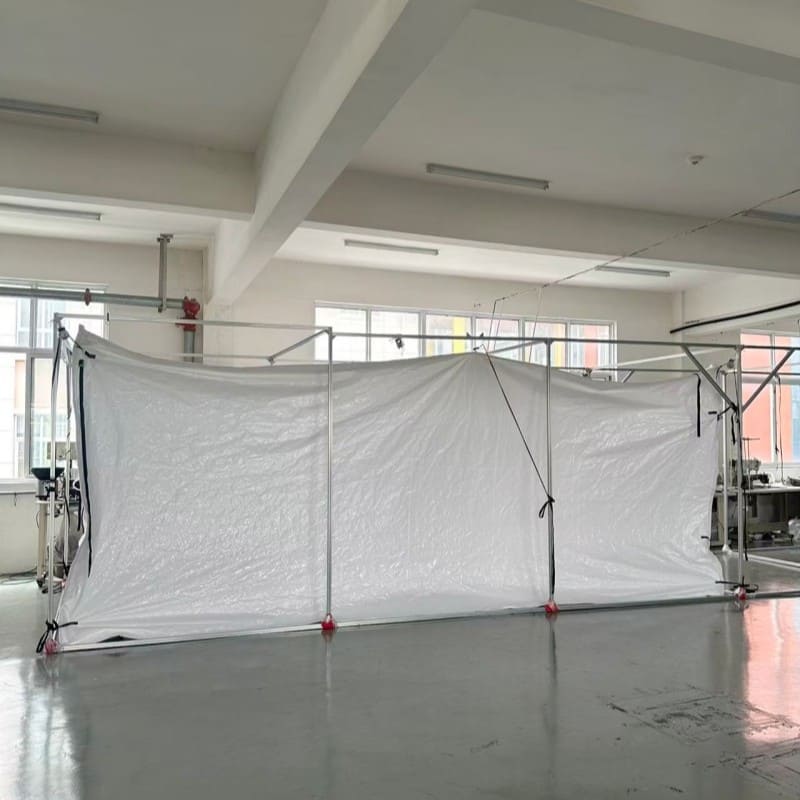
EU Organic Regulation 2018/848 and What It Means for Packaging
The EU Organic Regulation (EU) 2018/848, effective from January 2022, strengthened the rules on contamination prevention throughout the organic supply chain. Article 28 requires operators to implement measures that prevent contamination with non-organic products at all stages. Article 29 addresses the measures operators must take when a contamination risk is identified. For bulk container shipping, the regulation means that the exporter must demonstrate the packaging system prevents commingling, not merely assert it.
From a container liner perspective, this regulation makes material traceability and supplier documentation more important for EU-bound organic shipments than for conventional food exports. We prepare for EU organic audits by maintaining production batch records for each liner lot, documenting the resin source and grade, and confirming whether the production line was dedicated or cleaned between runs. This level of documentation is not always requested by certifiers, but when an EU organic control body does ask for it, the exporter who has it ready avoids delays and potential nonconformity findings.
The DBL-W02 Malt Grade Dry Bulk Container Liner illustrates how product-specific liners address organic requirements. Designed for barley malt and wheat malt transport, it uses double-sided food-grade LDPE lamination on a 110 gsm HDPE woven base. The lamination creates a 100% moisture and odor barrier. For organic malt exporters, odor barrier performance matters because malt absorbs environmental odors, and a container previously used for chemicals, even with a standard liner, can transfer odors that affect malt quality. The organic certifier is concerned with contamination in the broadest sense, not just GMO commingling.
Documentation and Traceability for Organic Bulk Exports
The documentation package that supports organic container liner compliance should address four areas. First, the liner’s food-grade certifications (FDA, LFGB, or both) provide the baseline regulatory evidence. Second, the manufacturer’s batch production records link the specific liner lot to its raw material inputs and production date. Third, a cleaning or segregation statement confirms whether the production line was dedicated to organic-compatible production or cleaned between conventional and organic runs. Fourth, the liner’s technical specification sheet provides the physical performance data (tensile strength, moisture vapor transmission rate, seam construction) that demonstrates the barrier is fit for purpose.
I recommend that organic exporters request this documentation package at the time of ordering rather than waiting until the certifier’s annual audit. Manufacturers who regularly supply organic supply chains maintain these records as a standard practice. Those who do not may need lead time to compile them, and the auditor will not wait.
The interaction between container liner documentation and the organic certificate matters at the port of entry. EU customs authorities and organic control bodies increasingly cross-reference the exporter’s organic certificate with the transport documentation. If the bill of lading references a container liner type that the organic certificate does not address, the control body may flag the shipment for additional inspection. This is particularly relevant for composite products where organic and non-organic ingredients are shipped separately for blending at destination. Each component’s packaging must be traceable to the organic handling plan.
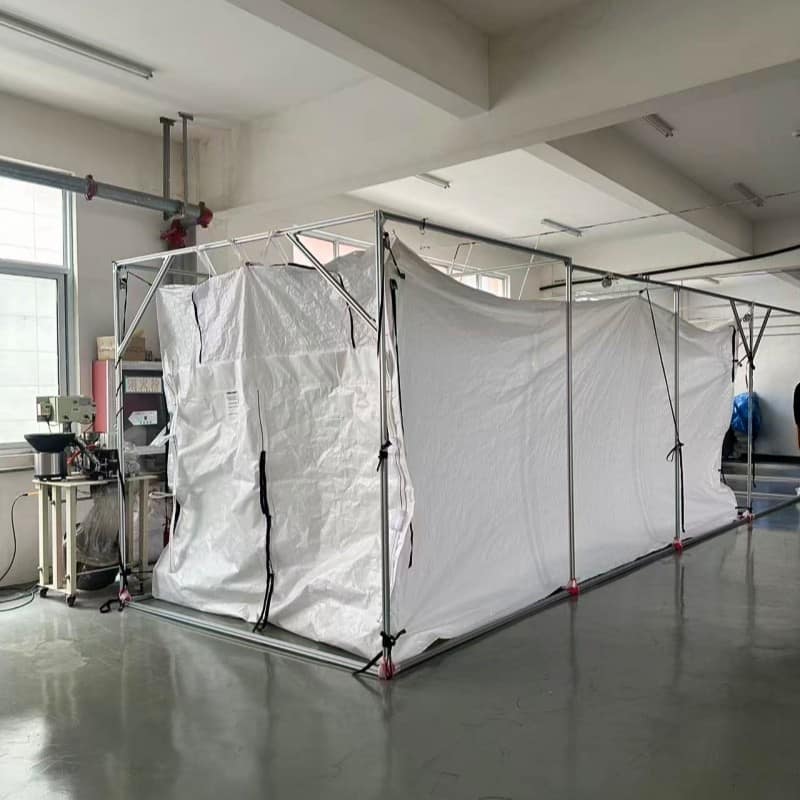
Selecting the Right Container Liner for Certified Organic Cargo
Matching the container liner to the organic product requires evaluating the product’s physical form, the shipping route’s environmental conditions, and the destination market’s certification requirements in parallel.
For organic grains, oilseeds, and pulses shipped in standard 20ft or 40ft containers, the DBL-F01 PE Film Container Liner offers a cost-effective solution with FDA and LFGB certification. At 140 microns thickness, it provides the moisture barrier organic dry products need for ocean transit while meeting the food-grade baseline for both US and EU markets. The smooth LDPE surface speeds discharge and reduces product retention, which matters for organic shipments where retained product in the liner after discharge represents both product loss and a cross-contamination risk if the liner is reused or disposed of improperly.
For organic powders, the seam integrity of the liner becomes the determining factor. The DBL-W06 Sift-Proof Container Liner, with its PU tape-sealed seams and double-sided PE coating, prevents both product loss through seams and external contamination ingress. This is the specification I recommend for organic flour, milk powder, and ground spice exporters because the consequences of seam leakage include not only product loss but also potential commingling with container residues that can compromise organic certification.
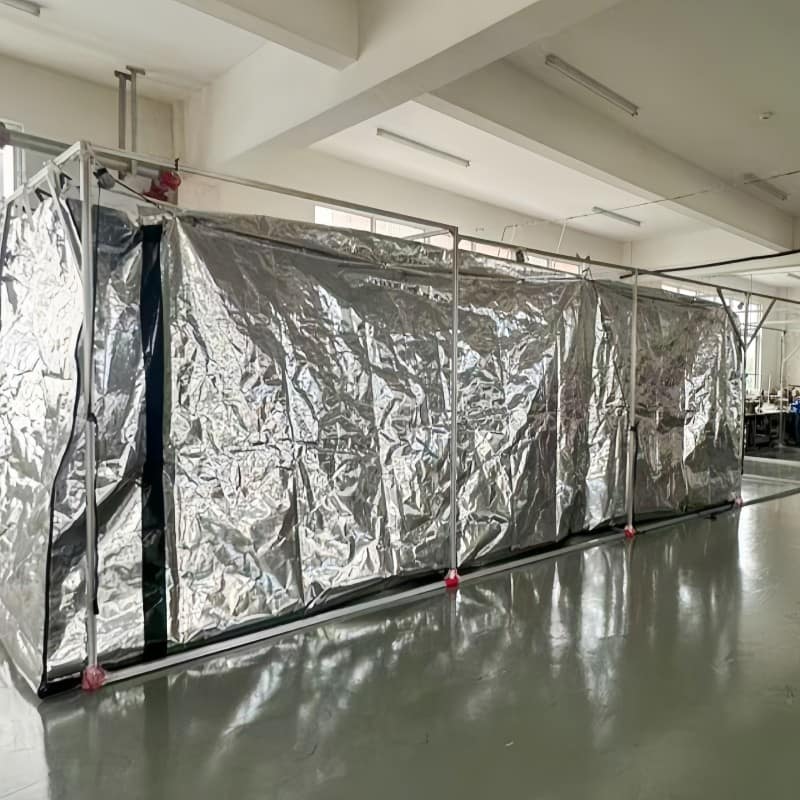
For temperature-sensitive organic products such as cocoa beans, chocolate ingredients, or certain organic oils, the thermal liner series adds temperature stability to the compliance requirements. The TL-01 Thermal Container Liner reflects 95-97% of radiant heat while maintaining internal temperatures within ±5°C of the loading temperature. For organic cocoa bean shipments crossing the equator, this thermal protection prevents the temperature fluctuations that cause condensation inside the container. Condensation on organic product can lead to mold growth, and mold contamination is both a quality failure and an organic compliance failure because it indicates the handling system did not maintain product integrity.
cURL Too many subrequests by single Worker invocation. To configure this limit, refer to https://developers.cloudflare.com/workers/wrangler/configuration/#limits
cURL Too many subrequests by single Worker invocation. To configure this limit, refer to https://developers.cloudflare.com/workers/wrangler/configuration/#limits
cURL Too many subrequests by single Worker invocation. To configure this limit, refer to https://developers.cloudflare.com/workers/wrangler/configuration/#limits
cURL Too many subrequests by single Worker invocation. To configure this limit, refer to https://developers.cloudflare.com/workers/wrangler/configuration/#limits
cURL Too many subrequests by single Worker invocation. To configure this limit, refer to https://developers.cloudflare.com/workers/wrangler/configuration/#limits
cURL Too many subrequests by single Worker invocation. To configure this limit, refer to https://developers.cloudflare.com/workers/wrangler/configuration/#limits
cURL Too many subrequests by single Worker invocation. To configure this limit, refer to https://developers.cloudflare.com/workers/wrangler/configuration/#limits
cURL Too many subrequests by single Worker invocation. To configure this limit, refer to https://developers.cloudflare.com/workers/wrangler/configuration/#limits
cURL Too many subrequests by single Worker invocation. To configure this limit, refer to https://developers.cloudflare.com/workers/wrangler/configuration/#limits
cURL Too many subrequests by single Worker invocation. To configure this limit, refer to https://developers.cloudflare.com/workers/wrangler/configuration/#limits
 Spanish
  English
  German