
Shipping bulk cargo through tropical or monsoon regions introduces a persistent threat: humidity-driven condensation that can ruin an entire container of product. Container liners for humidity offer a practical defense, but not all liners perform equally under sustained high-humidity conditions. From my 15 years working with thermal packaging and container liner manufacturing, I’ve seen the costly gap between expectation and reality when procurement teams select a liner based on price alone. The material structure, not the brand, determines whether your cocoa beans, plastic pellets, or chemicals arrive dry and intact.
Understanding Humidity Risks in Container Shipping
A shipping container crossing warm, humid oceans acts like a climatic pressure cooker. As outside temperatures rise, the air inside the container heats up and absorbs moisture from the cargo or from ambient air trapped during loading. When the vessel enters cooler waters or nighttime temperatures drop, the container walls chill below the dew point. Water condenses on the ceiling and side panels, then drips onto the cargo below. This container rain effect is the single largest cause of moisture-related spoilage I have diagnosed in over a decade of field assessments.
Certain cargoes amplify the risk. Hygroscopic goods like cocoa beans, coffee, and sugar release moisture during transit, raising internal relative humidity above 90%. Even non-hygroscopic materials such as plastic resins or titanium dioxide can suffer surface clumping, mold growth, or chemical degradation if condensation persists. A liner that merely covers the floor will not stop these failures; the protection must be continuous across all six container walls.
How Container Liners Block Moisture and Condensation
A properly specified container liner for humidity functions as both a physical barrier and a climatic buffer. The liner material wraps the cargo in a sealed envelope that prevents water vapor from reaching the product and simultaneously reduces the temperature swings that cause condensation.
The critical performance metric is moisture vapor transmission rate (MVTR), measured in grams per square meter per 24 hours under standard test conditions. A low MVTR means the liner material resists the passage of water molecules. For high-humidity routes, an MVTR below 0.1 g/(m²·h·kPa) is desirable, while premium liners using foam or foil composites can achieve 0.033 g/(m²·h·kPa) or better. However, MVTR alone does not tell the full story. The construction layers also determine how effectively the liner reflects radiant heat and insulates the cargo, because stable internal temperatures reduce the dew point reach. In our GewenChamp™ TL series, we design specific material stacks for different humidity severity levels precisely because no single structure works for every route.
Comparing Liner Materials for Humid Routes
The choice of liner material for a humid shipping route directly dictates how well your cargo survives the journey. The following comparison draws on our own testing data and field performance on routes like Southeast Asia to Europe and South America to the Middle East.
| Liner Construction | Primary Layers | Moisture Barrier Performance | Thermal Insulation | Typical Use Case |
|---|---|---|---|---|
| Woven PE with aluminum foil lamination (e.g., TL-01) | Woven PE / double-sided PE aluminum foil | Reflects 95–97% radiant heat, reduces condensation; waterproof | Moderate, temperature variance ±5°C | Dry bulk such as plastic pellets, grains in moderate humidity |
| EPE foam composite (e.g., TL-02) | PET aluminum foil / woven PE / 3mm EPE foam / PET aluminum foil | MVTR ≤0.033 g/(m²·h·kPa); thermal conductivity ≤0.038 W/(m·K) | High, -50°C to 80°C operating range | Cocoa beans, coffee, pharmaceuticals on long tropical voyages |
| MPET / PE composite film (e.g., TL-04) | Metallized PET film + polyethylene film | Reflects ≥92% radiant heat; waterproof IPX6 rating | Low to moderate, -10°C to 30°C for 24–48 h | Fresh produce, standard electronics where extreme insulation is not needed |
| 140-micron PE film liner (e.g., DBL-F01) | Single-layer LDPE film | 100% moisture and dust barrier, no reflective insulation | None | Lowest-cost solution for non-hygroscopic cargo on short, mildly humid routes |
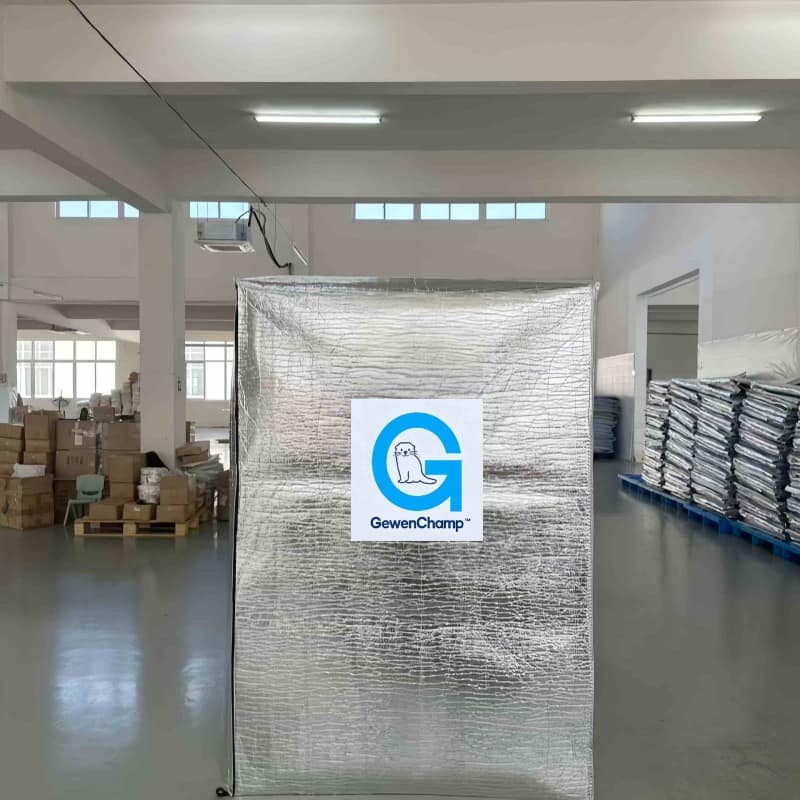
For cargo with sensitivity to both humidity and temperature, the EPE foam composite stands out. The embedded 3mm cross-linked foam core dramatically slows heat transfer, which keeps the interior above the dew point longer. In a documented shipment of cocoa beans from Ghana to Hamburg, we recorded internal humidity fluctuations of less than 15% over a 28-day transit using a TL-02 liner, whereas a standard woven liner without insulation allowed condensation during two separate overnight temperature dips.
This is not a suggestion that every shipment needs the most expensive liner. A cargo of polycarbonate resin on a route from Shanghai to Los Angeles, where ambient humidity rarely exceeds 70%, will be well-protected by a PE film liner or a basic woven thermal fabric. The art, learned through repeated observation rather than a spec sheet, is matching the liner’s performance margin to the most severe conditions the container will encounter.
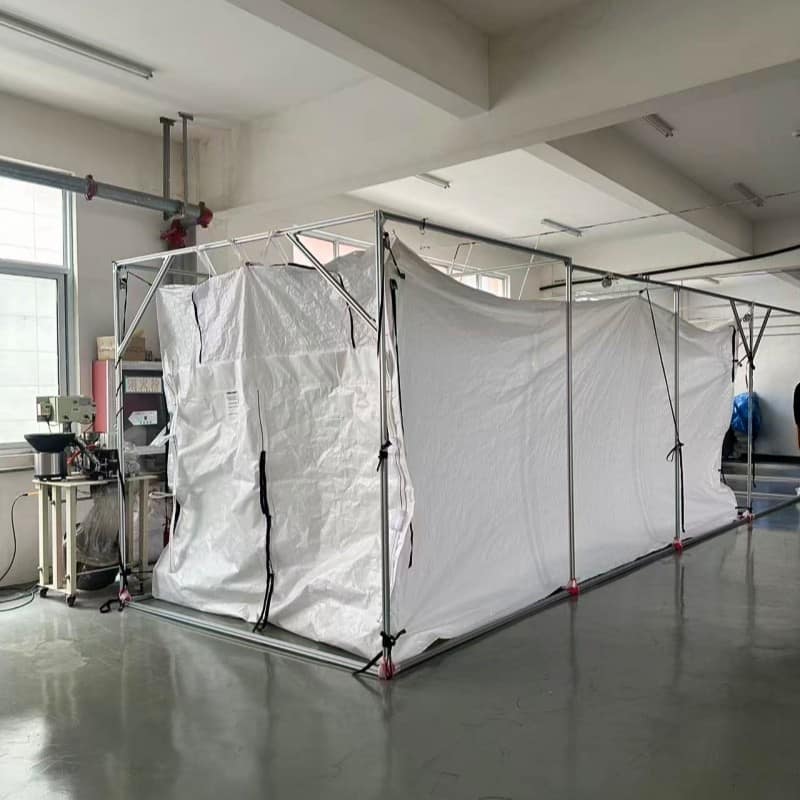
Installing Liners for Maximum Moisture Protection
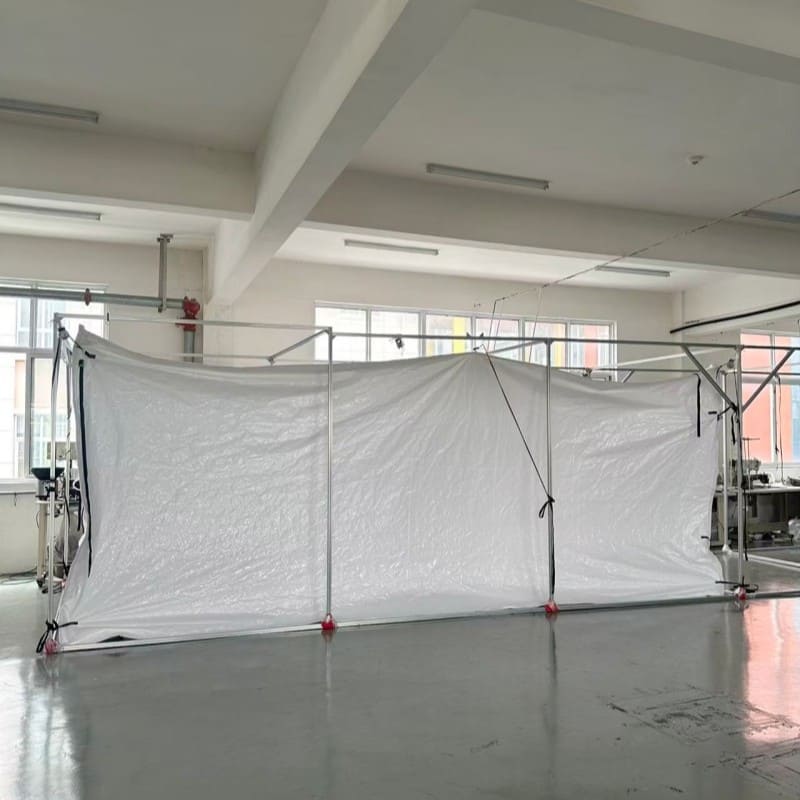
Even the best container liner for humidity fails if not installed with a meticulous sealing protocol. I’ve witnessed entire shipments compromised because a corner was left unsealed or a loading spout was not correctly cinched. The following practices, drawn from our on-site training with logistics partners, apply to all liner types.
cURL Too many subrequests by single Worker invocation. To configure this limit, refer to https://developers.cloudflare.com/workers/wrangler/configuration/#limits
cURL Too many subrequests by single Worker invocation. To configure this limit, refer to https://developers.cloudflare.com/workers/wrangler/configuration/#limits
cURL Too many subrequests by single Worker invocation. To configure this limit, refer to https://developers.cloudflare.com/workers/wrangler/configuration/#limits
cURL Too many subrequests by single Worker invocation. To configure this limit, refer to https://developers.cloudflare.com/workers/wrangler/configuration/#limits
cURL Too many subrequests by single Worker invocation. To configure this limit, refer to https://developers.cloudflare.com/workers/wrangler/configuration/#limits
cURL Too many subrequests by single Worker invocation. To configure this limit, refer to https://developers.cloudflare.com/workers/wrangler/configuration/#limits
cURL Too many subrequests by single Worker invocation. To configure this limit, refer to https://developers.cloudflare.com/workers/wrangler/configuration/#limits
cURL Too many subrequests by single Worker invocation. To configure this limit, refer to https://developers.cloudflare.com/workers/wrangler/configuration/#limits
cURL Too many subrequests by single Worker invocation. To configure this limit, refer to https://developers.cloudflare.com/workers/wrangler/configuration/#limits
cURL Too many subrequests by single Worker invocation. To configure this limit, refer to https://developers.cloudflare.com/workers/wrangler/configuration/#limits
cURL Too many subrequests by single Worker invocation. To configure this limit, refer to https://developers.cloudflare.com/workers/wrangler/configuration/#limits
cURL Too many subrequests by single Worker invocation. To configure this limit, refer to https://developers.cloudflare.com/workers/wrangler/configuration/#limits cURL Too many subrequests by single Worker invocation. To configure this limit, refer to https://developers.cloudflare.com/workers/wrangler/configuration/#limits
cURL Too many subrequests by single Worker invocation. To configure this limit, refer to https://developers.cloudflare.com/workers/wrangler/configuration/#limits cURL Too many subrequests by single Worker invocation. To configure this limit, refer to https://developers.cloudflare.com/workers/wrangler/configuration/#limits
cURL Too many subrequests by single Worker invocation. To configure this limit, refer to https://developers.cloudflare.com/workers/wrangler/configuration/#limits cURL Too many subrequests by single Worker invocation. To configure this limit, refer to https://developers.cloudflare.com/workers/wrangler/configuration/#limits
cURL Too many subrequests by single Worker invocation. To configure this limit, refer to https://developers.cloudflare.com/workers/wrangler/configuration/#limits cURL Too many subrequests by single Worker invocation. To configure this limit, refer to https://developers.cloudflare.com/workers/wrangler/configuration/#limits
cURL Too many subrequests by single Worker invocation. To configure this limit, refer to https://developers.cloudflare.com/workers/wrangler/configuration/#limits cURL Too many subrequests by single Worker invocation. To configure this limit, refer to https://developers.cloudflare.com/workers/wrangler/configuration/#limits
 German
  English
  Spanish