
Shipping bulk cargo through tropical or monsoon regions introduces a persistent threat: humidity-driven condensation that can ruin an entire container of product. Container liners for humidity offer a practical defense, but not all liners perform equally under sustained high-humidity conditions. From my 15 years working with thermal packaging and container liner manufacturing, I’ve seen the costly gap between expectation and reality when procurement teams select a liner based on price alone. The material structure, not the brand, determines whether your cocoa beans, plastic pellets, or chemicals arrive dry and intact.
Understanding Humidity Risks in Container Shipping
A shipping container crossing warm, humid oceans acts like a climatic pressure cooker. As outside temperatures rise, the air inside the container heats up and absorbs moisture from the cargo or from ambient air trapped during loading. When the vessel enters cooler waters or nighttime temperatures drop, the container walls chill below the dew point. Water condenses on the ceiling and side panels, then drips onto the cargo below. This container rain effect is the single largest cause of moisture-related spoilage I have diagnosed in over a decade of field assessments.
Certain cargoes amplify the risk. Hygroscopic goods like cocoa beans, coffee, and sugar release moisture during transit, raising internal relative humidity above 90%. Even non-hygroscopic materials such as plastic resins or titanium dioxide can suffer surface clumping, mold growth, or chemical degradation if condensation persists. A liner that merely covers the floor will not stop these failures; the protection must be continuous across all six container walls.
How Container Liners Block Moisture and Condensation
A properly specified container liner for humidity functions as both a physical barrier and a climatic buffer. The liner material wraps the cargo in a sealed envelope that prevents water vapor from reaching the product and simultaneously reduces the temperature swings that cause condensation.
The critical performance metric is moisture vapor transmission rate (MVTR), measured in grams per square meter per 24 hours under standard test conditions. A low MVTR means the liner material resists the passage of water molecules. For high-humidity routes, an MVTR below 0.1 g/(m²·h·kPa) is desirable, while premium liners using foam or foil composites can achieve 0.033 g/(m²·h·kPa) or better. However, MVTR alone does not tell the full story. The construction layers also determine how effectively the liner reflects radiant heat and insulates the cargo, because stable internal temperatures reduce the dew point reach. In our GewenChamp™ TL series, we design specific material stacks for different humidity severity levels precisely because no single structure works for every route.
Comparing Liner Materials for Humid Routes
The choice of liner material for a humid shipping route directly dictates how well your cargo survives the journey. The following comparison draws on our own testing data and field performance on routes like Southeast Asia to Europe and South America to the Middle East.
| Liner Construction | Primary Layers | Moisture Barrier Performance | Thermal Insulation | Typical Use Case |
|---|---|---|---|---|
| Woven PE with aluminum foil lamination (e.g., TL-01) | Woven PE / double-sided PE aluminum foil | Reflects 95–97% radiant heat, reduces condensation; waterproof | Moderate, temperature variance ±5°C | Dry bulk such as plastic pellets, grains in moderate humidity |
| EPE foam composite (e.g., TL-02) | PET aluminum foil / woven PE / 3mm EPE foam / PET aluminum foil | MVTR ≤0.033 g/(m²·h·kPa); thermal conductivity ≤0.038 W/(m·K) | High, -50°C to 80°C operating range | Cocoa beans, coffee, pharmaceuticals on long tropical voyages |
| MPET / PE composite film (e.g., TL-04) | Metallized PET film + polyethylene film | Reflects ≥92% radiant heat; waterproof IPX6 rating | Low to moderate, -10°C to 30°C for 24–48 h | Fresh produce, standard electronics where extreme insulation is not needed |
| 140-micron PE film liner (e.g., DBL-F01) | Single-layer LDPE film | 100% moisture and dust barrier, no reflective insulation | None | Lowest-cost solution for non-hygroscopic cargo on short, mildly humid routes |
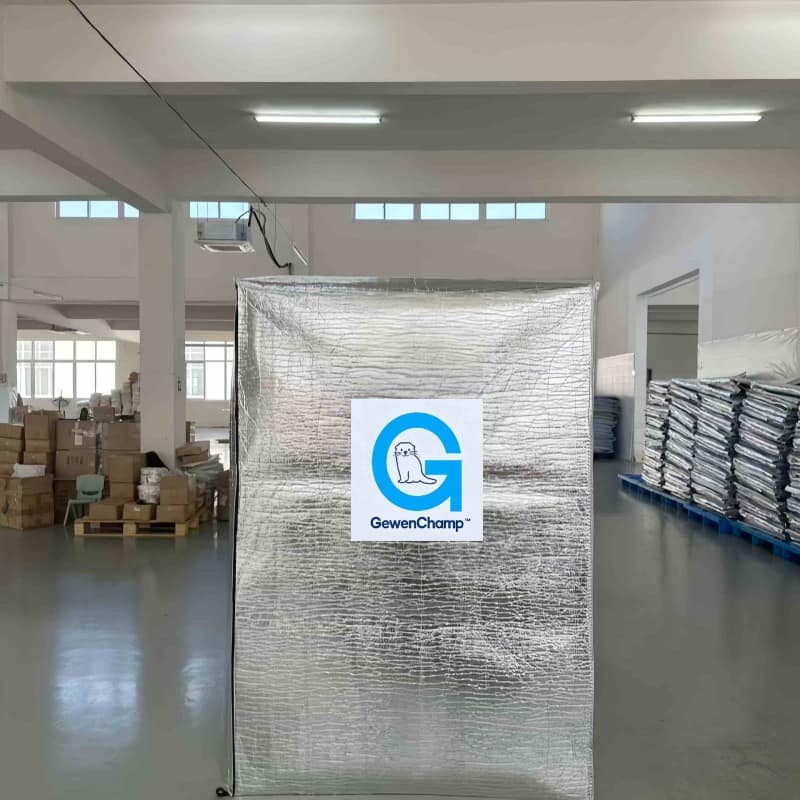
For cargo with sensitivity to both humidity and temperature, the EPE foam composite stands out. The embedded 3mm cross-linked foam core dramatically slows heat transfer, which keeps the interior above the dew point longer. In a documented shipment of cocoa beans from Ghana to Hamburg, we recorded internal humidity fluctuations of less than 15% over a 28-day transit using a TL-02 liner, whereas a standard woven liner without insulation allowed condensation during two separate overnight temperature dips.
This is not a suggestion that every shipment needs the most expensive liner. A cargo of polycarbonate resin on a route from Shanghai to Los Angeles, where ambient humidity rarely exceeds 70%, will be well-protected by a PE film liner or a basic woven thermal fabric. The art, learned through repeated observation rather than a spec sheet, is matching the liner’s performance margin to the most severe conditions the container will encounter.
Installing Liners for Maximum Moisture Protection
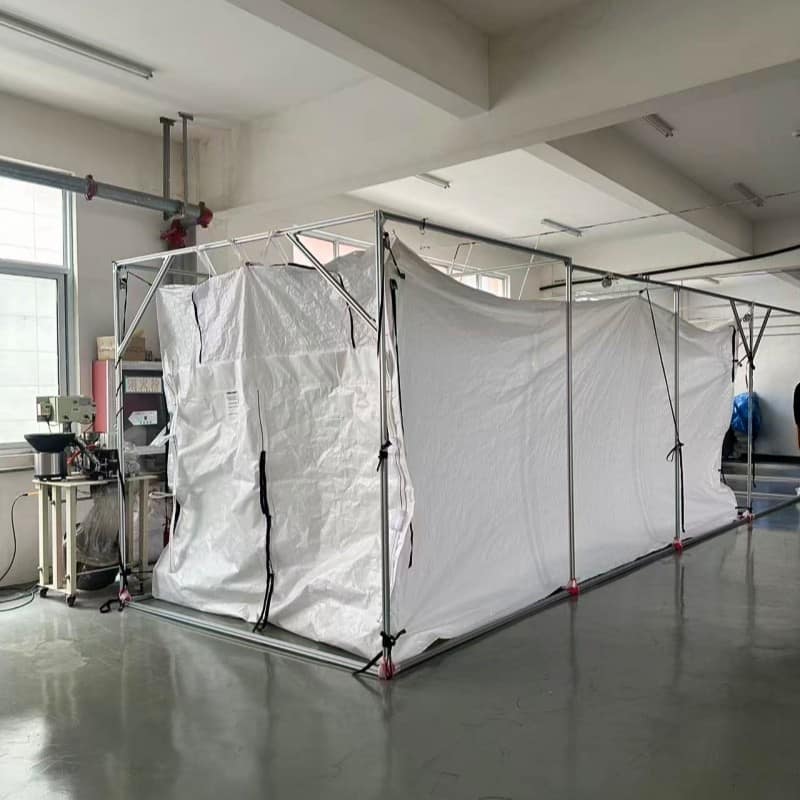
Even the best container liner for humidity fails if not installed with a meticulous sealing protocol. I’ve witnessed entire shipments compromised because a corner was left unsealed or a loading spout was not correctly cinched. The following practices, drawn from our on-site training with logistics partners, apply to all liner types.
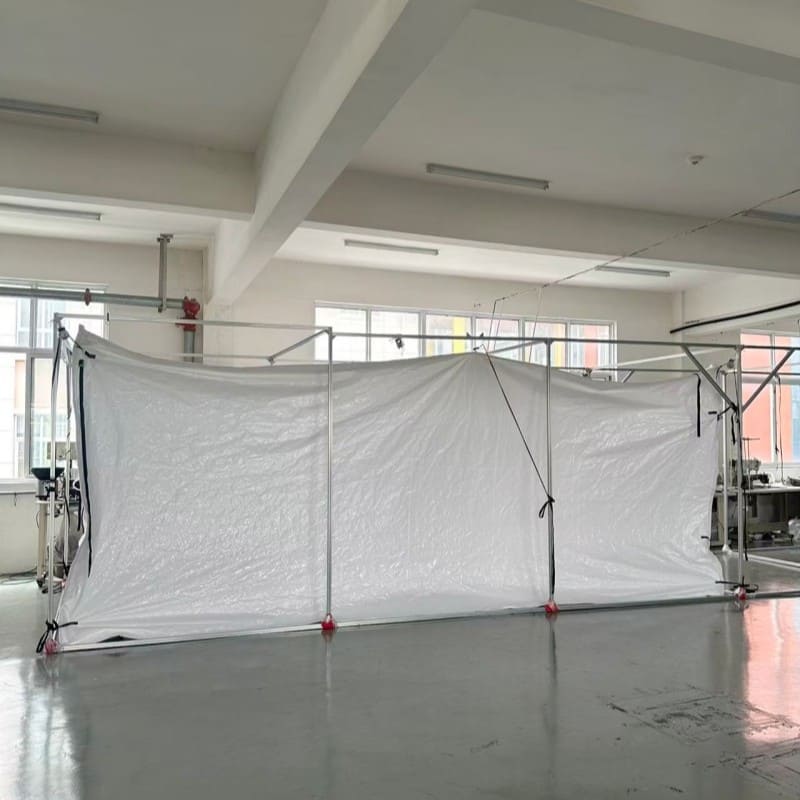
First, inspect the container interior for sharp protrusions and cover them with protective tape before placing the liner. Second, fix the liner to all six walls, ensuring the material lies flat without folds that could trap moisture-laden air. Third, seal the liner edges around the door opening with a double-fold adhesive strip or hook-and-loop fastening to create a continuous envelope. For top-loading liners, the filling spout should be heat-sealed or tied with a moisture-blocking cable tie after loading. Finally, if your route includes extended high humidity, consider adding a small quantity of desiccant inside the sealed liner as a secondary safeguard, not a replacement for the moisture barrier itself.
Choosing the Right Liner for Your Cargo and Route
The decision framework I recommend to our procurement clients is simple: rate your cargo on moisture sensitivity and cross-reference that with the expected route humidity profile. Highly hygroscopic commodities such as cocoa beans, coffee, and sugar demand Class A protection — an insulated liner with an MVTR below 0.05 g/(m²·h·kPa) and a thermal resistance that maintains internal temperatures above dew point throughout the voyage. Moderately sensitive cargoes like plastic pellets or PVC resin can be served with a reflective woven liner or a thicker PE film, provided the route’s average relative humidity stays under 80%. For routes with well-documented monsoon seasons or where the container will be exposed to daily temperature swings exceeding 15°C, I always lean toward at least a reflective foil construction.
The duration of transit pushes the equation further. A 15-day route from Asia to the Middle East in summer might require a lower specification than a 35-day voyage from South America to Northern Europe in winter, because the longer the container sits, the more cycles of condensation it undergoes. In my evaluations, I look at the worst-case dew point and then select a liner whose specifications exceed that threshold by a comfortable margin rather than just meeting it.
If your program involves multiple commodities or variable routing, it is worth confirming the precise liner specification before finalizing your BOM. Reach out to our technical team at [email protected] to discuss your cargo profile.
What to Look for in a Container Liner Supplier for Humid Conditions
When you are protecting cargo worth hundreds of thousands of dollars, the supplier’s competence matters as much as the liner’s material. Three indicators separate reputable container liner manufacturers from general trading companies: verifiable test data, relevant certifications, and demonstrated experience with humid climate applications.
Demand the MVTR report and thermal conductivity measurements for the exact liner construction you are buying, not a similar product. Certifications such as FDA and LFGB confirm food-contact safety, while ISO 9001 ensures a consistent production process — but they do not themselves guarantee moisture performance. The manufacturer should be able to explain, in technical terms, how their material layers combat condensation and why a particular stack works for your cargo.
As a Sino-American joint venture with over two decades in thermal packaging, Giant Flexpack has built the GewenChamp™ liner series by testing constructions on real-world humid routes rather than relying solely on laboratory conditions. Our engineers routinely adjust layering, adhesive selection, and seam welding based on feedback from long-distance bulk shipments. If you are evaluating a potential supplier, ask whether they can reference a specific shipment or case where their liner prevented moisture damage on a route similar to yours.
The right container liner supplier will not simply sell you a bag. They will look at your cargo data, route map, and seasonal timing and recommend a solution that reduces your total landed cost by minimizing damage-related claims. That consultative capability, built on hands-on experience, is what can make the difference between a cargo that arrives in prime condition and one that faces an insurance adjuster.
Moisture Protection Solutions for Container Shipping: Common Questions
Moisture damage begins inside the container when warm, humid air contacts cold surfaces. The correct container liner interrupts this entirely. Condensation forms when the internal air temperature drops to the dew point as external conditions change. A sealed liner with a low moisture vapor transmission rate blocks external humidity and reduces the temperature fluctuations that bring water out of the air. With an insulated composite liner like the TL-02, we have maintained internal conditions within 5°C of loading temperature even as outside temperatures varied by 20°C, effectively eliminating the dew point cycle in many cases.
In programs we’ve supported across Southeast Asia, thermal liners are the primary defense and desiccants play a secondary finishing role. A liner seals the cargo from the ambient air that carries the vast majority of moisture. Desiccants can remove any residual water vapor introduced during loading, especially if the loading site itself was humid. I recommend desiccants as a supplementary measure for extremely sensitive cargoes like cocoa or coffee beans on routes where the liner may be pierced or where the container remains closed for more than 40 days.
Not all reusable liners survive a high-humidity trip without degradation, but our woven thermal fabric and EPE foam liners are designed to be reused 3–5 times if properly dried and stored. The key is inspecting the liner for seam delamination or foil cracking after each use, because even microscopic breaches will nullify the moisture barrier on the next voyage. If a liner has been exposed to salt air or sustained condensation, I recommend discarding it rather than risking a second load. For operators running repeated humid routes, a reusable insulated liner with durable outer layers typically pays for itself in two to three shipments.
Yes, a higher-grade liner is almost always justified during annual monsoon periods because humidity levels rise from typical 70% to sustained 85% or above. The transition from moderate to high humidity changes the physics inside the container. A PE film liner that was adequate in dry winter conditions may develop condensation underneath when the container crosses the equator during the rainy season. Our rule of thumb for clients is to upgrade to an insulated liner with an aluminum foil or MPET reflective layer whenever the route forecast predicts average relative humidity above 85% for more than 50% of the transit time.
Cocoa beans need a liner that combines the lowest possible MVTR with substantial insulation, which is why we typically recommend the EPE foam composite. Cocoa beans are hygroscopic and also sensitive to temperature, with undesirable butter bloom occurring above 25°C. On a humid route from West Africa to Europe or the US, I’ve seen standard liners result in mold growth on the bean surface even when desiccants were added. A liner such as the TL-02, with a four-layer construction including a 3mm EPE foam core, keeps both moisture and heat out. If your cocoa shipment involves a route with a history of claims, you should also verify that the liner’s seam strength exceeds 1,500 N/5cm, because cocoa beans create significant bulk pressure during transit. Share your specific route and loading conditions at [email protected], and we can confirm the exact liner spec for your program.
 English
  German
  Spanish