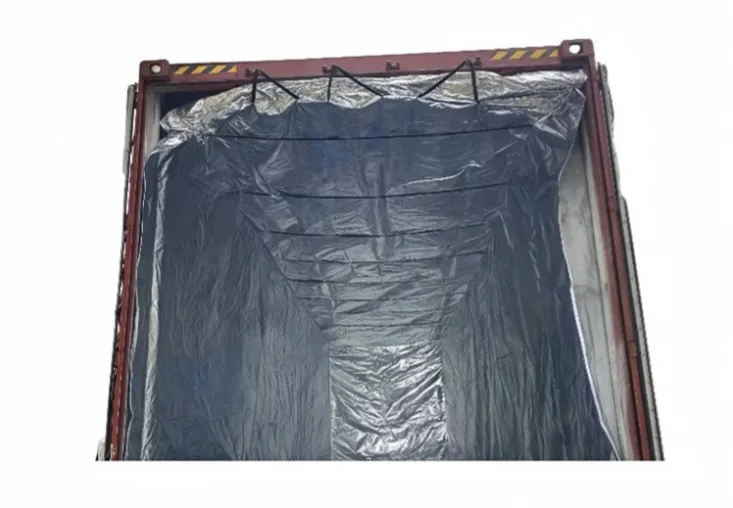
Foil-laminated woven PE
TL-01 Thermal Container Liner Woven thermal fabric
Woven PE with foil lamination on both sides. Check installation, handling and usable container space against your loading process.
View specifications
COMPARE MATERIALS & APPLICATIONS
Giant Flexpack manufactures thermal container liners for shipping containers. Compare four fitted liner constructions: foil-faced woven fabric, EPE foam, double-bubble composite and MPET/PE film. Review the container fit and product specifications before requesting a factory quotation.
Thermal liners provide passive insulation. The right construction depends on your route, transit duration, loading process and temperature requirements.
FIND YOUR MATERIAL & FORMAT
Showing 1–4 of 4 products
Foil-laminated woven PE
Woven PE with foil lamination on both sides. Check installation, handling and usable container space against your loading process.
View specifications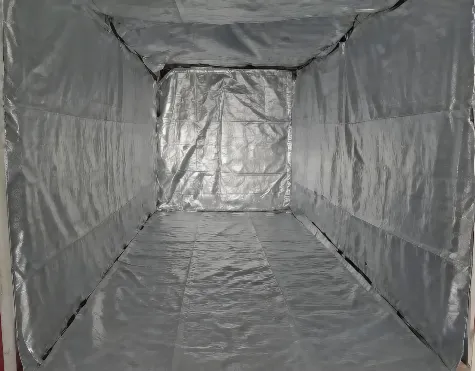
Foil-faced woven PE / EPE foam
Woven PE and foil-facing layers with an EPE foam core. Review foam thickness, fixing arrangements and clearance for cargo loading.
View specifications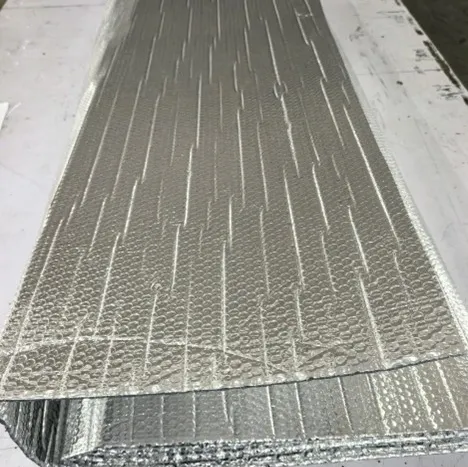
MPET / double-bubble composite
MPET composite with a double-bubble core. Review the complete layer specification, installation method and space needed inside the container.
View specifications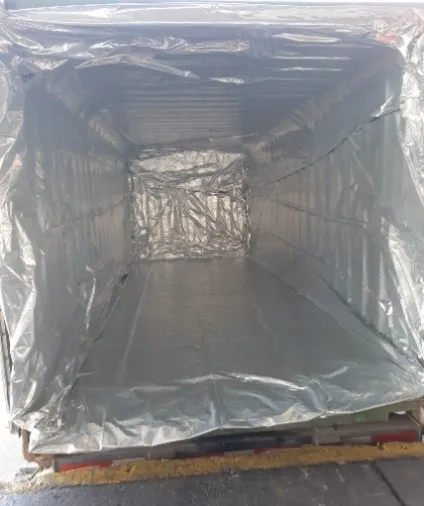
MPET / PE composite film
Flexible metallized PET and PE film construction. Compare its lightweight format, dimensions and handling requirements for the planned route.
View specificationsNARROW YOUR OPTIONS
Use this overview to shortlist a construction, then open the product specifications to check the details for your shipment.
| Product | Material format | What to review |
|---|---|---|
| TL-01 Thermal Container Liner Woven thermal fabric | Foil-laminated woven PE | Woven PE with foil lamination on both sides. Check installation, handling and usable container space against your loading process. |
| TL-02 Thermal Container Liner EPE foam | Foil-faced woven PE / EPE foam | Woven PE and foil-facing layers with an EPE foam core. Review foam thickness, fixing arrangements and clearance for cargo loading. |
| TL-03 Thermal Container Liner (MPET/Double Bubble/MPET) | MPET / double-bubble composite | MPET composite with a double-bubble core. Review the complete layer specification, installation method and space needed inside the container. |
| TL-04 Thermal Container Liner (MPET/PE Composite Film) | MPET / PE composite film | Flexible metallized PET and PE film construction. Compare its lightweight format, dimensions and handling requirements for the planned route. |
Need help matching a construction to your cargo? Share your shipping requirements →
Select around the shipment, not a material name alone. Use these checks before confirming dimensions, construction and order quantity.
Provide the container size, usable internal dimensions and door opening. Check liner installation, fixing points, clearance and the space required for loading and unloading.
Describe the cargo, required temperature range, origin and destination, transit duration and likely exposure during storage and handling. Validate the complete packaging and transport arrangement for temperature-sensitive goods.
Review woven fabric, EPE foam, double-bubble and MPET/PE film against the product specifications. Discuss thickness, handling, installation and any cargo-specific requirements before requesting a quotation.
Thermal liners do not actively cool cargo. Where controlled cooling is required, assess active refrigeration or a validated combination of measures alongside passive insulation.
Review temperature stabilization and cold-chain shipping requirements alongside your liner selection. For individual pallet loads, compare insulated pallet covers.
It is an insulating liner installed inside a shipping container to help reduce heat transfer. It provides passive protection; performance depends on the construction, installation, cargo and shipping conditions.
The constructions use different material structures. TL-01 uses foil-laminated woven PE, TL-02 incorporates EPE foam, TL-03 uses an MPET composite with a double-bubble core, and TL-04 uses MPET/PE composite film. Compare the individual specifications and installation requirements before selecting.
A passive liner does not provide active cooling or a guaranteed temperature range. Whether it fits a shipment depends on the cargo and route. Temperature-sensitive loads may require refrigeration and validation of the complete shipping process.
A container liner protects at the container level. A pallet cover encloses an individual pallet load, which may be relevant for shared containers, mixed shipments or protection during transfers. Match the format to how the cargo is grouped and handled.
Include cargo type, container size and usable dimensions, shipping route and duration, temperature requirements, loading method, preferred construction and approximate quantity. Note any food-contact or other application-specific requirements for discussion.
The terms can refer to different packaging formats. A loose cargo blanket covers a load, while this range consists of fitted thermal container liners. Compare the actual construction, fixing method and container fit. For individual pallet loads, review insulated pallet covers.
FROM SHORTLIST TO SPECIFICATION
Tell us what you are shipping so we can discuss the available formats and the details that need checking.