
For companies shipping dry bulk commodities, choosing the right packaging can mean the difference between a profitable shipment and a costly cargo claim. Two of the most widely used solutions are the container liner and the flexible intermediate bulk container (FIBC), each designed for very different logistics scenarios. While both carry dry flowable materials, their structural differences lead to stark contrasts in cost efficiency, cargo protection, and supply chain integration. Understanding when to use a container liner instead of FIBCs—or vice versa—helps logistics managers optimize total landed cost and reduce cargo damage.
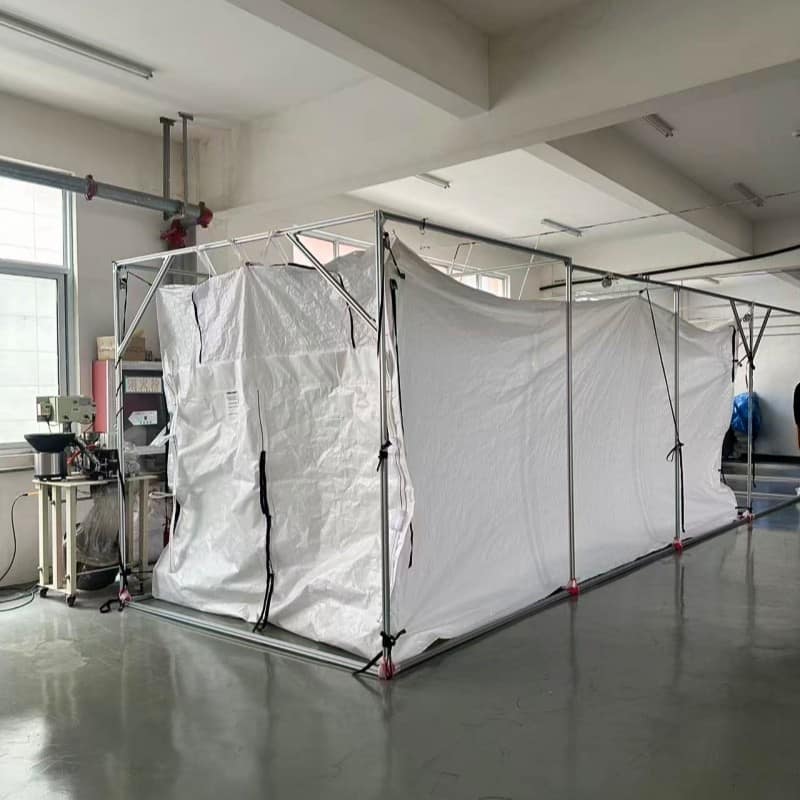
What is a Container Liner?
A Trockenbulk-Containerliner is a large, flexible barrier that turns a standard 20ft or 40ft ISO container into a bulk transport vessel. Made from woven polypropylene or polyethylene film, the liner is hung inside the container and secured before loading up to 30 tons of granular or powdered cargo through a top filling spout. On arrival, the cargo is discharged via a bottom outlet or pneumatic system, and the liner is typically removed and discarded or recycled. Container liners fully utilize the internal volume of a shipping container, offering a high payload-to-packaging ratio and excellent protection against moisture, contamination, and cargo loss. Leading manufacturers like Giant Flexpack engineer PE-Film-Containerliner und sift-proof woven liners for specific cargo types, ensuring compatibility with agricultural products, chemicals, minerals, and food-grade ingredients.
What is an FIBC?
An FIBC, commonly called a bulk bag, big bag, or super sack, is a woven fabric bag designed for transporting 500 kg to 2,000 kg of dry product. FIBCs feature lifting loops that allow forklift or crane handling and are often used as standalone packaging for short-distance truck shipments, warehouse storage, or as an intermediate step before container stuffing. Unlike container liners, FIBCs are discrete units that can be separated from the transport vehicle and handled independently. They provide a flexible, modular solution for facilities without bulk loading infrastructure, but they introduce higher per- ton packaging costs and more handling steps when used for long-haul international shipping.
Key Structural Differences
Understanding the physical and operational gap between the two systems reveals why they suit different freight strategies.
| Feature | Container Liner | FIBC |
|---|---|---|
| Load capacity per unit | 15–35 metric tons per liner | 0.5–2 metric tons per bag |
| Container utilization | 100% of container floor space and volume | 60–75% due to bag shape and void spaces |
| Loading method | Pneumatic, auger, or gravity into a single spout | Each bag filled individually, often requiring bagging stations |
| Discharge method | Gravity or pneumatic from a single outlet | Each bag must be lifted, opened, and emptied |
| Feuchtigkeitsbarriere | Integral film or coating provides a complete barrier | Standard woven FIBCs require separate inner liner bags |
| Contamination risk | Fully sealed system reduces cross-contamination | Open top and spout designs create dust and exposure risks |
| Material cost per ton shipped | Low (liner is a single item) | Higher (20–60 bags per container) |
| Typical reusability | Single-use, though some heavy-duty liners can be reused | Can be reused multiple times if not contaminated |
Cost Comparison: Unit Price vs. Total Landed Cost
cURL Too many subrequests by single Worker invocation. To configure this limit, refer to https://developers.cloudflare.com/workers/wrangler/configuration/#limits Trockenbulk-ContainerlinercURL Too many subrequests by single Worker invocation. To configure this limit, refer to https://developers.cloudflare.com/workers/wrangler/configuration/#limits
cURL Too many subrequests by single Worker invocation. To configure this limit, refer to https://developers.cloudflare.com/workers/wrangler/configuration/#limits
cURL Too many subrequests by single Worker invocation. To configure this limit, refer to https://developers.cloudflare.com/workers/wrangler/configuration/#limits PE-Folien-Containerliner cURL Too many subrequests by single Worker invocation. To configure this limit, refer to https://developers.cloudflare.com/workers/wrangler/configuration/#limits cURL Too many subrequests by single Worker invocation. To configure this limit, refer to https://developers.cloudflare.com/workers/wrangler/configuration/#limits cURL Too many subrequests by single Worker invocation. To configure this limit, refer to https://developers.cloudflare.com/workers/wrangler/configuration/#limits
cURL Too many subrequests by single Worker invocation. To configure this limit, refer to https://developers.cloudflare.com/workers/wrangler/configuration/#limits
cURL Too many subrequests by single Worker invocation. To configure this limit, refer to https://developers.cloudflare.com/workers/wrangler/configuration/#limits
cURL Too many subrequests by single Worker invocation. To configure this limit, refer to https://developers.cloudflare.com/workers/wrangler/configuration/#limits
cURL Too many subrequests by single Worker invocation. To configure this limit, refer to https://developers.cloudflare.com/workers/wrangler/configuration/#limits
- cURL Too many subrequests by single Worker invocation. To configure this limit, refer to https://developers.cloudflare.com/workers/wrangler/configuration/#limits
- cURL Too many subrequests by single Worker invocation. To configure this limit, refer to https://developers.cloudflare.com/workers/wrangler/configuration/#limits
- cURL Too many subrequests by single Worker invocation. To configure this limit, refer to https://developers.cloudflare.com/workers/wrangler/configuration/#limits
- cURL Too many subrequests by single Worker invocation. To configure this limit, refer to https://developers.cloudflare.com/workers/wrangler/configuration/#limits
cURL Too many subrequests by single Worker invocation. To configure this limit, refer to https://developers.cloudflare.com/workers/wrangler/configuration/#limits
cURL Too many subrequests by single Worker invocation. To configure this limit, refer to https://developers.cloudflare.com/workers/wrangler/configuration/#limits
cURL Too many subrequests by single Worker invocation. To configure this limit, refer to https://developers.cloudflare.com/workers/wrangler/configuration/#limits gewebte Trockenbulk-Containerliner cURL Too many subrequests by single Worker invocation. To configure this limit, refer to https://developers.cloudflare.com/workers/wrangler/configuration/#limits
cURL Too many subrequests by single Worker invocation. To configure this limit, refer to https://developers.cloudflare.com/workers/wrangler/configuration/#limits
cURL Too many subrequests by single Worker invocation. To configure this limit, refer to https://developers.cloudflare.com/workers/wrangler/configuration/#limits
- cURL Too many subrequests by single Worker invocation. To configure this limit, refer to https://developers.cloudflare.com/workers/wrangler/configuration/#limits cURL Too many subrequests by single Worker invocation. To configure this limit, refer to https://developers.cloudflare.com/workers/wrangler/configuration/#limits
- cURL Too many subrequests by single Worker invocation. To configure this limit, refer to https://developers.cloudflare.com/workers/wrangler/configuration/#limits cURL Too many subrequests by single Worker invocation. To configure this limit, refer to https://developers.cloudflare.com/workers/wrangler/configuration/#limits
- cURL Too many subrequests by single Worker invocation. To configure this limit, refer to https://developers.cloudflare.com/workers/wrangler/configuration/#limits cURL Too many subrequests by single Worker invocation. To configure this limit, refer to https://developers.cloudflare.com/workers/wrangler/configuration/#limits
- cURL Too many subrequests by single Worker invocation. To configure this limit, refer to https://developers.cloudflare.com/workers/wrangler/configuration/#limits cURL Too many subrequests by single Worker invocation. To configure this limit, refer to https://developers.cloudflare.com/workers/wrangler/configuration/#limits
cURL Too many subrequests by single Worker invocation. To configure this limit, refer to https://developers.cloudflare.com/workers/wrangler/configuration/#limits
Frequently Asked Questions
cURL Too many subrequests by single Worker invocation. To configure this limit, refer to https://developers.cloudflare.com/workers/wrangler/configuration/#limits
cURL Too many subrequests by single Worker invocation. To configure this limit, refer to https://developers.cloudflare.com/workers/wrangler/configuration/#limits
cURL Too many subrequests by single Worker invocation. To configure this limit, refer to https://developers.cloudflare.com/workers/wrangler/configuration/#limits
cURL Too many subrequests by single Worker invocation. To configure this limit, refer to https://developers.cloudflare.com/workers/wrangler/configuration/#limits
cURL Too many subrequests by single Worker invocation. To configure this limit, refer to https://developers.cloudflare.com/workers/wrangler/configuration/#limits
cURL Too many subrequests by single Worker invocation. To configure this limit, refer to https://developers.cloudflare.com/workers/wrangler/configuration/#limits cURL Too many subrequests by single Worker invocation. To configure this limit, refer to https://developers.cloudflare.com/workers/wrangler/configuration/#limits cURL Too many subrequests by single Worker invocation. To configure this limit, refer to https://developers.cloudflare.com/workers/wrangler/configuration/#limits
cURL Too many subrequests by single Worker invocation. To configure this limit, refer to https://developers.cloudflare.com/workers/wrangler/configuration/#limits
cURL Too many subrequests by single Worker invocation. To configure this limit, refer to https://developers.cloudflare.com/workers/wrangler/configuration/#limits
cURL Too many subrequests by single Worker invocation. To configure this limit, refer to https://developers.cloudflare.com/workers/wrangler/configuration/#limits
cURL Too many subrequests by single Worker invocation. To configure this limit, refer to https://developers.cloudflare.com/workers/wrangler/configuration/#limits
cURL Too many subrequests by single Worker invocation. To configure this limit, refer to https://developers.cloudflare.com/workers/wrangler/configuration/#limits
cURL Too many subrequests by single Worker invocation. To configure this limit, refer to https://developers.cloudflare.com/workers/wrangler/configuration/#limits
cURL Too many subrequests by single Worker invocation. To configure this limit, refer to https://developers.cloudflare.com/workers/wrangler/configuration/#limits Kontaktieren Sie uns or explore our dry bulk container liner portfolio to find a solution engineered for your route and cargo requirements.
 German
  English
  Spanish