
For companies shipping dry bulk commodities, choosing the right packaging can mean the difference between a profitable shipment and a costly cargo claim. Two of the most widely used solutions are the container liner and the flexible intermediate bulk container (FIBC), each designed for very different logistics scenarios. While both carry dry flowable materials, their structural differences lead to stark contrasts in cost efficiency, cargo protection, and supply chain integration. Understanding when to use a container liner instead of FIBCs—or vice versa—helps logistics managers optimize total landed cost and reduce cargo damage.
What is a Container Liner?
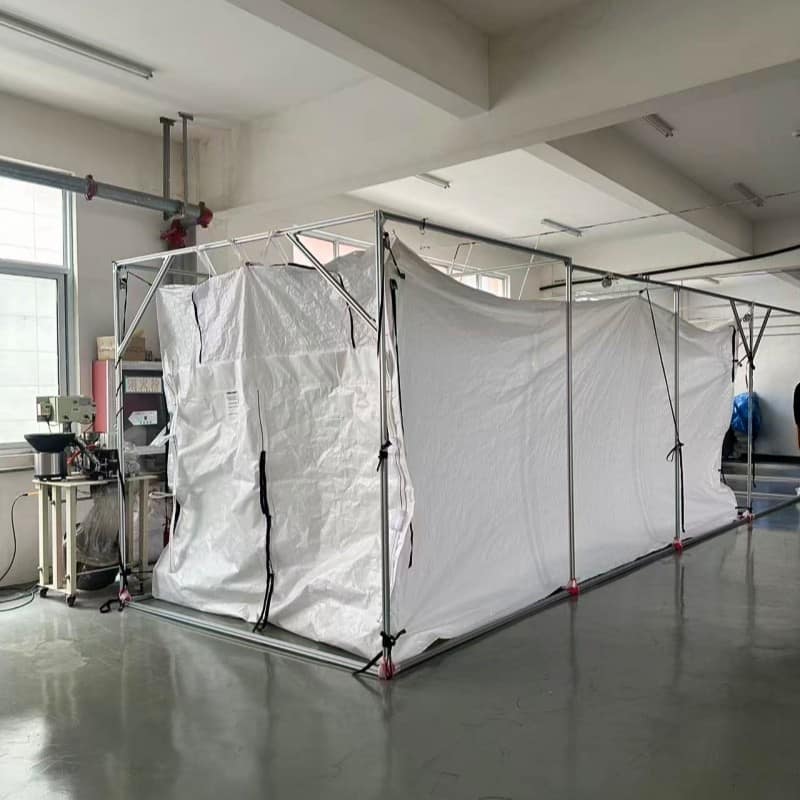
A dry bulk container liner is a large, flexible barrier that turns a standard 20ft or 40ft ISO container into a bulk transport vessel. Made from woven polypropylene or polyethylene film, the liner is hung inside the container and secured before loading up to 30 tons of granular or powdered cargo through a top filling spout. On arrival, the cargo is discharged via a bottom outlet or pneumatic system, and the liner is typically removed and discarded or recycled. Container liners fully utilize the internal volume of a shipping container, offering a high payload-to-packaging ratio and excellent protection against moisture, contamination, and cargo loss. Leading manufacturers like Giant Flexpack engineer PE film container liners and sift-proof woven liners for specific cargo types, ensuring compatibility with agricultural products, chemicals, minerals, and food-grade ingredients.
What is an FIBC?
An FIBC, commonly called a bulk bag, big bag, or super sack, is a woven fabric bag designed for transporting 500 kg to 2,000 kg of dry product. FIBCs feature lifting loops that allow forklift or crane handling and are often used as standalone packaging for short-distance truck shipments, warehouse storage, or as an intermediate step before container stuffing. Unlike container liners, FIBCs are discrete units that can be separated from the transport vehicle and handled independently. They provide a flexible, modular solution for facilities without bulk loading infrastructure, but they introduce higher per- ton packaging costs and more handling steps when used for long-haul international shipping.
Key Structural Differences
Understanding the physical and operational gap between the two systems reveals why they suit different freight strategies.
| Feature | Container Liner | FIBC |
|---|---|---|
| Load capacity per unit | 15–35 metric tons per liner | 0.5–2 metric tons per bag |
| Container utilization | 100% of container floor space and volume | 60–75% due to bag shape and void spaces |
| Loading method | Pneumatic, auger, or gravity into a single spout | Each bag filled individually, often requiring bagging stations |
| Discharge method | Gravity or pneumatic from a single outlet | Each bag must be lifted, opened, and emptied |
| Moisture barrier | Integral film or coating provides a complete barrier | Standard woven FIBCs require separate inner liner bags |
| Contamination risk | Fully sealed system reduces cross-contamination | Open top and spout designs create dust and exposure risks |
| Material cost per ton shipped | Low (liner is a single item) | Higher (20–60 bags per container) |
| Typical reusability | Single-use, though some heavy-duty liners can be reused | Can be reused multiple times if not contaminated |
Cost Comparison: Unit Price vs. Total Landed Cost
At first glance, an FIBC appears cheaper because a standard bulk bag costs less than a custom container liner. However, when you calculate the cost per ton shipped, container liners frequently emerge as the more economical choice for high-volume international routes. A 40ft container can hold approximately 25–28 tons of bulk cargo. Using FIBCs, you would need 20–28 bags of 1-ton capacity, plus pallets or slip sheets for loading, and additional plastic liners inside each bag to achieve the same moisture protection a container liner provides by default. The combined packaging materials cost often exceeds the price of a single dry bulk container liner. Beyond materials, container liners reduce labor dramatically. A single operator can fill an entire container liner in 30–45 minutes using a pneumatic system, whereas manually filling, stacking, and securing 25 FIBCs can take several hours and a larger crew. At the destination, discharging a container liner takes 20–40 minutes via gravity; opening and emptying each FIBC individually adds labor and turnaround delays. These time savings translate directly to lower handling costs and faster container turnaround.
Performance and Cargo Protection
For moisture and contamination control, container liners are engineered as integral protective systems. A PE film container liner creates a 100% moisture and dust barrier with heat-welded seams, effectively eliminating the risks of mold, caking, and foreign particle ingress during ocean transit. In contrast, standard FIBCs are woven structures with inherent breathability. Even when fitted with internal polyethylene liners, the top filling and discharge spout area remains vulnerable to moisture ingress and dust escape unless carefully sealed—a process that is often inconsistent in practice. Advanced container liner designs like sift-proof models with PU tape sealed seams go a step further, achieving zero dust emission for micronized powders such as carbon black or cement. This capability is not practical with standard FIBCs due to the multiple openings and woven fabric permeability. Cargo integrity also benefits from the container liner’s snug fit within a hard-walled container. The liner is restrained by the container walls, preventing product movement that could cause compartment shifts or static charge buildup. FIBCs inside a container can slide or collapse if not properly blocked and braced, increasing both product damage risk and dangerous cargo shift during sea transit.
When FIBCs Remain the Right Choice
Despite the cost and protection advantages of container liners, FIBCs remain essential in many supply chain scenarios. If your receiving facility does not have bulk storage silos or pneumatic discharge equipment, FIBCs allow gradual, manual dispensation of product. Industries that sell small batches or repackage at destination—such as specialty chemicals, pigments, or food ingredients sold in 25-kg bags—often prefer FIBCs for their modularity. FIBCs are also practical for short inland truck movements where a full container liner would be underutilized. For organizations moving product between manufacturing lines within the same plant or to a nearby warehouse, the reusable nature of FIBCs (when returned in good condition) can deliver an acceptable cost per use.
When to Choose a Container Liner Over FIBCs
Container liners become the optimal answer when you are shipping large volumes of dry bulk across oceans or over long land distances and aiming for the lowest cost per ton. They are especially valuable for:
- Agricultural commodities like soybeans, barley, or corn, where maintaining low moisture content is critical.
- Plastic pellets and resin granules where contamination must be avoided.
- Food-grade products such as sugar, flour, and malt that demand sanitary, certified packaging.
- Minerals and building materials like cement, kaolin clay, or alumina powder where sift-proof containment is necessary.
For any shipment moving in a full container load (FCL), converting an ISO container into a bulk carrier with a liner eliminates the packaging waste and labor of dozens of FIBCs while delivering better product protection.
How Giant Flexpack Optimizes Container Liner Performance
At Giant Flexpack, we engineer container liners not just as disposable barriers but as precision cargo management tools. Our woven dry bulk container liners are manufactured to ISO 9001 certified quality systems, with FDA, REACH, and RoHS compliant raw materials to meet global food safety and environmental regulations. For products sensitive to moisture, we offer double-sided LDPE laminated liners that achieve 100% odor and moisture sealing, proven in malt and cocoa bean exports. Our manufacturing approach aligns liner design to specific discharge methods, from standard gravity outlets to European-style pneumatic spouts, ensuring compatibility with destination infrastructure. By treating the liner as an integrated component of the logistics chain, we help shippers reduce cargo claims, eliminate costly re-bagging, and simplify end-to-end bulk transport.
How to Decide: Container Liner vs. FIBC
Ask these practical questions before making a packaging decision:
- What is your shipment size? If you regularly ship 15+ tons in FCL containers, a container liner will almost always deliver lower packaging cost per ton.
- Does your destination have bulk receiving equipment? If yes, the speed and cleanliness of pneumatic or gravity discharge makes container liners far more efficient.
- Is moisture sensitivity a concern? For hygroscopic cargoes, the integral barrier of a PE film liner is more reliable than multiple FIBC inner liners.
- Do you need to repackage at destination? If you must split a bulk shipment into smaller packages, FIBCs allow simpler downstream processing.
For many companies, a hybrid strategy makes sense: use container liners for large, high-volume international lanes and FIBCs for regional distribution or spot-market supply.
Frequently Asked Questions
Can a container liner be reused?
Most standard container liners are designed for single use because they are cut or punctured during unloading. However, some heavy-duty woven liners can be reused a few times if carefully removed and not contaminated.
Are FIBCs cheaper per ton than container liners?
Generally, no. When you factor in the number of FIBCs needed to fill a container and the labor to load and discharge them, the total packaging cost per ton is often higher than using one container liner.
Can I use a container liner for food-grade products?
Yes. Many container liners, including those from Giant Flexpack, are manufactured from FDA and EU-compliant raw materials and can be certified for direct food contact. Options like malt-grade container liners with food-safe laminations are standard.
What prevents a container liner from tearing during filling?
Woven container liners use high‑tenacity tapes with tensile strengths exceeding 1,800 N/5cm. Heat‑welded seams and strategic lifting loops distribute stress evenly. Installation training and proper strapping techniques (which suppliers provide) further minimize the risk of failure.
Can I use a container liner for small shipments?
Container liners are most cost-effective for full container loads (FCL). For smaller volumes, FIBCs or other packaging units may be more practical.
Conclusion
The choice between a container liner and FIBC hinges on volume, logistics infrastructure, and cargo sensitivity. For large-scale international bulk shipping, container liners deliver lower cost per ton, faster loading and discharge, and superior moisture and contamination protection—advantages that directly lower total supply chain costs. FIBCs, on the other hand, offer flexibility for smaller batches and facilities without bulk handling systems. By understanding how each packaging type influences every link in your logistics chain, you can select the solution that saves money and protects product quality from origin to destination.
If you’re evaluating bulk packaging for an upcoming shipment or program, our technical team at Giant Flexpack can help you compare container liner specifications, calculate cost per ton, and recommend the optimal configuration for your commodity. Contact us or explore our dry bulk container liner portfolio to find a solution engineered for your route and cargo requirements.
 English
  German
  Spanish