
Choosing a container liner supplier is a decision that directly determines whether your bulk cargo survives transcontinental shipping without moisture damage, thermal spoilage, or contamination. Most supplier evaluation checklists emphasize price per unit and quoted lead time, but those two metrics reveal almost nothing about the supplier’s ability to engineer a liner that matches your cargo profile. After fifteen years in thermal packaging and bulk logistics, I have seen procurement teams discover this gap only after a shipment arrives partially caked, heat-affected, or rejected at the destination port. The seven criteria below are the ones we use internally when qualifying our own material and process partners—they shift the focus from paperwork to performance.
Why Thermal Performance Should Be the First Gate in Supplier Evaluation
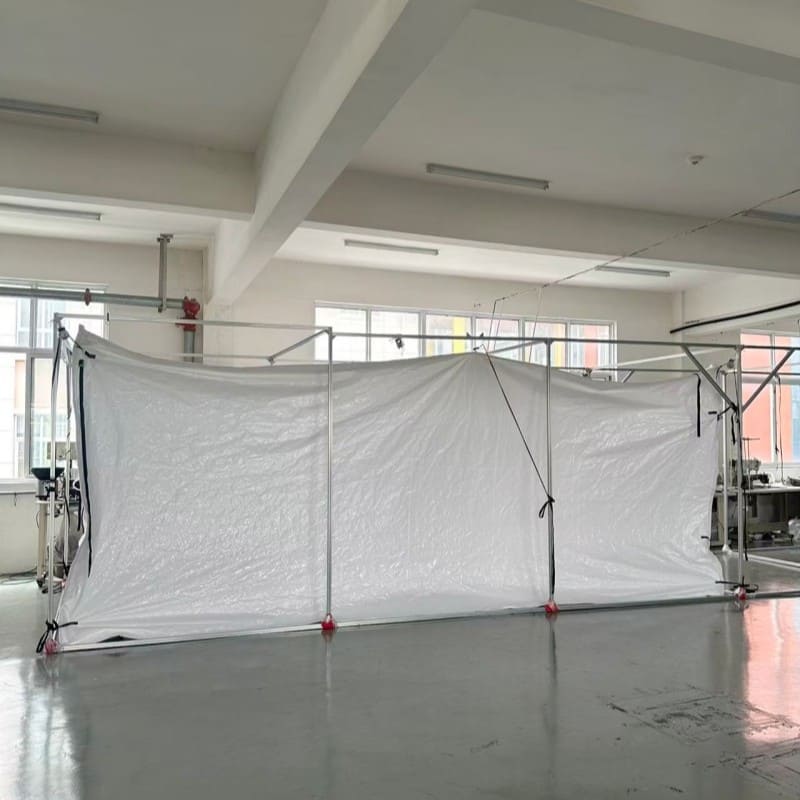
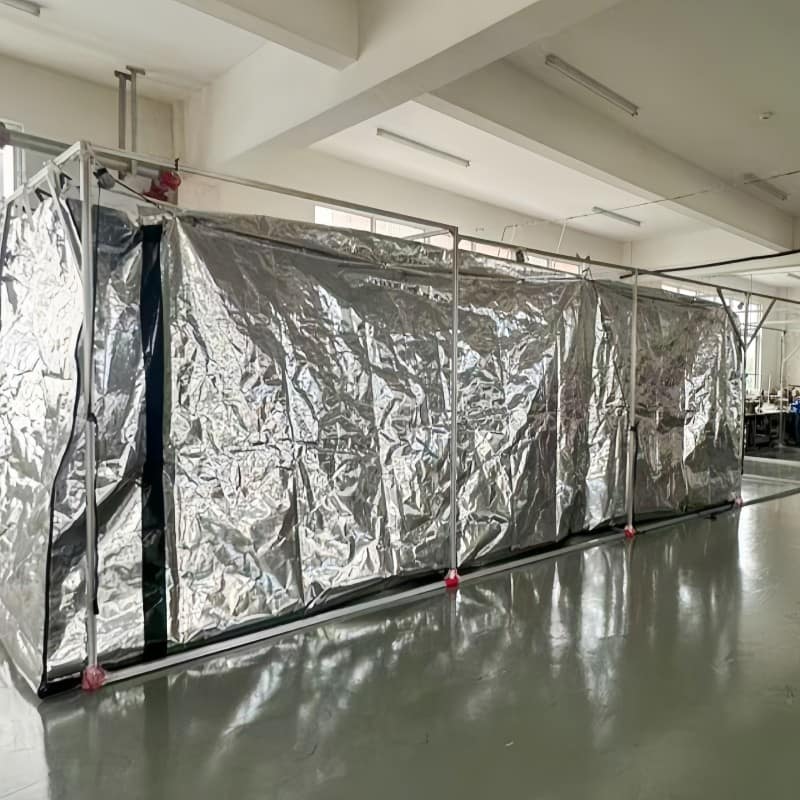
A container liner manufacturer may quote any thermal resistance value they choose, but if they cannot walk you through the exact material stack that generates that performance, the number is meaningless. At Giant Flexpack, we structure every thermal liner as a defined composite: the TL-03 series, for example, sandwiches an MPET/double bubble/MPET core between metallized PET and PET MPET layers, reaching a radiant heat rejection rate of 98% with a total 5mm bubble cushion. Ask suppliers to produce film-layer diagrams, not marketing sheets. The four decision points that matter are radiant reflectivity threshold (minimum 92%), conductive insulation density (EPE foam cores should sit at 25 kg/m³ or above), moisture vapor transmission rate (MVTR ≤ 0.033 g/(m²·h·kPa) separates a protective liner from a basic bag), and the temperature operating window your actual route demands—our TL-02 with EPE foam handles -50°C to 80°C, while a lighter MPET/PE composite film liner like the TL-04 maintains a narrower -10°C to 30°C band, sufficient for standard fresh produce but inadequate for Arctic or Middle Eastern summer transits. A supplier that cannot distinguish between these ranges is not manufacturing thermal control; they are repackaging commodity material.
Certification Depth: What Buyers Miss When They Stop at ISO 9001
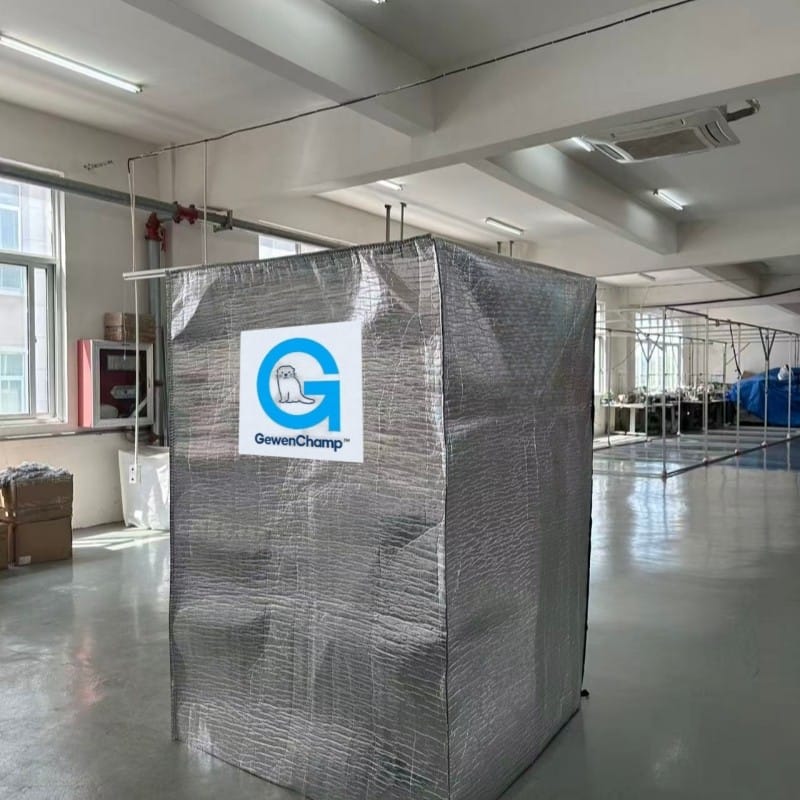
A single ISO 9001 certificate on a factory wall only confirms that the manufacturing process follows documented procedures; it does not guarantee that the liner touching your food product will meet FDA migration limits or that the factory’s supply chain satisfies REACH substance restrictions. I have worked with buyers who assumed an ISO registration equated to food-contact safety, only to have a shipment held at an EU border because the liner film lacked specific migration test reports. When evaluating a supplier, demand the actual test reports issued by accredited third-party laboratories—not internal declarations. For the GewenChamp™ TL series, we hold current certificates from SGS covering FDA 21 CFR, LFGB, REACH, and RoHS simultaneously. The distinction matters operationally: a woven PE liner with double-sided food-grade LDPE lamination, like our malt-grade DBL-W02, must demonstrate barrier integrity against odor transfer and moisture ingress under load. If a supplier hesitates to share the laboratory name or the report batch number that corresponds to your intended product, treat that as a qualification gap, not a negotiation detail.
If your program involves temperature-sensitive food ingredients or pharmaceutical powders, verifying a supplier’s certification matrix often uncovers hidden gaps that standard RFQs miss—before finalizing your BOM, reach out at [email protected] and we can confirm which compliance documents apply to your specific cargo category.
How Customization and OEM/ODM Capacity Affect Your Total Landed Cost
Standard-dimension liners work for standard containers, but actual logistics rarely remain standard. The difference between a supplier that modifies a sewing template and one that reengineers the polymer structure becomes visible the first time you need a 30FT European pallet-wide liner with four top spouts synchronized to your filling equipment. The DBL-F02 we produce for the European plastic pellet market is not a scaled-down 40FT liner; it is a separate development path with 140-micron LDPE film, four heat-sealed 25–30 cm top spouts, and fully welded seams that eliminate the leakage points common in converted designs. A legitimate OEM/ODM capability shows itself in two places: the speed with which a technical team moves from your specification sheet to a first-article drawing, and the presence of specialized tooling—heat-sealing jigs, multi-layer lamination stations, and PU tape-sealing lines for sift-proof seams like those on our DBL-W06 powdered chemical liner. If the supplier cannot produce a capability statement listing their in-house R&D equipment, you are probably speaking with a trader rather than a manufacturing partner.
Production Scale, Lead Time Consistency, and Supply Chain Visibility
Bulk shippers often discover a supplier’s capacity limit at the exact moment a three-container trial order becomes a quarterly program of sixty units. The question to ask is not “what is your maximum monthly output?” but “how does your quality management system behave when output doubles?” At our Taixing facility, woven liner lines and thermal lamination lines operate as separate controlled processes, each with inline tension monitoring and post-production seal-integrity sampling. This means a 20-ton DBL-W01 dry bulk liner carrying polymer pellets reaches the same seam strength whether it ships in a 10-unit batch or a 200-unit urgent replenishment. Lead time predictability matters more than optimistic quoted lead times: a supplier that consistently ships within 25–35 days on confirmed orders, with weekly production status updates showing material availability and curing completed, is worth significantly more than one that promises 15 days and delivers sporadically.
After-Sales Support Goes Beyond a Warranty Certificate
A one-year warranty text is only as valuable as the engineering team standing behind it. The critical after-sales dimension is application support: what happens when your receiving warehouse team in Mombasa encounters a different pneumatic discharge pump pressure than the liner specification anticipated, and your cargo is stalled at the port? We handle this by maintaining a technical support channel that reviews installation photos and discharge equipment specs in real time, often resolving the issue within hours rather than days. This kind of support requires the supplier to have seen enough real-world installations to diagnose failures at a distance—the TL-01 woven thermal fabric liner, for instance, can be reused three to five times if the installation team follows correct strapping procedures, but if the fixing ropes are tensioned unevenly, the liner develops stress points that shorten its life. A supplier that cannot explain exactly how their liner fails under incorrect installation is unlikely to help you prevent it.
From Sample to Full-Scale: A Practical Supplier Verification Path
Requesting samples is the most commonly skipped step, because it delays the purchase order by a few weeks. Those weeks are the cheapest insurance available in bulk logistics. A proper sample evaluation verifies three things: whether the liner fits your container type (20GP, 40GP, 40HQ) without sagging or overstretching; whether the filling and discharge spout positions align with your loading and unloading equipment; and whether a practical load test—even a half-container run with actual cargo—reproduces the thermal and moisture barrier results quoted by the supplier. For thermal liners, we recommend placing data loggers at the container floor, ceiling, and center during the trial shipment to capture the full temperature profile. With the TL-01’s aluminum foil lamination reflecting 95–97% of radiant heat, you should see a temperature variance within ±5°C even on high-humidity routes. If the recorded deviation exceeds the supplier’s specification by a wide margin, the batch likely has a lamination defect traceable back to process control—and you want to find that on a sample run, not on a full commercial shipment.
Questions Procurement Teams Ask About Supplier Evaluation
What is the single most overlooked factor when comparing liner suppliers?
The thermal resistance number on a datasheet is almost never the actual performance under shipping conditions. Suppliers quote lab-tested R-values at steady-state ambient temperatures, but your container experiences dynamic solar loading, humidity cycling, and conductive heat transfer through the container walls. The real evaluation metric is the liner’s ability to dampen temperature peaks over a multi-day voyage—ask for time-series temperature data from a shipment that matches your route rather than a single R-value.
When a supplier claims “FDA-compliant,” what documentation should I actually receive?
A legitimate claim requires the supplier to furnish the specific 21 CFR section invoked, the third-party laboratory name, the test methodology used (such as overall migration testing under intended-use simulants), and the certificate’s date of validity. A generic “FDA approved” statement without laboratory traceability is not compliance; it is a marketing claim and should be treated as such until proven otherwise.
How can I tell if a manufacturer genuinely controls their polymer sourcing versus buying from a trading network?
A manufacturer that controls sourcing can identify the resin grade, film extrusion parameters, and lamination conditions for each production batch, and they will record these against the batch number on the finished liner. Ask the supplier to walk you through a single batch record from polymer arrival to final inspection. If that documentation does not exist, the supply chain is opaque beyond the supplier’s immediate operation.
If my shipment requires both thermal insulation and sift-proof containment, can one liner handle both?
Yes, but only if the construction integrates the barrier functions without compromising either. For example, our TL-02 combines a 3mm EPE foam core for thermal isolation with a PET aluminum foil facing that also provides moisture vapor barrier performance, while the DBL-W06 handles powder containment via PU tape-sealed seams and double-sided PE coating. The two requirements demand different engineering priorities, so confirm the supplier has manufactured for both conditions before accepting a “dual-function” claim.
Does evaluating a supplier through a single trial shipment give enough confidence for a long-term contract?
One trial shipment eliminates obvious failures—poor fit, immediate condensation, spout misalignment—but it does not reveal batch-to-batch consistency, which is the real predictor of long-term reliability. We recommend a graduated approach: a tight-specification sample run, then a three-to-five container pilot program with your standard cargo and route, and finally a quarterly review of conformance data before committing to annual volumes. If your program involves high-value or time-sensitive goods, share your requirements at [email protected] or call +86 523 87683880 to discuss a qualification schedule that matches your procurement timeline.
 English
  German
  Spanish