
OEM container liner manufacturing gives procurement teams direct control over material specifications, thermal performance, and quality certifications. Too many buyers assume that any container liner will protect their cargo, only to face moisture damage, temperature excursions, or contamination claims after shipment. From fifteen years of working with bulk logistics clients, I’ve seen that the most successful sourcing decisions start with verifying three things: the manufacturer’s material engineering capabilities, the certifications they actually hold, and their willingness to customize liners to specific cargo and route conditions. This article explains what to demand from an OEM container liner supplier before placing an order.
The OEM Container Liner Manufacturing Process
When you source liners through an OEM, you are not buying a generic product off a shelf. OEM manufacturing means the supplier designs and produces container liners to your specifications, matching the liner’s material composition, dimensions, and thermal performance to the cargo you ship and the routes you run. Our OEM process begins with a technical review: we examine the cargo’s sensitivity to moisture, acceptable temperature range, loading and discharge method, and any regulatory certifications required in the destination market.
From that review, we select the appropriate film, lamination, and fabric construction. For a resin exporter shipping from Southeast Asia to Europe, that might mean a PE woven liner with double-sided aluminum foil lamination to reflect 95 percent of radiant heat and block moisture ingress. For a cocoa bean shipper, a food-grade EPE foam liner with low thermal conductivity and an anti-condensation barrier matters more than radiant reflection. Every liner is heat-welded on automated production lines to eliminate stitching holes that leak powder or moisture.
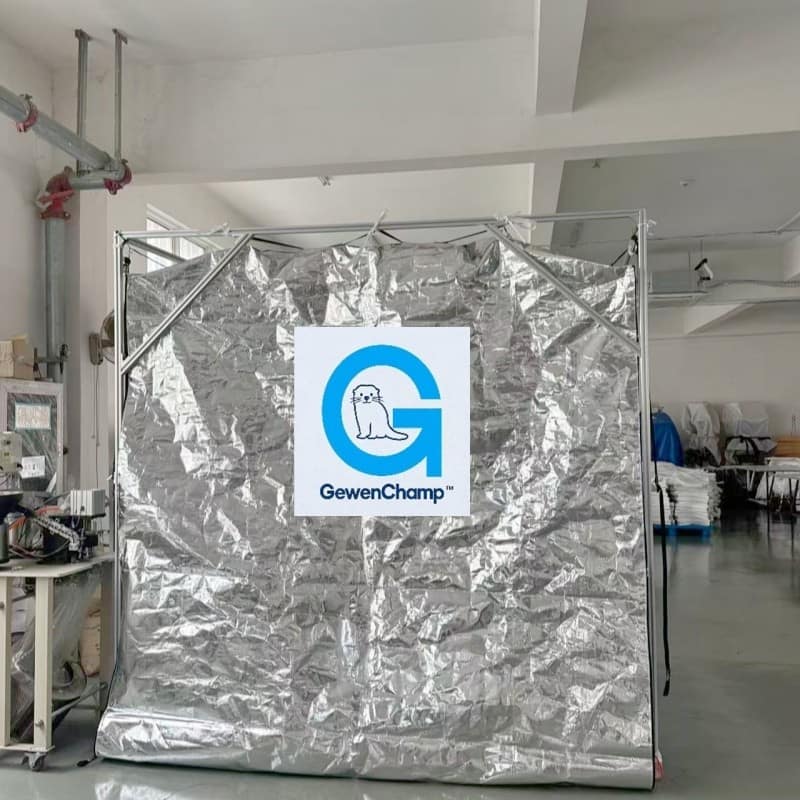
What separates a capable OEM from a transactional factory is this engineering-backed material selection. I have watched buyers walk away from the lowest-cost quote because the supplier could not explain why a 140-micron LDPE film was inadequate for a fine powder that sifts through seams. The right OEM will walk you through the material decision, not just take your order.
Material and Thermal Performance Specifications
The largest variable in container liner performance is the material structure. Different layers solve different problems, and the stackup determines whether the liner insulates, reflects, blocks moisture, or resists tearing.
Below is a reference overview of the four most common OEM construction types and their distinct roles.
| Liner Type | Material Stack | Radiant Heat Reflection | Thermal Conductivity | Primary Application |
|---|---|---|---|---|
| Woven thermal | Woven PE + double-sided aluminum foil lamination | 95–97% | — | General dry bulk, food & pharma |
| EPE foam composite | Aluminum foil / woven PE / 3mm EPE foam / aluminum foil | High | ≤0.038 W/(m·K) | Long-haul sea freight, frozen goods |
| MPET double bubble | MPET / double bubble cushion / PET MPET | Up to 98% | — | Vaccines, biologics, electronics |
| PE film | 140-micron LDPE film | — | — | Dry powders, plastic pellets |
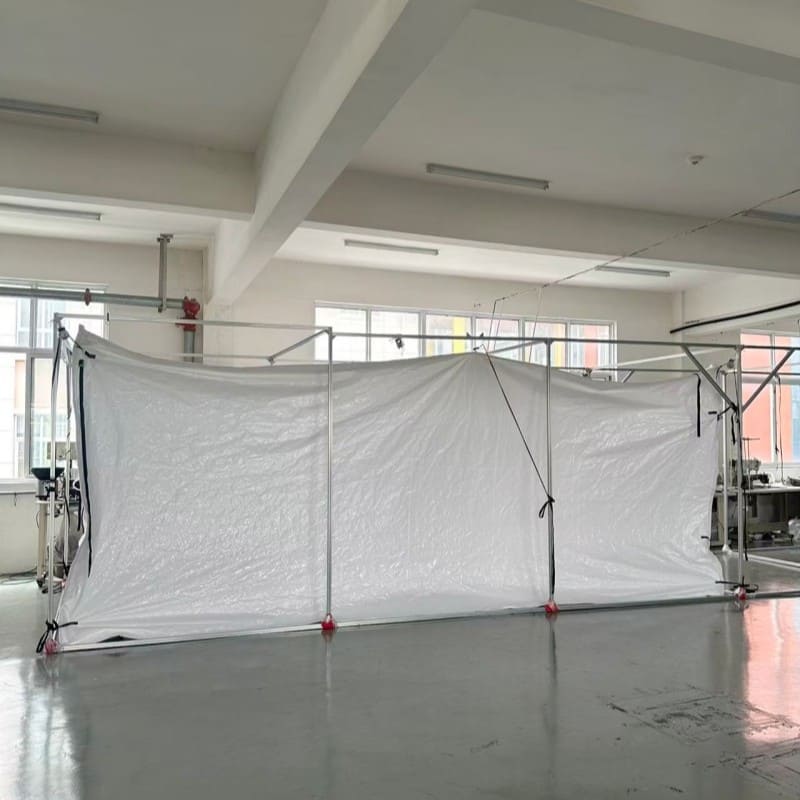
Beyond thermal protection, moisture control separates reliable liners from those that fail mid-voyage. A competent OEM will test and disclose the moisture vapor transmission rate (MVTR). For insulated liners, an MVTR below 0.033 g/(m²·h·kPa) is typical for constructions that use aluminum foil or metalized PET layers as moisture barriers. This directly prevents “container rain,” the condensation that forms when daytime heat drives moisture from the cargo and nighttime cooling deposits it on the container ceiling. If your cargo clumps, molds, or rusts from moisture, the MVTR rating and the presence of a continuous barrier layer are non-negotiable.
Quality Certifications That Matter in OEM Manufacturing
Certifications are often treated as a checklist, but not all certificates carry equal weight for container liners. The specific combination you need depends on your cargo and market.
For food-contact bulk shipments, FDA compliance is the baseline for the US market, while LFGB and EU Framework Regulation (EC) No. 1935/2004 are required for Europe. These certifications confirm that the liner’s materials do not transfer harmful substances to food at the expected contact time and temperature. Likewise, REACH and RoHS compliance matters for industrial cargoes entering the EU, because they restrict hazardous substances in packaging.
A manufacturer that holds both FDA and LFGB certification has undergone separate audits for food-contact safety and material composition. Our GewenChamp thermal liner series and dry bulk liner lines carry FDA, LFGB, ISO 9001, REACH, and RoHS certifications, with third-party testing from SGS. That range covers the majority of international bulk food and industrial shipments.
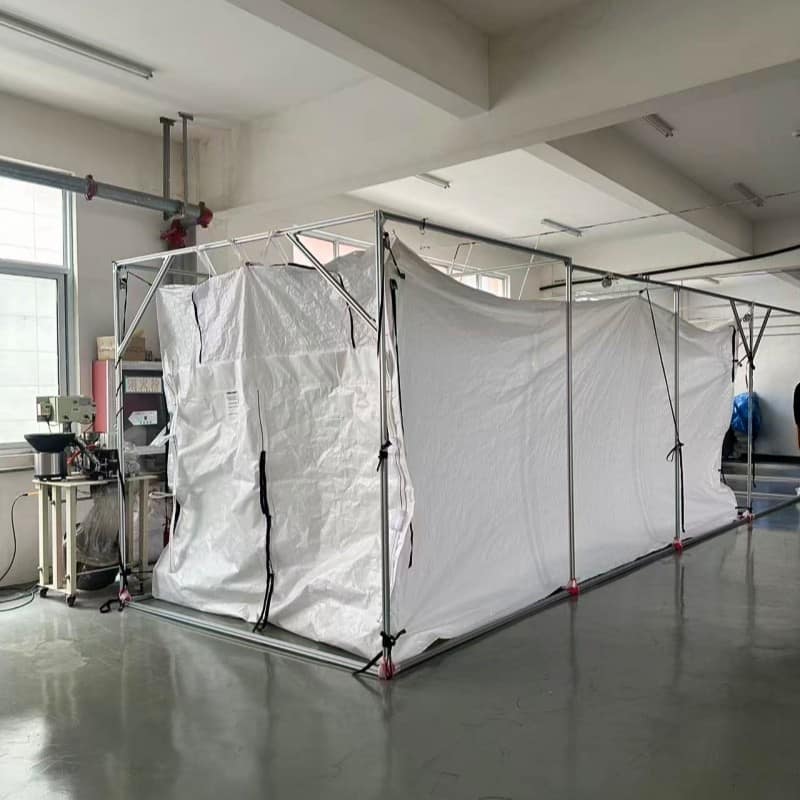
ISO 9001 is the operational backbone. It confirms that the factory runs under a quality management system with documented process control, from incoming raw material inspection to final liner testing. When I speak with procurement managers vetting new suppliers, I advise them to request a copy of the ISO 9001 scope certificate: it should explicitly include container liner manufacturing. An ISO 9001 certificate for a different product category is meaningless.
Customization Options for Container Liner OEM Orders
A standard container liner fits common containers, but your cargo rarely fits a standard set of challenges. OEM customization is where the real value lies, provided the manufacturer has in-house design capability.
Customizations we routinely handle include: adding side-loading spouts for facilities without top access; reinforcing seam strength with PU tape sealing for fine powders that sift through standard stitches; adjusting liner dimensions for 30-foot or railway containers; and integrating anti-static or anti-UV treatments for chemical cargoes. Thickness adjustments are similarly straightforward. A PE film liner can move from a standard 140-micron to a heavy-duty 300-micron when the product is abrasive or the loading method applies high impact.
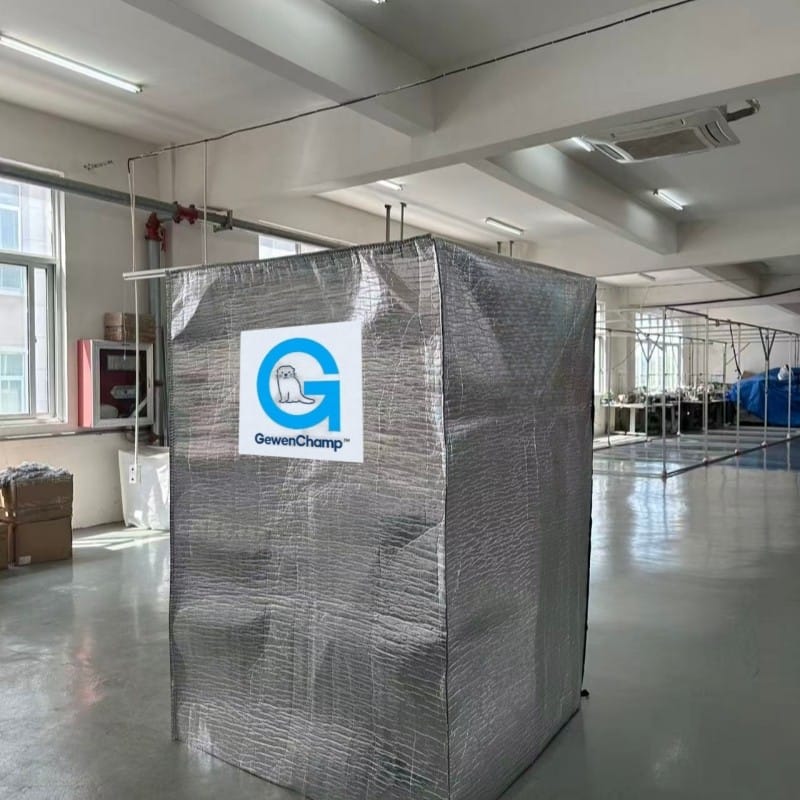
One specification that sometimes surprises buyers is the thermal pallet cover. For cargo moved on pallets inside containers, a fitted thermal cover provides an additional layer of temperature stability. Our TP-series covers use the same MPET, aluminum foil, or EPE foam materials as full container liners, maintaining temperature bands for sensitive pharmaceuticals or chocolates during trucking to port. The key is that these are designed together with the container liner as a system, not as an afterthought.
Production Lead Times, MOQ, and Logistics Planning
Lead times and minimum order quantities are where OEM sourcing either aligns with your logistics calendar or causes delays that erode the cost savings you expected.
A dedicated container liner OEM typically quotes production lead times of 20 to 30 working days for standard custom orders, assuming the required materials are in stock. Full custom developments that require new tooling or new material qualification can add 10 to 15 working days. I always recommend adding a buffer of one week for third-party inspection if your contract requires it, plus the transit time from the factory to the loading port.
MOQs vary with liner complexity. A simple PE film liner might have an MOQ of 500 to 1,000 units, while a multi-layer thermal liner with custom dimensions can start at 200 to 500 units because the raw material procurement and machine setup costs are higher. An experienced OEM will be upfront about these numbers rather than burying them in a quote.
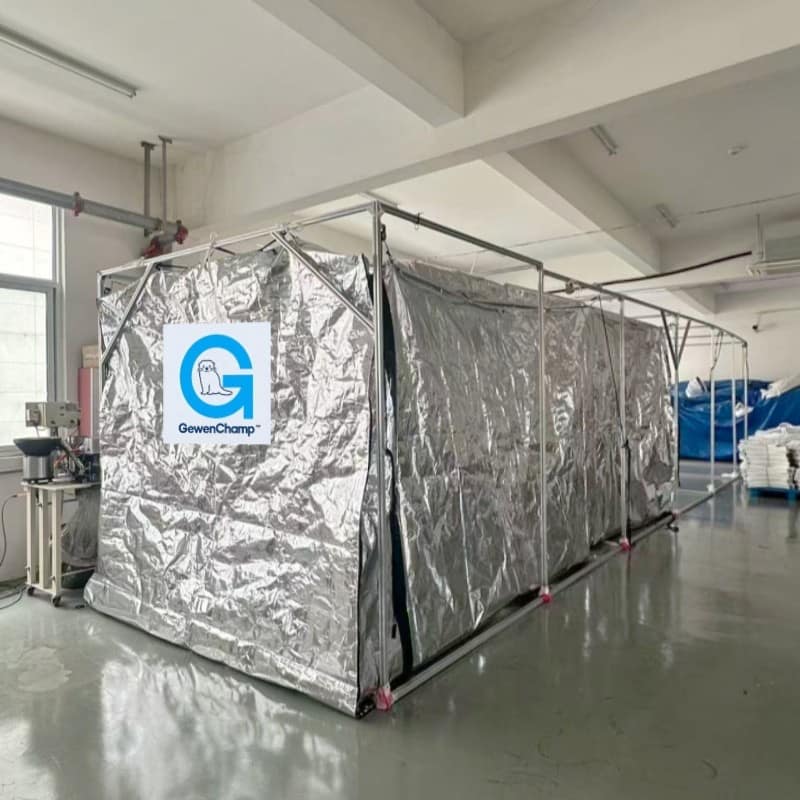
The logistical reality of sourcing from China means that production capacity and shipping consolidation options matter as much as the liner specification. Our factory in Jiangsu operates dedicated production lines for thermal and dry bulk liners, which means we do not queue custom orders behind generic production runs. For buyers shipping partial container loads, we consolidate liners with other orders to hit full container load volumes, cutting per-unit ocean freight.
What You Should Require from an OEM Supplier
When you narrow down your OEM shortlist, the decision comes down to whether the manufacturer treats liner engineering as core expertise or as a commodity operation. I have seen temperature-sensitive pharmaceutical shipments saved by a manufacturer who insisted on an aluminum foil barrier layer when the buyer originally specified a plain PE liner. Conversely, I have seen cocoa beans rejected at destination because the chosen liner lacked a certified moisture barrier.
Before committing to an order, insist on three things: a data sheet that lists MVTR, tensile strength, and radiant heat reflection values measured by third-party testing; a certificate package showing active FDA, LFGB, or equivalent market-specific approvals; and a reference contact from a previous customer shipping a similar cargo type. A manufacturer that cannot provide all three in 48 hours is unlikely to deliver a liner that performs under real-world conditions.
Send your cargo profile—including commodity type, expected transit temperatures, and destination regulatory requirements—to [email protected] or call +86 523 87683880. We will return a liner specification recommendation with third-party test data and a sample timeline for your evaluation.
Common Questions About OEM Container Liner Sourcing
What is the typical MOQ for OEM container liners?
MOQ depends on the liner complexity. For standard PE film liners, an MOQ of 500 to 1,000 pieces is common. Multi-layer thermal liners like EPE foam or MPET composites often start at 200 to 500 pieces because the material cost and machine setup are higher. Some manufacturers offer trial orders of 50 to 100 pieces for qualification testing, though the unit price will be higher than full production pricing. Clarify whether the MOQ applies per size or per order, as this affects multi-size programs.
How can I verify a manufacturer’s certifications?
Request the full certificate document, not just a logo on a website. Every legitimate certification carries a certificate number and an issuing body, such as SGS, TÜV, or Bureau Veritas. You can cross-check the certificate number on the issuer’s public database. Also confirm that the certificate’s scope explicitly includes container liners or food-contact packaging; a generic ISO 9001 for “manufacturing” is insufficient. A manufacturer with nothing to hide will send the PDF within a day.
Can I request samples before placing a bulk order?
Yes, and you should. A reliable OEM will supply A4-sized material swatches for initial evaluation and a full-sized sample liner for physical fit and handling tests. Both should be accompanied by a spec sheet showing the exact material structure and test results. Expect to cover the courier cost; the sample itself is usually free or credited against your first order. Use the sample to verify spout placement, tie-down points, and ease of installation before committing to production.
What are the most common container liner failures and how does OEM quality prevent them?
The three most frequent failures are seam splitting, moisture ingress through non-laminated fabric, and incorrect sizing that leaves cargo exposed. OEM quality prevents seam failures by using heat-welded seams with PU tape reinforcement on sift-prone liners. Moisture ingress is blocked by continuous barrier layers, either aluminum foil or metalized PET, tested to an MVTR spec. Sizing errors are eliminated by requiring the buyer to supply container internal dimensions and confirming the liner CAD drawing before production.
Are OEM thermal container liners reusable?
Many thermal container liners, particularly those with woven PE and aluminum foil or EPE foam construction, are designed for 3 to 5 reuses under normal conditions. Reusability depends on careful removal, inspection for tears or delamination, and proper storage away from UV exposure. For high-value, consistent trade lanes, reusable liners reduce per-shipment packaging cost and lower the environmental footprint. If your route passes through equatorial regions, request a liner with an MVTR below 0.033 g/(m²·h·kPa) and check the barrier layer integrity between trips. Share your lane details and we can confirm whether a reusable thermal liner fits your operation.
 English
  German
  Spanish