
A genuine ODM container liner engagement succeeds or fails long before production starts. If the manufacturer does not fully understand your cargo’s thermal envelope, moisture sensitivity, and the specific handling conditions along your route, the resulting liner will be beautifully built but functionally wrong. I’ve spent over fifteen years on the manufacturing side of these conversations, and the gap that costs importers the most is not price or lead time. It is the translation of cargo-specific requirements into material decisions and production parameters that the factory can actually execute without cutting corners. This article walks through that translation from the buyer’s perspective, covering what you need to prepare, how the design and prototyping loop actually works, and where certification and quality control fit into an ODM pipeline, so the liner you receive solves the real transport problem, not just the one described in a generic spec sheet.
Defining Your Cargo Protection Requirements for ODM Success
The quality of a custom container liner begins with the clarity of the operational profile you provide to the manufacturer. Many procurement teams start by requesting a liner for a specific material, such as cocoa beans or PE resin, without quantifying the conditions that will attack that cargo during transit. That approach leaves too much room for interpretation because the same commodity shipped on a North Atlantic route in November faces a completely different set of thermal and moisture stresses than it does crossing the Arabian Sea in July.
At a minimum, you need to tell your ODM partner three things before any design work can begin. First, the full temperature range the cargo will experience from loading to final discharge, including extremes at both ends and the duration at each. A liner engineered for a stable ambient range of 5°C to 30°C will not protect goods sitting on a dockside at 45°C for eight hours. Second, the moisture source and mechanism that poses the greatest risk: external humidity penetrating the container wall, internal condensation from day-night temperature swings, or moisture migrating from the cargo itself. Third, any regulatory or customer-specific compliance obligations such as FDA, LFGB, EU REACH, or RoHS that must be satisfied by the liner material itself, not just by your product.
We’ve found that when a buyer sends us a one-page summary covering these three points, along with a description of the container type and discharge method they plan to use, the design cycle time shortens significantly because we skip the discovery phase that would otherwise happen later in the first sampling round.
How ODM Container Liner Manufacturers Translate Specs into Designs
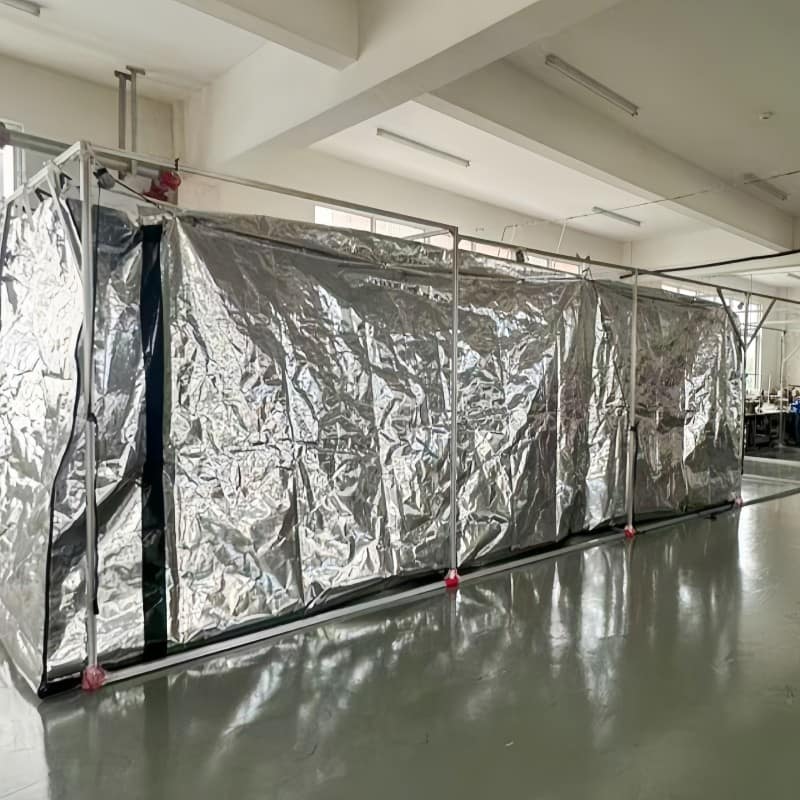
With a clear operational profile in hand, a capable ODM manufacturer moves to material selection, structure design, and engineering validation. The translation process is not simply a matter of picking a material grade off a shelf. It requires the factory to interpret the thermal loads, moisture loads, and mechanical handling requirements as an integrated problem, then propose a composite structure that addresses all three without over-engineering to a price point that makes the solution unusable.
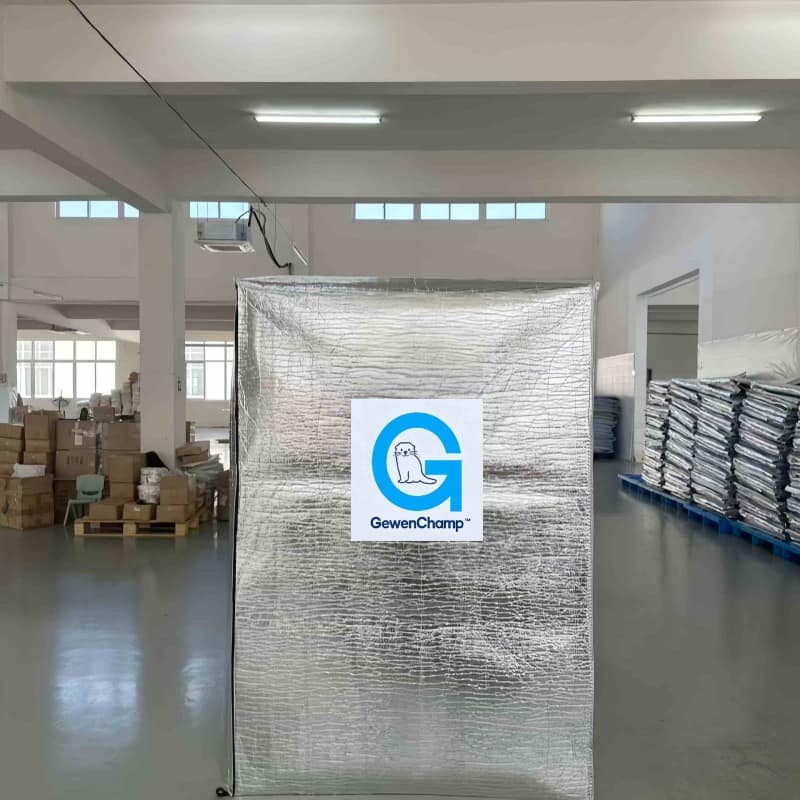
For temperature-sensitive cargo, the thermal design typically centers on one of several material platforms. A woven fabric liner laminated with aluminum foil, like our GewenChamp™️ TL-01, reflects 95–97% of radiant heat and holds internal temperature between -20°C and +60°C with a variance of ±5°C. If the route involves extreme cold or prolonged exposure, an EPE foam-based construction such as the TL-02, with its 3mm closed-cell foam core and thermal conductivity below 0.038 W/(m·K), becomes necessary to reduce conductive heat transfer. For lighter thermal requirements, a metallized PET composite film liner (TL-04) can maintain 24–48 hours of thermal stability at a fraction of the bulk and cost, which matters when the cargo is fresh produce or standard pharmaceuticals rather than frozen biologics.
Moisture control runs in parallel. The ODM team needs to decide whether the moisture threat is primarily condensation from the container’s interior walls or humidity ingression from outside air. A liner with a moisture vapor transmission rate of 0.033 g/(m²·h·kPa) or better, combined with sealed seams, acts as a barrier to container rain, while a breathable design might be appropriate for certain granular agricultural cargoes where preventing mold requires a controlled exchange of air.
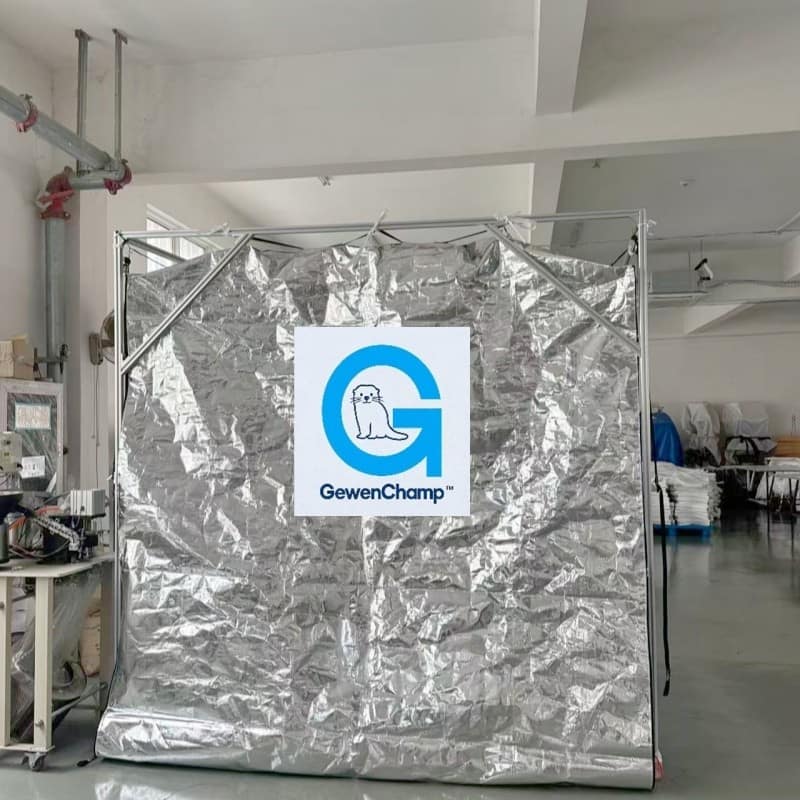
What most generic guides miss is that material selection cannot be finalized in isolation from production constraints. The chosen composite must be fabricable at scale using the factory’s existing heat-welding, lamination, and sewing lines, otherwise the prototype will differ from the production version in ways that invalidate the testing data. An experienced ODM partner will surface these constraints during the design review, not after the first production run fails a quality audit.
Material Selection and Prototyping: The Iterative Process
Once the design concept is agreed upon, the real work of iterative prototyping begins. I’ve seen importers arrive at this stage expecting to sign off on a final sample in one round, only to encounter the reality that combining thermal insulation, moisture barrier properties, and mechanical durability into a single multi-layer structure always introduces trade-offs that require physical samples to resolve.
The typical ODM prototyping loop runs three to four rounds. The first sample validates basic dimensions, hanging configuration, filling spout placement, and discharge port fit within the target container. At this stage, the actual barrier materials are often substituted with prototyping fabrics to keep costs low and turnaround fast. The second round introduces the final material layers and tests seam strength, tensile performance, and handling durability under simulated loading conditions. The third round subjects the sample to thermal and moisture testing using your cargo simulant, or a thermal model that replicates the expected mass and heat capacity, so that performance claims can be verified against the operational profile you provided earlier. A fourth round addresses minor adjustments to accessory positioning, zipper or Velcro closures, and labeling.
For a thermal liner with an EPE foam core, for example, the second-round prototype might reveal that the foam density needs to increase from 25 kg/m³ to 30 kg/m³ to prevent compression thinning at the bottom of a fully loaded container, which would create a thermal bridge. That adjustment feeds back into the construction, weight, and cost, and cannot be predicted by software alone because the real compression behavior depends on the specific cargo shape, weight distribution, and even the container floor condition.
If your program involves a cargo that requires both thermal protection and a specific food-contact certification, it is worth confirming whether the certification covers the complete multi-layer composite or only the food-contact surface, because some testing protocols apply to the individual layers while others require evaluation of the finished article as a whole. Reach out at [email protected] to discuss how your specific regulatory requirements map to our material certification database.
Production Quality Control and Certification Integration
Moving from a validated prototype to full production requires a quality control plan that is designed into the ODM agreement, not appended as an afterthought. A container liner that passes prototype testing can still fail in production if incoming raw material inspection, in-process monitoring, and finished product testing are not aligned with the specific performance parameters that matter for your cargo.
The production quality system for an ODM thermal liner typically covers at least five checkpoints. Incoming film, fabric, and foam are inspected for basis weight, thickness, tensile strength, and elongation, with the acceptance limits drawn directly from the prototype data. During lamination, the peel strength between layers is measured at a defined frequency because delamination during container loading is a common failure mode that prototype testing, conducted on carefully prepared samples, rarely exposes. Seam integrity is verified both visually and through pull-tests on random sections, particularly around zipper closures, filling spouts, and discharge chutes where stress concentrates. Dimensional tolerances are checked against the container type, with the liner installed in a sample container or jig whenever possible. Finally, finished liners are sampled for the specific thermal and moisture barrier tests that correspond to the cargo profile, such as guarded hot plate measurements for thermal conductivity, water vapor transmission rate testing, or a simulated container rain exposure.
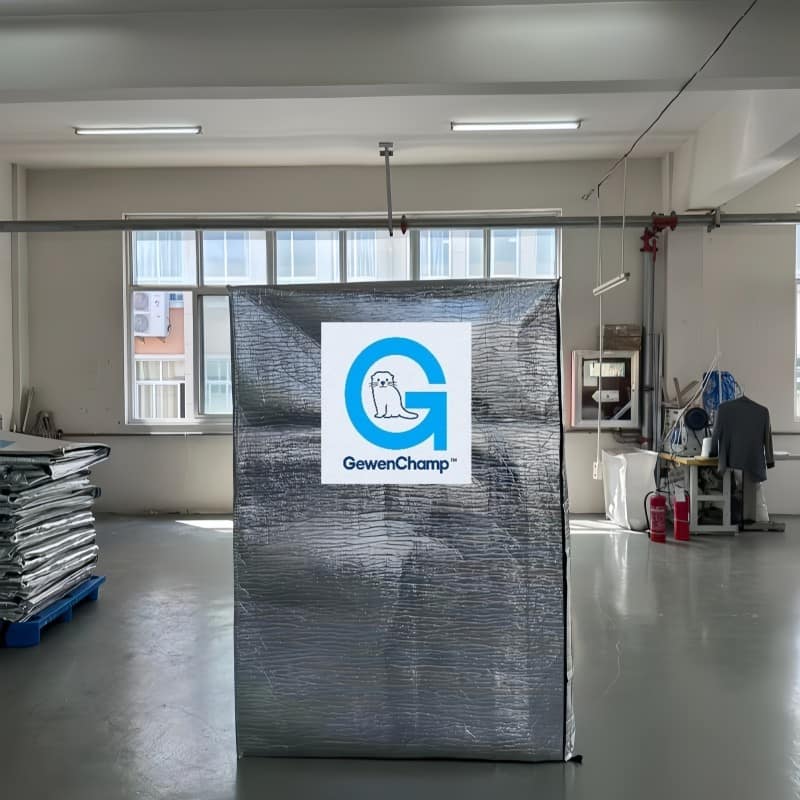
Certification integration is where many ODM projects stumble. It is not enough for the manufacturer to hold an ISO 9001 certificate or to claim that their materials are FDA compliant. You need to verify, before production begins, whether the certification covers the exact material combination and construction method that will be used for your liner. For instance, an aluminum foil laminated woven fabric that is FDA compliant in its component layers may require a separate migration test or overall article evaluation when used as a food-contact container liner, depending on the importing country’s regulations. Similarly, EU REACH and RoHS compliance must be demonstrated for every substance intentionally added in the composite, including adhesives, flame retardants, and printing inks, not just the base polymers.
We routinely provide customers with a certification mapping matrix early in the design phase, which lists each required certification, the testing standard, whether the current material construction meets it, and what additional testing is needed to close any gaps. This document becomes the foundation for the final certificate package you present to your own customers or regulatory authorities, and it transforms the certification discussion from a hand-waving promise into a verifiable plan.
From Production to Your Warehouse: The Final Steps
The last mile of an ODM container liner project is often treated as an administrative formality when it should be treated as a final quality gate. The shipping method from the factory to your consolidation warehouse, the storage conditions before first use, and the pre-shipment inspection checklist you apply all influence whether the liners perform as designed when they reach the container at the origin port.
Bulk container liners, especially those with foam insulation or laminated composite layers, are susceptible to compression set, creasing, and adhesive degradation if they are stacked improperly or stored at high temperatures for extended periods before use. We recommend that importers specify folding and packaging standards in the ODM contract, such as flat-folding or roll-packing without sharp creases, bagging in moisture-proof outer packaging, and palletizing with corner protection. A pre-shipment inspection should include a random sample opening to verify that the liners are dry, free of visible seam defects, and correctly labeled with lot numbers that trace back to the production batch records.
Installation training materials are another piece that an ODM manufacturer with serious process maturity will provide without being asked. A 20-foot liner cannot be installed the same way as a 40-foot liner if the access doors, hanging points, and strapping configurations differ. Simple video instructions or a one-page illustrated guide that matches the exact liner design you are receiving dramatically reduces the error rate at the destination end, where third-party labor unfamiliar with your custom liner may be doing the installation.
If your program involves frequent shipments across different container types and climates, it is worth confirming installation compatibility and training material availability before finalizing your purchase order, because the cost of one failed installation at a remote port easily exceeds the cost of getting these details right upfront. Reach out at [email protected] or +86 523 87683880 to share your container fleet details and timeline, and we will confirm how the installation flow works with your specific liner configuration.
Common Questions About ODM Container Liner Projects
How long does a full ODM container liner project take from first inquiry to production delivery?
From our experience supporting international programs, a typical project spans eight to twelve weeks once a complete operational profile is received. The design and prototyping phase consumes four to six weeks across three sample rounds, assuming prompt feedback at each stage. Material sourcing and certification confirmation add one to two weeks. Production of the first commercial order then takes two to four weeks depending on quantity and factory loading, plus shipping time to your consolidation point. Projects with novel material combinations or extensive regulatory testing can extend to fourteen weeks or more, which is why we always recommend that importers initiate the ODM process well ahead of the shipping season rather than rushing a design into an incomplete validation cycle.
Do I need to provide my own cargo sample for testing, or can the manufacturer simulate it?
It depends on the cargo and the performance concerns you have. For moisture-sensitive commodities like cocoa beans or sugar, a real cargo sample is ideal because the moisture exchange between the liner and the load depends on the specific water activity of that batch. For thermal protection of a homogeneous plastic resin or industrial powder, a thermal simulant with matched mass and specific heat capacity often provides sufficiently accurate data to validate the liner’s temperature performance, and this is faster and cleaner than shipping a ton of actual product. We recommend that importers discuss the testing approach early and be prepared to supply a small quantity of actual cargo if the certification protocol requires migration testing on the finished article.
Can the same ODM liner design be produced across multiple container types without re-testing?
Not automatically. A liner designed and prototyped for a 40-foot high-cube container will have different hanging point geometries, wall coverage dimensions, and weight than one for a 20-foot standard container, and those differences affect thermal performance and mechanical stability. If you need a common design family to fit a mixed fleet of 20ft, 40ft, and 40HQ containers, the ODM process should include physical verification on at least the extremes of the size range, with engineering analysis bridging the intermediate sizes. It is a reasonable and common request, but it must be built into the prototyping scope from the beginning because the dimensional scaling is not linear; a liner that seals perfectly on a 40HQ can sag or gap on a 20ft if the adaptation is done on paper alone.
What happens if a production batch fails a quality test after shipment?
The foundation for handling this situation should be embedded in the ODM contract and the quality agreement that accompanies it. Our standard warranty includes replacement of any liner that fails to meet the agreed performance parameters due to manufacturing defect, provided the failure is documented with batch records and photographic evidence, and the liners were stored and installed in accordance with our guidelines. The larger point is that this scenario is far less likely when the ODM process includes the multi-round prototyping and in-process quality control checkpoints described above, because the production specifications have already been validated under real loading and exposure conditions, not just at a lab bench. If your program has a narrow delivery window where any shipment failure carries high commercial cost, it is worth confirming the replacement logistics and lead time explicitly before finalizing the ODM order. Share your shipment schedule and we’ll confirm the fallback plan that applies to your material and output volume.
 English
  German
  Spanish