
Most procurement managers and logistics engineers who reach out to us at Giant Flexpack for the first time share the same frustration: they know a custom container liner is the right packaging choice for their cargo, but they don’t know where to start the conversation with a manufacturer. A liner that fails halfway across the Pacific isn’t just a packaging problem—it means product loss, insurance claims, and a relationship with a buyer who now doubts your shipping reliability. I’ve spent over fifteen years on the manufacturing side of that conversation, and the difference between a liner that performs and one that causes damage almost always comes down to how clearly the requirements were communicated before production began. This article walks through the custom container liner development process from the manufacturer’s perspective, covering specification, qualification, and partnership practices that directly affect cargo protection and total cost.
Why Custom Container Liners Exist and When They’re Worth the Investment
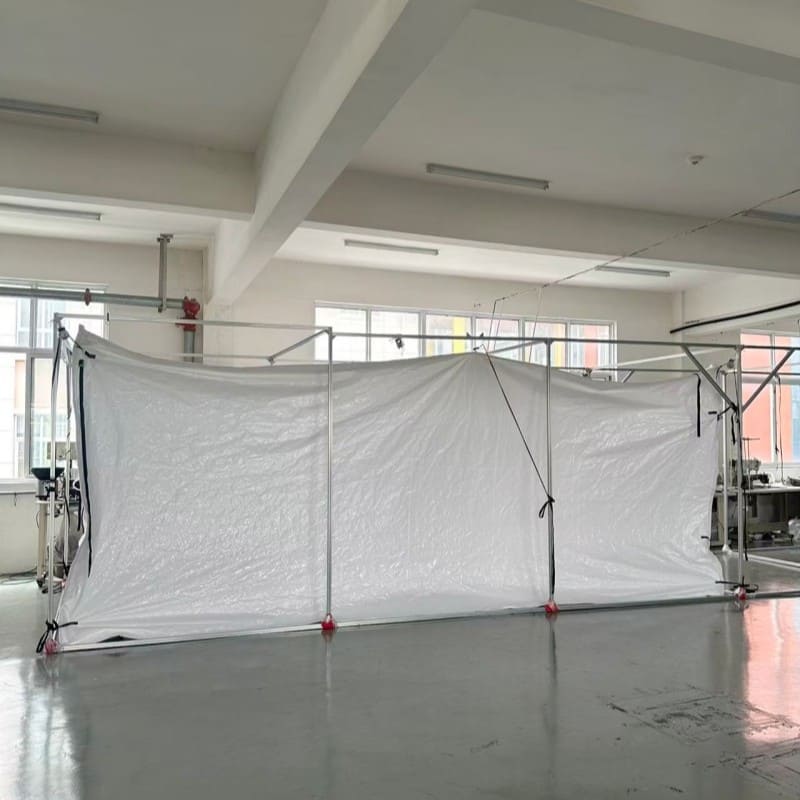
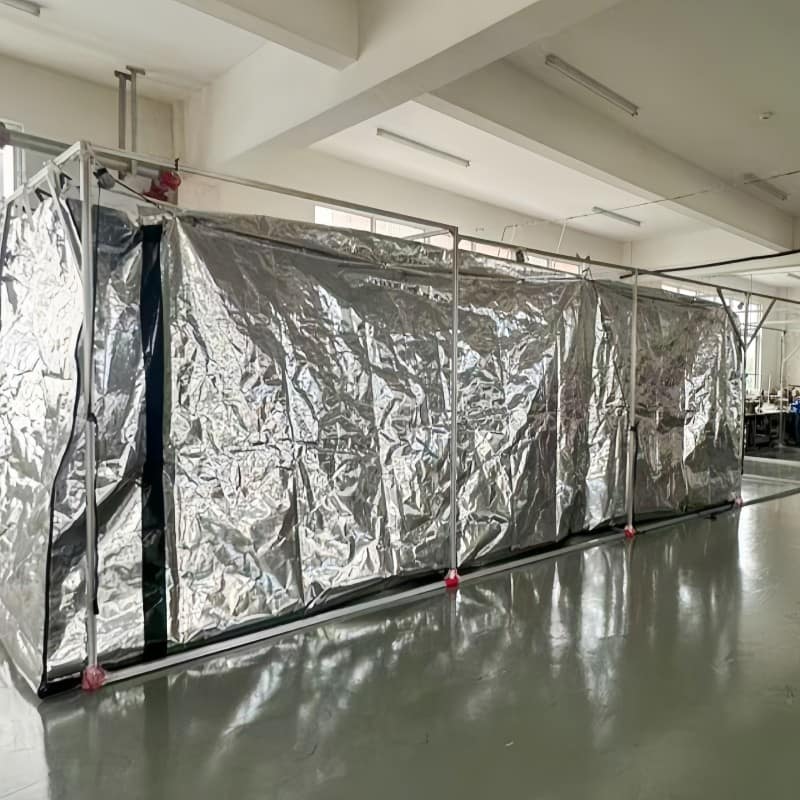
Standard off-the-shelf liners cover generic container dimensions and basic moisture protection, but that’s often not enough. Cargo that is hygroscopic, temperature-sensitive, heavy, abrasive, or subject to strict food-contact regulations demands a liner engineered to specific conditions. A custom container liner might be as simple as a standard dry bulk liner with a repositioned discharge spout, or as complex as a multi-layer thermal liner with a defined R-value and anti-condensation barrier for a long-haul route through equatorial waters.
I’ve seen companies default to standard liners because the initial unit price looked lower, only to face cargo spoilage that cost twenty times what a correctly specified custom liner would have added to the packaging budget. The decision to go custom should be based on a cumulative cost-of-failure calculation: what does moisture damage cost per container? What’s the value of the cargo? What’s the reputational risk if a consignment arrives caked or contaminated? When those numbers are on the table, it becomes obvious that a precisely specified liner is an insurance policy, not an expense.
How to Specify Your Custom Container Liner So the Manufacturer Gets It Right in One Round
The most common reason a custom liner quotation takes too long or produces a product that doesn’t match expectations is incomplete specifications on the first inquiry. I’m going to list what a manufacturer’s engineering team actually needs—not what looks reasonable on a procurement form, but the data points that determine material selection, seam construction, and accessory placement.
Start with exactly what you’re shipping. The cargo name needs to include its physical form (granulate size distribution, powder density, liquid viscosity, peeled or unpeeled beans). A PE resin shipper who tells me “plastic pellets” without specifying bulk density or whether they’re polyethylene versus polycarbonate gets a different liner recommendation than one who gives me specific gravity and pellet diameter. For food commodities, the moisture content at time of loading is non-negotiable information—if you’re shipping cocoa beans at 7.5% moisture in a non-ventilated liner through a humid route, I’m going to flag the mold risk before we quote anything.
Then describe the container and loading/discharge method. ISO 20-foot or 40-foot? Top-loading through a filling spout or side-opening? Gravity discharge, pneumatic, or manual unload? These determine spout diameter, placement, and reinforcement. If the cargo is packed hot or cold, the expected temperature range at origin, transit peak, and destination drives the thermal liner choice. A shipment of temperature-sensitive pharmaceutical intermediates moving from Shanghai to Hamburg in August—where container skin temperatures can exceed 70°C—requires a fundamentally different liner architecture than a January shipment of the same cargo to Stockholm.
One thing I always advise: if your cargo has failed with a previous liner, send photos and a brief failure description. Nothing accelerates the specification process faster than understanding what went wrong so we can design against it. A picture of the split seam tells me whether the issue was tensile strength, sewing thread specification, or improper installation—three problems with three different engineering solutions. If your cargo has special requirements like anti-static properties, UV stabilization, or clean-room manufacturing, those need to be stated. Don’t assume the manufacturer will infer them from the cargo type.
What Cargo Information Does a Manufacturer Need for a Quote?
Beyond the cargo name and physical form, the technical data sheet should include bulk density (kg/m³), particle size, angle of repose if it’s a flowable solid, moisture content, and any chemical reactivity notes. For temperature-sensitive cargo, state the maximum acceptable temperature excursion and duration. For food-grade cargo, specify the required regulatory standard (FDA 21 CFR, EU 1935/2004, LFGB, or organic certification). The more data upfront, the fewer rounds of clarification and the faster the quote.
How to Determine the Right Liner Material for Your Cargo
Material choice is dictated by four factors: cargo weight and abrasiveness, moisture sensitivity, temperature exposure, and regulatory requirements. A 30-ton load of kaolin clay that needs sift-proofing will require a heavy-duty woven HDPE liner with sealed seams, while 25 tons of malt destined for a brewery requires a laminated liner with a perfect odor barrier and smooth interior to prevent kernel retention. For thermal control, understand that reflective MPET layers cut radiant heat transfer, while foam cores like the 3mm EPE in our TL-02 liner reduce conductive and convective flow. There’s no single best material—only the best match for your specific route and cargo profile.
Finding and Evaluating a Container Liner Manufacturer You Can Rely On
Anyone can send a spec sheet, but the manufacturer that delivers consistent quality over repeated orders has operational depth that a one-time supplier does not. I recommend evaluating on three axes: certification scope, technical capability, and production transparency.
Certifications should be independently verifiable. For food-contact liners, FDA, LFGB, and EU regulations are baseline. For industrial liners, REACH and RoHS demonstrate chemical safety compliance. ISO 9001 signals a quality management system, but beyond certification, ask how often surveillance audits occur and whether they cover the specific production lines your liners will run on. At Giant Flexpack, our certifications are maintained with annual third-party audits that examine raw material traceability, in-process inspection records, and final lot testing. If a manufacturer can’t provide recent audit reports, that’s a signal.
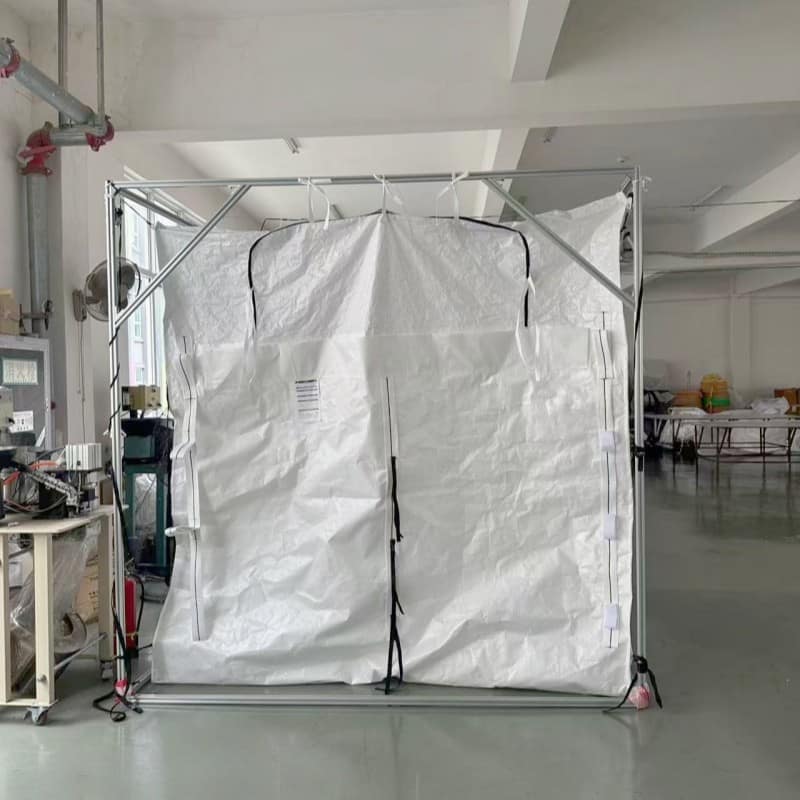
Technical capability means more than having extrusion or weaving machines—it means an engineering team that can analyze your cargo profile and route data and translate it into a material structure. Ask your prospective supplier to explain how they would approach a challenging cargo. If the response is a price per square meter rather than a technical rationale, they’re a fabricator, not a development partner. Look for evidence of in-house R&D: tensile testing equipment, thermal conductivity measurement capability, and documented quality control for incoming raw materials.
Transparency shows up in things like sample provision and factory access. A manufacturer that’s confident in its product will send pre-production samples without hesitation. Before committing to a bulk order, request a sample of the exact material structure you’ll receive—not a generic demo piece—and test it under your actual loading and transport conditions. If you’re unable to visit the factory in person, request a virtual walk-through video that shows the production lines, storage conditions, and QC testing stations.
| Manufacturer Attribute | Why It Matters | What to Ask For |
|---|---|---|
| Certification scope | Ensures regulatory compliance and food safety | FDA, LFGB, REACH, RoHS, ISO 9001 certificates with audit dates |
| In-house R&D | Enables correct material and structure design for your cargo | Tensile and thermal test reports, engineering response to your cargo description |
| Sample policy | Validates quality before bulk commitment | Pre-production sample of exact proposed material, with test results upon request |
| Production transparency | Confirms consistent manufacturing conditions | Factory video walk-through, batch traceability records, QC process documentation |
| After-sales support | Handles issues during use and enables continuous improvement | Failure analysis process, corrective action reports, technical consultation availability |
The Custom Container Liner Production Process and Realistic Lead Times
Once the specification is finalized and the purchase order is placed, the production timeline breaks down into four stages: material procurement and QC, liner fabrication, in-process and final inspection, and packing for export. Total lead time for a custom liner order runs 25 to 45 days from deposit to container loading, depending on material availability and order complexity. Simple PE film liners in a standard specification can be produced faster; multi-layer thermal liners with specialized reflective layers may push toward the upper end.
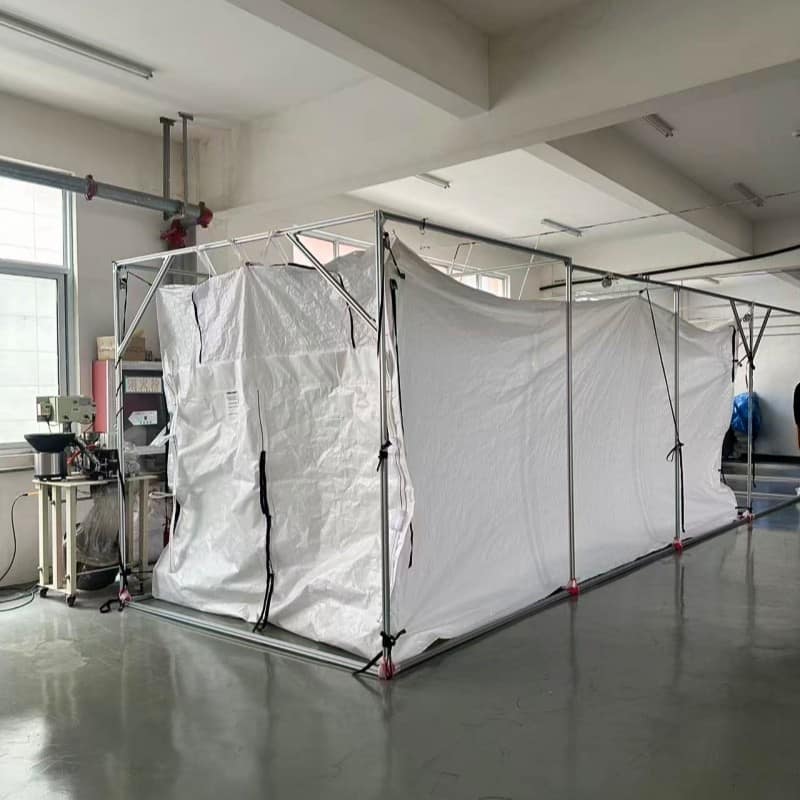
There are two lead time realities that I’ve learned to communicate early. The first is that material procurement for custom structures—especially those involving metallized PET films, specific-density EPE foam cores, or high-strength woven fabrics with food-grade lamination—is not instant. Those materials are often made to order, not off the shelf. The second is that pre-production sample approval creates a gate in the timeline that the buyer controls. A sample that sits on your desk for a week before testing extends the schedule by that week. To keep your order moving, prepare your internal testing protocol before requesting the sample so you can turn around approval in days, not weeks.
What Is the Typical Lead Time for Custom Container Liners?
For a first-time order with a new specification, plan on 30 to 45 days from finalized spec and deposit. Repeat orders with the same specification can be reduced to 20–30 days once material stocks and production schedules are established. If your shipping window is tight, inform the manufacturer before quoting so they can reserve raw materials or suggest a slightly modified specification that uses in-stock inventory to compress the timeline.
Quality Assurance and Compliance That Actually Protect Your Cargo
A liner’s quality isn’t just a test report—it’s the repeatable manufacturing discipline that makes every production lot match the approved sample. The compliance documentation you receive with a shipment should include lot-specific test results, not generic certificate copies. For woven liners, look for tensile strength data (warp and weft) per EN ISO 13934-1 or equivalent. For thermal liners, request thermal conductivity or R-value test data for the composite structure, not just individual layer specifications. For food-grade liners, migration testing results per the relevant regulation confirm that the material won’t leach substances into your cargo under your specific temperature and time conditions.
If your cargo involves multiple regulatory jurisdictions—for example, a food ingredient exported from China to the EU and then re-packed for UK distribution—make sure the manufacturer understands the overlapping requirements. FDA compliance alone doesn’t satisfy EU Regulation 10/2011, and a REACH certificate doesn’t substitute for LFGB. I’ve seen shipments held at port because a liner was certified for one market but not another. This is a failure of specification, not a failure of the liner material.
What Certifications Should I Look for When Choosing a Custom Liner Manufacturer?
The minimum depends on your cargo. Food-grade cargo requires FDA and/or LFGB with migration testing for your specific product type and temperature. Chemical cargo needs REACH SVHC screening and RoHS for electronic equipment-related supply chains. For any liner, ISO 9001 signals a process-oriented quality system, but verify that the certificate covers the specific product category—some factories hold broad certificates that exclude liners, or the certification scope is limited to certain materials.
Common Questions About Working with a Container Liner Manufacturer
Can I order a small sample before placing a bulk order?
Yes—and you should. A pre-production sample of your exact specification allows you to test fit, durability, and performance under simulated transport conditions. We routinely produce samples for first-time customers, and the sample is your baseline for verifying that production liners match the approved standard. Plan one to two weeks for sample preparation and shipping.
What is the minimum order quantity for a custom liner specification?
For fully custom liners with new tooling, MOQs vary by material complexity. For dry bulk liners, a minimum order might start at 50 to 100 units; for multi-layer thermal liners, 30 to 50 units is common due to raw material minimums on specialized films and foams. If your initial volume is small, ask about production-sharing programs where your liners are produced alongside larger orders of similar material to reduce cost without compromising quality.
How do I ensure the liners I receive match the approved sample quality?
The key is lot-level documentation: a certificate of analysis (CoA) for each production batch that includes the specific test results for your liner’s critical parameters—tensile strength, seam strength, thickness, coating weight, and, for thermal liners, thermal resistance values. If a manufacturer cannot provide batch-specific CoA, they cannot guarantee batch-to-batch consistency.
How are liner failures handled after shipment?
In a program we’ve supported, a shipment of malt arrived with moisture intrusion from an improperly sealed discharge spout. The root cause was a stitching variance on one production line, not a material failure. We issued a corrective action report within 48 hours, covered the cargo loss per our warranty terms, and implemented an additional post-production spout pressure test that eliminated the issue across subsequent orders. A reliable manufacturer’s failure response tells you more about their quality commitment than any certificate. If you’ve had a liner failure in a previous shipment, share the details and photos with our team—we can often identify the root cause from the failure pattern and advise on a specification that prevents recurrence.
For a custom container liner specification that matches your cargo and route profile start to finish, send your cargo details, container type, and loading method to [email protected] or call +86 523 87683880. We’ll respond with a technical assessment and quotation within one business day.
 English
  German
  Spanish