
Container liners factory direct purchasing is often pitched as the fastest way to cut logistics costs—and it can be, with price reductions that routinely achieve 15–30% compared to trading channels. Over fifteen years in thermal packaging and bulk logistics, I’ve seen that the real difference between a reliable supply line and an expensive problem isn’t always price. It’s the factory’s certification infrastructure, quality-control culture, and willingness to stand behind their product. This article walks through the benefits procurement teams expect, the risks that catch first-time buyers off guard, and the practical steps to verify a manufacturer so that your factory-direct decision becomes a calculated improvement rather than a gamble.
What Are the Benefits of Buying Container Liners Factory Direct?
Buying directly from the manufacturer removes the trading company margin, which in bulk orders translates into a visible unit cost reduction. Manufacturers can also respond faster to technical questions because the engineering team sits in the same building, not behind an intermediary.
The second benefit is customization speed. When you need a container liner modified—a repositioned loading spout, a heavier fabric weight, or a different discharge configuration—a factory-direct conversation cuts days of back-and-forth. We often move from sketch to sample within two weeks for OEM adaptations because the production floor, testing lab, and customer-facing team operate under one roof.
Lead times also benefit. Trading companies quote lead times based on their suppliers’ schedules, but when you buy factory direct, you hear the real production capacity and can negotiate a slot that matches your shipment window.
What Risks Should You Expect with Factory Direct Container Liners?
The most common risk I’ve observed is quality drift between the approved sample and the production shipment. A factory that ships without robust in-process inspection can deliver liners with inconsistent seam strength, thinner fabric than agreed, or moisture barrier pinholes that only appear after loading.
Communication gaps create a second layer of risk. Many factories rely on sales staff with limited technical vocabulary, and when a buyer raises a specification concern, the answer can be a reassuring but vague “no problem” that doesn’t address the root cause. Misunderstandings about certification scopes—whether a liner is food-grade for dry contact only or for full liquid migration compliance—lead to customs rejections that cost far more than the liner price difference.
Hidden costs also accumulate. Factory-direct pricing often excludes port charges, container demurrage when documentation is delayed, or the cost of sending a third-party inspector. These are manageable if you plan for them, but they erase the price advantage if you compare only the liner unit cost.
Why Factory Credentials Matter When Buying Container Liners Direct
A factory’s certification portfolio is the single strongest predictor of whether your direct-buy experience will be smooth or stressful. ISO 9001 requires documented process control and periodic external audits. FDA and LFGB certifications mean a food-contact liner has undergone migration testing by an accredited lab. REACH and RoHS compliance confirms restricted substance management. Without these, you are trusting the factory’s word—and that trust becomes expensive if your consignment is flagged at the destination port.
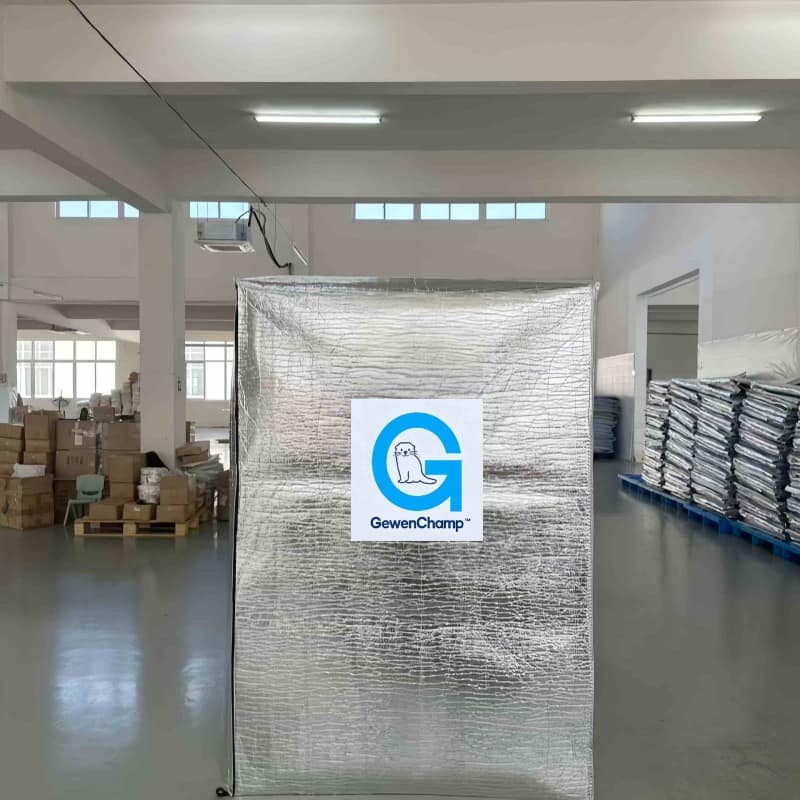
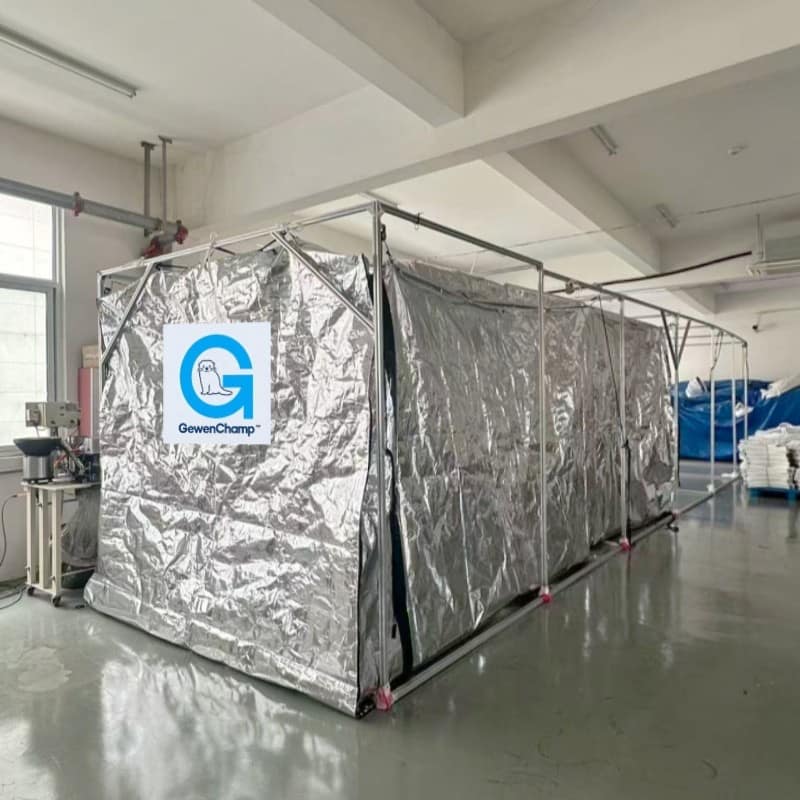
Sino-American joint ventures add a structural advantage that isn’t visible on a catalog page. The management layer operates with bilingual technical staff, Western quality-reporting standards, and an internal escalation path that treats a customer specification change as a documented process, not a verbal agreement. At Giant Flexpack, our GewenChamp™ thermal liners hold FDA, LFGB, ISO9001, REACH, and RoHS certifications, and the product library across TL-01 through TL-04 thermal liners and DBL dry bulk liners gives procurement teams a single-source manufacturer with verifiable compliance.
| Certification | What It Verifies | Typical Cargo Relevance |
|---|---|---|
| FDA | Food contact safety, migration limits | Food ingredients, beverage powders, cocoa, sugar |
| LFGB | EU food-grade compliance, sensory testing | Food exports to Germany and EU markets |
| ISO 9001 | Quality management system, process control | All container liner types, baseline reliability indicator |
| REACH | Chemical substance registration, SVHC monitoring | Chemical powders, polymers, industrial raw materials |
| RoHS | Hazardous substance restriction | Electronics and electrical component packaging |
A factory that holds these certifications and can share the actual test reports—not just logos on a website—has already invested in the quality infrastructure that lowers your risk.
What Steps Should You Take Before Ordering Container Liners Direct?
Request samples from the production line you intend to buy from, not from a separate sample room. The sample should carry the same material batch code and fabric weight that the production order will use. When the sample arrives, check seam strength, fabric thickness (with a micrometer if you have one), and the quality of any coating or lamination.
Ask for third-party test reports that are no older than twelve months. If the factory claims FDA or LFGB certification, the report must name the specific product and show whether it covers dry contact only or full liquid migration. I’ve seen too many cases where a buyer assumed “food-grade” meant ready for liquid cargo, only to find the certification was for dry contact storage.
Clarify MOQ, lead time, and penalty clauses before you issue a purchase order. Most container liner factories in China have MOQs that vary by liner type—a thermal container liner may carry a different MOQ than a dry bulk woven liner. Confirm whether the quoted lead time includes production plus loading, or production only.
If your program involves temperature-controlled or food-grade cargo, confirming the certification scope before committing to a production run avoids weeks of rework and demurrage. Reach out at [email protected] with your cargo type and volume, and we’ll verify the certification coverage for your specific requirement.
When Does Buying Container Liners Factory Direct Make Sense?
Factory direct works best when your order volume justifies the direct relationship—typically when you are moving several container loads per year of the same liner specification. The cost savings compound, and the technical alignment deepens with each order.
It also makes sense when you need a custom liner that a trading company cannot stock. If your cargo has an unusual bulk density, a unique loading equipment interface, or a specific temperature-excursion tolerance, a manufacturer’s engineering team can design around it. Trading companies generally match your requirement to an existing catalog; a factory can create a new one.
Factory direct is less suitable for one-off or spot purchases where the transaction cost of due diligence outweighs the margin savings. It also becomes riskier when the buyer lacks internal technical resources to evaluate specifications. In those cases, a reputable manufacturer’s agent or a verified trading partner with a documented factory relationship can add a layer of protection worth the markup.
When the evaluation points to a factory-direct path, the first step should be a clear technical exchange, not a price negotiation. Send your liner specification, cargo type, and annual volume estimate to [email protected] or call +86 523 87683880 to start a documented consultation. Getting the first order right hinges on aligning the product specification with your logistical reality—something that a certified manufacturer with joint-venture infrastructure is built to deliver.
Common Questions About Factory Direct Container Liner Sourcing
What minimum order quantity can I expect from a container liner factory?
MOQ varies by liner construction. Woven dry bulk liners typically carry an MOQ of 10–20 pieces per size, while thermal container liners with multi-layer lamination may start at 20–30 pieces. Customized thermal pallet covers can have lower MOQs because the cutting and sealing process is more flexible. Always confirm whether the MOQ is per size or per total order; some factories allow a mixed container of different sizes to reach the minimum.
How can I verify a factory’s certifications without visiting in person?
Request the full audit report, not just the certificate image. ISO 9001 reports include scope and validity dates, and you can verify them directly through the registrar’s public database. For FDA food-contact certifications, ask for the specific Food Contact Notification (FCN) or supporting migration test report. An experienced manufacturer will share these without hesitation; hesitation is a red flag.
Do I need to visit the factory before placing a first container liner order?
A site visit is ideal but not always necessary if you use a multi-layer verification approach: request a video call that walks through the production floor, ask for a recent production run report with QC data, and hire a third-party inspection for the pre-shipment check. I’ve seen buyers build reliable relationships this way, especially when the factory is accustomed to international customers and maintains transparent documentation.
What are the recommended payment terms for factory direct container liner orders?
Standard international trade terms apply: T/T with 30% deposit and 70% against shipment documents is the most common. Letter of credit can add cost but provides stronger payment security for first-time orders. Avoid 100% upfront payment unless the factory is a long-established partner with a verifiable track record; even then, split the payment across milestones.
Can a factory direct supplier customize a container liner for a niche cargo?
Yes, and this is one of the strongest arguments for going factory direct. A manufacturer with in-house R&D can adjust fabric weight, coating composition, loading spout placement, and even barrier film layering based on your cargo’s bulk density, hygroscopicity, and handling equipment. For a specific configuration such as a malt-grade dry bulk liner or a 30ft PE film liner for European plastic pellets, the factory’s engineering team should be able to provide a technical proposal. Share your cargo requirements and we will confirm whether an existing specification meets your needs or if a design adjustment makes sense—reach out at [email protected] to start that conversation.
 English
  German
  Spanish