
When I talk to procurement managers evaluating container liner suppliers in China, the conversation often begins with price. But the more interesting question is technical resilience. Jiangsu’s container liner manufacturers have evolved from a low-cost production base into a center of material engineering and international compliance. The region’s joint ventures, including our own operations at Giant Flexpack, have driven this shift by combining global quality systems with local production expertise. For buyers of bulk container liners, understanding the technical capabilities of Jiangsu’s supply base gives a clearer path to supplier qualification than a cost-per-unit spreadsheet alone.
The Jiangsu Manufacturing Advantage for Container Liners
Jiangsu province, situated on China’s eastern coast, has built a self-reinforcing industrial ecosystem for bulk packaging. It starts with a deep supply chain: raw polymer suppliers, film extruders, woven fabric mills, laminators, and custom fabrication shops all operate within a radius that lets a container liner factory source everything within hours. This proximity shortens lead times and allows real-time material adjustments during production.
Beyond logistics, the workforce is a more durable advantage. The region has produced two decades of technical talent specifically skilled in plastic welding, extrusion lamination, and precision cutting. When we developed a new anti-condensation liner composite, the in-house team could iterate the lamination settings across three polymer layers within a single shift because the operators already understood the interaction between melt temperature and bond strength.
Joint ventures with European and American partners introduced another layer of discipline: process documentation. Many Jiangsu factories now operate under ISO 9001 with fully traceable batch records from resin lot to finished liner roll. This is not the effortless cost advantage many buyers expect. It is a technical advantage built on repeatable manufacturing controls. For importers who cannot afford shipment-level quality gambles, that matters more than any price negotiation.
Material Engineering: From Woven PE to Multi-Layer Thermal Composites
Container liners in Jiangsu are no longer just woven polyethylene sacks. The product range now spans single-layer PE blown film up to 140 microns, high-tensile HDPE woven fabric with double-side PE coating, and multi-layer thermal composites that reflect radiant heat while blocking moisture vapor.
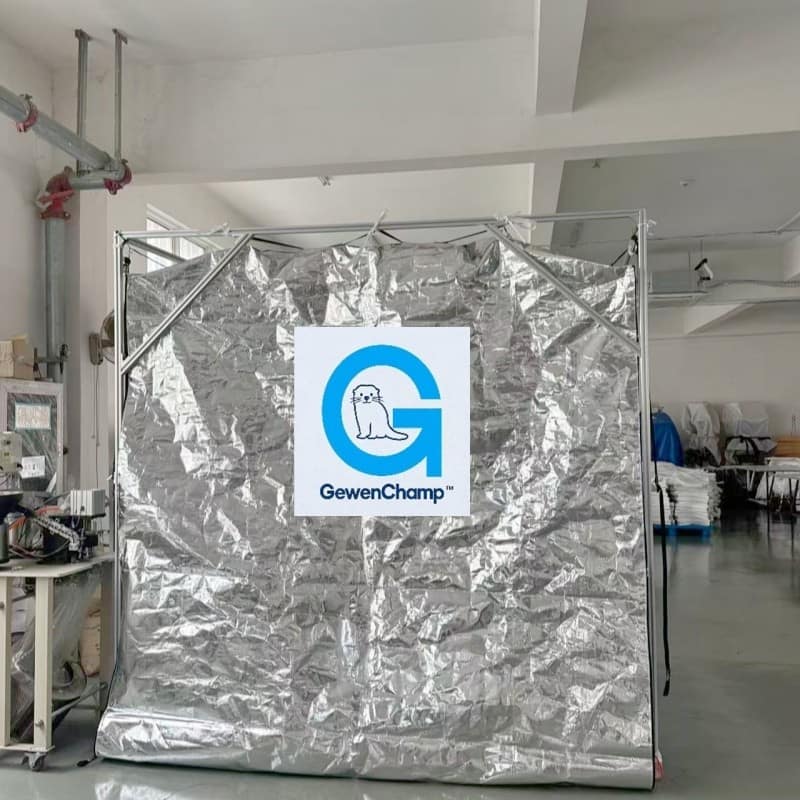
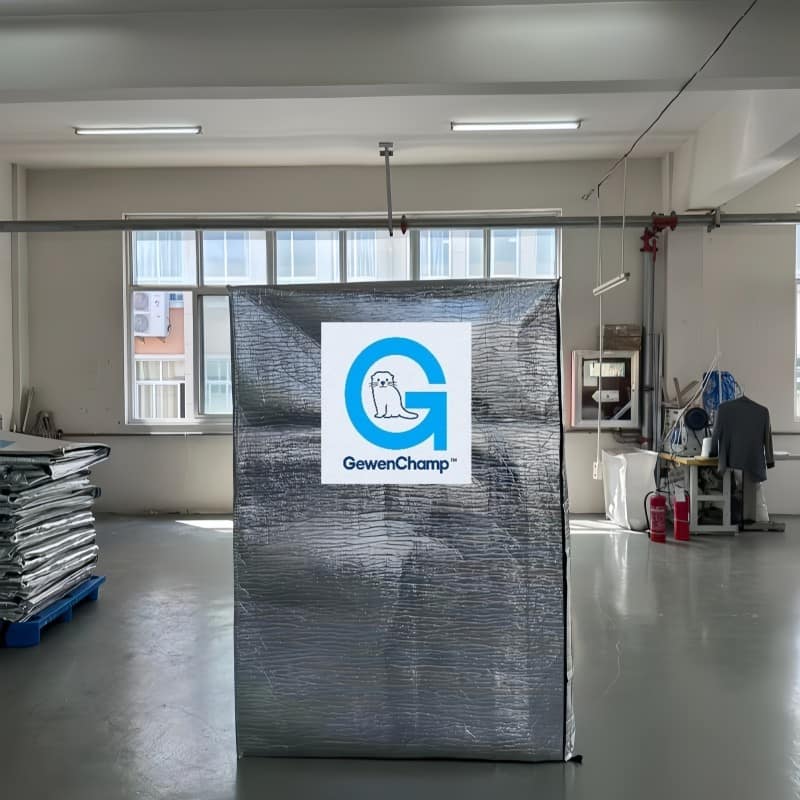
The following table shows how materials and performance scale across our GewenChamp TL series as an example of the technical depth available from Jiangsu manufacturers:
| Model | Material Structure | Thermal Performance | Typical Reuse Cycles |
|---|---|---|---|
| TL-01 | Woven PE + Double-Sided PE Aluminum Foil Lamination (2-layer) | -20°C to +60°C, ±5°C variance | 3–5 times |
| TL-02 | PET Aluminum Foil / Woven PE / 3mm EPE Foam / PET Aluminum Foil (4-layer) | -50°C to 80°C, conductivity ≤0.038 W/(m·K) | 3–5 times |
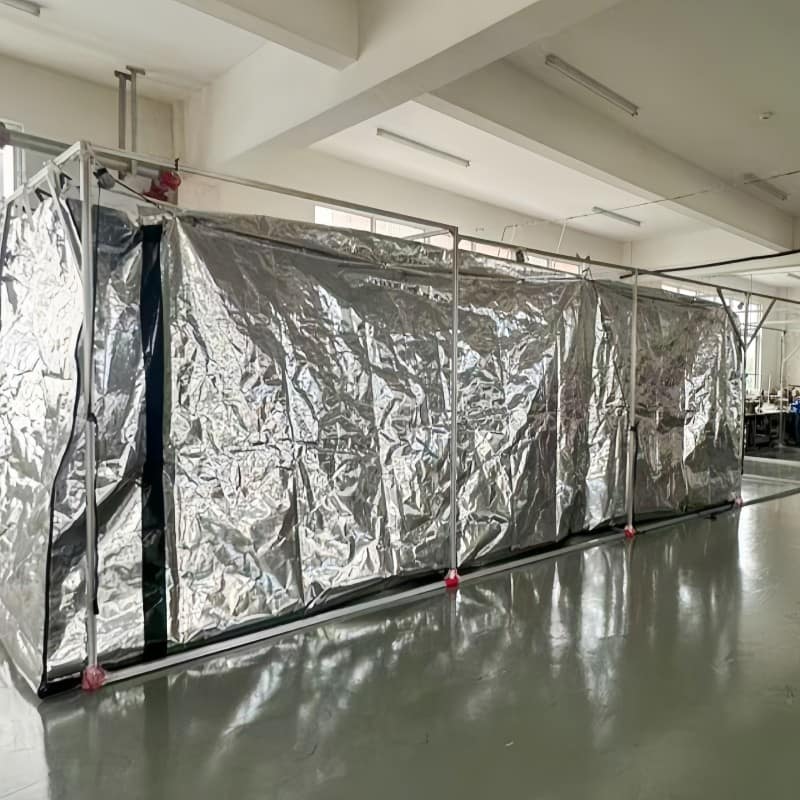
| TL-03 | MPET / Double Bubble Cushion / PET MPET (4-layer) | Radiant heat reflection up to 98%, 5mm static air gap | 3–5 times (standard) |
| TL-04 | MPET / PE Composite Film | Maintains -10°C to 30°C for 24–48 hours at 25°C ambient | 3–5 times |
The material choices are driven by physics, not marketing. The aluminum foil in TL-01 reflects 95 to 97 percent of radiant heat. The EPE foam in TL-02 reduces conductive heat transfer not because it is a better reflector but because its low thermal conductivity (≤0.038 W/(m·K) acts as a static barrier. For shipments where impact protection matters, the bubble cushion in TL-03 adds mechanical shock absorption. Each material layer answers a specific transport risk, and the best specification depends on the cargo’s sensitivity to temperature swing, condensation, and physical shock.
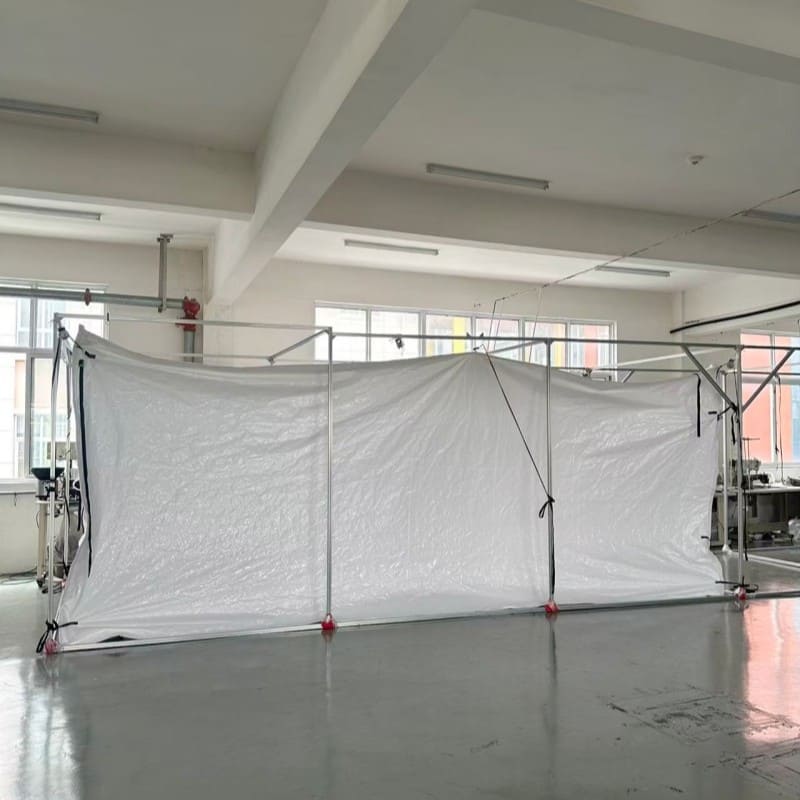
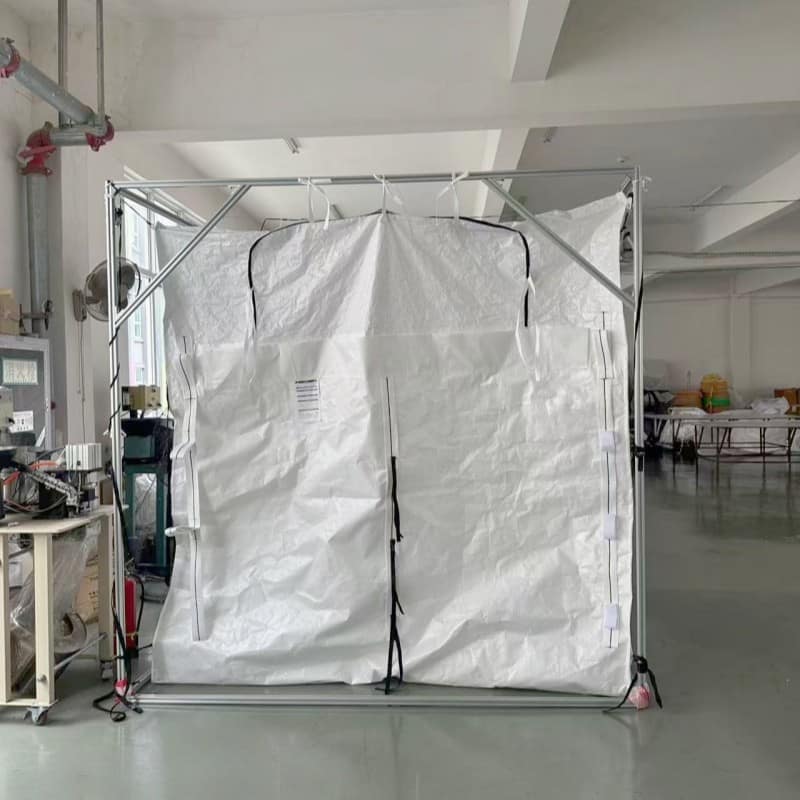
Dry bulk liners, meanwhile, handle entirely different risks: contamination, dust leakage, and moisture ingress. PE film liners provide a continuous barrier with no stitching holes. Woven dry bulk liners, like the DBL-W01 (140 gsm HDPE), combine high tensile strength with moisture resistance above 98 percent. For powdered cargo, sift-proof construction with PU-taped seams becomes essential. The ability to produce all four archetypes (thermal, film, woven, sift-proof) under one factory roof is what separates a true technical manufacturer from a trading company repackaging generic goods.
Certifications That Matter in Global Container Liner Procurement
I have seen multiple buyers disqualify otherwise competent suppliers because the factory could not produce a complete LFGB test report for a food-contact liner. This single failure wastes months of sourcing effort. Jiangsu’s leading manufacturers understand that certifications are not an afterthought. They build compliance into the production process.
For food-grade applications, FDA certification confirms that the liner material does not transfer harmful substances to food. LFGB certification opens EU markets by meeting German food safety law. ISO 9001 certifies the quality management system, not the product, but without it there is no reliable audit trail for batch traceability. REACH and RoHS address chemical substance restrictions, which matter for industrial liners shipping into the European Union. Our TL and DBL series carry all five certifications because international buyers rarely accept one without the others.
The actual testing behind these certificates is where many factories fall short. Verifying a liner’s migration test results or its vapor transmission rate requires an in-house laboratory equipped with a universal testing machine, a moisture vapor permeability tester, and a thickness gauge. Without this equipment, a factory cannot generate the test data that an importer’s technical team will request. When evaluating a Jiangsu supplier, I recommend asking for the most recent calibration certificate for the lab equipment rather than just a product certificate. A factory that cannot prove its instruments are calibrated probably cannot guarantee its liner data either.
Evaluating a Jiangsu Container Liner Factory: What to Check Beyond Price
A factory visit reveals more than a desktop review can. One of the first things I look for is the condition and layout of the lamination line. If the hot-melt lamination rollers show uneven wear, the bond strength will vary across the fabric width. That variance might not appear in a small sample swatch but it will show up in a 40-foot container liner subjected to road vibration during transshipment.
Material traceability is the second hard check. A serious factory keeps incoming resin certificates organized by batch and links each production lot to a specific raw material lot in the ERP system. This matters when a shipment fails at destination: without traceability, you cannot isolate the problem to a specific batch of resin, a lamination temperature setting, or a sealing seam operation.
Three other areas worth inspecting:
- Capacity utilization: a factory claiming a 200,000-liner annual capacity but running one shift probably cannot meet your peak-season schedule.
- R&D headcount: if the factory relies entirely on reverse-engineering competitor samples, they will struggle with custom ODM requests.
- Quality lab personnel: a dedicated in-house lab with at least two full-time technicians trained on tensile testing and gas chromatography indicates a factory that treats compliance as a function, not a checkbox.
Request a production sample from a current run, not a pre-prepared showcase sample. Test it for seam strength, pinhole count, and barrier property. The results of a single production sample tested by an independent lab give more supplier confidence than a stack of supplier-provided certificates from three years ago.
Sourcing Thermal and Dry Bulk Liners from Jiangsu: A Buyer’s Workflow
The sourcing process becomes repeatable when it moves from personal relationships to a documented workflow. The following steps have proven reliable for importers in food, chemical, and resin industries:
- Define the cargo protection requirement. Decide whether the liner’s primary job is moisture barrier, thermal insulation, dust containment, or a combination. This selects the liner category: PE film, woven bulk, sift-proof, or thermal composite.
- Map the transport route conditions. If the container passes through two climate zones, estimate the temperature extremes and the duration of exposure. This determines whether you need TL-01 or TL-02 performance, not just a generic “insulated liner.”
- Set the certification threshold. For food contact, require LFGB or FDA, not both. But verify the certificate covers the specific film grade you will use, because some suppliers certify one product and sell another.
- Request a sample from current production with a test protocol attached. Instead of waiting for the supplier to send a sample and a test report separately, send a one-page protocol listing the tests you will perform: seam tensile, pinhole detection, water vapor transmission rate, and any cargo-specific test.
- Place a trial order covering at least two container shipments. The first shipment tests the liner’s real-world performance. The second tests consistency. No buyer should scale up before seeing two identical outcomes.
If your program involves temperature-sensitive cargo crossing equatorial routes, confirm the liner’s anti-condensation layer performance before finalizing your packing specification. We can provide a customized technical data sheet and sample test plan; reach out at [email protected].
Moving from Supplier Screening to Long-Term Partnership
The most expensive liner failure is the one you do not see until the cargo arrives damaged. Often, the root cause is not a material defect but a missing step in quality planning: a lamination temperature that drifted nine degrees because the factory never set a control limit, or a batch of woven fabric that passed incoming inspection but had inconsistent filament density that opened micro-tears during loading.
Working with a manufacturer that combines in-house thermal composite R&D with international certification under one roof reduces the number of variables in your quality equation. The advantage of a Jiangsu-based joint venture is that the global quality system and the local production line answer to the same management team. This eliminates the finger-pointing that happens when a trading company blames the factory and the factory blames the shipping line.
Send your cargo specification and estimated annual volume to [email protected] or call +86 523 87683880. We will return a technical proposal with a recommended liner structure, a sample request form, and a production schedule that aligns with your first trial order.
What Buyers Ask About Jiangsu’s Container Liner Manufacturers
How do Jiangsu’s container liner factories compare with those in other regions?
Jiangsu’s advantage is integration, not scale. Factories in other provinces may match or exceed Jiangsu on square meters of factory floor, but the Jiangsu cluster has a higher density of vertically integrated operations where weaving, lamination, and final assembly sit on one site. This is especially true for thermal liners, where the bonding of reflective film to woven substrate requires precise temperature control that disintegrated supply chains struggle to maintain. For buyers, the practical outcome is shorter sampling lead times and faster revision cycles when a specification changes.
What certifications should I require for food-grade container liners?
Require FDA 21 CFR for shipments to the United States and LFGB for shipments to the European Union. These are complementary, not interchangeable, and a factory should hold both if you serve both markets. In addition, ask for a migration test report specific to the liner’s film grade and the food simulant relevant to your cargo (ethanol, acetic acid, or oil). A generic certificate without a product-specific test report is not enough to pass a customs inspection.
Can Jiangsu manufacturers handle complex custom liner designs?
Yes, when the manufacturer has an in-house R&D team. Custom designs involving multiple discharge spouts, partial perforation for gas release, or combined thermal and moisture barrier layers are standard ODM projects at Jiangsu’s larger joint ventures. The limit is usually not technical capability but minimum order quantity. For a completely new structure requiring custom tooling, budget for a development batch of 3,000 to 5,000 liners and a lead time of eight to twelve weeks for first article approval.
What is the typical lead time for container liners from Jiangsu?
Standard woven dry bulk liners without custom printing ship in 15 to 20 working days from order confirmation. Thermal liners add five to ten days for lamination and foil bonding. Custom ODM orders carry variable lead times depending on material availability; aluminum foil, for example, has volatile lead times because the foil supply chain runs on different demand cycles than polymer fabrics. Always request a material-by-material lead time breakdown rather than a single ship date, then buffer ten percent for port congestion.
How do I verify a factory’s actual production capacity?
Review the factory’s utility records. Electricity consumption correlates closely with production output in extrusion and lamination operations. A factory claiming full capacity but operating on a tiered electricity tariff suggests they are saving power, not running at load. During a visit, look at the machine hour meters, not the production whiteboard. If the meters show significantly fewer hours than the claimed capacity requires, adjust your supplier risk assessment accordingly. For a production audit checklist that includes utility cross-checks, reach out to us at [email protected].
 English
  German
  Spanish