
Container liner quality warranty should specify measurable performance thresholds, material defect coverage, and a clear claim process backed by third party test data. Most manufacturers offer a warranty, but the difference between a credible commitment and a marketing statement lies in the specifics, something I’ve seen repeatedly in over 15 years of manufacturing container liners. A real warranty doesn’t just promise to replace defective products; it defines what constitutes a defect, how performance is measured, and exactly what documentation triggers a claim. Without those details, a warranty is little more than a comforting line in a sales brochure.
What Should a Container Liner Quality Warranty Cover?
At a minimum, a credible container liner warranty should clearly define several areas. The warranty period typically spans 12 to 24 months from the date of shipment, but this alone means nothing without a clear description of what is covered. Coverage must distinguish between manufacturing defects and damage caused by incorrect installation, improper handling, or use beyond the liner’s specified limits. I’ve seen too many disputes where a buyer assumed all damage was covered, only to discover the warranty excluded anything that happened after the liner left the factory gate. A transparent warranty also states whether it covers replacement only, a refund, or both, and whether the buyer or manufacturer bears the cost of return shipping and inspection.
| Warranty Component | What to Look For |
|---|---|
| Warranty Period | 12 to 24 months from shipment date; clarify if it starts from shipment or delivery. |
| Defect Definition | Specific measurable defects (seam separation beyond 2mm, pinholes, delamination) – not vague “quality issues.” |
| Coverage Scope | Replacement, refund, or credit; whether shipping and inspection costs are included. |
| Exclusions | Misuse, improper installation, exceeding load capacity, unauthorized modifications. |
| Claim Trigger | What evidence triggers a claim: photos, test reports, return of sample. |
Some manufacturers also include a performance warranty for specific liner types: a thermal liner warranty might guarantee that internal temperature variance remains within ±5°C of the specified range when the liner is installed according to instructions. Without that specificity, any performance claim is unenforceable.
How Do Certifications Like ISO 9001 and FDA Back a Warranty?
Certifications are not just wall decorations; they demonstrate that a manufacturer follows documented quality processes. ISO 9001 certification requires a supplier to maintain process control, traceability, and corrective action procedures, all of which directly support consistent product quality and warranty reliability. When a liner carries FDA and LFGB food-grade certifications, the warranty can legitimately cover contamination risk and material safety because the manufacturing process has been audited and the materials tested by independent labs. REACH and RoHS compliance further confirm that the liner doesn’t introduce restricted substances, which matters for chemical and pharmaceutical cargo. We hold all five certifications at Giant Flexpack, and we can supply the specific test reports for each production batch because our quality system is built around that traceability. If a manufacturer can’t produce the actual lab reports behind their certifications, their warranty claims rest on trust alone, not verified performance.
Which Performance Guarantees Separate Real Warranties from Marketing?
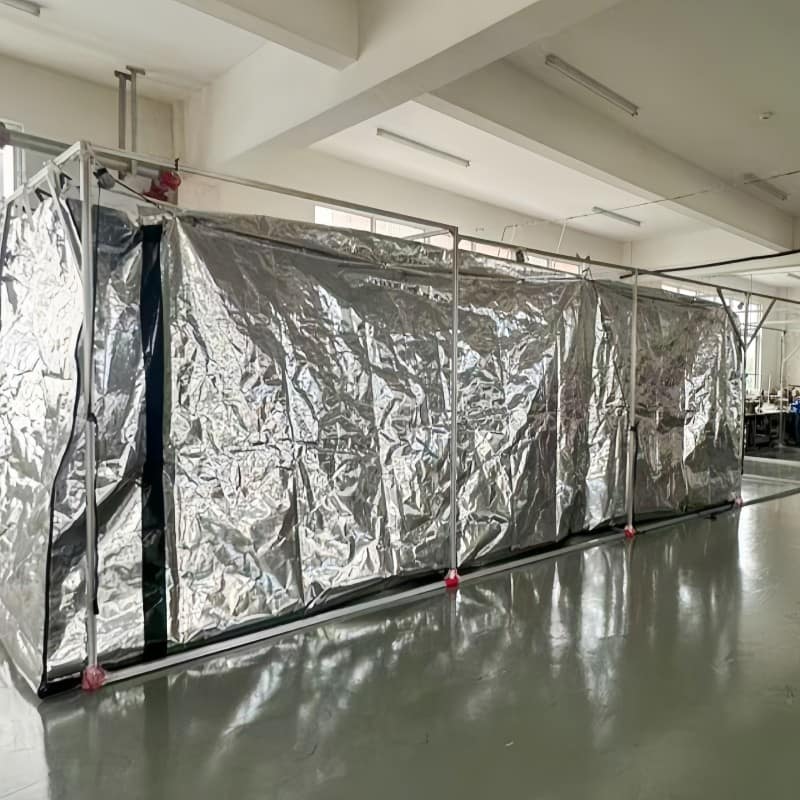
The difference between a meaningful warranty and empty marketing often comes down to numbers. For thermal container liners, the critical metrics are temperature variance limits, radiant heat reflection rates, and moisture vapor transmission rates. Our GewenChamp TL-01 liner, for example, reflects 95 to 97% of radiant heat and keeps temperature variance within ±5°C. The TL-02 with its EPE foam core has a thermal conductivity of ≤0.038 W/(m·K) and a moisture vapor transmission rate ≤0.033 g/(m²·h·kPa). These numbers come from lab testing and are part of the warranty documentation we send. For dry bulk liners, the key metrics shift to tensile strength, seam strength, and sift-proof performance. A woven liner rated for 1,800 N/5cm warp tensile strength and 100% dust-proofing carries a very different warranty expectation than a generic liner with no published specs.
| Liner Type | Performance Metric | What a Warranty Should Guarantee |
|---|---|---|
| Thermal (TL-01) | Radiant heat reflection | ≥95% reflection rate |
| Thermal (TL-02) | Temperature variance | ±5°C under specified conditions |
| Thermal (TL-02) | Moisture vapor transmission | ≤0.033 g/(m²·h·kPa) |
| Dry Bulk Woven | Tensile strength | Warp ≥1,800 N/5cm, Weft ≥1,500 N/5cm |
| Dry Bulk Sift-Proof | Dust leakage | Zero leakage for particles ≥50 mesh |
| PE Film Liner | Elongation at break | ≤30 to 35% for flexibility and tear resistance |
If you’re sourcing thermal liners for cargo that cannot tolerate more than a few degrees of temperature swing, confirming the actual tested performance data, not just the marketing numbers, before you commit to a supplier is worth the call. Send your requirements to [email protected] and we’ll supply the lab reports for the liner type that matches.
How Does the Warranty Claim Process Work in Practice?
No warranty matters if the claim process is so burdensome that pursuing it costs more than the liner itself. In my experience, the most straightforward claims follow a clear path: documentation, inspection, and resolution. First, the buyer documents the failure, usually with photographs of the defective area, a description of the cargo and conditions, and the original order and batch numbers. Second, the manufacturer inspects the evidence, often requesting a sample of the failed liner for lab analysis. Third, they determine whether the failure falls within the warranty terms and issue a replacement, credit, or refund. We aim to complete this process within two to three weeks once we receive the evidence, but it requires the buyer’s cooperation in providing records. Disputes typically arise when the buyer cannot prove the liner was installed correctly or when the damage is clearly from mishandling. That is why we always recommend that buyers request installation guidance and keep loading records; these are the difference between a settled claim and a rejected one.
How to Use Warranty Terms to Evaluate Container Liner Manufacturers
When you compare container liner suppliers, the warranty document itself reveals a lot about how the manufacturer operates. Look for three qualities: specificity, certification backing, and claim clarity. Does the warranty cite measurable performance criteria, or is it filled with general statements like “high quality guaranteed”? Second, does the manufacturer reference the specific standards and test reports that support their warranty? Third, is the claim procedure spelled out, including timelines, evidence requirements, and who pays for shipping? A supplier who is vague on any of these points may not have the quality control infrastructure to stand behind its products. We include a written warranty document with every quotation, covering the performance specs, the certification references, and the claim steps, so there are no surprises later. If your current or prospective supplier hesitates to share that document before you place an order, that hesitation is itself valuable information.
Procurement decisions involve real money and cargo value, and the warranty is the manufacturer’s promise that their product will perform. When that promise is backed by specific numbers, independent certifications, and a clear claim process, you can buy with confidence. If you’re sourcing container liners and want to review the warranty terms alongside the technical specifications, send your cargo details and performance requirements to [email protected] or call +86 523 87683880. We’ll send the full warranty documentation and test data for the liner type that fits your application.
Common Questions About Container Liner Warranties
How long should a container liner warranty last?
Most container liner warranties run 12 to 24 months from the date of shipment. The duration matters less than what the warranty covers during that period. A two-year warranty that only covers manufacturing defects narrowly defined may protect you less than a one-year warranty with clear performance guarantees. For thermal liners, verify that the temperature and moisture barrier specs remain applicable for the full warranty period, because insulation properties can degrade over time if the liner is stored improperly before use.
Does a container liner warranty cover damage that happens during shipping?
Whether a container liner warranty covers shipping damage depends entirely on the terms. A manufacturing warranty typically covers defects in materials and workmanship present at the time of shipment, not damage from rough handling, improper installation, or cargo shifting during transit. However, a liner that fails because its seam strength was below the published specification would be covered, even if the failure occurred during transit, because the root cause is a manufacturing defect. Always distinguish between a shipping insurance claim and a warranty claim; they serve different purposes.
What documentation will I need to provide for a warranty claim?
In warranty claims we’ve processed, the most common delay comes from incomplete documentation. The buyer needs the original purchase order, batch or lot number, clear photographs of the failure, and a description of cargo type and transit conditions. Some claims also require a material sample for lab analysis. When a claim arrives with all of this ready, we can often confirm coverage within days; without it, back-and-forth requests can stretch weeks. The difference between a fast claim and a slow one is usually the quality of the initial evidence.
Are thermal liner warranties different from dry bulk liner warranties?
It’s a common assumption that all container liner warranties are the same, but thermal and dry bulk warranties address fundamentally different performance criteria. Thermal liner warranties center on insulation performance: radiant heat reflection percentage, temperature variance limits, and moisture vapor transmission rate. Dry bulk liner warranties focus on mechanical durability: tensile strength, seam integrity, sift-proof performance, and load capacity. A manufacturer that offers both types should supply separate warranty documents. When you request quotes, ask to see the warranty for the specific liner type you need; a generic warranty that doesn’t distinguish between thermal and dry bulk products is a signal worth noting.
Can I see a warranty document before placing an order?
Rather than asking whether you can see a warranty document, the better question is whether the manufacturer will supply it before you order. A manufacturer confident in their quality control will send a sample warranty document during the quotation stage. This lets you compare the terms, exclusions, and claim procedures before committing. If a supplier pushes back on this request, consider whether you want to discover the warranty’s limitations only after a problem arises. If your program involves high-value or temperature-sensitive cargo, share your specific performance thresholds with us at [email protected] and we’ll send the relevant warranty terms along with the technical data sheet.
 English
  German
  Spanish