
Most container liner importers focus on product specs and price comparisons, but the real friction point isn’t the liner itself. It is the logistics and compliance chain that sits between a Chinese factory floor and a bonded warehouse in Rotterdam or Long Beach. In my fifteen years of manufacturing and shipping thermal liners and dry bulk container liners from Jiangsu province to over thirty countries, I have seen entire shipment timelines collapse because a certificate was misread, an incoterm was misaligned with the actual cargo handling plan, or a customs broker had never processed a liner classified as a food-contact packaging material. Getting the container liner to the port on time is the easy part. Getting it through customs without demurrage, ensuring the compliance documentation matches the destination country’s current regulatory interpretation, and loading the liner so that the cargo arrives in spec is where importers lose money. This guide walks through that hidden logistics-and-compliance layer from the manufacturer’s perspective, not the generic freight forwarder’s checklist you have already read.
What Compliance Actually Means for Container Liner Imports
Compliance is never a single certificate. It is a stack of documents, each tied to a specific regulation in the destination market, and the validity of the stack depends on how recently the testing was performed and whether the testing scope matches your cargo category.
For container liners, the most frequently referenced certifications are FDA (United States food contact), LFGB (European food contact), REACH (EU chemical substance regulation), RoHS (restriction of hazardous substances), and ISO 9001 (quality management system). A liner that carries an FDA certificate does not automatically satisfy LFGB, because LFGB demands migration testing under different simulant conditions and tighter limits on certain plasticizers. Similarly, a liner with a REACH compliance statement is only meaningful if the statement lists specific SVHC substances that the liner was tested for and shows the results. A generic REACH declaration is worthless at customs.
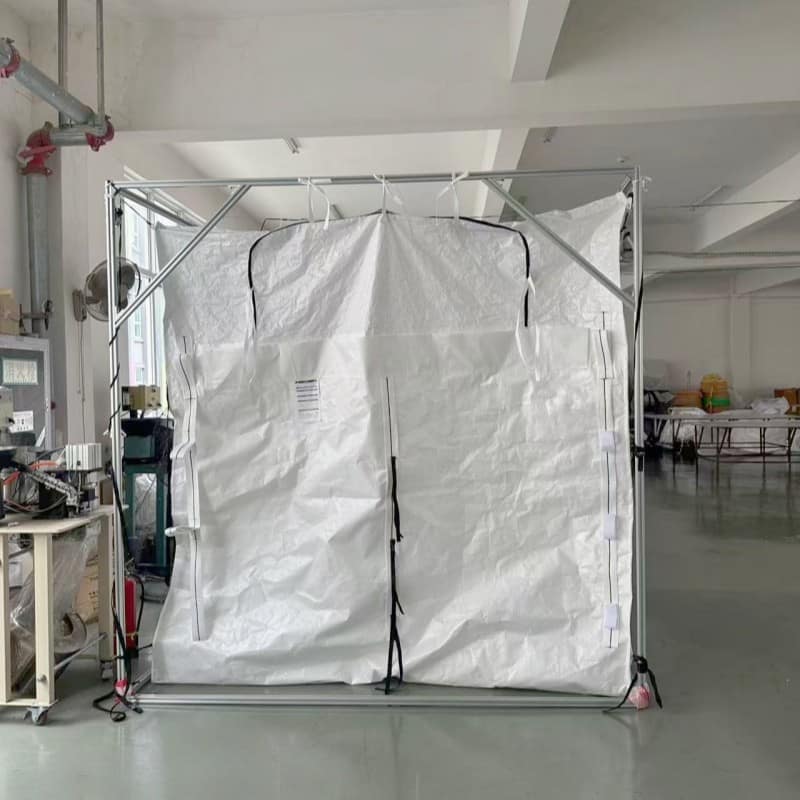
Our team at Giant Flexpack regularly re-tests liners through SGS and other accredited labs because regulations shift. In one case, an EU importer nearly had a shipment of food-grade liners rejected at Hamburg because the LFGB test report on file was 18 months old. Although the material had not changed, the customs officer interpreted an updated guidance note on migration limits as requiring a test from within the previous 12 months. The shipment cleared only after we provided a new lab report and a letter from our regulatory affairs contact confirming the manufacturing process had not been altered. That incident changed how we date-stamp our compliance reports. I now recommend that buyers request a test report issued within six months of the shipment date for any liner that will make food contact in the EU. A report older than that may be technically valid but is negotiation leverage you do not want to hand to a customs inspector.
Verifying Chinese Container Liner Suppliers and Documentation
Supplier verification for Chinese container liner manufacturers should focus on three categories: production capability, certification chain integrity, and export licensing. Production capability is the most straightforward. Ask for factory footage of the laminating line, foam extrusion line, or blow film line relevant to your liner type. A manufacturer that owns its lamination equipment can control inter-layer bonding consistency, which directly impacts moisture barrier performance. A trading company that sub-contracts lamination cannot make the same process guarantees.
Certification chain integrity is harder to assess remotely. Certificates from China-based testing labs are easily verified if you request the original lab report PDF with the lab’s unique report number and then ask the third-party lab directly for verification. I have personally seen instances where a supplier presented a modified report with the testing scope cropped and a more favorable migration value highlighted, while the excluded section showed a failing result for a different simulant. The safe practice is to require the full, unredacted report and to verify the report number with the issuing lab yourself. Do not accept a scanned image of a certificate as proof; anybody with a photo editor can insert a logo.
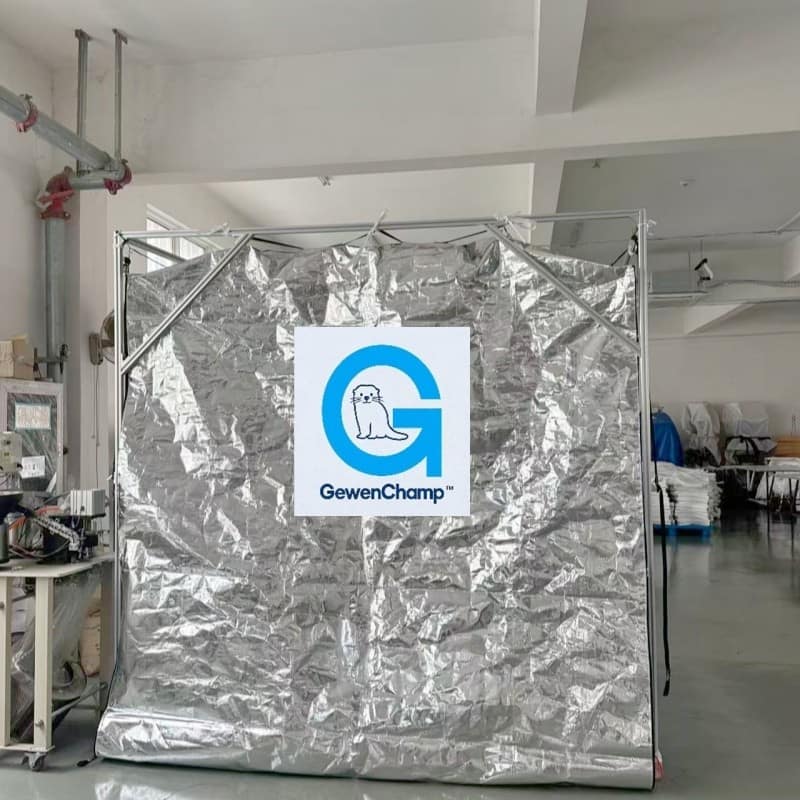
Export licensing is the area most first-time container liner buyers overlook. Many container liners are classified under HS code 6305 (sacks and bags, of a kind used for the packing of goods) or 3923 (articles for the conveyance or packing of goods, of plastics), but the exact code shifts depending on liner construction and whether the liner includes a separate PE film inner layer. The HS code drives import duty rates and determines what additional paperwork your country’s customs will demand. Before confirming an order, ask the manufacturer for the standard HS code they export under and cross-check with your own customs broker. In one European shipment, a container liner classified as 6305 was stopped because the customs authority reclassified it as 3923 due to the dominant weight of the PE film component, and the importer had to pay a retrospective duty adjustment.
Managing Container Liner Logistics and Shipping from China
Logistics planning for container liner imports from China centers on four decisions: incoterms selection, ocean freight mode, packaging configuration, and documentation preparation. The incoterm you choose determines at which physical point the liner’s temperature protection or moisture barrier performance becomes your responsibility. For thermal liners, I generally advise against any incoterm that transfers risk before the liner is loaded into a container in China, because a thermal liner left exposed on an open dock in a Shanghai August absorbs heat and moisture that can degrade the aluminum foil reflection layer before the container doors ever close. FOB (port of shipment) or CIF/CIP (carriage and insurance paid to) are safer starting points because they require the seller to deliver the goods in a container to the carrier. If you are new to container liner imports, avoid EXW until you have a reliable freight partner who understands thermal packaging handling at Chinese ports.
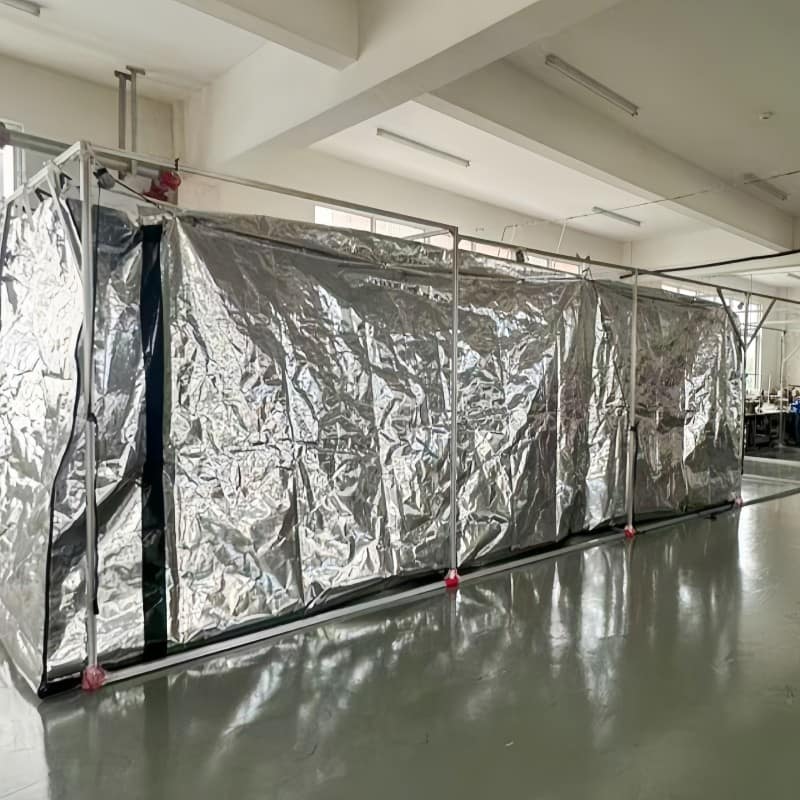
Ocean freight mode affects transit time and temperature exposure. LCL shipments, where liners share a container with other cargo, introduce two risks. First, the container may sit at a consolidation warehouse for days before loading, extending the liner’s time in uncontrolled conditions. Second, co-loaded cargo may off-gas or release moisture that compromises the liner’s film. For food-grade or temperature-sensitive liners, I recommend full container load whenever possible. FCL gives you container-level temperature monitoring and prevents cross-contamination. Lead times from Chinese liner manufacturers typically range from 20 to 45 days, depending on whether the order is standard stock or a custom dimension and thickness specification. Build an additional 10 working days into your planning for ocean freight booking and customs export clearance in China.
Pre-Shipment Quality Control and Liner Performance Testing
Pre-shipment inspection for container liners should verify dimensional accuracy, material thickness, seam strength, and thermal or moisture barrier performance, depending on the liner type. A liner that is 5 cm shorter than its specification can tear at the door seal under bulk loading pressure. A thermal liner with degraded foil because of poor lamination can lose 30% of its reflective performance, which you will not notice until your cargo temperature log shows an excursion mid-transit.
For thermal container liners, I recommend spot-testing the R-value on a sample from the production batch. The TL-02 EPE Foam liner, for instance, uses a 3mm closed-cell foam core with a thermal conductivity below 0.038 W/(m·K), and the outer aluminum foil reflects 95 to 97 percent of radiant heat. Those numbers are meaningful only if the foam lamination shows no delamination at the edges and the foil layer has no pinholes. A simple LED light box test behind the liner sample can identify pinholes too small to see by eye. For dry bulk woven liners, the tensile strength in both warp and weft directions should be checked against the supplier’s specification. Our DBL-W01 standard liner, for example, carries a minimum warp tensile of 1,800 N/5cm. If that drops by ten percent, the liner may still hold 25 tons of PP pellets, but the margin against a sudden surge during loading is gone.
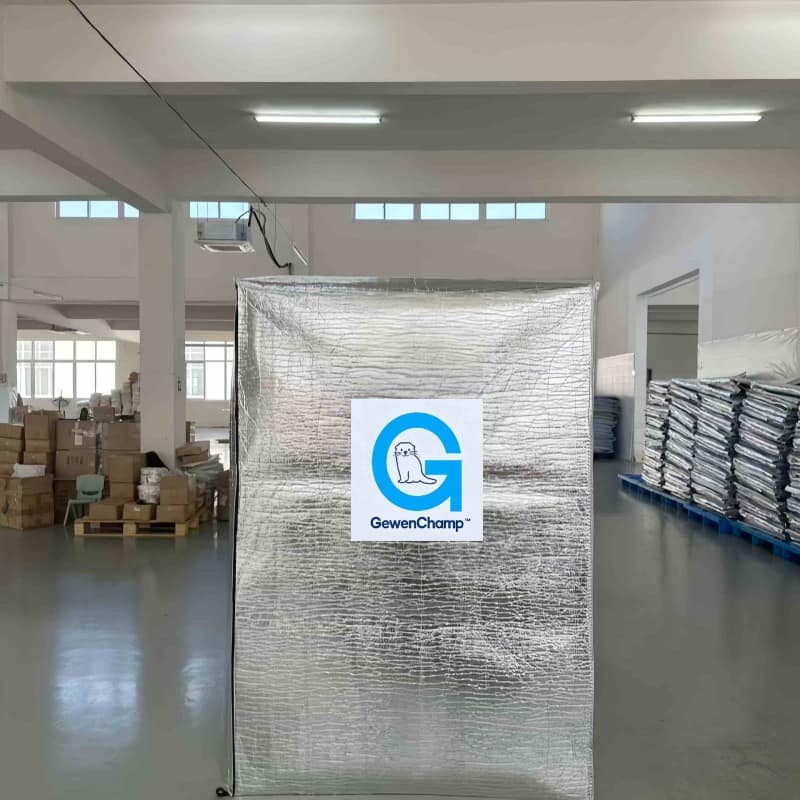
Below is a rapid reference for buyers comparing the four main thermal liner constructions from the TL series, each meeting a different risk profile for logistics temperature exposure.
| Model | Material Structure | R-Value Guard | Typical Transit Protection |
|---|---|---|---|
| TL-01 | Woven PE + PE Aluminum Foil Lamination | Foil reflection ≥ 95% | Moderate climate routes, reusable 3–5 trips |
| TL-02 | PET Foil / Woven PE / 3mm EPE Foam / PET Foil | Thermal conductivity ≤ 0.038 W/(m·K) | Long-haul hot or cold routes, foam insulation |
| TL-03 | MPET / Double Bubble / MPET | Radiant heat reflection ≥ 98% | Shock-sensitive cargo, double bubble air layer |
| TL-04 | MPET / PE Composite Film | Reflection ≥ 92%, waterproof IPX6 | Lightweight budget routes, produce and pharma |
Post-Receiving and Container Liner Installation Readiness
When container liners arrive at the destination warehouse, the logistics job is not finished. Liners should be stored in dry, shaded conditions, still in their original packaging, until installation. Thermal liners that sit in direct sunlight for a weekend on a loading dock can start to show foil oxidation at the creases. Installation itself is straightforward for trained crews, but the most common error is failing to attach the liner’s hanging straps to the container’s internal lashing rings at the correct tension. A thermal liner that sags during loading creates a thermal bridge between the container wall and the cargo, defeating the insulation. For dry bulk liners, the loading spout must be aligned with the container’s top hatch to avoid tearing the seam around the spout flange. A torn spout flange during filling is a waste of a liner and a loading delay.
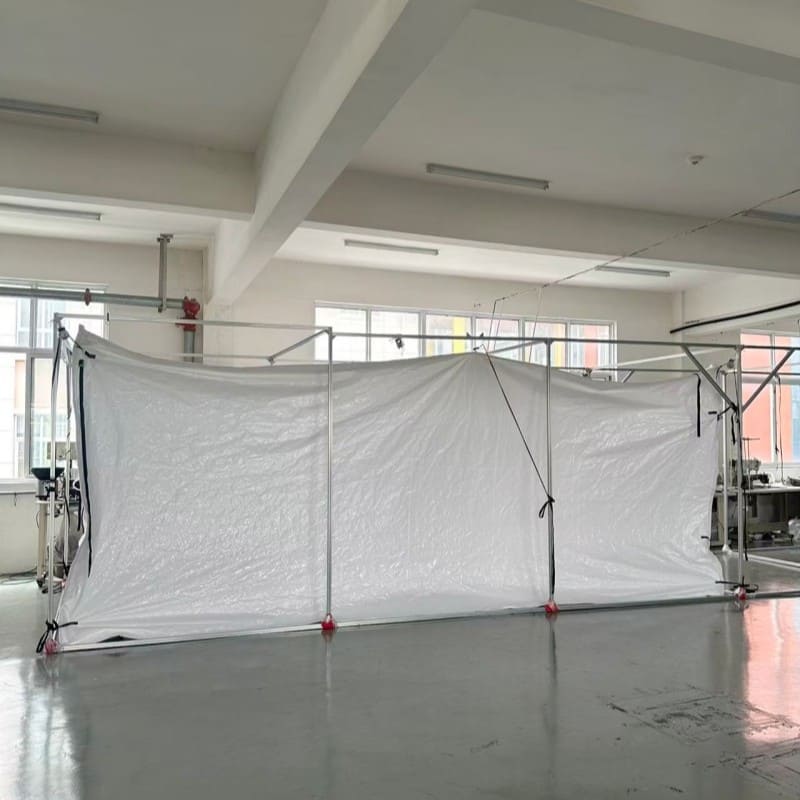
If your cargo program involves shipping temperature-sensitive food ingredients like cocoa butter, bulk wine, or pharmaceutical powders through equatorial sea routes, a thermal liner is only as good as the installation. We have seen liners perform to their rated R-value in controlled laboratory tests but underperform at sea because the installation crew misjudged the strapping tension and allowed an air gap behind the liner. The fix is simple: include a photo QC check during installation and train the loading crew on the specific liner model. A five-minute training session with the actual liner before the first container load will do more for compliance than ten pages of spec sheets.
Common Concerns When Importing Container Liners from China
What is the minimum order quantity for container liners from China?
Minimum order quantities vary by liner type. Standard woven dry bulk liners often have an MOQ around 10 to 50 units, while custom-sized thermal liners may require 100 units or more to justify material procurement and machine setup. It is worth asking a potential supplier up front about MOQ and whether they keep stock of common 20-foot and 40-foot liner sizes ready to ship.
How long does shipping container liners from China take?
From final order confirmation, standard liner orders usually ship within 20 to 40 days depending on customization and factory capacity. Ocean freight transit to a European port then takes 25 to 35 days. Planning for eight to ten weeks total is a safe starting point.
Can I reuse container liners?
Many woven PP liners are single-use, but certain thermal liners, particularly those with robust outer woven PE layers, are designed for 3 to 5 trips if inspected for damage between uses. The reusable liner should always be checked for foil delamination, pinholes, and seam integrity before reinstallation. A single undetected moisture path negates the entire thermal protection.
Are there container liners that are eco-friendly?
Reusable thermal liners and liners made from recyclable mono-material PE are moving in that direction, but the industry is still developing a practical circular model. If sustainability is a procurement requirement, ask the manufacturer about the liner’s end-of-life recyclability and whether they can provide a life cycle assessment based on your projected reuse cycles. A reusable liner that replaces multiple single-use liners reduces total packaging waste even if it is not biodegradable.
What if my imported container liner fails inspection on arrival?
If the liner shows visible damage or does not meet the specification you ordered, the resolution depends on the agreed incoterms and your contract’s quality warranty terms. Photograph the damage immediately and note the container number and seal integrity. A reliable manufacturer should offer a replacement or credit, but the strongest position is to have a pre-shipment inspection report from a third party that already confirmed the liner condition before it left China. If your liner specification includes tolerance for performance testing, sharing your incoming QC findings with the factory helps refine future batches. You can reach our quality team directly at [email protected] to discuss any liner incident or to arrange a sample inspection protocol before your next shipment.
 English
  German
  Spanish