
Finding a reliable bulk packaging supplier in China takes more than checking a business license and comparing unit prices. The most costly risks, such as cargo spoilage from condensation, a failed European food-contact audit, or inconsistent liner quality that only shows up after five container loads, trace back to technical gaps that generic supplier vetting misses. Over 15 years in thermal packaging manufacturing, I have seen procurement teams lose thousands because they stopped at the commercial layer without probing a supplier’s material science, certification depth, and operational discipline. A reliable supplier in industrial bulk packaging is one that can prove its performance in a laboratory and repeat it in serial production. The six checks below are the ones I would use myself when qualifying a partner for sensitive dry bulk, food-grade, or temperature-controlled container shipments.
Evaluate the Supplier’s Material and Construction Quality for Bulk Packaging
Bulk container liners routinely carry loads exceeding 25 metric tons, so material selection and seam integrity are non-negotiable. A supplier should speak with precision about fabric weight, tensile strength, and lamination method, not list “PE” or “PP” in a catalog without supporting data. For woven dry bulk liners, I look for a warp tensile strength of at least 1,800 N/5cm and a weft of 1,500 N/5cm as a reference baseline, values that align with our own DBL-W01 standard liner. When the application demands thermal protection, the composite structure matters even more. Our TL-01 series pairs a woven PE core with double-sided aluminum foil lamination, achieving both mechanical toughness and 95–97% radiant heat reflection. A supplier that cannot provide tensile test data for the exact fabric weight you are ordering is one that outsources quality assurance to chance.
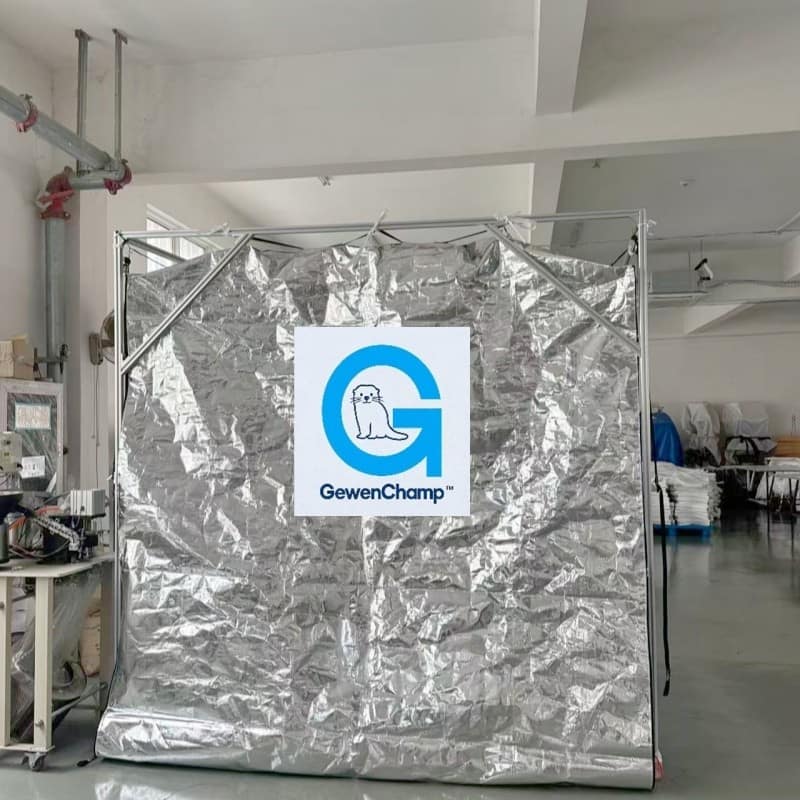
Equally important is seam construction. Heat-welded seams, as used on the DBL-04W wagon liner, eliminate pinhole leaks entirely and deliver dust-proof performance that sewn-and-taped seams cannot match under high static pressure. During a factory evaluation, ask to see the seam strength test records for the liner model you are buying. A graph showing consistent break strength across multiple seam samples tells you more about day-to-day process control than a glossy certificate on the wall.
The table below compares structural differences among four common thermal liner constructions, differences that directly influence how cargo weathers a long ocean voyage.
| Liner Type | Material Structure | Tensile Strength (Warp) | Thermal Reflectivity | Key Use |
|---|---|---|---|---|
| TL-01 | Woven PE + Al Foil Lamination | ≥1,500 N/5cm | 95–97% | Moderate temperature control, dry bulk |
| TL-02 | Al Foil / Woven PE / 3mm EPE Foam / Al Foil | ≥1,500 N/5cm | 95–97% | Wide -50°C to 80°C range, high insulation |
| TL-03 | MPET / Double Bubble / PET MPET | ≥15 N/15mm | 98% | Lightweight, shock-absorbing insulation |
| TL-04 | MPET / PE Composite Film | ≥15 MPa | ≥92% | Cost-sensitive, light-duty temperature control |
Request the supplier’s technical data sheet for the specific lot you are considering. A material that meets the published spec on paper but arrives thinner or with an uncalendered lamination will fail under real transit stresses.
Verify the Supplier’s Thermal Performance Certifications and Test Data
If your cargo needs temperature protection, move past marketing phrases such as “thermal liner” and ask for concrete performance indicators: R-value, U-factor, and a quantified temperature variance number. For example, the EPE foam core inside the TL-02 liner has a thermal conductivity of ≤0.038 W/(m·K), which is the measurable reason it holds internal temperatures steady between -50°C and 80°C. Suppliers often claim “insulated” without disclosing these figures; that absence should be treated as a red flag during evaluation.
How Do I Read Thermal Performance Data Like R-Value and U-Factor?
R-value measures resistance to heat flow; a higher value means better blockage of conductive heat transfer. U-factor is its inverse. In container liners, the picture is more layered because radiant heat and convection also move energy into the cargo space. A reflective surface such as aluminum foil or MPET blocks radiant heat, while a foam core blocks conduction. A competent supplier will share third-party test reports showing the assembly’s overall thermal resistance, not simply the reflective layer’s emissivity. Ask for a test report from an accredited laboratory that documents the liner’s ability to maintain a specific ΔT over a 24- or 48-hour period under controlled temperature and humidity conditions.
Which Certifications Matter for Thermal Container Liners?
Third-party validation carries weight. SGS, TÜV, or a Chinese National Packaging Quality Supervision and Inspection Center report on thermal performance supplies credible, independently verified evidence. A supplier that offers only in-house data may still be reliable, but the burden of proof then shifts entirely to your own sample testing. In our GewenChamp™️ series, independent laboratory reports verify the temperature variance and insulation performance we claim; this is the standard I recommend procurement teams demand before committing to a production run.
Confirm Food-Grade and International Compliance Standards Are Met
For food and beverage shipments, a container liner functions as a primary contact surface. The supplier must demonstrate compliance with the destination market’s food-contact regulations, not only those of the exporting country. In my experience, the biggest source of confusion is the difference between FDA-certified and LFGB-certified materials, and buyers who discover this distinction at the customs desk pay for it in demurrage and rejected goods.
What Is Migration Testing and Why Does It Matter?
Migration testing measures whether chemical substances from the liner material transfer into the food product under realistic time and temperature conditions. The EU’s Regulation (EC) No 1935/2004 sets specific migration limits, and LFGB certification in Germany imposes additional sensory evaluation and overall migration requirements. A supplier who holds only FDA clearance may be adequate for US-bound shipments, but European customs can and do reject a consignment if the liner lacks EU-specific testing documentation. Always request the migration test report, not just the certificate, and verify that the test conditions match your cargo’s fat content, acidity, and expected temperature exposure.
Are FDA and LFGB Equally Valid for EU Exports?
FDA is not automatically equivalent to LFGB. While both standards address food safety, LFGB includes more stringent overall migration limits and a sensory evaluation that FDA does not require. For EU-bound cocoa beans, wine, or sugar, I advise sourcing liners that carry both certifications and that are accompanied by a current EU Declaration of Compliance signed by the manufacturer. Giant Flexpack’s TL and DBL series maintain FDA, LFGB, ISO9001, REACH, and RoHS certifications precisely because our customers ship into multiple regulatory zones, and we cannot afford to have a single certification gap block a container at Rotterdam or Hamburg.
Assess Production Capacity, Lead Times, and Customization Scalability
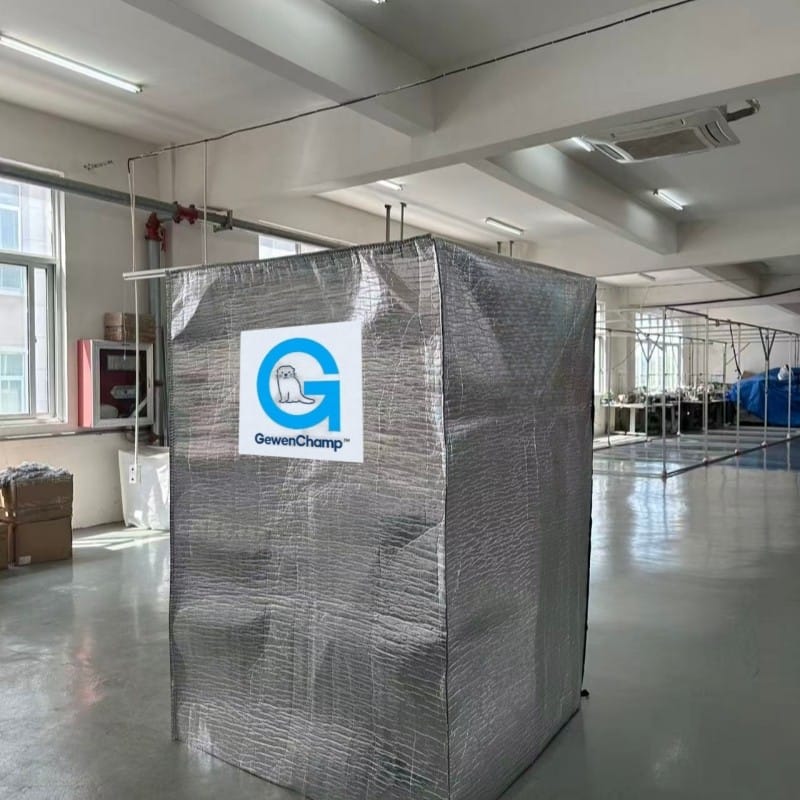
A supplier that offers a fixed catalog but cannot scale to custom dimensions or adapt filling spouts becomes a bottleneck the moment your logistics requirements shift. During evaluation, check the factory’s annual output in units or square meters, and confirm their actual lead time for a non-standard order by requesting a recent production schedule. For example, 30FT container liners for European plastic pellet transport require specific spout diameters and an exact fit. Our DBL-F02 model is configured for 30FT ISO containers with four top filling spouts compatible with European loading equipment. If a supplier cannot produce a technical drawing for your container type within a week, their engineering support capacity is probably too thin to support a long-term relationship.
Ask about the minimum order quantity for both standard and custom liners. A manufacturer that demands the same MOQ regardless of complexity signals a rigid production line that may struggle with the small adaptation requests that real cargo programs generate. Reliable partners can typically offer lower MOQs on standard materials and ramp up sensibly on proven custom designs.
I also recommend probing what happens when an order is urgent. A supplier that cannot walk you through a compression scenario—who would re-sequence work orders, where the extra material inventory sits, and how many additional shifts they can call in—has not built the operational buffers that a reliable partner needs.
Audit the Quality Control Process and After-Sales Support Structure
ISO 9001 certification is a starting point, but the actual quality control workflow matters far more. During a supplier evaluation, I want to see the incoming raw material inspection log, the in-process seam strength test records, and the final load-test reports. The DBL-W06 sift-proof liner offers a useful reference: every sewn seam is sealed with high-adhesion PU tape to achieve 100% containment for fine powders. A supplier that cannot show me the batch-level peel adhesion test for that tape is one that trusts hope over verification.
After-sales support should include installation guidance, failure analysis, and a genuine willingness to participate in a root-cause investigation if cargo damage occurs. I have been on the receiving end of a contamination claim where a liner seam opened inside the container, and the producer’s first response was to blame the loading crew. A reliable supplier starts with a structured failure analysis, pulls the retained samples from that batch, and reports on seam strength before anyone assigns blame. We maintain an installation guide library and provide on-call technical support for GewenChamp™️ liners because a liner installed incorrectly will underperform regardless of its laboratory ratings. Ask the supplier to show you their after-sales response flow, from complaint registration to corrective action closure, before you place the first purchase order.
Understand the Joint Venture Structure and Its Reliability Benefits
A Sino-American joint venture combines two supply cultures that procurement teams value simultaneously: the cost and manufacturing efficiency of Chinese production with the quality management, engineering rigor, and communication practices of a Western partner. In practice, this usually means the joint venture’s quality system is audited by both Chinese and international certification bodies, English-language technical support is embedded rather than outsourced, and product development follows documented stage-gate processes instead of ad-hoc adaptations. Giant Flexpack has operated as an established Sino-American joint venture since 2004, and our product development and compliance documentation reflect this dual accountability every day.
For a procurement manager, the practical benefits include faster turnaround on technical inquiries, clearer specification sheets, and a measurably lower risk of miscommunication during custom liner design. When you evaluate a supplier, check whether their quality management team includes personnel with international experience and whether their quality manual references both ISO and US/EU standards as formal design inputs. A joint venture that cannot demonstrate this structure is likely a label rather than an operating reality, and the reliability gap will surface under pressure.
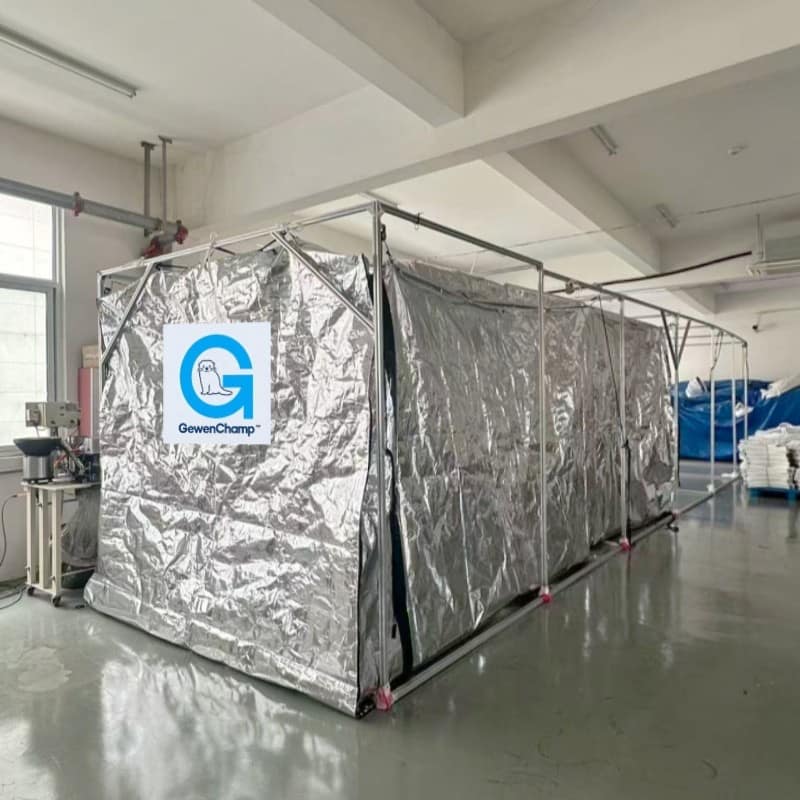
If your program involves temperature-sensitive or high-value dry bulk cargo, identifying a supplier that passes these six checks before you place a trial order prevents most of the problems that surface six months into a partnership. For a technical discussion about your specific cargo, container type, and route, email [email protected] or call +86 523 87683880 to speak with our engineering team at Giant Flexpack. We regularly configure thermal container liners, dry bulk liners, and pallet covers for materials ranging from PE resin to cocoa beans, and we can confirm a realistic timeline and compliance documentation set once we understand your requirements.
Common Questions About Vetting Bulk Packaging Suppliers
What is the typical minimum order quantity for custom container liners?
MOQ varies by material and complexity. Standard PE film liners may start at 50 to 100 units, while specialized thermal liners with multi-layer composites often require 200 to 500 units for a production run. A supplier willing to offer a pilot lot of 20 to 30 units for qualification testing signals confidence in both their product and their process consistency.
How do I verify a supplier’s ISO 9001 certification?
Request the certificate number and issuing body, then check the certifier’s online database. Many Chinese suppliers hold valid ISO 9001 certificates from accredited bodies such as SGS, TÜV Rheinland, or CQC, but verify that the scope explicitly covers “manufacture of container liners” rather than a generic “packaging materials” category that could mask a narrower operational footprint.
What is the difference between woven PP and PE film container liners?
Woven PP liners deliver high tensile strength and are typically chosen for heavy granular cargo such as soybeans or fertilizer. PE film liners provide a superior moisture and oxygen barrier and are preferred for hygroscopic materials like sugar, milk powder, and certain chemicals. The selection turns on your cargo’s sensitivity to moisture and mechanical load, not on one material being universally better.
Can I receive samples before committing to a bulk order?
Yes, a reliable supplier will provide sample swatches or a full unit at a nominal cost and should cover shipping for serious evaluations. I recommend requesting lab test reports alongside the sample so you can compare the small-batch quality against the supplier’s standard specifications before scaling up.
How long does it take to manufacture a custom container liner order?
Standard custom orders, where an existing design is adapted to a new container size, typically take 15 to 25 days from drawing approval. Fully new designs involving tooling or unique material laminations can extend lead time to 30 to 45 days. Secure a written schedule that includes drawing review, material procurement, production, and final inspection milestones. If your specification involves multiple food-contact standards, share your requirements early because validating material suitability alone can add two weeks. Send your cargo details to [email protected] and we will confirm the timeline before any commitment is required.
 English
  German
  Spanish