
Most dry bulk and temperature-sensitive cargoes still fail in transit not because of a lack of available packaging, but because the packaging was developed for a generalized set of conditions that don’t match the actual supply chain route. A container liner that passes a static lab test at 25°C with 60% relative humidity may perform very differently on a 35‑day voyage crossing the equator with ambient peaks above 45°C and dew point swings that trigger condensation inside the container. At Giant Flexpack, our R&D process is built around this gap between laboratory qualification and real‑world thermal and moisture performance. Container liner R&D succeeds when it stops treating protection as a material specification and starts treating it as an outcome that must survive a specific logistics chain.
How Field Failure Data Shapes Container Liner R&D Priorities
R&D programs that start from a catalog of material options tend to produce variants of existing liners. Programs that start from documented field failures tend to produce liners that work better because they are designed against specific failure mechanisms. We maintain a structured log of every post‑shipment liner inspection that reaches us from customers, and over the last decade the top three failure causes have remained remarkably consistent.
Condensation‑driven cargo wicking occurs when the inner liner surface drops below the dew point and moisture transfers directly into hygroscopic cargoes. At the container wall, even a thermal liner with an R‑value above 2.0 will experience some boundary‑layer cooling. What matters is not whether cooling occurs, but whether the inner surface stays above the dew point long enough to prevent liquid water formation. Our TL‑02 liner with a 3mm EPE foam core addresses this by maintaining a thermal conductivity below 0.038 W/(m·K), which slows heat transfer enough to keep the interior surface temperature above the critical threshold during typical diurnal temperature cycles.
Mechanical abrasion during loading and unloading is the second most frequent failure. Woven PE outer layers rated at 120–150 gsm provide good tensile strength, but the real vulnerability is seam integrity under pneumatic loading pressure. For powdered cargoes like titanium dioxide or kaolin clay, we moved to PU tape‑sealed seams on the DBL‑W06 liner after documenting that standard stitching allowed fine particle migration even when the fabric itself remained intact.
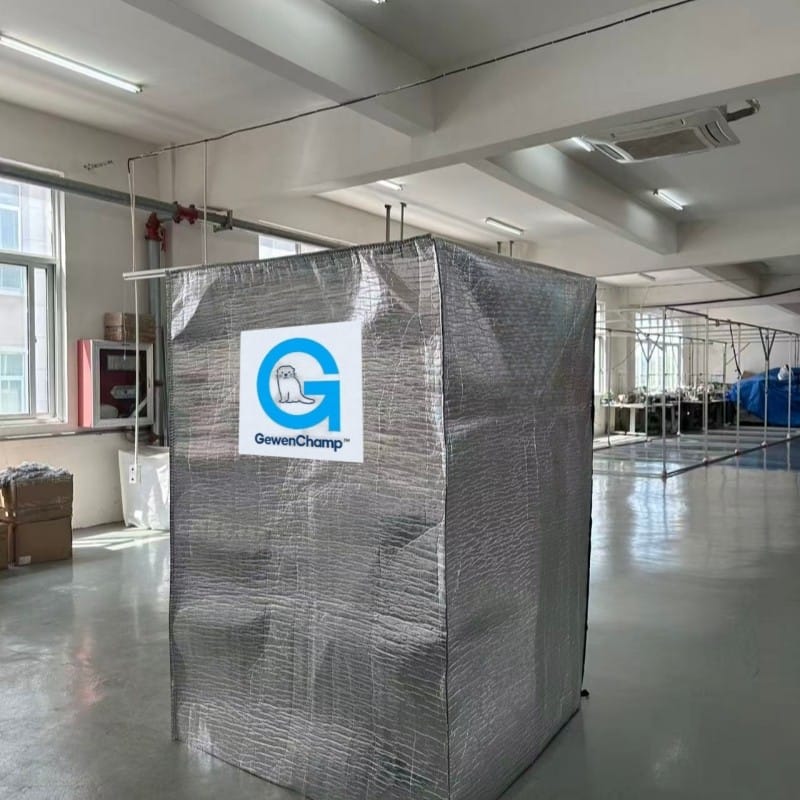
The third category is cargo incompatibility, where a liner material that works for one commodity degrades rapidly with another. Plasticizer migration from certain polymer pellets was softening PE film liners within 48 hours of contact, reducing tear resistance by up to 30% before the ship left port. That data point redirected an entire R&D sub‑project on co‑extruded barrier films.
Material Selection as an R&D Decision, Not a Spec Sheet
When a procurement team asks for “a thermal liner for cocoa beans,” the R&D question is not which insulation to pick from a price list. The question is what combination of heat reflectance, conductive resistance, and vapor transmission rate will keep the cargo within its quality window for the full voyage duration, including potential port delays. Cocoa beans tolerate 25–30°C but start blooming and losing value when internal temperatures exceed 32°C for more than a few hours. At the same time, they must stay above 18°C to avoid condensation damage during unloading in temperate ports.
A single‑layer aluminum foil liner reflects 95–97% of radiant heat but provides almost no conductive insulation. It works for routes where the primary threat is direct solar loading on the container roof. On routes with both extreme daytime radiant heat and cold nights, the four‑layer MPET/double bubble/MPET structure of our TL‑03 liner adds a static air barrier that slows conductive heat loss. The double bubble layer traps air in 10–15mm cells, which cannot convect, producing a measurable reduction in the night‑time temperature drop rate.
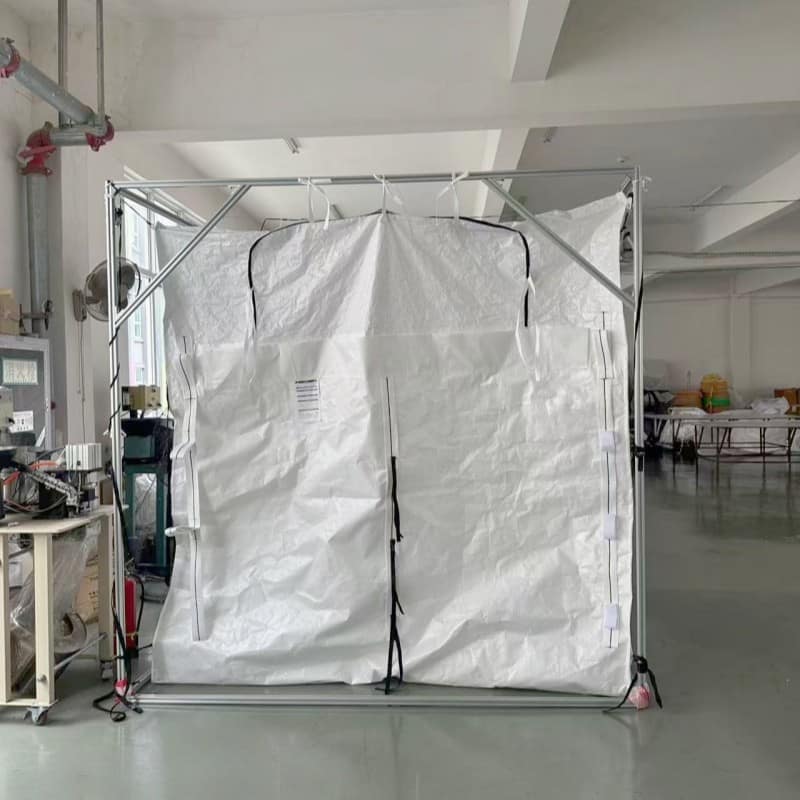
The table below summarizes the R&D logic behind the four thermal liner architectures we deploy for different route profiles. The selection is driven not by material cost alone, but by the failure mode each architecture is designed to prevent.
| Liner Architecture | Primary Thermal Mechanism | Best Route Profile | Typical Temperature Stabilization |
|---|---|---|---|
| Woven PE + Aluminum Foil (TL-01) | Radiant heat reflection, moderate tensile strength | Short‑ to medium‑haul, moderate ambient temperatures | ±5°C from ambient, -20°C to 60°C operating range |
| PET Foil / Woven PE / EPE Foam / PET Foil (TL-02) | Combined radiant reflection and conductive resistance | Long‑haul sea freight, high diurnal temperature swings, condensation risk | -50°C to 80°C operating range, moisture vapor transmission ≤0.033 g/(m²·h·kPa) |
| MPET / Double Bubble / PET MPET (TL-03) | High radiant reflection plus static air insulation, plus shock absorption | Frozen and chilled cargoes, biologicals, precision electronics | Radiant heat reflection up to 98%, internal temperature maintained for 24‑72 hours depending on supplementary cooling |
| MPET / PE Composite Film (TL-04) | Good radiant reflection, lightest weight, cost‑optimized | Short‑ to medium‑haul, fresh produce and standard pharmaceuticals | Maintains -10°C to 30°C for 24‑48 hours at 25°C ambient, extendable with ice packs |
How Certification Testing Becomes an R&D Input Rather Than a Final Gate
Many buyers treat certifications like FDA, LFGB, REACH, and RoHS as a checklist completed at the end of production. In an R&D workflow that genuinely serves cargo protection, certification test results feed back into material and process decisions during development, not after.
For food‑grade liners, the migration testing specified by EU Regulation 10/2011 is not a pass/fail barrier. It is a quantitative constraint on the liner’s formulation. A PE film that shows overall migration below 10 mg/dm² during the simulant tests is legally compliant, but if the measured value is 8.7 mg/dm² for a fatty food simulant, the R&D team knows there is limited headroom if the customer later switches to a more aggressive product or if the shipment route includes temperature excursions that accelerate migration. Our response has been to develop co‑extruded films with a thin virgin LDPE food‑contact layer and a structural layer behind it, rather than relying on a mono‑layer film that must satisfy every requirement simultaneously.
REACH and RoHS compliance create a different R&D challenge. The restriction on certain phthalates and heavy metals means that recycled content, which is otherwise desirable from both a cost and sustainability standpoint, must be screened and segregated carefully. A woven PE outer layer containing post‑industrial recycled material may meet tensile specifications but fail REACH if the recycled stream included a plasticizer source the recycler did not declare. That risk shifts R&D toward designing for traceable material chains rather than optimizing for the lowest raw polymer price.
ISO 9001 certification of the manufacturing facility is sometimes cited as a quality assurance credential, but its R&D value is in the process control data it generates. When every production batch of woven fabric records warp and weft tensile strength, elongation at break, and coating thickness, those data points accumulate into a statistical picture of process capability. Over multiple production campaigns, our R&D team can identify which liner designs are robust to normal manufacturing variation and which ones are fragile — performing well only when every parameter hits its nominal value. Fragile designs are redesigned before they reach a customer container.
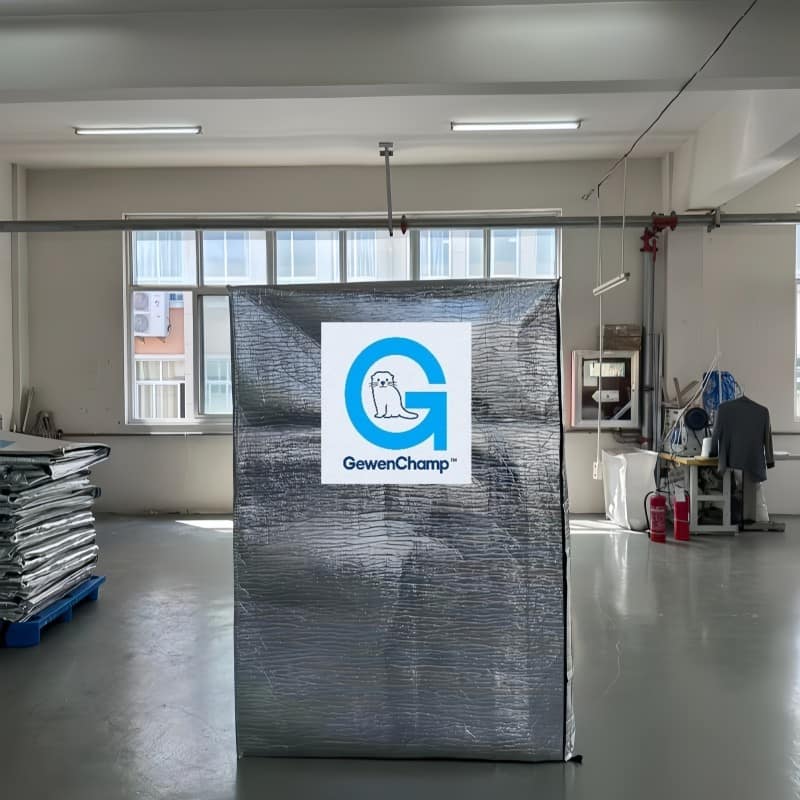
If your shipping program involves food‑grade cargo under FDA or EU regulation, the liner’s compliance documentation is not just a certificate. It is a record of the material choices made during R&D. At Giant Flexpack, we provide full migration test reports and material declaration documents mapped to each production batch, so you can verify compliance before your cargo is loaded. Reach us at [email protected] or +86 523 87683880 with your cargo type and target regulations, and we will confirm which liner architectures have matching documentation available.
Rapid Prototyping for Non‑Standard Routes and Cargoes
Standard liner catalogues cover common container sizes and typical cargo categories. The R&D process that generates those catalogues is relatively mature. What makes a manufacturer an effective R&D partner for buyers is the speed and technical quality of the non‑standard solution development.
We have completed liners for 30ft European containers used in plastic pellet distribution, liners for rail gondola wagons moving alumina powder from inland smelters to seaports, and thermal pallet covers sized for non‑standard pallet dimensions in pharmaceutical cold chain logistics. Each of these began with a customer‑supplied set of failure data or a specific logistics constraint. From there, the R&D cycle follows a repeatable four‑step sequence.
First, the cargo and route are characterised quantitatively: cargo density, moisture sensitivity, temperature limits, abrasiveness, chemical reactivity with liner materials, and the expected temperature and humidity extremes of the route. Second, candidate materials are selected from our library of fabrics, films, foams, and coatings, with each option evaluated against the specific failure risks identified. Third, a short run of prototype liners is manufactured and tested — not only in controlled laboratory conditions, but on instrumented trial shipments when the customer’s logistics schedule allows it. Fourth, the trial results are reviewed with the customer and the liner design is either approved for production or modified.
For a malt exporter who was losing 3–5% of each 40ft container to moisture damage during long‑haul sea freight to Southeast Asian breweries, the standard dry bulk liner was providing a physical barrier but not addressing the condensation cycle. Malt loads are typically pneumatically filled at ambient temperature, then the container crosses equatorial waters and cools at night, pulling moisture from the headspace air onto the cargo. The R&D solution was not a thicker liner, but a liner with double‑sided food‑grade LDPE lamination (our DBL‑W02) that created a 100% moisture and odor barrier, combined with a filling protocol that minimized humid ambient air entrainment during loading. Post‑implementation, the customer’s moisture‑damage claims on that route dropped to below 0.5% over a 12‑month period.
What R&D Investment Signals About a Manufacturer’s Service Life
A manufacturer’s R&D activity is often evaluated based on patent counts or laboratory equipment lists. For bulk packaging buyers, the more practical indicator is how the manufacturer responds when a liner performs unexpectedly in the field. If the response is to replace the liner under warranty with an identical product, the R&D function is essentially a cost center managing quality defects. If the response is to investigate the failure, identify the mechanism, and modify either the liner design or the usage protocol, the R&D function is adding value back into the supply chain.
We structure our R&D budget to support both ongoing product improvement and customer‑specific development. The GewenChamp TL series went through four architecture generations because field data from early adopters revealed that a single thermal mechanism — radiant reflection alone — was insufficient for routes with long dwell times and high night‑time humidity. Each successive generation added a material layer that addressed a documented failure mode, not a theoretical improvement.
For buyers evaluating a container liner manufacturer, the question is not whether the supplier has an R&D department. The question is whether the R&D process connects field failure data to material and design decisions on a timeline that matters for your next shipment. At Giant Flexpack, that connection is the structural backbone of how we develop every new liner solution.
Common Questions About Container Liner Research and Development
A liner performs well in a spec sheet. What happens when it fails in the field?
We treat field failures as the highest-priority R&D input. When we receive a report of moisture ingress or thermal excursion, our team requests photographs of the failed liner, temperature logger data if available, and the loading and route details. The failure is replicated in our test chamber if possible, and the liner design or installation protocol is modified before replacement units are shipped. This feedback loop typically closes within two to four weeks depending on the complexity of the failure mechanism.
It costs more to develop a customized liner than to buy a standard one, so why invest in R&D at all if off-the-shelf liners already exist?
The cost of a customized liner includes the engineering time and prototype fabrication, but it must be weighed against the cost of cargo loss on standard liners. A single 40ft container of specialty chemicals or food ingredients can carry a cargo value exceeding $50,000. If a standard liner results in a 2% loss rate and a customized liner reduces that to 0.2%, the R&D investment is recovered inside a year for most regular shipping programs.
Thermal liners are often reusable. How does R&D account for multi‑trip performance?
Multi‑trip durability is designed into the material selection, not tested only in a laboratory at the end. Liners in our TL series are rated for 3–5 reuses, but that rating assumes the liner is removed, inspected, and stored flat between trips without creasing or puncturing. The R&D validation includes repeated installation and removal cycles, abrasion against container walls during the removal process, and inspection for aluminum foil delamination. When a customer requests a reusable liner for a specific number of trips, we validate that claim on the actual cargo and route before confirming the rating.
How long does it take to develop a liner for a completely new cargo type?
A first‑article prototype for a new cargo can be produced within 15–25 working days if the cargo properties and route conditions are fully documented. The longer phase is trial shipment and iteration. A typical custom liner program reaches full production approval after one to three trial shipments, which means a total timeline of 8–16 weeks depending on shipping schedules. For cargoes with unusual chemical reactivity or extreme temperature requirements, material screening may extend the initial phase by an additional 4–6 weeks. Timelines tighten when the customer provides detailed failure data from previous shipments because we can focus the R&D effort on the known failure mechanisms.
If you are shipping a cargo that does not fit a standard liner specification, our R&D team can evaluate your route, cargo properties, and failure history and propose a development timeline before you commit. Share your cargo type and shipping route with us at [email protected] or +86 523 87683880.
 English
  German
  Spanish