
Container liner ventilation is one of the most misunderstood features in bulk cargo protection. Proper airflow prevents moisture accumulation, reduces condensation, and stops mold growth that can destroy entire shipments. But ventilation is not a universal solution. The right approach depends on your cargo type, liner material, and shipping route. I have seen cases where well-intentioned venting introduced more humidity than it released, and others where sealed liners trapped moisture and caused cargo loss. Understanding this balance is essential for logistics managers and procurement teams who want to protect their goods without compromising the liner’s moisture barrier.
The Hidden Cargo Risks from Inadequate Container Liner Ventilation
Every container on a long-distance voyage cycles through temperature swings that can push interior relative humidity past the dew point. When that happens, water droplets condense on the inner liner walls, drip onto the cargo, and initiate container rain. That moisture feeds mold, accelerates spoilage, and causes powder cargo to cake into solid blocks that become unusable by the time they reach the discharge port.
I recall a case involving cocoa bean shipments from West Africa to Northern Europe. The beans were loaded at a safe moisture content and sealed inside a non-vented liner. During transit the daily temperature differential between tropical ports and cool Atlantic nights drove condensation inside the liner. Several tons arrived with surface mold, requiring expensive reconditioning before the receiving plant would accept them. That loss could have been avoided with a ventilation design suited to the route and commodity.
The Physics of Condensation: How Ventilation Prevents Dew Point Damage
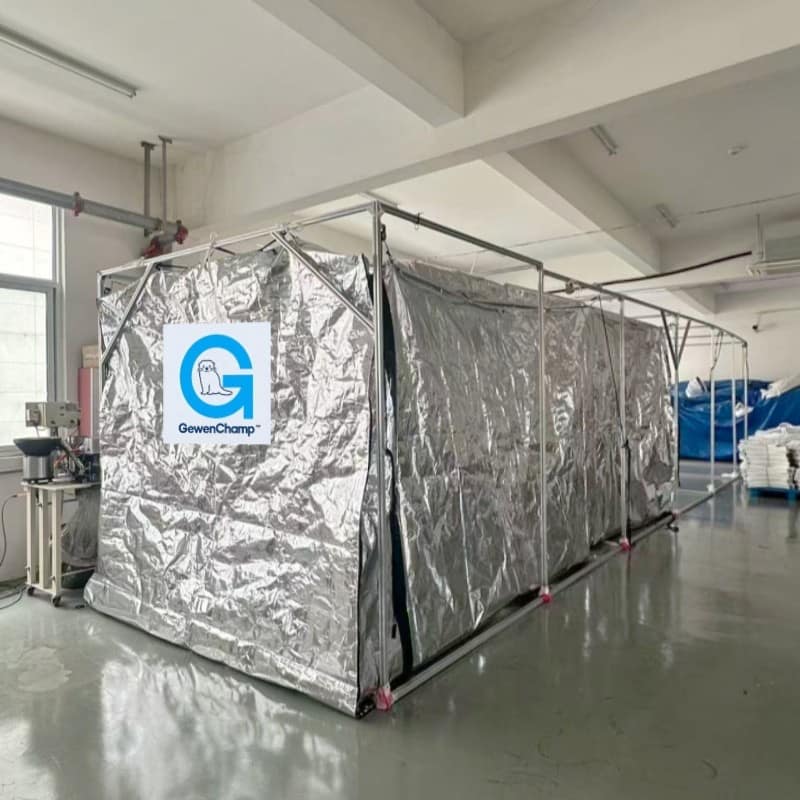
Condensation is not a random event. It follows a clear physical mechanism that becomes predictable once you know the container’s internal temperature and relative humidity. Air holds more water vapor as it warms. When the container wall temperature drops below the dew point of the trapped interior air, liquid water forms. Ventilation counters this by allowing humid air to exit and drier outside air to enter, lowering the average dew point inside the liner.
The placement of ventilation openings creates a passive chimney effect. Hot, moisture-laden air rises to the top of the container, where roof-level vents exhaust it. Side vents, if used, admit fresh air at a lower level. This thermal gradient drives a steady airflow without any mechanical assistance. A container liner’s ability to manage this internal microclimate directly impacts cargo integrity. When we test liner materials, we target moisture vapor transmission rates (MVTR) that match the expected route humidity, not just the worst-case scenario. For instance, our TL-02 thermal liner achieves an MVTR of ≤0.033 g/(m²·h·kPa), which means it blocks nearly all external moisture while internal condensation still needs to be handled through controlled venting.
The Ventilation-Moisture Barrier Trade-Off in Container Liner Materials
One of the most frequent points of confusion among buyers is the assumption that venting and moisture protection are opposites. In reality, they must be engineered together. The table below shows how air permeability differs across common liner materials and what that means for ventilation strategy.
| Liner Material | Air Permeability | Moisture Barrier | Typical Vent Design | Recommended Cargo |
|---|---|---|---|---|
| Woven PP, uncoated | High (80-120 L/m²·s) | Low (requires additional moisture protection) | Natural weave allows passive airflow; no dedicated vents needed | Plastic pellets, non-hygroscopic granules |
| Woven PE with double-sided lamination | Low | High (≥98%) | Dedicated vents with moisture-filtering membranes | Malt, grains, sensitive food cargo |
| PE film (LDPE) | Extremely low | Near 100% | Vent ports with one-way valve patches | Food powders, chemicals, any moisture-sensitive bulk |
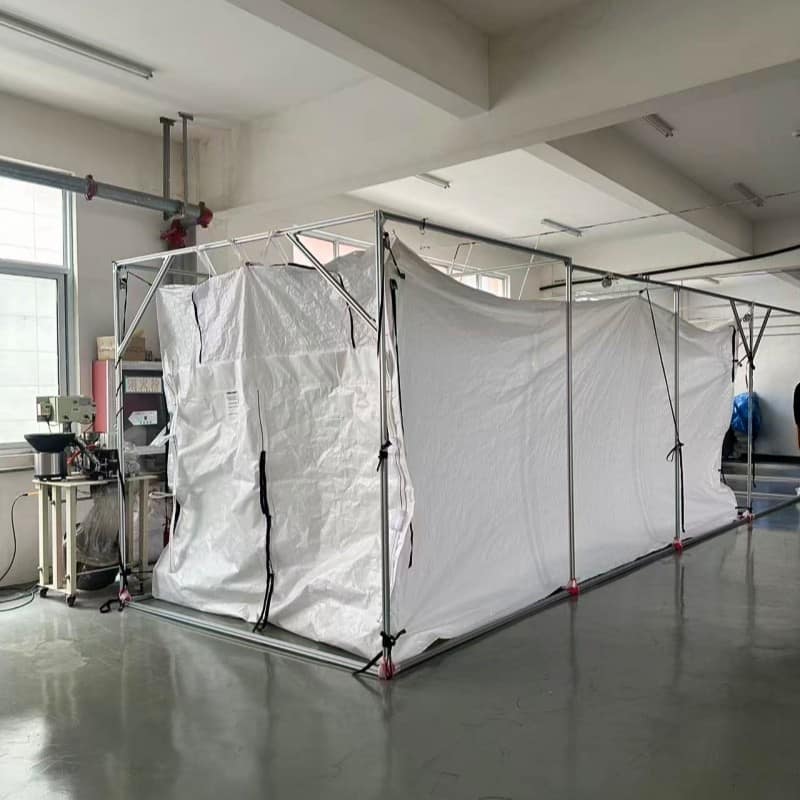
If your cargo is hygroscopic, meaning it absorbs or releases moisture, a sealed liner with controlled venting is usually the safer route. For non-hygroscopic goods like plastic pellets, an uncoated woven liner that breathes passively can work well and costs less. The decision comes down to whether the liner needs to block external humidity, release internal moisture, or both. We routinely help clients map their exact cargo behavior to the right material and vent combination so they do not pay for a barrier they do not need or, worse, ship without a barrier they cannot afford to omit.
Cargo Compatibility: When Vented Container Liners Are Required
Not every bulk cargo requires ventilation. Some commodities, like polyethylene resin or titanium dioxide, can travel in fully sealed liners without any venting because they neither contain internal moisture nor generate it. Other cargos demand ventilation simply to stay saleable during transit.
Key categories where vented liners are typically necessary include agricultural products such as soybeans, corn, cocoa beans, coffee, and raw sugar. These commodities often have a residual moisture content that continues to equilibrate with the liner’s internal air. Without ventilation, the humidity inside the liner climbs until condensation begins, and that cycle ruins the load. Processed commodities like malt or wheat flour, which are dried to very low moisture, can also benefit from slight venting if the route passes through extreme temperature gradients.
A practical checklist for deciding whether your cargo needs ventilation:
– Does the cargo contain residual moisture above 12-14%?
– Is it a biological product that respires?
– Does the route cross from humid tropics to cold temperate regions?
– Will the shipment be at sea for more than two weeks?
– Does your cargo have a history of mold or caking during transport?
If the answer to two or more of these is yes, ventilation should be part of your liner specification.
Venting Design Strategies for Thermal Container Liners
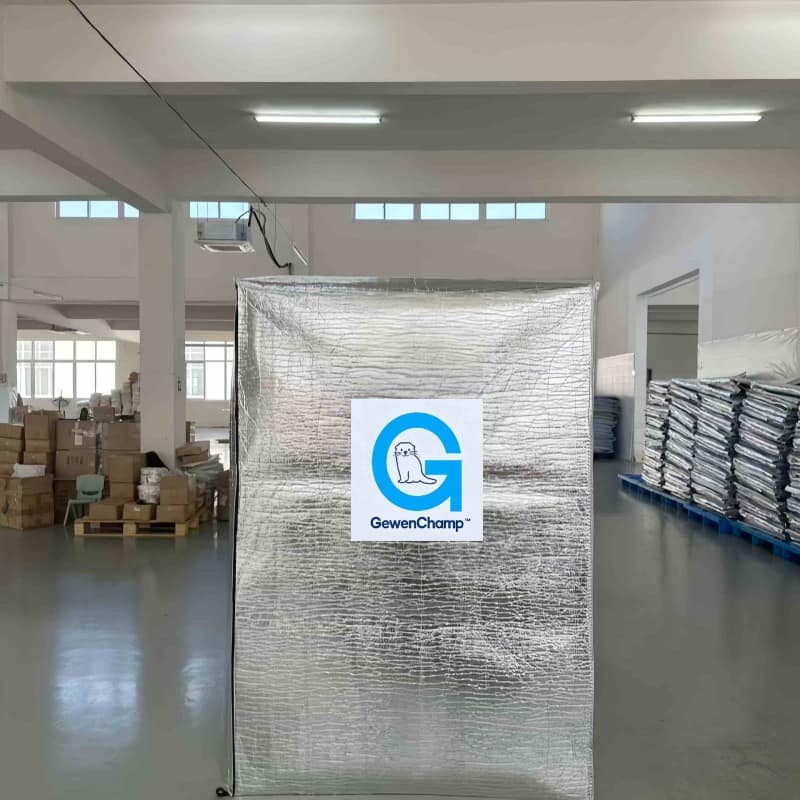
Thermal container liners present a specific design challenge. Their primary job is to reduce heat transfer into the container to keep the cargo below a target temperature. The same insulation layers that reflect radiant heat also restrict the liner’s natural ability to vent moisture, because the goal is to minimize air exchange that would bleed thermal energy.
Our TL-02 liner, for example, uses a four-layer composite that includes a 3mm EPE foam core laminated between aluminum foil skins. The MVTR is extremely low, which is excellent for preventing external humidity intrusion but means internal moisture has nowhere to go unless we build in a vent path. The vents on thermal liners must be placed in low-heat-loss areas, typically near the top rear of the container where air is warmest and where thermal impact is minimal. Each vent is fitted with a breathable membrane that permits vapor egress while blocking liquid water ingress from rain or wave spray.
The wrong vent placement can create a thermal bridge that undermines the liner’s R-value. I have tested liners where a seemingly minor vent location error increased the internal temperature variance by 3-5°C over a 48-hour period. The fix was shifting the vent to a corner near the container roof, which restored the insulation performance while still allowing moisture to exit. That kind of detail is what buyers should expect their liner manufacturer to understand and provide.
Key Questions to Specify Correct Container Liner Ventilation
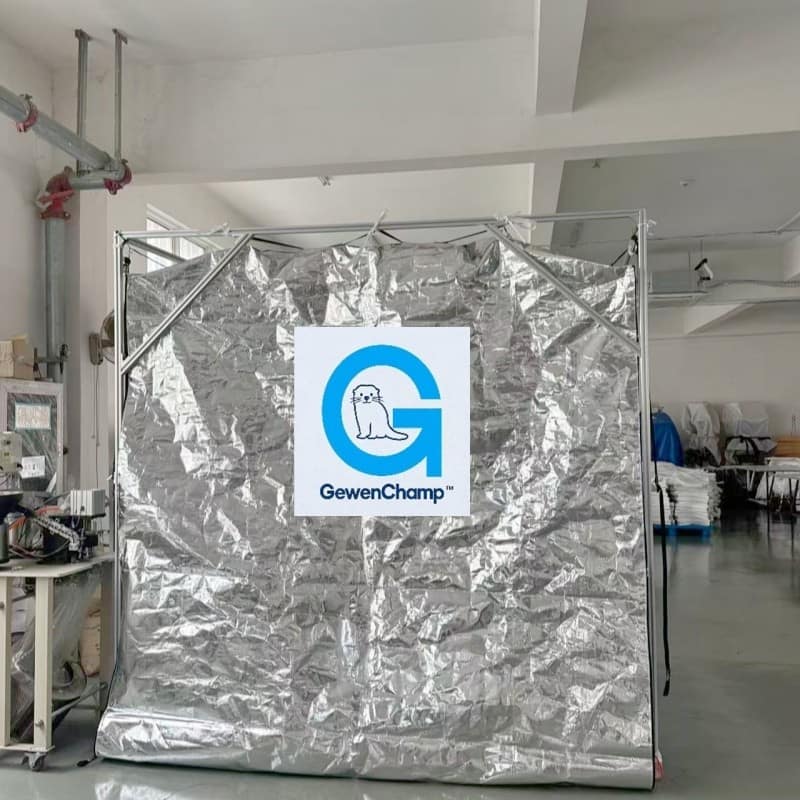
Before you place an order, ask your liner manufacturer the following questions to ensure ventilation is correctly specified:
- What is the air permeability of this liner material, and does the vent design preserve or alter it?
- Are the vents equipped with moisture-blocking filters, or are they simple openings?
- Will the vent placement interfere with my loading or discharge equipment (spouts, blowers, etc.)?
- How does venting interact with the liner’s food-grade certifications for my destination market?
- What happens to vent performance in heavy rain or high-humidity sea air?
Failing to clarify these details often leads to liners that meet a general specification but underperform on the specific route and cargo combination. We supply a venting specification sheet with every liner that documents vent size, flow rate, filtration type, and placement coordinates relative to the container. That level of documentation provides the traceability that ISO 9001 quality systems and international logistics partners require.
If your cargo is temperature-sensitive, the venting solution must be designed together with the insulation selection, not added as an afterthought. That means choosing between a fully sealed thermal liner with desiccant packs, a lightly vented liner, or a hybrid approach. The right answer depends on the cargo moisture profile, the route’s temperature and humidity extremes, and the insurance requirements for your shipment.
Common Questions About Container Liner Ventilation and Cargo Safety
Do all container liners need ventilation?
No. Fully sealed liners are the better choice when the cargo has negligible internal moisture and the route does not expose it to extreme temperature swings. Plastic pellets, titanium dioxide, and many chemical powders ship safely in PE film liners with no vents. The need for ventilation arises when the cargo contains residual moisture, when temperature changes would cause condensation even in a sealed liner, or when the cargo itself respires, as with fresh or semi-processed agricultural products. In those situations, a liner with no vents will trap moisture and almost guarantee loss.
How can a vented liner work in heavy rain?
It is a common misconception that ventilation openings let rain flood the container. Properly designed vents use protective hoods, overlapping flaps, or hydrophobic membranes that pass vapor while blocking liquid water. I have seen vented liners perform without any water ingress in extreme monsoon conditions on Southeast Asian routes. The key is to confirm that your supplier uses vents tested to a water entry pressure rating equivalent to their membrane’s hydrostatic head value, not generic drain holes.
Will adding vents reduce a thermal liner’s insulation performance?
It can if poorly executed. An open hole in an insulated wall is a direct thermal short circuit. Our approach is to place vents in the top corners where warm, moist air naturally gathers, and to keep the aperture small enough that the heat loss is negligible relative to the moisture removal benefit. Testing shows that a properly vented thermal liner maintains temperature variance within ±5°C while preventing condensation, which is essentially the same as an unvented liner in protected conditions. If your shipment includes temperature logging, ask your supplier for their vent thermal bridging data before committing to a design.
How does ventilation differ from using desiccants?
Think of ventilation as removing moisture before it becomes a problem, while desiccants absorb moisture that is already present. In many high-value shipments, we recommend both: ventilation to exhaust warm humid air and desiccant packs placed near the cargo to capture any residual moisture. A common mistake is to use desiccants alone in a sealed liner on a route with large temperature swings. The desiccants saturate before the voyage ends, and then condensation takes over. Ventilation extends the effective working window for desiccants by keeping the ambient humidity lower over the full trip.
What signs show my cargo is at risk without ventilation?
You may not see the risk until you open the container at the destination. Look for signs like caking of powders, clumping of granules, surface discoloration on grains, or a musty odor, any of these indicate that moisture built up during transit. If you see water droplets on the inner liner walls or a pool at the container floor, condensation was severe. The safest approach is to review your last three shipments for any moisture-related quality notes from receivers. If you have even one documented moisture event in the past year, it is time to revisit your venting specification with your liner supplier. Share your route details and cargo moisture history with us at [email protected] or call +86 523 87683880, and we can help determine whether your current liner setup is adequate or whether a vented design will eliminate the ongoing risk.
 English
  German
  Spanish