
A container liner that is poorly installed can fail before the ship leaves the dock, turning a cost-saving measure into a cargo claim. Over the years, we have seen multiple cases where the liner itself was technically sound, but installation errors created gaps, tension points, or dust entry paths that compromised the entire load. The training materials your supplier provides are often the first and only line of defense against these mistakes. If those materials are unclear, incomplete, or outdated, your team will install liners based on guesswork, and guesswork in bulk packaging is expensive.
Why Training Quality Directly Affects Cargo Protection
Container liners are not universal one-size components. A 40ft dry bulk liner with bottom discharge spouts requires a different installation sequence than a thermal liner with reflective foil layers that must not be creased. When training materials assume a generic container or skip the specific top-loading or strapping steps needed for a particular liner model, the result is a liner that twists, tears, or fails to seal. We have traced contamination claims back to installation videos that showed a different liner type than the one shipped. This is not a documentation detail, it is a direct risk to cargo integrity. The training package is the bridge between the manufacturer’s design intent and the real-world conditions on the warehouse floor. If that bridge is weak, every shipment crosses it with risk.
What Should Be Included in Comprehensive Installation Training Materials
A serious training package goes beyond a single-page PDF. In our own quality process, we have settled on a minimum set of components that make a material set operationally useful for international logistics teams:
| Component | Purpose | Minimum Requirement |
|---|---|---|
| Liner-specific video | Shows each step in real time | HD video covering 20ft and 40ft variants, no stock footage |
| Step-by-step illustrated guide | Printable reference for the installation team | Photos of actual liner, not generic diagrams |
| Pre-installation inspection checklist | Identifies container condition issues before liner placement | Points to check: floor nails, wall protrusions, door seal integrity |
| Strapping and fastening map | Specifies tie-down points and tension | Positions numbered and matched to container type |
| Troubleshooting addendum | Addresses common failure modes | At least five failure scenarios with corrective actions |
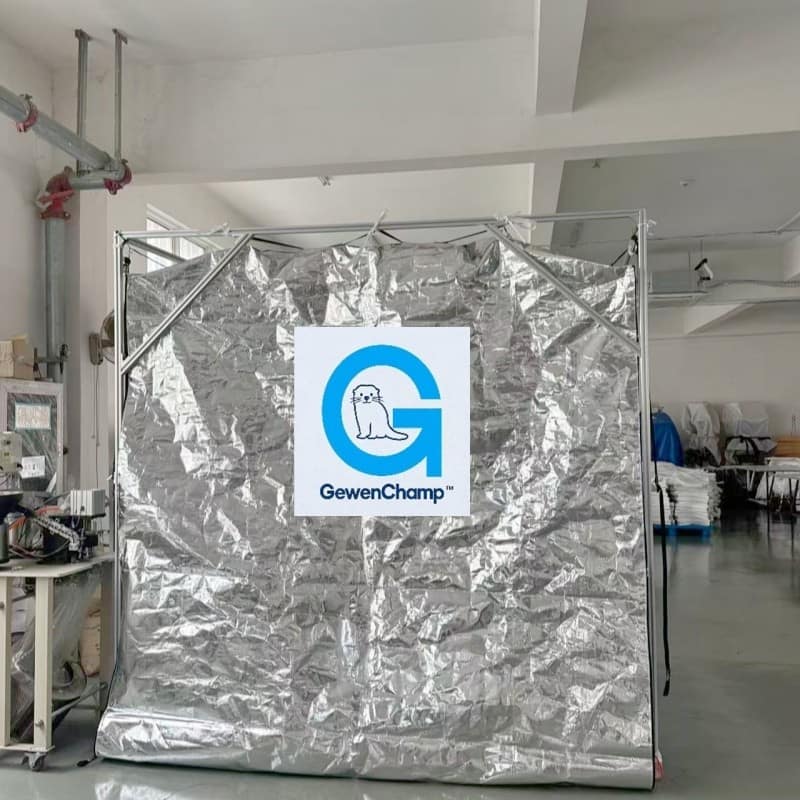
If any of these components is missing, the supplier is essentially transferring installation risk to the buyer. That may be acceptable for commodity liners in low-value shipments, but for food-grade or thermal applications, the absence of a formal strapping map has resulted in liners pulling away from the container walls during stuffing, creating folds that trap product and complicate discharge.
A mid-level procurement decision often surfaces here: how much detail is enough? If your cargo falls under FDA or LFGB requirements, the installation steps must also prevent contamination during setup. Look for materials that explicitly call out clean-handling procedures, not just liner attachment. If your liner program involves temperature-sensitive goods, installation training must explain how to avoid compressing the insulation layers during strapping, because crushed foam loses R-value permanently.
How to Judge the Clarity and Practicality of Training Instructions
Clarity is not the same as simplicity. A clear training material respects the language barriers and skill levels present in global logistics teams. In our work with international customers, we have identified three practical litmus tests:
First, the material should be usable without narration. If a worker on a noisy dock cannot hear the video audio and the visuals do not convey the sequence, the material fails. Second, the printed guide must use callouts and arrows that point to actual liner features — a generic “attach here” on a hand-drawn diagram is useless when the real liner has multiple attachment points. Third, the instructions must differentiate between mandatory and optional steps. We have seen crews spend 20 minutes on cosmetic smoothing because the guide did not mark which steps were safety-critical.
Another test: can a new loader follow the material and install the liner correctly in under 15 minutes? For a standard dry bulk liner, that is a realistic benchmark. If the training time is longer, the material is either too complex or the liner design requires simplification. The training package itself becomes a diagnostic: if it takes too long to explain, the installation process may be overly complicated.
Verifying Technical Accuracy and Compliance in Training Content
Training materials that are factually wrong are worse than no materials at all. We review installation guides from new suppliers against the actual product specifications and have found errors in load capacity labeling, strapping point placement, and even container dimensions. These are not minor errors. If a training guide says a lifting loop bears 5 tons when it bears 4, a failed loop during stuffing can injure personnel and damage cargo.
Verification starts with cross-checking every stated capacity against the product data sheet. Next, check that the tools and equipment recommended (tensioners, pole systems, number of crew) match the liner’s Weight and Volume Guide. If the training material recommends a two-person team for a liner that requires four attachment points simultaneously, the material is not aligned with the physical reality of installation. Also, verify that safety instructions match the region’s occupational standards. A European buyer should not receive training materials that reference only US OSHA requirements with no EU machinery directive alignment.
For food-contact liners, the training must include steps for maintaining hygiene during installation — glove protocols, no floor contact for liner surfaces, and handling of the filling spout. These steps should be traceable to the relevant certification (FDA 21 CFR, LFGB, or equivalent). If the training material does not mention the hygiene sequence, it is not compliant with the food-grade claim of the liner itself.
What Ongoing Support and Updates Should Accompany the Training
A training package that is delivered once and never updated is a snapshot of a specific liner revision. When the manufacturer improves the liner design, the training materials must follow. We provide our customers with revision-controlled training documents, and we notify them when a change occurs. Ask the supplier what their revision process is. If they cannot tell you, assume you will be responsible for retraining your team whenever you receive a modified liner.
Beyond versioning, look for a mechanism to report installation difficulties. The best suppliers use field feedback to improve both the liner and the training. If your team encounters a recurring problem — such as a particular strapping point that consistently fails on long-haul routes — the supplier should be able to investigate and issue a training bulletin. This closes the loop between design, training, and operational experience. It also builds a defensible quality record, which becomes valuable in insurance and cargo claim discussions.
Finally, consider whether the supplier offers on-site training support for initial deployments. For large-volume contracts or complex thermal liner installations, a manufacturer’s technician on site for the first container loading can reduce the learning curve dramatically. The cost of that support is often negligible compared to the cost of a failed first shipment.
Common Questions About Container Liner Installation Training
Is a video alone sufficient for installation training?
No. A video demonstrates the ideal sequence but cannot replace a printed checklist that the installation team can follow during real-world conditions, where lighting, noise, and time pressure may prevent careful video review. The best training packages pair a video with a laminated, step-by-step guide that can be clipped to the container door.
How do we know if the training materials are current for our liner version?
Ask the supplier for the document revision date and compare it to the liner production date. If the liner label shows a newer manufacturing date than the training document revision, the materials are out of sync. Any discrepancy should be resolved before the first installation. If your program involves frequent design changes, request revision notification as a standard supply term.
What if our installation crew speaks a different language than the training materials?
Multilingual support is not optional for global operations. At minimum, the training package should include English and the primary language of the receiving location. The visual elements must also be language-neutral enough to be understood without text. We require that our training illustrations use universally recognized symbols for danger points and required actions, per ISO 7010, to minimize language dependency.
Can we develop our own training materials from the supplier’s product specifications?
You can, but you assume full responsibility for any installation errors that result. The supplier’s training material reflects accumulated field knowledge that is not fully captured in product specifications. If you must develop internal materials, involve the supplier in a review cycle and require written sign-off that your materials accurately represent the installation sequence. This shared responsibility is often sufficient to prevent liability gaps.
How often should installation training be refreshed?
At minimum, with each new liner revision and each new crew member. Even without changes, an annual refresher session that includes a review of the original training materials and any field observations is a practical quality practice. Share those observations with the supplier; the feedback loop is a key indicator of a supplier’s long-term commitment to your program. If your operations have experienced a near-miss or a cargo claim, the training should be updated to address the root cause. We recommend sharing your specific container type, cargo, and route details with our team to determine whether your training package needs an update; reach out at [email protected] or +86 523 87683880.
 English
  German
  Spanish