
International buyers of bulk packaging face a compliance landscape that is changing faster than most supplier certificates can keep up with. Container liner environmental compliance is not a one-time certificate you check when qualifying a factory; it is a continuous, material-level obligation that determines whether your shipments clear EU customs or get detained. I have spent fifteen years in thermal packaging and dry bulk liner manufacturing, and I have seen well-intentioned importers accept a generic REACH statement only to discover—after a container arrives in Rotterdam—that their supplier had no batch-level test data for a specific substance of very high concern (SVHC). This article moves beyond the definitions you can find in any regulatory summary and explains what container liner environmental compliance requires from a manufacturer’s perspective, covering REACH and RoHS but also the documentation, verification steps, and emerging standards that procurement managers need to integrate into their sourcing workflow.
REACH and RoHS Regulations for Container Liners
REACH (Registration, Evaluation, Authorisation and Restriction of Chemicals, EC 1907/2006) and RoHS (Restriction of Hazardous Substances, Directive 2011/65/EU) are the two primary environmental compliance frameworks that affect container liner imports into the European Union. Understanding how they differ and where they overlap is the first step in specifying compliant packaging.
For container liners, REACH regulation applies to the chemical substances that make up the raw materials: polymer resins, plasticizers, stabilizers, colorants, flame retardants, and any processing aids used during extrusion or lamination. Under REACH, each substance imported into the EU in quantities above one tonne per year must be registered with the European Chemicals Agency (ECHA). More critically, substances identified as substances of very high concern (SVHC) are subject to authorization and can ultimately be restricted or phased out. The current SVHC Candidate List includes over 240 substances, among them phthalates commonly used as plasticizers in flexible films, certain brominated flame retardants, and lead-based stabilizers that can appear in recycled PVC or low-cost PE compounds. A container liner may contain multiple layers—woven PE, aluminum foil, EPE foam, laminated films—and each layer can introduce its own additive chemistry. I have seen a single laminated structure cause a compliance failure because the adhesion promoter between layers contained a restricted phthalate that the converter had never flagged.
RoHS, originally created for electrical and electronic equipment, addresses the restriction of six hazardous substances: lead, mercury, cadmium, hexavalent chromium, polybrominated biphenyls (PBB), and polybrominated diphenyl ethers (PBDE). Since 2019, four additional phthalates were added (DEHP, BBP, DBP, and DIBP). Container liners are not electronic equipment, but procurement teams often overlook that RoHS applies to any packaging that could end up in the waste stream associated with electronics or that may cross-contaminate during recycling. For bulk packaging, complying with RoHS demonstrates that the liner contains no restricted heavy metals or brominated flame retardants—a reassurance that also overlaps with REACH SVHC obligations.
A practical distinction matters for buyers: REACH compliance is ongoing and substance-level, while RoHS compliance is material-level with a defined list. A supplier holding a RoHS compliance certificate for a container liner model does not automatically guarantee REACH conformity for that entire chemical inventory. Both must be verified independently.
How Manufacturers Ensure Container Liner Environmental Compliance
For a container liner factory, environmental compliance is not a once-a-year exercise. It starts at raw material procurement and flows through every production batch. At Giant Flexpack, we maintain a controlled supplier list for all polymer resins, additives, and lamination films. Each incoming material batch is accompanied by a supplier declaration, a safety datasheet (SDS), and—for high-risk substances—independent test reports. This approach is not optional: we have seen cases where a supplier changed its plasticizer formulation without notification, and only routine incoming inspection caught the substitution before production.
The table below summarizes the hazardous substance categories that are most commonly monitored for container liner materials and the typical test methods used to verify compliance.
| Substance Category | Common Source in Container Liners | Typical Test Method |
|---|---|---|
| Phthalates (DEHP, DBP, BBP, DIBP) | Plasticizers in flexible films, lamination adhesives | GC-MS per EN 14372 |
| Lead, cadmium, mercury, chromium VI | Color pigments, stabilizers, recycled content | ICP-OES / UV-Vis per IEC 62321 |
| Brominated flame retardants (PBB, PBDE) | Flame-resistant additives in woven fabrics | GC-MS |
| Organotin compounds | Heat stabilizers in certain PVC formulations | GC-MS |
| Formaldehyde | Cross-linking agents in coatings or adhesives | UV-Vis |
Third-party testing is the only credible way to confirm that a container liner meets REACH article 33 requirements for SVHC communication and thresholds. We send production samples from every new material combination to SGS or equivalent accredited laboratories for a full-screen SVHC analysis, typically covering the entire candidate list. Test reports are then archived and linked to production lot numbers, so that every shipment can be traced back to its material batch and test record.
Verifying Supplier Compliance Documentation
When I speak with procurement managers, I often find they rely on a single certificate displayed on a supplier’s website. A valid REACH compliance position requires more than a glossy PDF. Buyers should request at minimum: (1) a supplier declaration of conformity that explicitly identifies the articles (container liner models) and declares compliance with REACH article 33 and annex XVII restrictions, (2) third-party test reports for the specific batch or material combination being supplied, and (3) a list of any SVHC present above 0.1% w/w—even if none exceed the threshold, a transparent statement matters.
The real test of a supplier’s compliance program is not whether they can provide these documents once, but whether they can reproduce them for every production run. We maintain a digital archive of all test reports, cross-referenced to customer orders. If a buyer requests the SVHC screening report for a particular container liner shipment, we can provide it within one working day.
If your program involves multiple liner types—for instance, a thermal liner for temperature-sensitive cargo and a standard dry bulk liner for resin pellets—it is worth confirming that each model has its own test documentation, not a blanket statement covering the entire factory. Many buyers discover this gap only during an EU customs audit. For detailed material compliance verification, reach out at [email protected] with your liner specifications and we can share typical documentation packages.
Beyond REACH and RoHS: Additional Environmental Standards
While REACH and RoHS dominate procurement conversations, several other standards are gaining relevance for container liners moving in global trade. The EU Packaging and Packaging Waste Directive (94/62/EC) requires that packaging be minimal, reusable or recoverable, and limits the sum of heavy metals (lead, cadmium, mercury, chromium VI) to 100 ppm. Container liners that claim eco-friendly attributes must demonstrate compliance with this directive—not merely REACH.
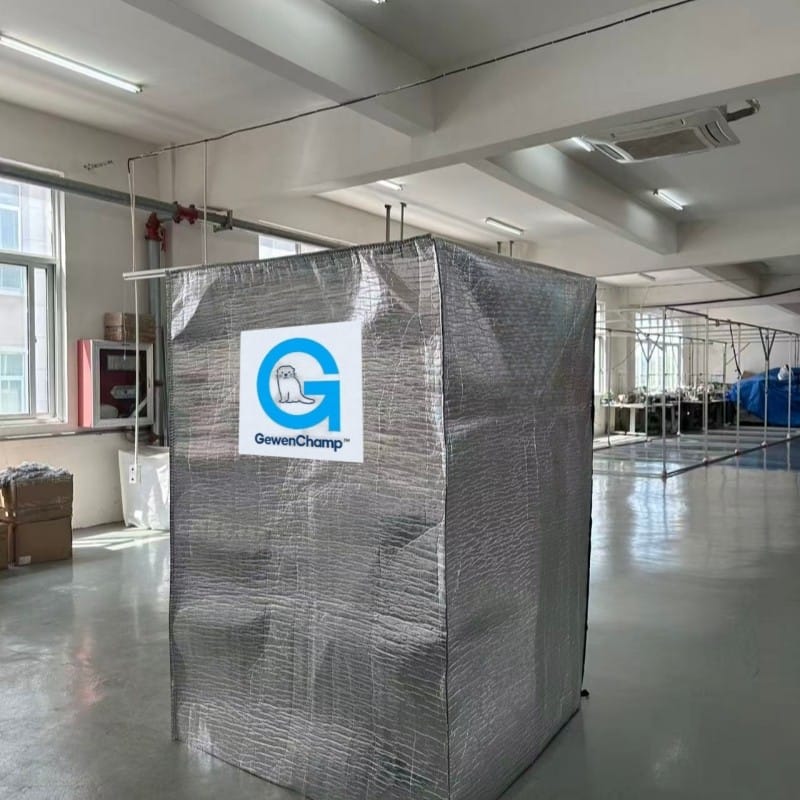
For food-contact applications, food-grade container liner standards such as EU Regulation (EC) No 1935/2004, FDA 21 CFR, and LFGB (German Food and Feed Code) mandate migration testing and restrict substances that could transfer from the liner into the food product. Our GewenChamp™ thermal liners and PE film liners are certified under FDA and LFGB, and the test reports include specific migration limits for phthalates, heavy metals, and overall migration.
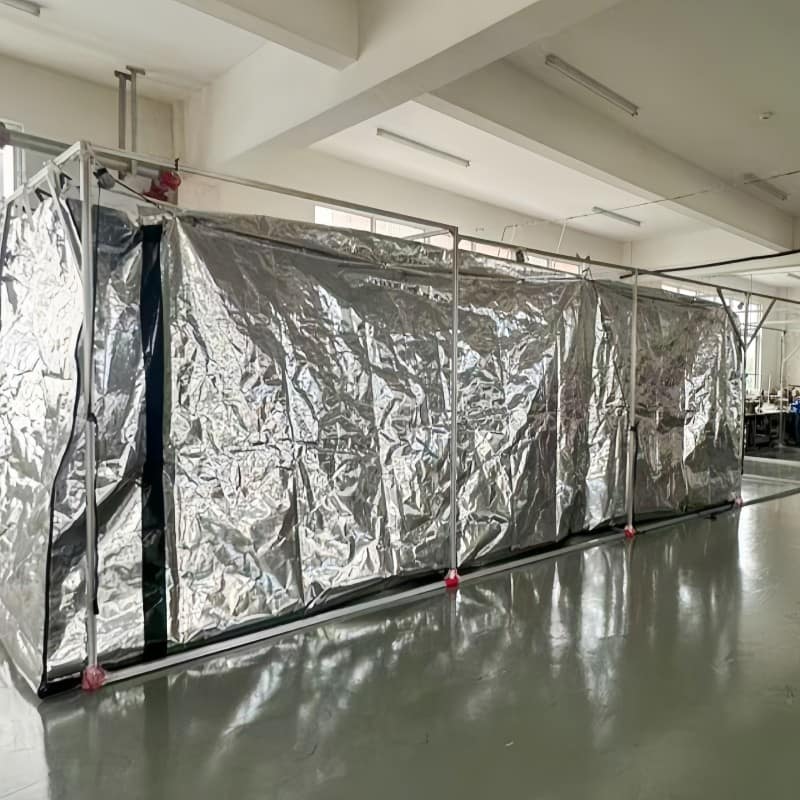
Sustainability certifications such as ISO 14001 and emerging Product Environmental Footprint (PEF) frameworks are also becoming part of supplier qualification, especially for European brand owners who need to report Scope 3 emissions. While a container liner itself is a single-use product in most dry bulk applications, the insulation performance can reduce the need for refrigerated containers, cutting carbon emissions by thousands of kilograms per shipment. We have worked with logistics providers who documented a 40% reduction in energy consumption when switching from reefer to passive thermal liners for ambient-temperature-sensitive cargo routing through the Red Sea and Southeast Asian corridors during monsoon season.
Selecting a Reliable Compliant Container Liner Supplier
Choosing a supplier that can sustain environmental compliance over a multi-year supply agreement requires looking beyond the sales presentation. I recommend evaluating four dimensions:
Material supply chain transparency. A supplier that cannot name its resin sources and additive suppliers is unlikely to control SVHC content. Ask whether the factory has a restricted substances list (RSL) communicated to all raw material vendors and how often the RSL is updated against the ECHA candidate list.
In-house testing capability. While full SVHC screening will always go to a third-party lab, a factory that conducts routine incoming material verification with XRF or FTIR equipment is far more likely to catch a non-conforming batch before production. In our facility, we screen every resin delivery for heavy metals before it enters the production floor.
Documentation reliability. A supplier that sends a scanned PDF from a decade-old test report is not maintaining a current compliance file. Request a sample test report for a recent production lot and compare the date, product code, and tested substances against the invoice.
Regulatory coverage beyond the minimum. Look for joint ventures or companies that hold certifications across multiple regions—FDA, LFGB, ISO 9001, REACH, RoHS—as this indicates an integrated quality management system rather than ad-hoc compliance. As a Sino-American joint venture, Giant Flexpack maintains certification records that satisfy EU, US, and Chinese food-contact and environmental requirements simultaneously, which simplifies compliance for buyers shipping to multiple destinations.
Common Questions About Container Liner Environmental Compliance
Does a RoHS certificate mean the container liner is REACH compliant?
No. RoHS covers a fixed list of substances, while REACH encompasses a much broader chemical inventory and is updated regularly. A liner can satisfy RoHS but still contain an SVHC that has been added to the candidate list since the last test. Buyers should verify both independently and request current test reports for each regulatory scope.
Can I rely on a supplier’s self-declaration for REACH compliance?
In most cases, a self-declaration is insufficient for EU border inspections, especially if the liner is complex (multi-layer, with adhesives or coatings). Customs authorities typically require third-party analytical test reports. The safest approach is to make test reports a mandatory part of your purchase specification, not an optional document request.
Our container liners are used for non-food industrial goods. Do we still need food-grade certifications?
It depends on your downstream customer’s requirements and whether the liner components could indirectly come into contact with food during recycling or repurposing. In programs we’ve supported for industrial mineral exporters, some European buyers still requested FDA or LFGB certificates to satisfy their internal environmental management systems, even though the immediate cargo was not food. The incremental cost of sourcing certified liners is often lower than the risk of a delayed shipment.
What is the most frequently missed compliance gap in container liner imports?
The most common gap we encounter is the absence of batch-level traceability. A supplier may hold a valid REACH test report from a sample submitted three years ago, but the current production lot uses a different resin grade containing a phthalate that was not originally screened. Without lot-to-test linkage, the buyer has no defensible evidence of compliance.
How often should container liner test reports be updated?
The ECHA candidate list is updated twice a year, in January and July. At minimum, a full SVHC re-screening should occur annually or whenever a new substance is listed that could be relevant to your material chemistry. For high-risk formulations—especially those using recycled content—more frequent testing is justified. If your program involves multiple ports of entry with differing regulatory scrutiny, it is worth confirming the test report frequency directly with your supplier before placing an order. Share your liner specifications and we can review whether your current documentation schedule is meeting the right level of rigor. Reach out at [email protected] or call +86 523 87683880.
Container liner environmental compliance becomes manageable once you stop treating it as a certificate checklist and start treating it as a supply chain discipline. The difference between a shipment that clears customs without delay and one that sits in a warehouse accumulating demurrage often comes down to whether the test report matches the actual production lot. At Giant Flexpack, we build that traceability into every order, from raw material intake to final shipment documentation, because we have seen the alternative cost play out more times than we care to count. Send your container liner part numbers and quantity requirements to [email protected] or call +86 523 87683880 to receive a documentation sample and a compliance recommendation specific to your cargo and destination.
 English
  German
  Spanish