
When a cargo claim lands on a buyer’s desk, the question is never whether a certificate existed—it is whether the testing behind it matched the realities of the shipment. Container liner third-party testing is the only independent verification that a thermal, moisture barrier, or food-contact liner will perform as advertised when it faces a 40℃ day in the Gulf or a condensation-heavy crossing through the tropics. A supplier’s in-house quality statement is not the same as a lab report from an ISO 17025‑accredited facility that shows actual measured performance against recognized thresholds. This article sets out exactly which tests buyers should require, how to read a test report, and how to make testing a built-in part of procurement rather than an afterthought.
The Importance of Third-Party Testing for Container Liners
A container liner must do more than hold bulk cargo. It often acts as a thermal barrier, a moisture shield, and, in food applications, a food-contact material. Each of these functions involves performance thresholds that cannot be verified by visual inspection or by a supplier’s production summary. A liner that passes a visual check but has never been tested for moisture vapor transmission can allow enough humidity through to cause caking in a load of sugar or mold on cocoa beans over a four‑week voyage.
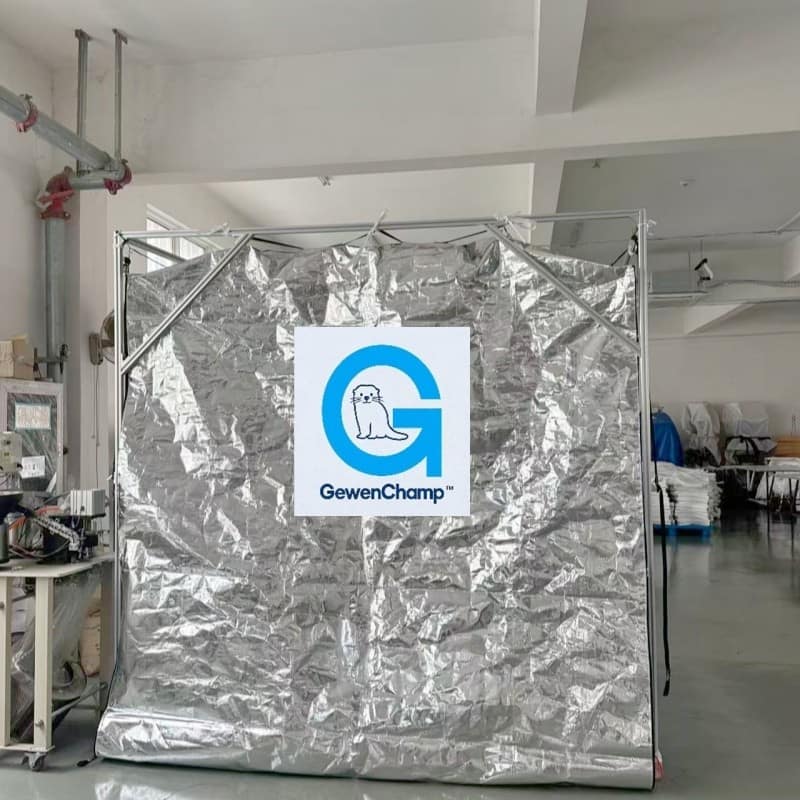
I have seen cases where a liner’s coating appeared intact but the barrier failed under prolonged humidity because the test had been run at 25℃ while the actual container interior reached 35℃ day after day. Without a third-party report that states the test conditions and results, the buyer has no way to know whether the liner was designed for their shipping lane or for a laboratory bench. Independent testing closes that gap because it introduces accountability—the lab has no stake in whether the liner passes or fails, only in whether its measurements are accurate.
Mandatory Testing Standards and Certifications
Buyers often encounter a list of certifications: FDA, LFGB, REACH, RoHS, ISO 9001. Each has a distinct scope, and none of them alone guarantees that a liner will protect cargo from heat or moisture. A certification confirms that a material or process meets a particular regulatory or management system requirement, not necessarily that a finished liner was tested for performance on a specific route.
| Standard | Scope | What It Covers | How to Verify |
|---|---|---|---|
| FDA (US) | Food contact materials | Migration limits, substance restrictions | Request FDA compliance statement and a test report for specific substances |
| LFGB (EU) | Food contact materials | Migration limits and sensory evaluation | Require an LFGB test report from an accredited lab |
| REACH (EU) | Chemical safety | Restriction of hazardous substances | Ask for the SVHC compliance declaration and relevant test data |
| RoHS | Electrical/electronic goods | Heavy metals, flame retardants | Obtain a test report for the restricted substances |
| ISO 9001 | Quality management systems | Process control, not product performance | Verify that the certification scope includes container liner production |
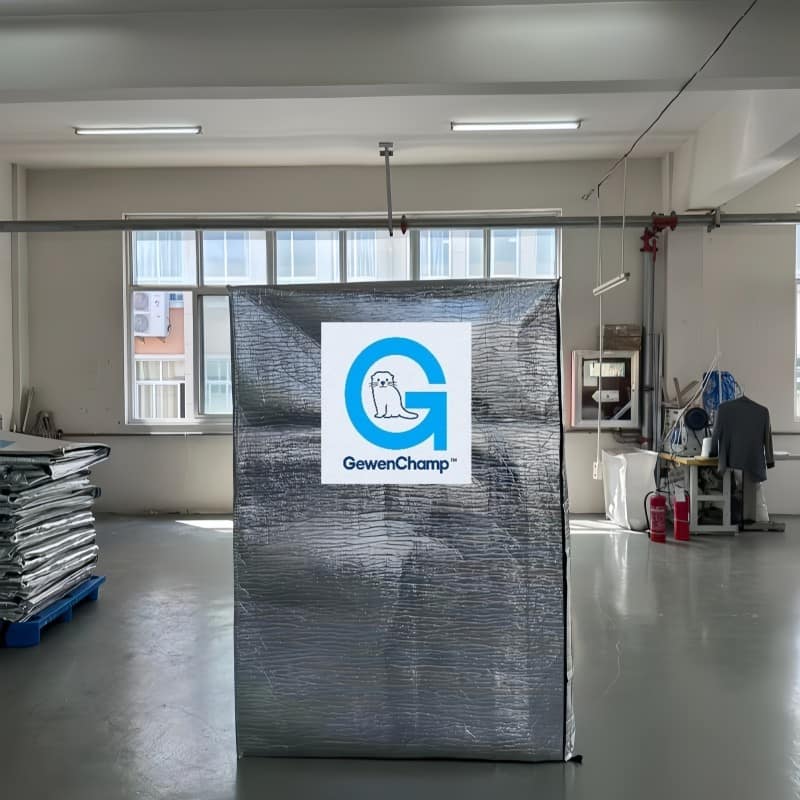
These standards form a baseline. A shipping buyer, however, also needs to know how a liner performs under thermal load, how much moisture it transmits, and how strong the seams are. That requires a different set of tests that go beyond regulatory checklists.
Performance Tests That Protect Your Cargo
When we talk to procurement teams, we point them toward a handful of measurable parameters that directly affect cargo condition. The three most important are thermal resistance, moisture vapor transmission rate, and tensile strength. Each has a defined test method, and each produces a number that a buyer can compare across suppliers.
Thermal resistance, commonly expressed as an R‑value, tells you how well the liner slows heat transfer. A higher R‑value means less heat reaches the cargo during a hot crossing. Moisture vapor transmission rate measures how much water vapor passes through the liner material over time; for cargoes sensitive to caking or mold, a rate below 0.05 g/(m²·h·kPa) is a reasonable starting point, though sensitive commodities may demand lower. Tensile strength indicates whether the liner will tear during loading or shifting at sea; a value of 15 MPa or above is typical for medium‑duty applications.
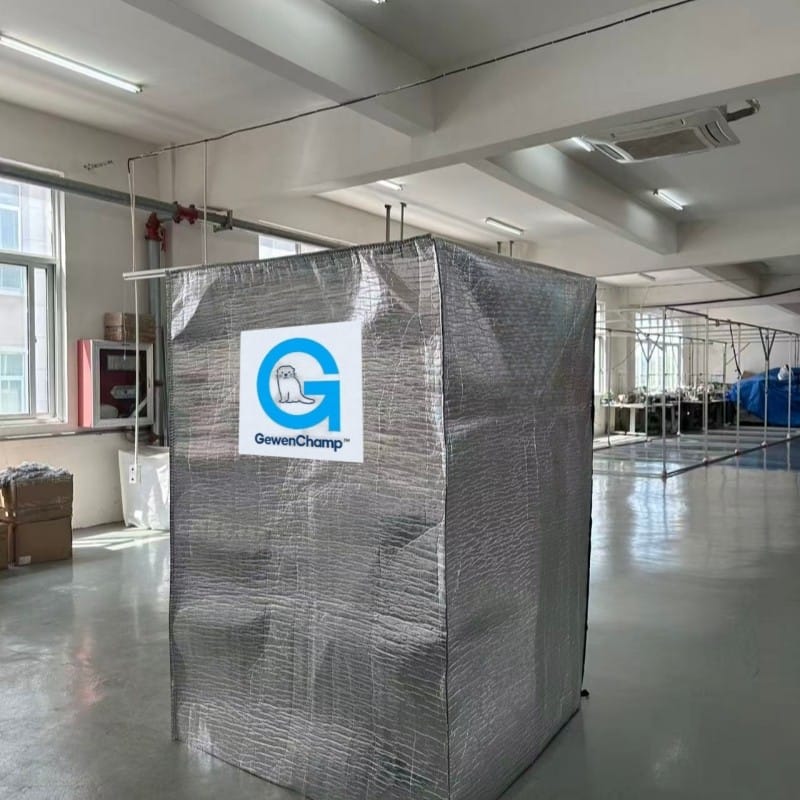
For food‑contact liners, migration testing is mandatory. EN 1186 and similar standards simulate contact between the liner and food simulants and measure total substances that migrate. A limit of 10 mg/dm² is widely accepted. Heavy metals such as lead, cadmium, and mercury should be below detectable thresholds under EN 71‑3 or equivalent.
The table below gives a concise reference for these performance metrics.
| Performance Test | Relevant Standard | Typical Requirement | Why It Matters |
|---|---|---|---|
| Thermal resistance | ASTM C518 | R‑value ≥ 2.5 (application‑dependent) | Slows heat entry, protects temperature‑sensitive cargo |
| Moisture vapor transmission | ASTM E96 | ≤ 0.05 g/(m²·h·kPa) | Prevents condensation and cargo caking |
| Tensile strength | ASTM D882 | ≥ 15 MPa | Resists tearing during loading and transit |
| Overall migration (food) | EN 1186 | ≤ 10 mg/dm² | Controls substances that can transfer into food |
| Heavy metals | EN 71‑3 | Below specified limits | Ensures food‑grade safety |
We advise buyers to request these specific values in the test report rather than accepting a “pass” summary. A generic pass tells you the liner met a minimum. A test report with actual numbers tells you how much margin existed—and whether that margin is acceptable for your particular cargo and route.
Verifying Test Reports and Lab Credibility
Not all test reports are equal. A one‑page certificate with a logo but no test conditions, no stated uncertainty, and no accreditation number is a marketing document, not a quality record. A credible report will include the lab’s name, ISO 17025 accreditation scope, test date, the standard followed, the exact test parameters (temperature, humidity, sample conditioning), and the measured result with units.
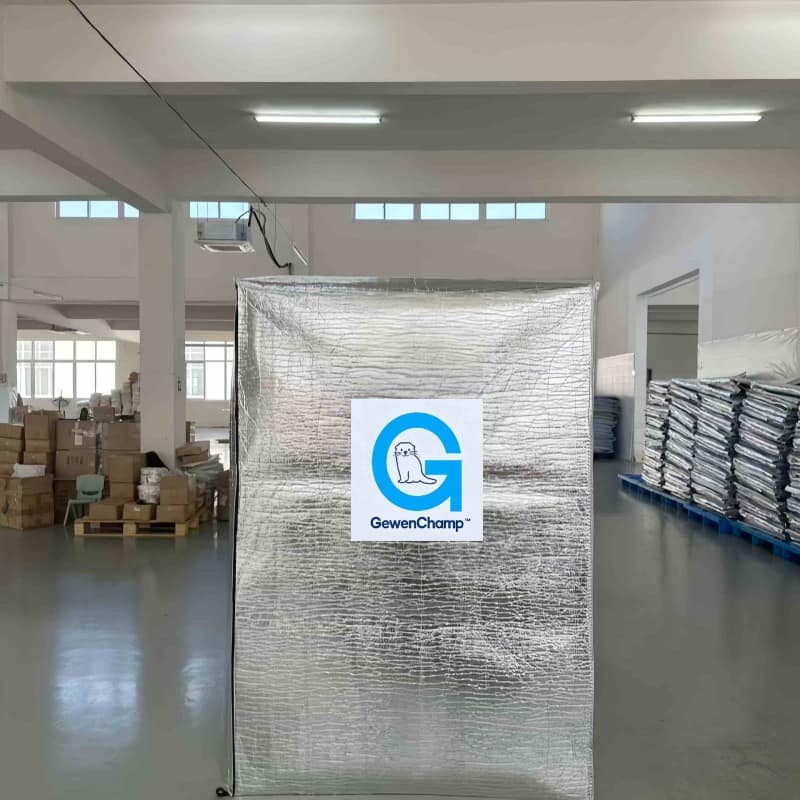
We often tell buyers to check whether the lab is accredited for the specific test method listed. A lab that holds ISO 17025 for chemical analysis may not be accredited for thermal conductivity testing, and that distinction matters. If a report simply states that a liner “complies with FDA,” without naming the substance‑specific test performed, it does not give the buyer enough information to defend a shipment if a border authority or a customer asks for proof.
Pay particular attention to the test conditions. A moisture barrier test run at 50% relative humidity will produce a different result than one run at 90%. If your shipping lane involves weeks of tropical humidity, you need a test report that was generated under conditions that resemble the real environment, not a lab’s default settings.
Embedding Testing Requirements in Procurement
The most effective time to secure third‑party testing is before the order is placed. Include the required test standards and acceptance limits in the RFQ and make clear that the test report must come from an ISO 17025‑accredited third‑party laboratory. If the liner is for food contact, specify the migration standard and the substances to be tested. For thermal liners, state the minimum R‑value and the moisture vapor transmission rate limit.
Require that test reports are dated, cover the production lot being shipped, and are provided with the shipping documents. Some buyers also arrange independent re‑testing on a periodic basis, either annually or upon receipt of the first shipment from a new supplier. This adds a small cost but gives continuous evidence that the supplier’s quality control has not drifted.
At Giant Flexpack, we maintain third‑party test reports for our GewenChamp™ thermal container liners and our dry bulk liner range. Those reports are part of the documentation package we provide to buyers, and we are accustomed to including specific test parameters in supply agreements. When testing requirements are built into the procurement language, there is no last‑minute scramble for proof.
Getting the Test Data That Actually Protects Your Cargo
A third‑party test report will not stop a storm at sea or a heat wave at port, but it will tell you whether the liner in your container was engineered to handle the conditions it will meet. Without independent testing, every claim about thermal performance and moisture protection is just an assertion.
If your next shipment requires documented container liner performance—not just a promise—start by defining the test parameters your cargo actually needs. Share your specifications with us at [email protected] or call +86 523 87683880, and I’ll help you translate them into testable requirements that make sense for your shipping lanes.
Common Questions About Container Liner Testing
What is the practical difference between FDA compliance and an FDA test report?
A compliance statement says the material meets FDA regulations. A test report shows the measured migration of specific substances under defined conditions. When a buyer only receives a compliance letter, they have no data to verify what was tested, how it was tested, or whether the lab was accredited. For food shipments, always request the full test report rather than accepting a one‑sentence declaration.
How often should container liner test reports be updated?
Test reports should be tied to production lots or, at minimum, be renewed annually. If the liner design, raw material supplier, or manufacturing process changes, retesting is essential even if the previous report is still within its validity window. Some buyers also run independent spot checks at an external lab upon receipt of the first container from a new contract.
Can in‑house testing replace third‑party testing?
In‑house testing is valuable for process control, but it does not provide the independence that an accredited third‑party lab delivers. A supplier’s own quality department is not impartial, no matter how skilled its technicians. Third‑party testing removes that conflict and gives the buyer an objective benchmark that is defensible in a cargo claim or regulatory audit.
Which test is the single most important for preventing moisture damage?
Moisture vapor transmission rate, measured under conditions that match the shipping route, is the most direct indicator of moisture protection. If that value is not available, the buyer is essentially guessing whether the liner will keep condensation under control over the full transit time. I recommend asking for MVTR data run at the highest expected humidity for the route.
What should I look for on an ISO 17025 lab report?
Look for the lab’s accreditation number, the specific test standard cited, the exact test conditions (temperature, humidity, and sample preparation), the measured values with units, and the statement of measurement uncertainty. If any of those elements are missing, the report may not hold up under scrutiny. If your current supplier’s documents lack that level of detail, send us a copy and we’ll help you interpret what you really have.
 English
  German
  Spanish