
When a container liner carries a “food-grade” label, the most important question isn’t what the supplier says about it — it’s what the liner actually releases into the food. A liner that contacts dry milk powder, bulk wine, or cooking oil during weeks at sea can interact with the cargo in ways that a generic certificate won’t catch. Migration testing is the only way to confirm that a container liner won’t compromise food safety under real shipping conditions. Yet many buyers accept a one‑page compliance letter as proof, which puts both their cargo and their liability at risk.
What Is Migration Testing and Why It Matters for Container Liners
Migration testing measures whether chemical substances transfer from a packaging material into food, and if so, at what levels. For container liners used in bulk food transport, this testing is not a formality. A polyethylene liner holding hot vegetable oil aboard a container crossing the equator can experience prolonged elevated temperatures, which may increase the migration of certain additives or monomers. Two distinct measurements matter: overall migration, which quantifies the total mass of non‑volatile substances released, and specific migration, which tracks individual substances with known toxicological limits. Without both, a liner that passes a cold‑contact aqueous test may still fail under the actual fat‑contact and high‑temperature conditions of a 30‑day ocean shipment.
The stakes are not theoretical. EU Regulation (EC) No 1935/2004 requires that food contact materials not transfer constituents in quantities that endanger human health or cause unacceptable changes in composition. Under Regulation (EU) No 10/2011, plastic materials must not exceed an overall migration limit of 10 mg of total constituents per square decimeter of surface area. The U.S. Food and Drug Administration applies similar principles through 21 CFR, evaluating components on a case‑by‑case basis. For a bulk liner with an internal surface area of over 100 m², even migration levels well below the legal limit can represent cumulative exposure worth verifying.
How Container Liner Materials and Construction Shape Migration Results
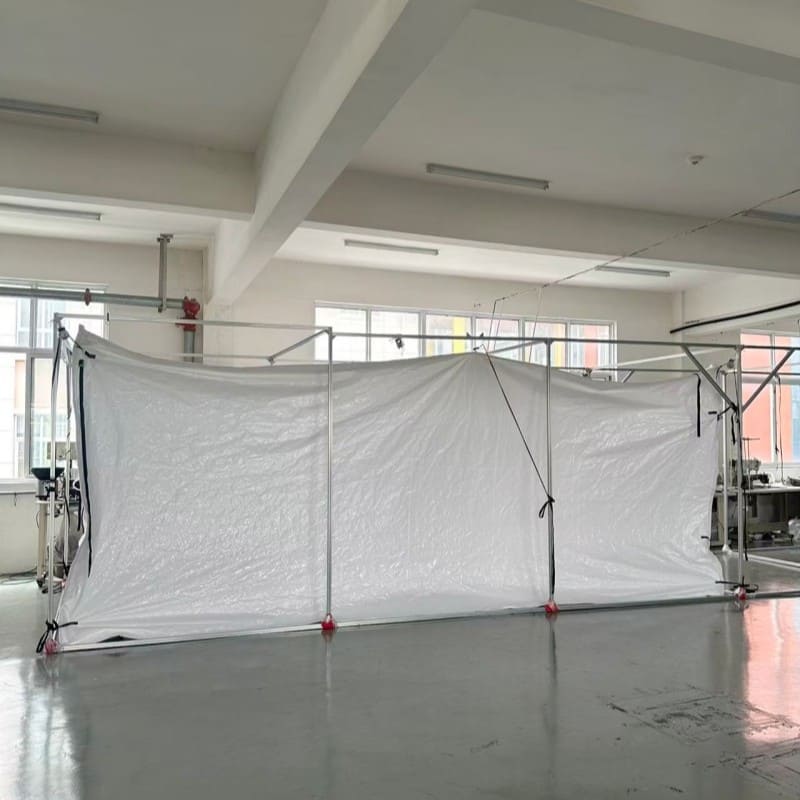
The base polymer and any functional layers in a liner directly determine what substances can migrate. Low‑density polyethylene liners, widely used for bulk liquids such as wine or edible oils, are generally inert but require careful control of slip agents, antioxidants, and processing aids. Woven polypropylene liners, common for dry goods like grain or sugar, may incorporate coatings or lamination films. A woven liner with an inner PE coating, for instance, has two material contributions to migration, and the quality of the lamination bond affects whether coating components remain firmly anchored.
In our own migration testing at Giant Flexpack, we have seen that liners with identical base polymers can produce substantially different results depending on the additive package and manufacturing process. A 140‑micron LDPE film produced under one extrusion profile may pass overall migration below 5 mg/dm² in 10% ethanol, while a liner from a different production run using a different slip masterbatch could edge closer to 9 mg/dm² — still passing, but with far less margin. This is why third‑party test reports need to specify the exact product batch and construction, not just generically reference a material type.
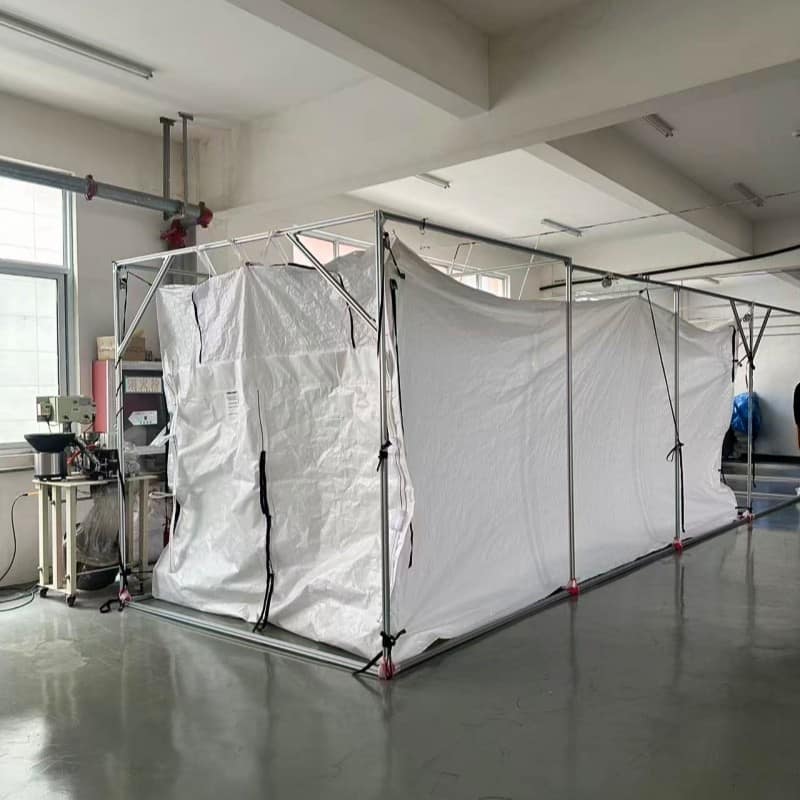
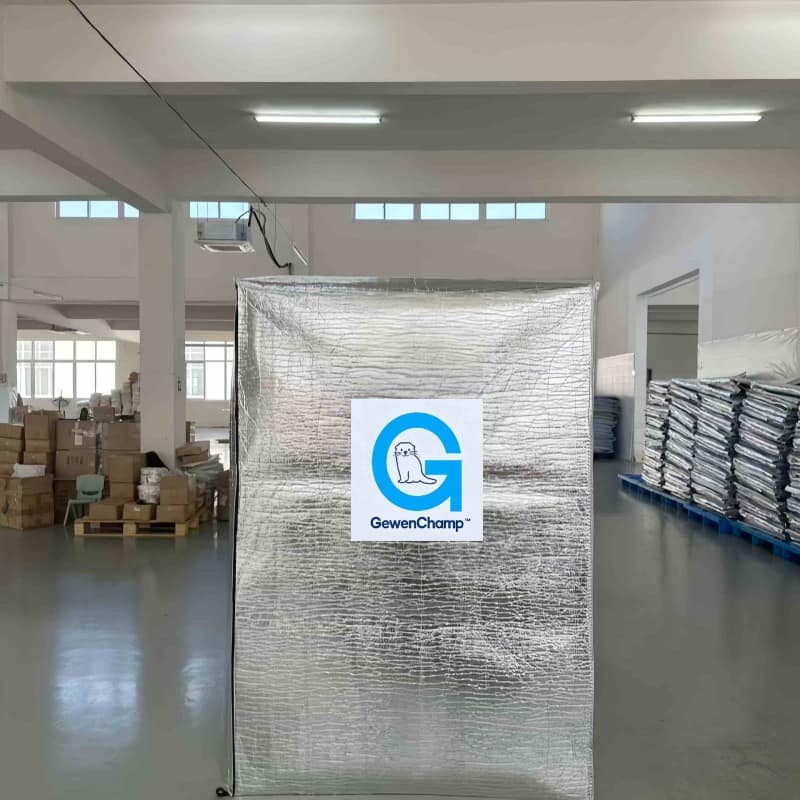
Multilayer thermal container liners introduce additional complexity. A construction like our MPET / double bubble / MPET liner incorporates metallized polyester layers over a polyethylene bubble cushion. While the MPET layers act as reflectance barriers, they also sit between the food and the outer environment, and migration testing must confirm that no adhesive or metallized‑layer residue penetrates the inner food‑contact film. For any composite structure, the rule is straightforward: migration testing must simulate the stacked or sealed condition that the food actually encounters, not an idealised single‑material scenario.
Reading a Migration Test Report: What to Look For and What to Request
A compliance certificate is not a test report, and treating them as equivalent is one of the costliest mistakes a buyer can make. A legitimate migration test report identifies the test laboratory, the testing standard applied, the food simulants used, the contact time and temperature, and the specific migration results with their units and detection limits. If the report does not state which simulants were used and at what conditions, it cannot be cross‑checked against the intended food type and transport route.
For example, a container liner destined for bulk olive oil should be tested with simulant D2 (vegetable oil) or 95% ethanol under the time‑temperature profile matching the estimated shipping duration and peak ambient conditions. A liner tested only with simulant A (10% ethanol, representing aqueous foods) or C (20% ethanol, representing alcoholic foods) provides insufficient evidence for fatty‑food contact. Buyers shipping milk powders, sugar, or cereals should insist on testing with simulant E (Tenax, for dry foods) or the appropriate aqueous simulant per EU guidelines.
In practice, we always advise importers to ask for the full report, not a summary letter. A full report will include chromatograms or analytical raw data, method validation details, and a statement of measurement uncertainty. If a supplier hesitates to share this, the hesitation itself is a signal. At Giant Flexpack, our standard practice is to provide the complete third‑party test report for each liner model, listing the specific substances quantified, the method detection limits, and the test conditions applied. That transparency allows a food manufacturer or importer to file the documentation directly with their own quality system and customs compliance records.
The Real‑World Testing Process and Common Pitfalls
Migration testing is often imagined as a one‑time lab exercise, but in a responsible manufacturing environment it is a recurring activity tied to production batches, raw material changes, and customer‑specific requirements. The typical workflow involves conditioning the liner sample, exposing it to the appropriate food simulant at the elevated temperature and contact duration specified in the standard method, then analyzing the simulant for migrated substances using techniques such as GC‑MS or LC‑MS. Results are compared against the applicable specific migration limits — for example, 0.05 mg/kg for primary aromatic amines, or lower for substances of very high concern.
One pitfall we encounter frequently is the mismatch between test geometry and real use. A liner tested in a small‑scale migration cell with only partial filling may underestimate migration, because in an actual filled container, the liner is subjected to mechanical pressure and the food contact area‑to‑volume ratio differs. This is particularly relevant for liner bags that may be folded or compressed during loading. Another common oversight is migration at the liner seams or heat‑sealed ports. A film may pass migration tests in flat sheet form, but the heat sealing process can alter polymer crystallinity and increase migration of additives concentrated at the weld line. Thorough testing includes seam sections and spout areas, not just uniform film samples.
How to Build Migration Testing Requirements into Your Supplier Qualification
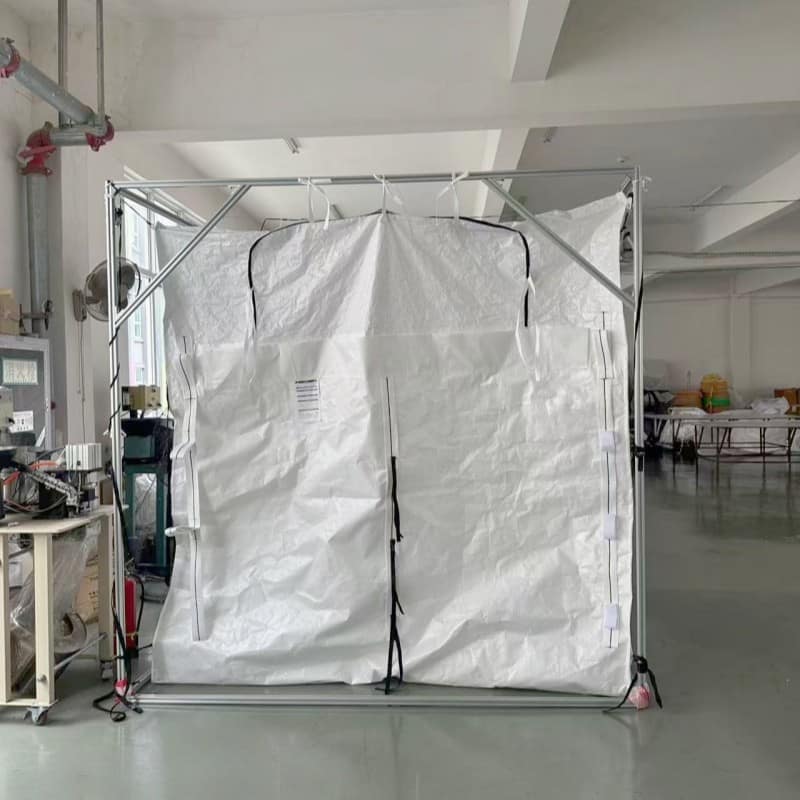
The most reliable approach is to make migration testing part of the initial purchase specification, not an afterthought. When reviewing container liner suppliers, request the following: (1) current third‑party test reports for the exact liner model you intend to buy, tested with the food simulant matching your product category and the temperature and time conditions of your longest typical shipping route; (2) documentation of the laboratory’s ISO 17025 accreditation; (3) a declaration of compliance under EU 10/2011 or the applicable FDA regulation, supported by the underlying test data; and (4) a written commitment to notify you of any material or process change that could affect migration performance, accompanied by re‑test results.
The regulatory environment is not static. The positive list of authorised monomers and additives under EU 10/2011 is periodically amended, and substances previously allowed may be restricted or removed. A supplier who hasn’t re‑tested a liner formulation in three years may be relying on outdated compliance. We maintain a rolling re‑test schedule for every food‑contact liner in our product line, and whenever a raw material supplier changes the antioxidant package or slip agent grade, we commission a fresh migration study before releasing the next production run. That level of proactive testing is not common among all manufacturers, but it is what a serious food exporter should demand.
What Buyers Should Ask Suppliers About Migration Testing
If your current supplier has only presented a letter stating “FDA compliant” or “suitable for food contact,” start the conversation by asking these questions. Which accredited laboratory performed the migration testing, and can I receive the full analytical report? Which food simulant and time‑temperature conditions were used, and do they correspond to my cargo and route? What specific substances were quantified, and were any detected above the method’s reporting limit? How often do you re‑test this liner, and what triggers a new migration study? The answers will quickly separate documentation that is built for a customs file from documentation that actually protects food safety.
Shipping bulk juice concentrate with a liner tested only in cold aqueous conditions leaves a gap that no retroactive assurance can fill. Migration testing is one of those technical details where the difference between a surface‑level check and a rigorous evaluation can be measured in cargo rejected at port, recall costs, and lost buyer confidence. Send your liner specification and target food matrix to [email protected] or call +86 523 87683880, and we will share the corresponding migration test records and simulant mapping for your exact application.
Common Questions About Migration Testing for Bulk Container Liners
Is overall migration testing alone sufficient for container liners?
Overall migration testing provides a useful total mass measurement but does not identify individual migrating substances. For liners intended for sensitive foods, specific migration testing is necessary because certain additives, like primary aromatic amines or phthalates, are subject to limits as low as 0.01 mg/kg. In our experience, a liner that passes overall migration can still contain an authorised substance that exceeds its specific migration limit under high‑temperature contact. Both tests are necessary, not optional.
Which food simulant should I request for a liner holding vegetable oil?
For fatty foods like vegetable oils, EU 10/2011 designates simulant D2 (vegetable oil) as the reference, but 95% ethanol is frequently accepted as a substitute because it is simpler to analyse. The substitution is valid only if the liner material’s interaction with ethanol is proven equivalent to oil. If your supplier cannot demonstrate this equivalence, insist on the oil‑based test, even if it adds time and cost. A liners for oil transport that was only tested with aqueous simulants should not be accepted for fatty food service.
Does a liner tested at 40 °C for 10 days cover a 30‑day tropical shipment?
Not automatically. Standard testing can use accelerated conditions — higher temperature for shorter time — if scientific justification is provided. A test at 40 °C for 10 days may simulate a 40 °C constant exposure for 10 days, but if your real shipment experiences cyclic temperature peaks above 45 °C inside the container, the extrapolation may be invalid. We recommend providing your worst‑case route temperature data to the testing lab and having them confirm the appropriate test conditions, rather than assuming a standard protocol covers your logistics. For specific route-condition testing advice related to your container liner specification, share your shipping profile and liner type with us at [email protected] and we will confirm the correct simulant and test parameters.
 English
  German
  Spanish