
Bulk shippers evaluating container liners quickly encounter a tension that most generic sustainability articles avoid: the gap between environmental ambition and the physical demands of a 40-day ocean crossing. Eco-friendly container liners are not a marketing abstraction when your cargo arrives with moisture damage or temperature excursions. The practical question is which materials, standards, and design choices actually reduce environmental impact without compromising the protection your product needs. Drawing on over fifteen years of hands-on experience in thermal packaging and liner manufacturing, I have seen this balance play out across hundreds of shipments. The liners that succeed over the long term are the ones where sustainability is engineered into the performance layer, not added as an afterthought.
What Defines an Eco-Friendly Container Liner in Practice
When shippers ask for an eco-friendly container liner, they rarely mean a single material or a universal label. In the bulk packaging context, the definition settles on three measurable factors: extended service life through reusability, material composition that supports recycling or recovery, and a manufacturing footprint that aligns with recognized environmental management systems. A liner capable of three to five return journeys halves the per-trip material consumption compared with a single-use alternative. This matters more than most promotional claims about biodegradability, because the infrastructure to compost industrial-scale liners at ports is still largely absent.
Material choices directly drive reusability. Woven polyethylene fabric liners with aluminum foil lamination survive multiple loading cycles when handled correctly, while lightweight PE film liners are typically designed for one trip. Recyclability depends on layer structure. A mono-material PE liner enters established recycling streams more easily than a multi-layer composite that bonds foil, foam, and film together. Within our own manufacturing process at Giant Flexpack, we prioritize designs where the outer and inner layers share a base polymer family, because that decision affects what happens at the end of the liner’s working life.
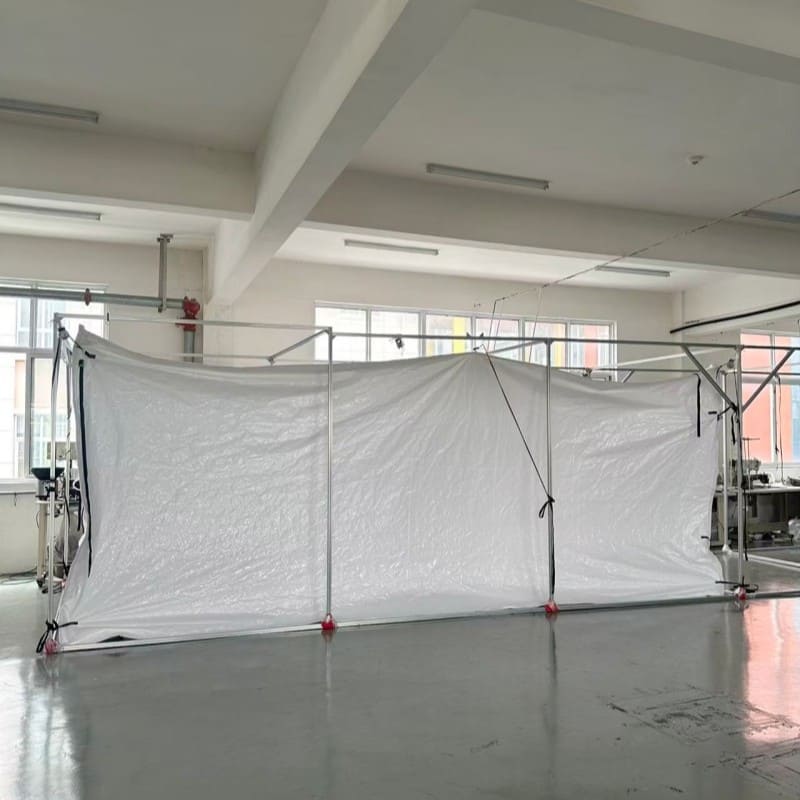
This is not a theoretical distinction. In a recent project involving food-grade resin shipments between Southeast Asia and Europe, the switch from single-use PE film liners to reusable woven thermal liners cut total liner waste by over 60% across a twelve-month contract. The liners were inspected, cleaned, and returned three times before retirement, and the cargo protection performance did not degrade measurably. That type of outcome only happens when reusability is built into the material selection and the liner design from the start.
Environmental Standards and Certifications That Apply to Container Liners
Environmental compliance for container liners follows both mandatory and voluntary tracks. The mandatory side includes REACH (EC 1907/2006), which restricts substances of very high concern in articles sold into the EU, and RoHS (2011/65/EU), which limits hazardous substances in electrical and electronic equipment but is often required by extension in packaging materials. For liners touching food, FDA 21 CFR and LFGB set specific migration limits that also influence material purity and recyclability. A liner that passes these requirements already sits on a higher environmental tier than one certified to none.
The voluntary side is where procurement teams can differentiate. ISO 9001 certification confirms a quality management system is in place, but for environmental claims, ISO 14001 (environmental management) and ISO 50001 (energy management) carry more weight. A factory that monitors energy consumption, waste segregation, and water treatment generates less environmental burden per unit produced — a point that matters when calculating scope 3 emissions in a buyer’s supply chain.
| Standard | Scope | Relevance to Eco-Friendly Container Liners |
|---|---|---|
| REACH (EC 1907/2006) | EU – substances | Restricts hazardous substances in liner materials; required for EU-bound cargo |
| RoHS (2011/65/EU) | EU – hazardous substances | Often required for packaging; sets baseline material purity |
| FDA 21 CFR | USA – food contact | Migration limits affect liner composition; impacts recyclability assessment |
| LFGB | Germany/EU – food contact | Similar scope to FDA; recognized for EU food shippers |
| ISO 14001 | Global – environmental management | Signals factory-level environmental controls; relevant for scope 3 accounting |
| ISO 50001 | Global – energy management | Energy-efficient production reduces liner’s carbon footprint before first use |
A liner manufacturer that holds both REACH and FDA certifications has already cleared the most common regulatory hurdles. For shippers with advanced ESG reporting obligations, asking for the factory’s ISO 14001 certificate number and last audit date provides verification that the environmental claim is operational, not promotional.
If your compliance team is currently mapping supplier certifications against your own reporting requirements, it is worth confirming the specific material test reports available per liner model — reach out at [email protected] and we can provide the documentation that matches your destination market.
Can Sustainable Liners Maintain Performance in Demanding Routes
The hardest environmental claim to defend is one that fails on the water. I have reviewed liner trial results where a well-intentioned recycled-content film lost tensile strength in high-humidity conditions, leading to sagging and partial discharge failure. The lesson was not that recycled materials are unusable. It was that mechanical properties — tensile strength, elongation at break, moisture vapor transmission rate — must be verified under conditions that match the intended route, not just at laboratory standard temperature and humidity.
Thermal performance adds a second layer. A reusable woven thermal liner like the TL-01, which uses a woven PE core with double-sided aluminum foil lamination, reflects 95–97% of radiant heat and stabilizes internal temperatures within ±5°C of target. When a shipping lane crosses the equatorial Pacific in August, that thermal reflection prevents the cargo from absorbing enough solar gain to trigger condensation. The environmental benefit is twofold: the liner itself is reusable three to five times, and it reduces the demand for active refrigeration, which lowers the overall carbon footprint of the shipment more than any material substitution alone.
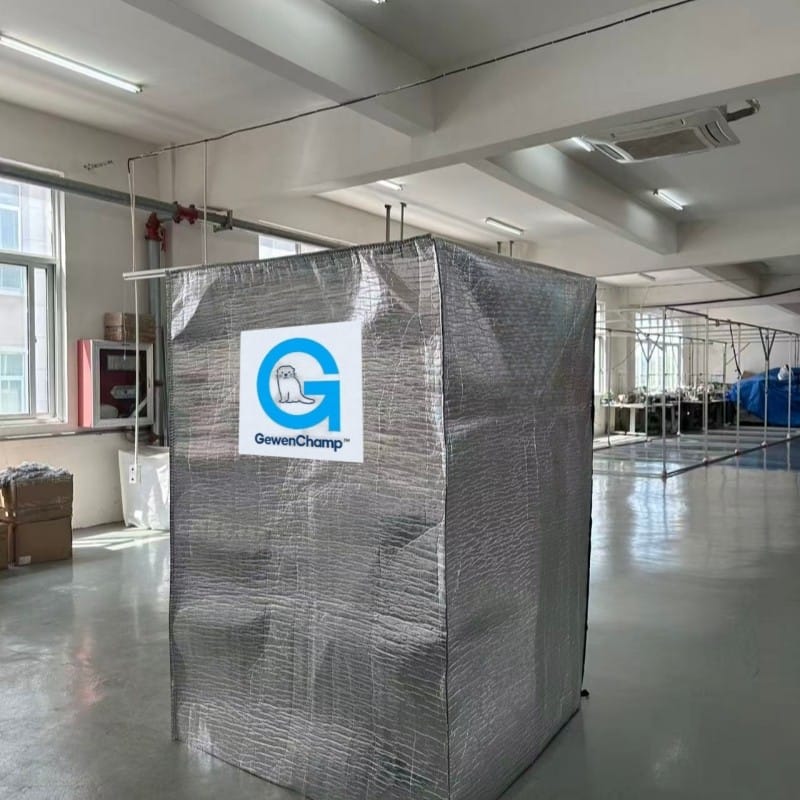
Foam-based liners, such as the TL-02 with its 3mm EPE foam core, achieve thermal conductivity at or below 0.038 W/(m·K). This level of passive insulation is sufficient to hold cargo inside a 20°C window on all but the most extreme routes. The trade-off is that the foam core makes end-of-life separation more complex than a straight woven PE design. This is the type of performance-versus-recyclability decision that shippers need to make explicitly, rather than letting a marketing headline decide for them.
Emerging Trends in Eco-Conscious Bulk Packaging
Three shifts are becoming visible across the container liner industry, and they will shape procurement decisions over the next three to five years. The first is the move toward mono-material composite liners. Instead of bonding aluminum foil to PE through solvent-based adhesives, manufacturers are experimenting with metallized barrier films that share a PE backbone, making the entire structure recoverable in mechanical recycling streams. Early commercial applications are limited to non-food, non-extreme-temperature lanes, but the technical trajectory is clear.
The second shift is data-backed reusability tracking. Instead of relying on visual inspection to determine whether a liner can make another trip, some logistics programs are attaching QR-coded tags that log the number of cycles, the maximum temperature exposure, and any repair events. This data feeds directly into life-cycle assessment models and gives shippers auditable proof of their waste reduction claims — a capability that procurement teams negotiating ESG-linked contracts will increasingly require.
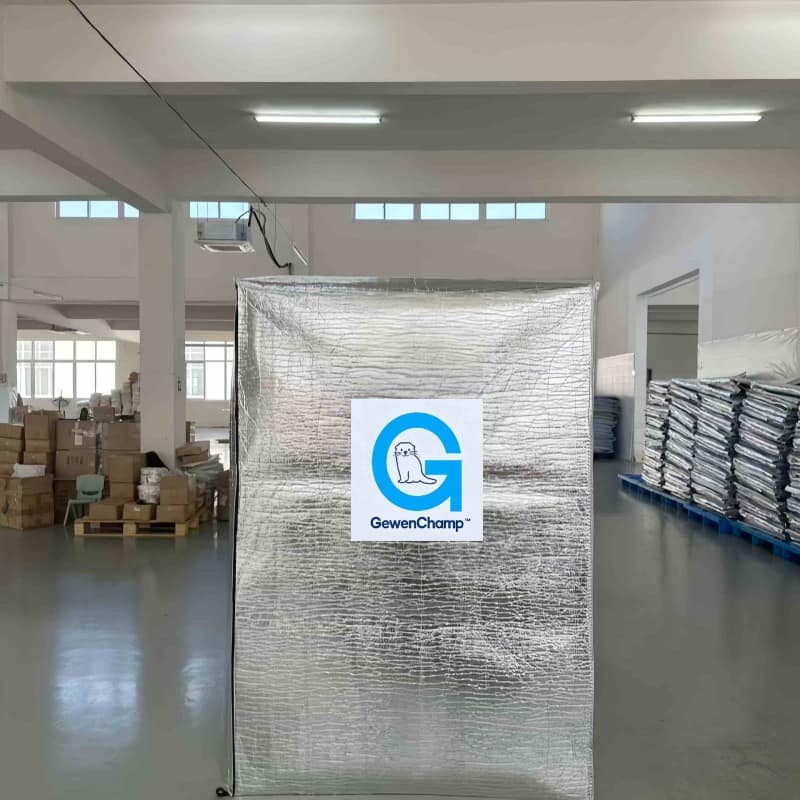
The third shift is less about the liner itself and more about the system. Integrated passive cold chain — where a thermal liner, a thermal pallet cover, and a modest quantity of phase-change material replace a reefer container for a 10-to-14-day lane — is gaining traction. The energy saved by not running a diesel genset or plugging into port power typically outweighs the embodied energy of the liner by a factor of three to five over a single voyage. When the liner is reused, the advantage widens further. This systems-level thinking, rather than a material-by-material comparison, is where the most credible sustainability gains will come from.
How to Source Reliable Eco-Friendly Container Liners
Selecting an eco-friendly container liner requires verifying claims against documentation. Start with the material data sheet. It should list the base polymer type, any recycled content percentage, the adhesive system if layers are laminated, and the referenced test standards. If the word “eco” appears more often than a test standard, move to the next supplier. A credible manufacturer will also be able to supply a third-party migration test report for food-contact liners and a REACH/SVHC screening report for the specific SKU you are ordering.
Manufacturing location matters for two reasons. First, regulatory enforcement varies. A factory operating under China’s evolving environmental protection laws while holding current ISO 14001 and ISO 9001 certifications has passed a higher verification threshold than an uncertified producer in any region. Second, the proximity effect: liners shipped from a manufacturing base in Jiangsu to major Asian ports reduce transport-related emissions compared with liners shipped intercontinentally before they even reach the first cargo.
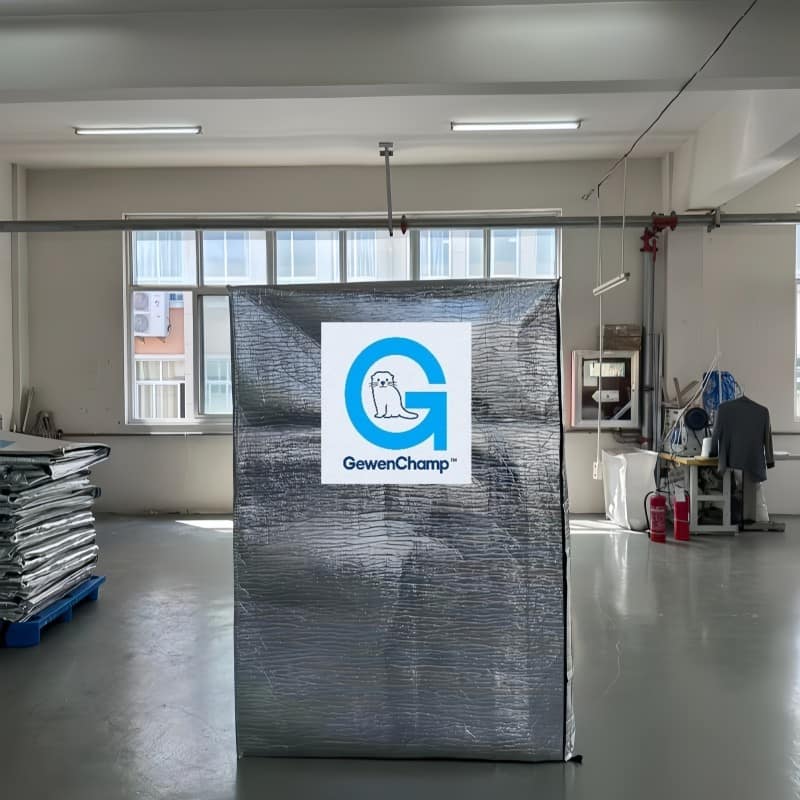
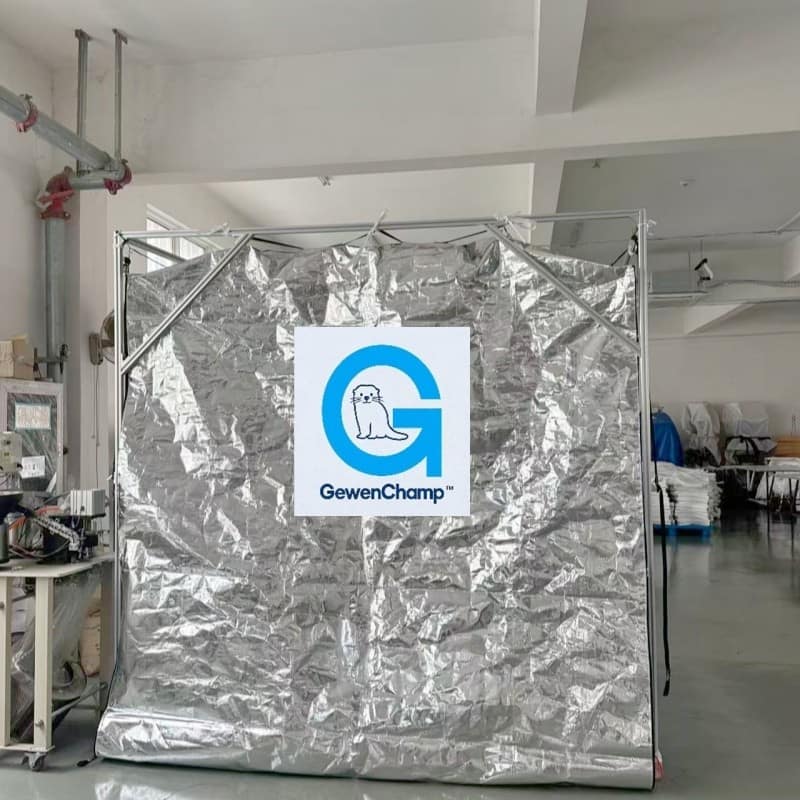
At Giant Flexpack, our GewenChamp thermal liner series — particularly the TL-01, TL-02, and TL-04 models — are built around this reusability-first philosophy. The design life is three to five cycles before material fatigue becomes a concern, and the material data sheets reference the specific ISO, FDA, and REACH frameworks relevant to each product. We see the same pattern with thermal pallet covers, where the TP-01’s five-layer composite achieves a tensile strength above 25 N/15mm, enabling eight or more return trips under normal handling. The environmental calculation changes entirely when the amortized liner cost per trip drops and the per-trip waste shrinks to nearly zero.
If your next shipment program demands both cargo protection and a verifiable reduction in packaging waste, it is worth evaluating a reusable thermal liner against your projected voyage count. The economics and the environmental arithmetic often favor the same decision.
Send your route details and container count to [email protected] or call +86 523 87683880, and we can confirm which liner model matches your thermal and moisture protection requirements along with the supporting certification package.
Common Questions About Eco-Friendly Container Liners
Are biodegradable container liners commercially viable right now?
Not for most international bulk cargo lanes. Biodegradable polymers that decompose in marine or soil environments generally lack the tensile strength and moisture barrier properties needed for a 30,000 kg load traveling 10,000 nautical miles. Industrial composting facilities at destination ports are still scarce. For shippers who must demonstrate waste reduction today, reusable liners provide a more immediate and measurable environmental gain than waiting for biodegradable options to mature.
Does a reusable liner really have a lower carbon footprint when you account for cleaning?
Yes, in the programs we have tracked. The energy required to inspect, wipe down, and repack a woven thermal liner is trivial compared with the energy embedded in manufacturing a new liner. When a TL-01 liner completes three trips instead of one, the embodied carbon per trip falls by roughly 60%. The cleaning step — typically a dry wipe and visual seam check — adds less than 2% to the total energy cost of that liner’s service life. The arithmetic only becomes unfavorable if the liner travels back empty over long distances, so backhaul planning is part of the equation.
How can I verify a supplier’s environmental claims without visiting the factory?
Ask for the current ISO 14001 certificate with the accredited certification body’s name and the scope of registration. Request a copy of the most recent surveillance audit report summary. These documents are standard for certified operations and are hard to fabricate convincingly. Additionally, ask for an SVHC screening report under REACH for the specific liner model you intend to purchase. A supplier that can produce these three documents within a few business days has the management systems and testing discipline that underpin legitimate environmental claims.
What is the single most impactful change a bulk shipper can make to reduce container liner waste?
Move from a single-use liner to a reusable design for any lane where the liner can be retrieved, inspected, and returned at least once. The waste reduction from that one decision usually exceeds all material formulation improvements combined. It also creates the feedback loop — the liner needs to be durable enough to survive the journey — that aligns performance and environmental goals instead of pitting them against each other. If the liner cannot be reused because your route has no return logistics, then focus on mono-material PE designs that enter local recycling channels more readily. Provide your destination port details and liner specification to [email protected], and we can advise which approach fits your actual logistics pattern.
 English
  German
  Spanish