
Shipping temperature-sensitive bulk cargo without racking up reefer bills and single-use packaging waste isn’t a distant sustainability target — it’s a logistics decision that pays back within a few rotations. After 20 years in thermal packaging manufacturing, I’ve seen how the right reusable liner changes the per-shipment math, and the carbon savings are not small side effects; they come directly from the same property that makes reusability work: structural insulation that survives multiple voyages.
What Drives the True Cost of Single-Use Thermal Liners
The purchase-price-per-unit of a disposable thermal liner tells only a fraction of the story. When I review total landed cost with procurement teams, three costs routinely overshadow the liner price: container waiting time during installation, cargo loss from condensation when a single-layer liner fails mid-voyage, and disposal fees at the destination. A disposable foil-bubble liner might cost $80–$120 shipped, but if condensation from a failed seam causes even a 1% product rejection on a $60,000 cocoa bean load, the liner cost becomes irrelevant. Multiply that across a year of shipments on a long-haul route and the cheapest liner on the invoice is often the most expensive one in practice.
Reusable thermal liners invert this risk profile. A product like our TL-01 Woven Thermal Fabric liner — a woven PE core laminated with double-sided aluminum foil — installs in 10–15 minutes without tools because its structure holds shape rather than flopping around like a foil bag, and when the seal is sound, it reflects 95–97% of radiant heat while providing moisture resistance well above what a single-layer PE film can offer. The difference that matters financially: it can be reused 3–5 times before performance degrades, and each reuse cycle spreads the acquisition cost thinner. For a liner with a $350 landed cost reused three times, the effective per-voyage cost drops below $120 — right in the range of a single-use liner — but with more consistent thermal performance and zero disposal cost for two out of every three trips.
How Much Carbon Does Each Reuse Cycle Actually Save
The carbon benefit of reusable thermal liners sits in two numbers that procurement teams can verify: the embodied carbon of the liner material and the avoided emissions from reduced reefer usage. A TL-02 EPE Foam liner, a four-layer composite with 3mm foam core and PET aluminum foil, achieves thermal conductivity ≤0.038 W/(m·K). On a typical 40-foot container route from Shanghai to Rotterdam where ambient temperatures swing between 5°C and 35°C over 30 days, that level of insulation can often keep the internal temperature within ranges that eliminate the need for a reefer when the cargo’s tolerance is broad enough — say 15°C to 25°C for many polymer resins and food ingredients.
Reefer containers consume approximately 2–3 kW of electricity per hour. Over 30 days, that’s roughly 1,440–2,160 kWh, translating to around 600–900 kg CO₂ depending on the grid mix at port and on vessel. If the same cargo is shipped in a dry container with a reusable thermal liner, those reefer emissions go to zero for that shipment, and the liner’s own embodied carbon — estimated at 80–120 kg CO₂ for a 40-foot TL-02 based on polyethylene and aluminum metallization — is amortized across multiple trips. After three uses, the embodied carbon per voyage falls below 40 kg, meaning the carbon payback versus a single reefer voyage can happen within a single shipment, and the savings deepen with every subsequent reuse.
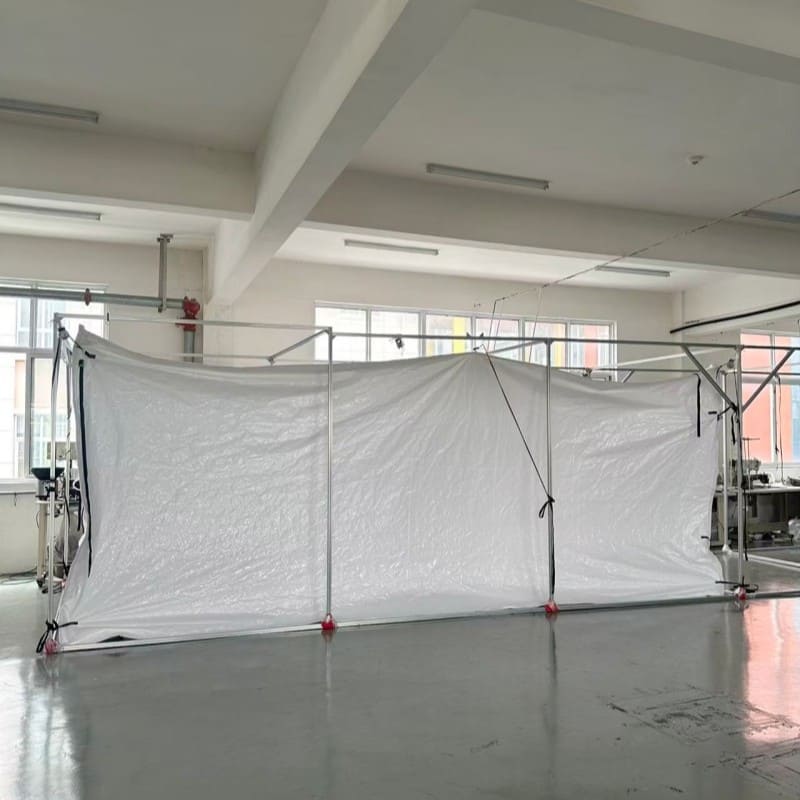
If your program involves sensitive cargo where temperature excursions above 5°C variance cause rejects, the liner alone won’t replace a reefer, but it will reduce reefer cycling — the compressor runs less often because the liner damps the effect of external solar load and night-time temperature drop — which still cuts fuel consumption by an amount worth measuring.
Material Choices That Determine How Many Reuses You Get
Not every reusable thermal liner delivers the same number of cycles, and the difference is almost always in the lamination structure and the outer layer’s abrasion resistance. In our factory, the TL-03 — MPET / Double Bubble / MPET — typically lasts 3–5 voyages because the double-bubble cushion layer (10–15mm bubble diameter, total 5mm thickness) resists puncture from container wall friction better than a flat composite film. The TL-04 MPET/PE composite film liner, while lighter and lower in upfront cost, is often rated for 2–3 reuses because the metallized PET surface can micro-crack if folded sharply repeatedly. For customers shipping kaolin clay or PVC resin where fine dust accumulates on the liner wall and acts as an abrasive, I recommend woven-face products like TL-01 or TL-02 because the outer woven PE or PET foil layer stands up to particulate contact without losing reflectivity.
One specific failure mode I’ve seen on buyer-side trials is measuring reusability by visual inspection alone. A liner can look clean after a voyage but have lost 15–20% of its reflectivity because the aluminum foil layer oxidized microscopically if it wasn’t fully laminated with a protective film. That’s why our TL-02 and TL-03 use PET aluminum foil or MPET layers with full encapsulation — no exposed metallic surface — to maintain radiant heat reflection above 95% across all planned reuse cycles.
Building Reusability into a Working Logistics Flow
The operational side of reusable liners — reverse logistics, cleaning, and storage — is where early adopters either capture the full savings or lose them. On routes where you control the container return, like a dedicated lane between a resin producer and a converter, the return logistics are straightforward: the liner stays in the container, the container returns to origin, and the liner is inspected before the next load. This pattern works especially well with 30-foot and 40-foot containers on intra-Asia or Asia-Europe loops where container turnaround is managed by the shipper or freight forwarder.
For customers who ship on one-way routes where container return isn’t feasible, I suggest a different approach: fold the liner and air-freight or LCL it back separately. A folded 40-foot TL-03 liner compresses to roughly the size of two pallets and weighs under 30 kg, so the return freight cost is a fraction of the liner’s value. A third pattern we support is supplying two sets of liners on a rotating basis — one in transit, one at origin being inspected — so the shipping schedule isn’t gated by liner availability.
The real implementation gate is cleaning. Liner interiors must be free of residue that could contaminate the next cargo. For food-grade shipments under FDA or LFGB, a simple wipe-down with a food-safe cleaning solution is typically sufficient because the inner surface of our TL-series liners is smooth LDPE or PET film — non-porous and quick to dry. For chemical cargo, compatibility must be verified; if the liner absorbed any substance, we recommend retiring it from food service even if the appearance is acceptable.
When Reusable Liners Beat Alternatives on Total Cost of Ownership
A direct TCO comparison clarifies where reusable thermal liners earn their place. The table below assumes a 40-foot container, three-year operation, eight shipments per year, and a cargo value of $60,000 per container — typical for high-value cocoa, specialty chemicals, or temperature-sensitive resins.
| Cost Factor | Single-Use Foil Liner | Reefer Container | Reusable Thermal Liner (3–5 cycles) |
|---|---|---|---|
| Liner cost per shipment | $100–$150 | N/A | $70–$120 (amortized) |
| Container surcharge | Dry ($0) | Reefer (+$1,500–$2,500) | Dry ($0) |
| Disposal/reverse logistics | $20–$40/shipment | N/A | $5–$15/shipment |
| Cargo loss risk (1% assumed) | $600 | $300 (active cooling) | $300–$600 (passive only) |
| Carbon cost (tCO₂, est.) | 40–60 kg (liner only) | 600–900 kg (reefer power) | 30–50 kg (amortized) |
On routes where the cargo temperature tolerance is ≤10°C and the liner alone can hold the range, the reusable liner’s total cost per shipment sits between a single-use liner and a reefer, but the carbon impact is dramatically lower than reefer and competitive with single-use after two trips. When the cargo demands active cooling, a reusable liner layered with ice packs inside a dry container can still displace a reefer on shorter routes, and we have customers using TL-04 liners plus phase-change packs to ship vaccines on sub-72-hour legs in West Africa with no reefer at all.
Common Questions About Reusable Thermal Container Liners
Do reusable liners maintain insulation performance after multiple folds and compression cycles?
The short answer is yes, if the liner’s reflective layer is protected. The aluminum foil in a TL-01 or the MPET in TL-03 does not lose reflectivity from folding itself — it loses it if the foil delaminates from the substrate due to weak adhesive. In our testing, after five folding cycles and 120 hours of vibration simulating truck/rail transport, a TL-01 with double-sided PE lamination retained 93% of initial reflectivity, while an unprotected foil sample dropped to 78%. The difference is the full encapsulation of the foil between polymer layers, preventing oxidation.
Can a reusable liner be repaired if it gets a small tear mid-voyage?
Small punctures can be patched with aluminum tape on the exterior surface if the tear is in the foil layer only and hasn’t penetrated the woven substrate. For TL-02 EPE foam liners, foam compression near the tear may reduce local insulation value, so I recommend marking the area and inspecting before the next use. If the tear extends through the full thickness and exposes the cargo to container wall condensation, retire the liner from thermal service — it can still be used as a moisture barrier for non-sensitive dry bulk.
How do I know if a supplier’s “reusable” liner is actually designed for multiple cycles, not just marketed that way?
Ask for two data points: the number of bending cycles the reflective layer withstands before micro-cracking (ASTM tests exist for metallized films), and the tensile strength of the lamination bond between foil and substrate after accelerated aging. A liner marketed as reusable should have bond strength ≥5 N/15mm after 72 hours at 70°C and 95% RH — temperatures and humidity that simulate a heated container summer crossing. If the supplier cannot provide this, test a sample on a single trip and measure reflectivity with an infrared thermometer before and after — you’ll know within one voyage whether the structure holds.
If your program calls for thermal liners that combine reuse economics with trackable carbon reduction, send your part number and quantity requirements to [email protected] or call +86 523 87683880 — we’ll run the numbers for your specific route and cargo profile.
 English
  German
  Spanish