
Reducing carbon emissions in international cold chain logistics often means a trade-off between cargo safety and fuel consumption. However, low emission cold chain packaging offers a practical path forward: passive thermal liners that maintain stable internal temperatures without consuming energy during transit. Over years of working with bulk exporters, I’ve seen that proper insulation material selection can eliminate the need for refrigerated containers on many routes, cutting CO2 output and operational costs simultaneously. The key is understanding how these liners work and what performance data matters for your specific cargo.
Passive Thermal Liners as Alternatives to Refrigerated Containers
Refrigerated containers, while essential for some cargo, consume substantial electricity and generate direct emissions. A typical 40-foot reefer can draw 4–7 kW of power continuously, depending on ambient temperature and setpoint, translating to nearly 100–170 kWh per day. Over a 30-day ocean voyage, a single reefer may consume over 3,000 kWh, much of it from diesel-powered shipboard generators or shoreside grid electricity with a significant carbon footprint. For many shipments, however, a reefer is overkill.
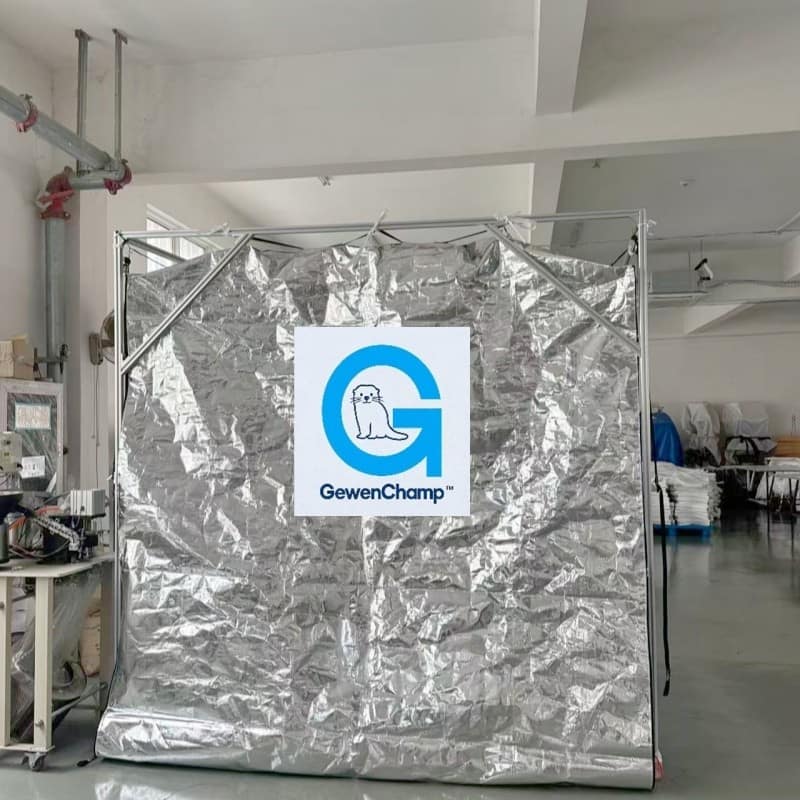
Passive thermal container liners, such as the GewenChamp™️ series, reflect radiant heat and resist conductive and convective heat transfer without any external energy input. These liners line the interior walls, ceiling, and floor of a standard ISO container, creating a thermally stable enclosure. I’ve observed that for cargo requiring temperatures between roughly -20°C and 30°C, a well-installed passive liner can maintain the target range for the entire journey, even across climate zones that swing from equatorial heat to northern cold. The result is a direct reduction in refrigeration-related emissions, plus lower operating costs.
The Science of Passive Insulation in Cold Chain Packaging
The effectiveness of a passive thermal liner comes from three mechanisms: radiation reflection, conduction resistance, and convection suppression. Aluminum foil or metallized PET films reflect 95–97% of radiant heat, while thicker insulating cores like expanded polyethylene foam or bubble cushion structures add resistance to conducted heat flow. The combination traps a layer of still air near the cargo, suppressing internal convection. The metric that ties all three together is the R-value, or thermal resistance. A higher R-value means the liner slows heat transfer more effectively per unit thickness.
For a liner to meaningfully cut emissions, the R-value must match the route’s worst-case temperature differential. A product specification alone is not enough, the liner must also be installed to avoid thermal bridges at seams or corners. Proper overlap and taping of joints can make the difference between a liner that holds temperature for 48 hours and one that leaks heat. When we test liners at our facility in Taixing, we pressurize the container and measure thermal decay under controlled conditions before certifying a configuration for a specific trade lane.
Comparing Thermal Liner Materials for Low-Emissions Performance
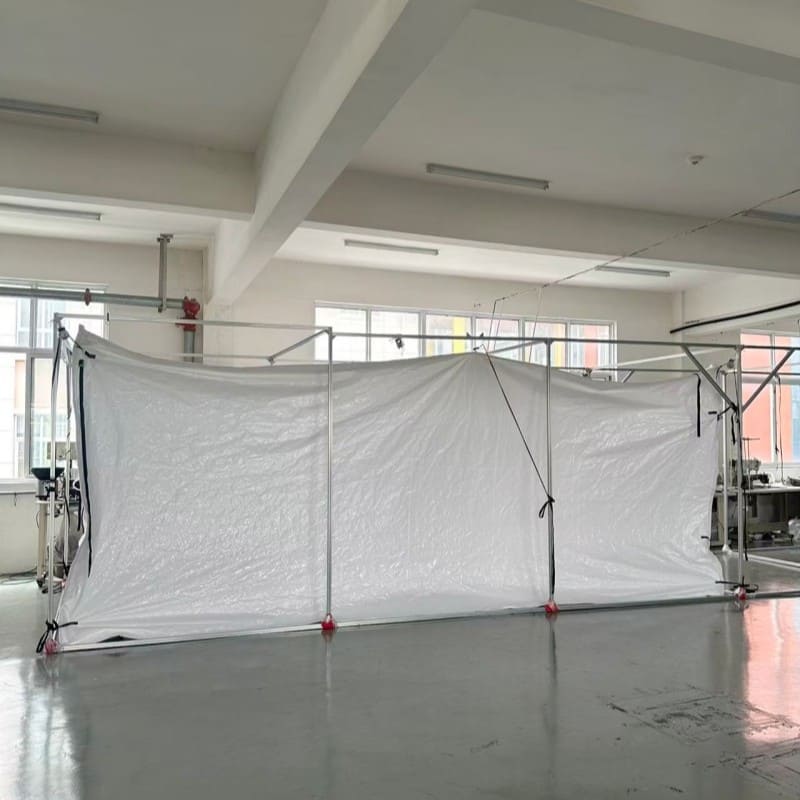
Choosing the right material directly affects the emission reduction potential. Below is a summary of four common passive liner constructions we produce, each with distinct thermal properties suited to different temperature ranges and voyage lengths.
| Material Structure | Core Feature | Radiant Heat Reflectivity | Operating Range | Typical Applications |
|---|---|---|---|---|
| Woven PE + Aluminum Foil Lamination | Reflective, high strength | 95–97% | -20°C to 60°C | Food, pharmaceuticals, electronics |
| PET Aluminum Foil + 3mm EPE Foam | Foam core adds conductive resistance | ≥96% | -50°C to 80°C | Frozen goods, long-haul, extreme climates |
| MPET + Double Bubble + MPET | Double bubble air gap for insulation | ≥98% | -50°C to 80°C | Vaccines, biologics, high-value cargo |
| MPET + PE Composite Film | Lightweight, cost-efficient | ≥92% | -10°C to 30°C | Fresh produce, standard pharmaceuticals |
The liners with higher reflectivity and thicker cores generally achieve lower temperature variance over time, critical for emissions calculations because they reduce the risk of temperature excursions that might otherwise force a switch back to active refrigeration. For example, the TL-03 liner (MPET/Double Bubble/MPET) reflects up to 98% of radiant heat and maintains ±5°C stability for trans-Pacific crossings, while the TL-04 composite liner works well for shorter intra-Asia routes where ambient temperatures rarely exceed 30°C.
If your cargo’s acceptable temperature band is narrow, the foam or double bubble options provide the margin needed to avoid reefer use. I’ve worked with shippers of temperature-sensitive polycarbonate resin who found that upgrading from a basic reflective liner to an EPE foam liner allowed them to ship without reefers on a Southeast Asia to Europe route, eliminating over 2 tons of CO2 per container load.
Calculating Emission Reductions from Passive Cold Chain Solutions
The emission savings from passive liners are a function of avoided reefer energy and reduced cargo spoilage. To estimate for a specific shipment, start with three numbers: the daily energy consumption of a comparable reefer, the voyage duration, and the carbon intensity of the electricity source. For a 40-foot reefer consuming 120 kWh/day on a 25-day voyage, total energy used is 3,000 kWh. Using a maritime grid emission factor of 0.7 kg CO2/kWh (a conservative average for shipboard diesel generators), that trip emits approximately 2.1 metric tons of CO2. Switching to a passive liner eliminates that entire block of emissions.
There are secondary savings as well. Passive liners weigh far less than a reefer unit, reducing fuel consumption from vessel weight. They also require no generator maintenance, coolant refills, or power hookups. Shippers also avoid reefer surcharges, which can exceed $1,500 per trip. From a pure carbon accounting standpoint, a single passive liner shipment often delivers a lower total carbon footprint than even an optimised reefer, provided the cargo’s temperature stability requirements are met.
Getting Started with Low-Emission Cold Chain Packaging
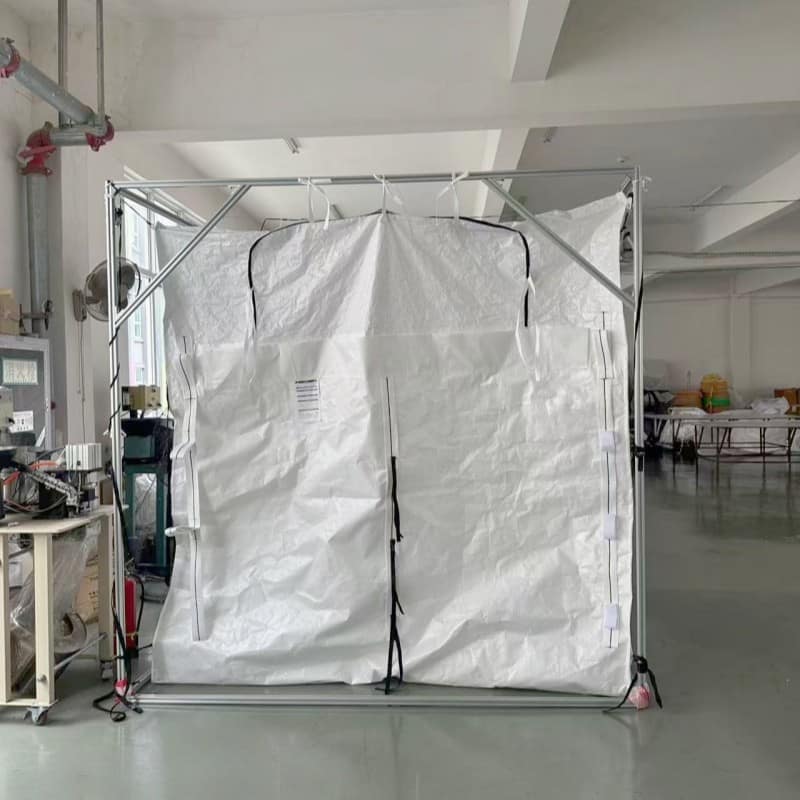
For logistics teams seeking to reduce cold chain emissions, the first step is to audit current lanes. Identify shipments where cargo temperature requirements fall within the 24–72 hour holding capacity of passive liners and where ambient conditions are not extreme throughout the entire journey. Then request liner samples tailored to your cargo and route. Our team routinely provides test liners to importers and freight forwarders, allowing them to log temperature data with data loggers and verify that the liner holds the required range.
The payback period for passive liner adoption is often immediate. A single avoided reefer trip saves enough in energy and surcharges to cover the liner cost, while the emission reduction supports corporate sustainability targets. If your program involves temperature-sensitive bulk commodities such as food powders, pharmaceuticals, or chemicals, it is worth confirming the liner’s thermal performance and compatibility with your loading equipment before finalizing your logistics plan. Reach us at [email protected] or call +86 523 87683880 to discuss your route and cargo, and we will recommend a liner matched to your emission reduction goals.
Common Questions About Low-Emission Cold Chain Packaging
How can I verify that a passive liner will meet my temperature range?
Begin by checking the liner manufacturer’s published operating range and thermal conductivity data. Then, conduct a trial shipment with a calibrated data logger placed in the center of the cargo. This field test reveals real performance under your exact route conditions. In programs we’ve supported, the data logger output often surprises shippers who expected less stability than what modern multi-layer liners deliver.
Why not simply use a reefer container and claim carbon offsets?
Offsets require verification, ongoing expense, and do not change the physics of energy consumption. Passive liners eliminate the emissions at the source. Moreover, reefers still carry operational risks like generator failure and temperature fluctuation during power outages, whereas a passive liner’s performance is material-driven and not dependent on machinery.
Are passive liners reusable, or must I discard them after one trip?
Most woven thermal fabric and foam-based liners can be reused 3–5 times when handled carefully, while lighter composite film liners are typically single-use. Reusability depends on cargo type and handling during unloading. If you plan to reuse, we can recommend cleaning and storage procedures to extend liner life and maximise the emission reduction per unit.
Do passive liners work for intermodal shipments crossing multiple climate zones?
Yes, when the liner is selected for the most extreme leg of the journey. A trans-Pacific shipment that crosses equatorial heat and North American winter requires a liner with sufficient R-value to handle both extremes and a wide operating range. We commonly configure liners for multi-zone routes based on historical weather data logged along the container’s path.
What documentation can I show my customers to prove the emissions saved?
We can provide a material specification sheet with the liner’s thermal resistance and an emission savings estimate based on the avoided reefer energy for your specific route. This documentation, combined with your own trip temperature logs, gives you a defensible carbon reduction claim. Share your shipment details and we will prepare the relevant performance data.
 English
  German
  Spanish