
Polymer resin moisture control during bulk export is often reduced to a simple calculation of desiccant quantity. Yet exporters moving polycarbonate, PE, PVC, and other hygroscopic resins know that cargo arriving clumped or degraded rarely traces back to humidity alone; the overlooked trigger is temperature swings inside the container. Drawing on over fifteen years of experience in thermal packaging and bulk logistics, I have seen that combining a proper moisture barrier liner with passive thermal insulation reduces moisture-related claims far more reliably than desiccants alone. Whether shipping PE resin from the US Gulf to Southeast Asia or polycarbonate from Europe to South America, the same principle holds: stabilize the container microclimate, and you stop the condensation that desiccants cannot handle.
What Causes Moisture Damage in Polymer and Resin Bulk Shipments?
Moisture damage in polymer bulk exports comes in two forms: direct humidity ingress from the outside environment and condensation generated inside the container itself. The latter is the more insidious problem. When a container moves through different climate zones, the diurnal temperature cycle forces warm, moisture-laden air to cool against the container walls and roof. Once the surface temperature drops below the dew point, water droplets form, a phenomenon known as container rain. Those droplets fall onto the cargo, and because many engineering resins are hygroscopic, the material absorbs moisture directly from the air or from liquid contact.
Even resins shipped in sealed bags inside an unlined container are not immune. Temperature fluctuations create a pumping effect that drives humid outside air through container door seals during cooling phases. Over a four-week sea voyage, a standard 40ft container can accumulate several liters of liquid water on interior surfaces. PE and PP pellets are less hygroscopic than polyamide or polycarbonate, but even minor surface moisture can cause processing issues downstream, including voids, splay, and hydrolysis in sensitive grades. I have worked with compounders who rejected entire container loads of engineering resin because the moisture content exceeded 0.05% after a single trans-Pacific crossing. The cost of re-drying or scrapping contaminated material far outweighs the freight savings.
How Do Desiccants Help Control Moisture?
Desiccants are the first line of defense in most moisture control plans. They work by adsorbing water vapor from the container headspace, lowering the relative humidity before it can reach the dew point. The three most common types used in container shipping are silica gel, calcium chloride, and clay desiccants, each with distinct performance profiles.
| Desiccant Type | Typical Moisture Uptake at 90% RH | Suited Application | Key Limitation |
|---|---|---|---|
| Silica Gel | 30-35% of its weight | Moderate humidity routes, electronics, resin pellets | Limited high-humidity endurance |
| Calcium Chloride | 150-200% of its weight (deliquescent) | Long voyages, tropical routes, hygroscopic cargo | Potential leakage if bag ruptured; requires containment |
| Clay Desiccant | 20-25% of its weight | Short-haul, low-value commodities | Low efficiency; not recommended for moisture-sensitive resins |
The quantity needed depends on the cargo volume, container condition, route duration, and the target final humidity. As a rule of thumb, a 40ft container carrying hygroscopic resin typically requires 8 to 12 kg of desiccant for a four-week voyage, but I have specified up to 20 kg for routes from Southeast Asia to Northern Europe during the monsoon season. Placement matters: desiccant bags hung on container lashing rings and placed between cargo units capture moisture before it can condense on the product. However, desiccants are a consumable buffer. They cannot stop the continuous ingress of humid air, nor can they prevent condensation that forms faster than the desiccant can adsorb. For polymers that demand extremely low moisture content, desiccants alone are insufficient.
What Role Do Container Liners Play in Moisture Protection?
A properly specified container liner creates a physical barrier between the cargo and the container environment. The two primary liner types for moisture protection are PE film liners and coated woven fabric liners, both of which serve as a vapor barrier. High-quality PE blown film liners, such as the GewenChamp DBL-F01, deliver a 100% moisture and dust barrier when all seams are heat-sealed. Their low moisture vapor transmission rate ensures that external humidity does not reach the resin during transit.
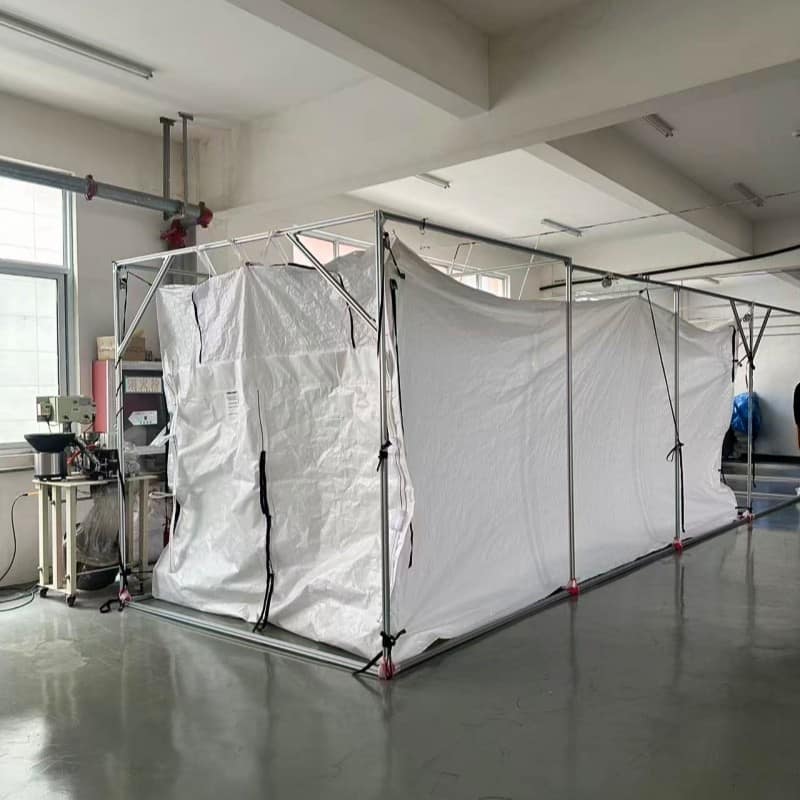
Beyond the base material, seam integrity is the deciding factor. Stitched seams without tape sealing will leak, no matter how good the film. For polymer powders and fine granules, sift-proof liners with PU tape-sealed seams, like our DBL-W06, prevent both moisture and product loss. A liner also protects the resin from contamination: metal container walls can shed rust particles, and previous cargo residues can interact with sensitive polymers. The combination of a moisture barrier liner and desiccants offers better protection than either method alone, because the liner cuts off the external moisture supply while the desiccant handles residual humidity from the cargo itself and initial trapped air.
If your program involves high-humidity sea routes, confirming the MVTR spec of your liner before finalizing your BOM is worth the ten minutes it takes. Reach out at [email protected] to discuss the right PE thickness and seam construction for your specific resin.
Why Is Temperature Stabilization Critical for Polymer Moisture Control?
This is the strategy most overlooked in polymer shipping plans. The container is a thermal system. When the sun heats the roof to 70°C in the Red Sea and the interior air temperature rises in tandem, the air’s capacity to hold water vapor increases dramatically. Then, when the container moves into cooler night air or a cold current, the roof temperature drops, and that saturated air condenses on the coldest surface, typically the container ceiling and upper walls. Even a fully sealed barrier liner cannot prevent condensation from forming on the outside of the liner and dripping onto the cargo if the temperature swing is severe enough.
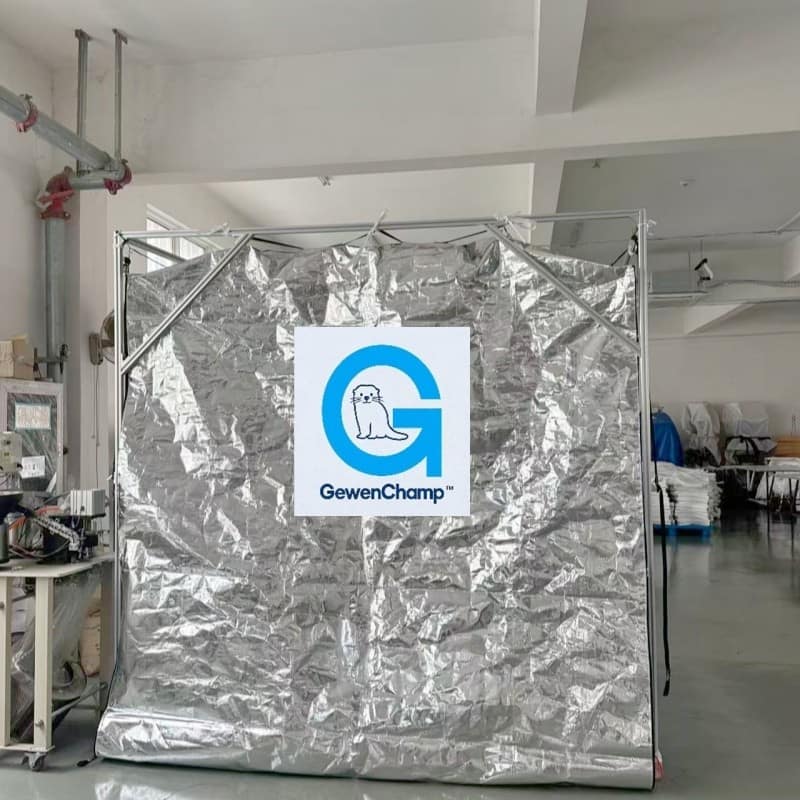
Passive thermal insulation liners address this by decoupling the interior from the container skin. A multi-layer construction like the GewenChamp TL-02, which combines a 3mm EPE foam core between PET aluminum foil layers, reduces conductive and convective heat transfer to a thermal conductivity of ≤0.038 W/(m·K). The aluminum foil reflects 95-97% of radiant heat, preventing the rapid roof heating that triggers condensation cycles. In practice, a thermal liner keeps the interior temperature within 5°C of the loading temperature over a 30-day voyage, compared with a 15°C swing or more in an unlined container.
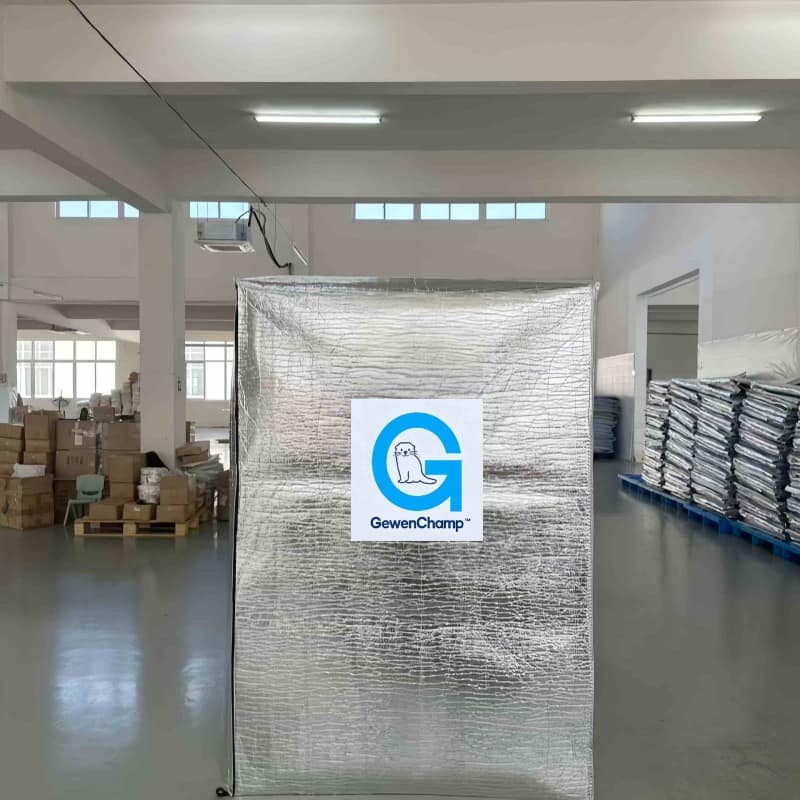
| Thermal Liner Model | Construction | Temp Range | Moisture Vapor Transmission | Reusability |
|---|---|---|---|---|
| TL-01 Woven Thermal Fabric | Woven PE + Double-Sided PE Aluminum Foil Lamination | -20°C to +60°C | Standard barrier | 3-5 uses |
| TL-02 EPE Foam | PET Alu Foil / Woven PE / 3mm EPE Foam / PET Alu Foil | -50°C to 80°C | ≤0.033 g/(m²·h·kPa) | 3-5 uses |
| TL-03 MPET/Double Bubble/MPET | MPET / Double Bubble Cushion / PET MPET | -20°C to 30°C (extendable with ice packs) | Low | 3-5 uses |
| TL-04 MPET/PE Composite Film | Metallized PET + PE Film | -10°C to 30°C (up to 72h with ice) | IPX6 waterproof | Single or limited reuse |
A thermal liner does not eliminate the need for desiccants, but it reduces the load on them by flattening the temperature curve. For polymers like nylon, PBT, or polycarbonate that can suffer hydrolytic degradation, the incremental cost of a thermal liner is small compared with the cost of a rejected lot. I have seen one polycarbonate exporter save over $60,000 in claims in a single year after switching from desiccant-only to a barrier liner plus TL-02 combination.
How to Choose the Right Combination of Moisture Control Methods
The optimal moisture control strategy depends on four factors: the resin type and its moisture sensitivity, the shipping route and season, the container size and loading method, and the end-use quality requirements.
For standard PE or PP pellets on short intra-Asia routes, a PE film barrier liner with 8-12 kg of silica gel desiccant is usually sufficient. For engineering resins like polycarbonate, nylon, or PET on trans-oceanic voyages exceeding three weeks, I recommend upgrading to a coated woven liner or PE film liner paired with a thermal insulation liner. The thermal liner pays for itself when you consider that a single rejected shipment can cost the customer relationship as well as the immediate freight and material loss.
When evaluating suppliers, look beyond the liner price. Request third-party test data for MVTR, tensile strength, and seam integrity. For thermal liners, ask for the R-value or thermal conductivity, not just the claimed temperature range. A supplier who can only quote the material thickness without performance data cannot confirm whether the liner will hold up on a Panama Canal crossing in August.
Giant Flexpack produces the full range of moisture control and thermal insulation liners in our own ISO 9001 certified facility in Jiangsu. All GewenChamp thermal liners carry FDA, LFGB, and REACH certifications, which simplifies compliance for food-grade resin shipments. We regularly customize liner dimensions, spout placement, and material combinations for specific polymer grades. If your next shipment involves a moisture-sensitive resin on a challenging route, share your requirements and we will confirm the right liner specification, without guesswork.
Common Questions About Polymer and Resin Moisture Control
Is a desiccant alone enough for a 20ft container of PVC resin?
For short coastal voyages under five days, desiccant alone is adequate if the container is in good condition and the resin has low initial moisture. However, PVC resin can absorb moisture over longer periods, leading to processing defects. On routes exceeding one week, I recommend at minimum adding a PE film liner to isolate the cargo from the container walls.
What is the difference between a moisture barrier liner and a thermal liner?
A moisture barrier liner is designed to block external humidity and liquid water from reaching the cargo, typically made of PE film or coated woven fabric. A thermal liner adds insulation layers, such as EPE foam or bubble cushion with reflective foil, to reduce temperature fluctuations and prevent the condensation cycles that overwhelm desiccants. The two liner types serve complementary functions.
How do I know if I need a thermal liner for my route?
If your shipment crosses a tropical zone, a high-altitude land corridor, or an area with a large day-night temperature swing, a thermal liner is worth considering. Ships moving from Asia to Europe through the Suez Canal, for example, routinely experience roof temperatures over 65°C followed by night cooling. In those conditions, a thermal liner reduces moisture risk and protects the resin from heat-related degradation.
Can I reuse a thermal container liner for multiple shipments?
Yes, most GewenChamp thermal liners are rated for three to five reuses when properly cleaned and stored. The return on investment improves significantly with reuse. For exporters with regular backhaul routes, a reusable thermal liner plus a fresh PE barrier liner becomes the most cost-efficient moisture control combination. Share your cargo details at [email protected] or call +86 523 87683880 and we can work out a liner program that aligns with your shipping schedule.
 English
  German
  Spanish