
We receive a recurring question from European buyers: “Do your container liners carry CE marking?” The question itself points to a confusion that can derail procurement timelines and expose cargo to unnecessary risk. The short answer, which we provide in every compliance discussion, is that container liners do not fall under any EU directive requiring CE marking. The more important answer, however, is that legitimate compliance still matters deeply. This article untangles CE marking from the regulatory framework that genuinely governs liner usage in the European Union, so you can evaluate suppliers on the evidence that counts and avoid cargo clearance surprises.
What CE Marking Actually Covers
CE marking is the manufacturer’s declaration that a product meets the essential requirements of all applicable EU harmonised legislation. It is mandatory for specific product categories—construction products, medical devices, electrical equipment, machinery, and personal protective equipment, among others. A product bearing the CE mark can circulate freely within the European Economic Area without additional national conformity procedures. The marking never indicates origin or general quality; it is strictly tied to a directive’s scope.
The foundational principle is that CE marking applies only when a product falls within the scope of at least one EU harmonisation directive. If no directive covers the product, affixing the CE mark is prohibited. This is not a guideline; it is a legal restriction under Regulation (EC) 765/2008. A manufacturer placing a CE mark on a product outside any directive’s scope risks enforcement action, including product withdrawal and fines. For logistics packaging products like container liners, the starting point is therefore to establish whether any directive encompasses them.
Do Container Liners Fall Under Any EU CE Directive?
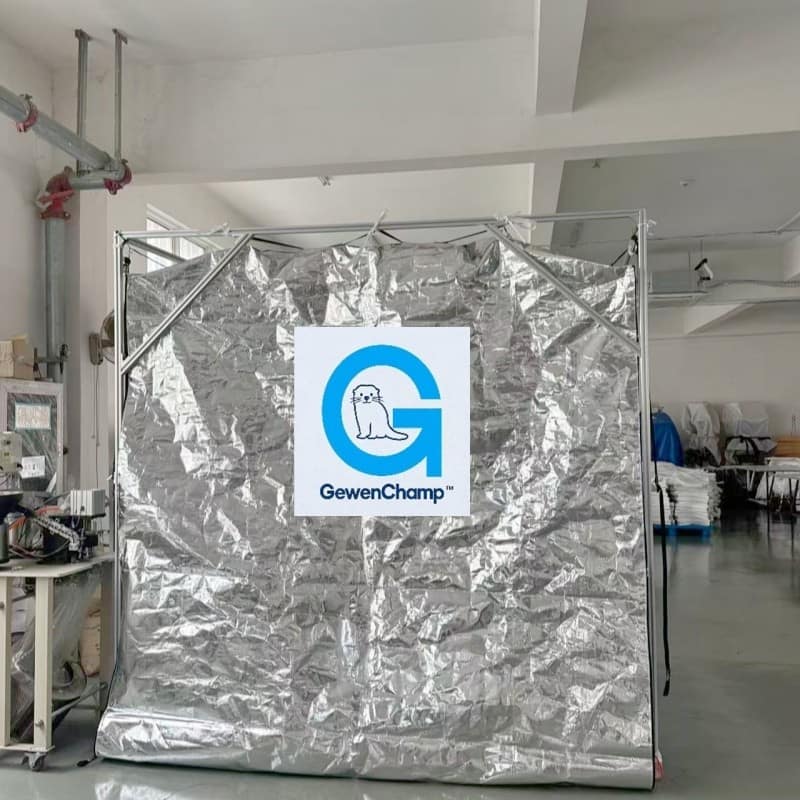
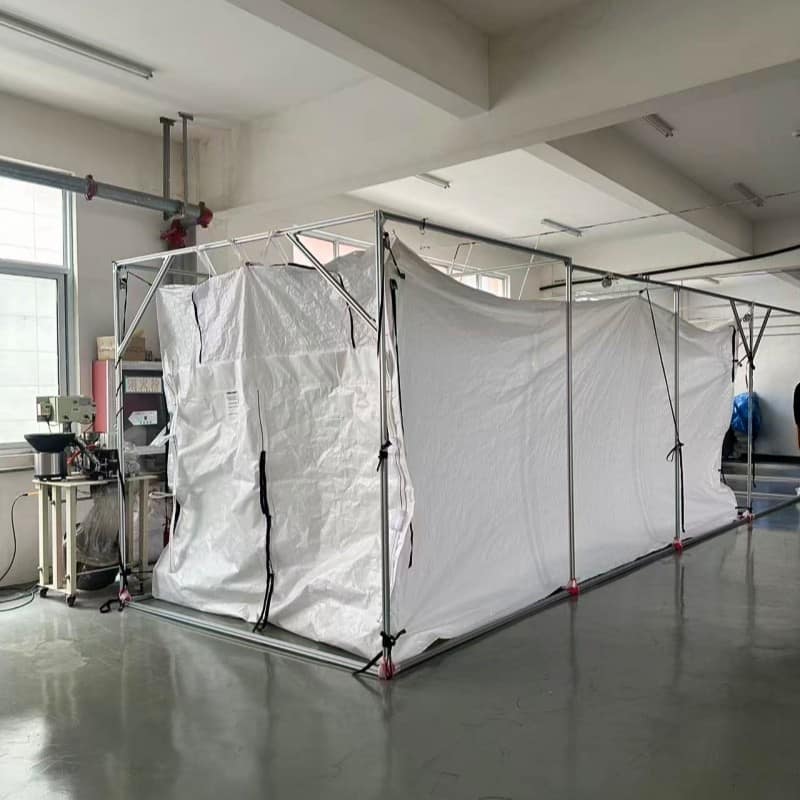
Container liners—whether woven PE dry bulk liners, PE film liners, or multi-layer thermal insulation liners—are industrial packaging designed for the efficient loading, transport, and discharge of bulk cargo inside ISO containers. They are not consumer products, not medical devices, and not construction elements. We have reviewed the following directives and excluded each from applicability to container liners:
- Construction Products Regulation (EU) No 305/2011 — applies to products permanently incorporated into buildings and civil engineering works. A removable bulk liner does not qualify.
- Machinery Directive 2006/42/EC — applies to machinery and interchangeable equipment. A liner is passive packaging, not machinery.
- Medical Devices Regulation (EU) 2017/745 — applies to medical devices and accessories. Even liners used for pharmaceutical raw materials are packaging, not a medical device.
- Electromagnetic Compatibility Directive 2014/30/EU — no relevance.
- Low Voltage Directive 2014/35/EU — no relevance.
- Personal Protective Equipment Regulation (EU) 2016/425 — no relevance.
- Pressure Equipment Directive 2014/68/EU — no relevance.
The EU’s official NANDO database lists all notified bodies and the directives for which they are designated. A container liner does not match the scope of any directive represented in that database. This is the objective reason we never affix CE marks to our liners: doing so would be illegal and misleading.
The Compliance Requirements That Actually Govern Container Liners
The absence of CE marking does not equal an absence of regulation. Container liners entering the European market must comply with a set of chemical safety, food contact, and environmental standards that are enforced at the member-state level and through customs clearance. The four pillars we systematically address for every order entering the EU are:
- REACH Regulation (EC) No 1907/2006 — Registration, Evaluation, Authorisation and Restriction of Chemicals. REACH restricts Substances of Very High Concern (SVHC) in articles. Any container liner containing a listed SVHC above 0.1% w/w triggers an obligation to inform the recipient and, upon request, consumers. Our liners are tested against the current Candidate List and we issue a REACH compliance certificate with each shipment bound for the EU.
- RoHS Directive 2011/65/EU — Restriction of Hazardous Substances in electrical and electronic equipment. Although container liners are not EEE, many European buyers request RoHS compliance as a proxy for heavy metal restrictions. Our liners are verified to comply with RoHS limits for lead, mercury, cadmium, hexavalent chromium, PBBs, and PBDEs. This is documented in a RoHS compliance statement backed by third-party lab analysis.
- EU Food Contact Materials Regulation (EC) No 1935/2004 and Plastics Regulation (EU) No 10/2011 — if the bulk cargo is a food or food ingredient, the liner that contacts it must meet overall migration limits and specific migration limits. Our food-grade liners are tested against EU 10/2011 for total migration and specific substances. The test report, not a CE mark, is the proof.
- LFGB (Lebensmittel-, Bedarfsgegenstände- und Futtermittelgesetzbuch) — German food and feed code, often required as an additional standard for food-contact liners sold into Germany and neighboring markets. We provide LFGB test certificates from accredited German laboratories.
If your shipment includes a food commodity—sugar, cocoa beans, malt, milk powder—the liners must carry documentation of migration testing. We see far more customs delays caused by missing food-contact test reports than by any confusion over CE marking.
How to Verify a Supplier’s EU Compliance Without Relying on a Mark
The CE mark is a single label; genuine compliance is a paper trail. We advise buyers to ask for four documents before committing to a container liner supplier for European destinations:
- REACH SVHC conformity declaration — dated, signed, and referencing the current Candidate List revision.
- RoHS test report — third-party accredited lab analysis covering all six restricted substances.
- Food-contact migration test report — where the cargo is food, a test report to EU 10/2011 with specific migration results for the liner’s polymer type.
- ISO 9001 certificate — not an EU legal requirement, but a practical guarantee that the manufacturing quality system can reproduce compliant product consistently.
We maintain these documents as living files: every batch exported to the EU is accompanied by up-to-date versions. A supplier who cannot produce a current REACH declaration or food-contact test when asked is unlikely to resolve a customs hold quickly. That is where the risk concentrates—not in the absence of a CE mark, but in the absence of updatable compliance evidence.
Why Certification Transparency Reveals More Than a Mark
I have seen procurement teams reject a perfectly compliant liner because it lacked a CE mark, and simultaneously accept a liner with a CE mark that had no food-contact test whatsoever. This happens because “CE marking” has become a shorthand for “safe for Europe” in many industries, even when the shorthand is technically wrong. The consequence is that well-intentioned buyers inadvertently assume compliance while ignoring the documents that customs authorities actually inspect.
When evaluating a thermal container liner for a food export to Rotterdam, the meaningful questions are: “What is the total migration limit of this PE film under 40°C for 10 days?” and “Does this liner contain any plasticisers listed on the REACH Candidate List?” The answer appears in the lab report, not on a self-affixed marking. We encourage all our European customers to shift expectations from marks to material declarations, because that shift aligns with how EU market surveillance authorities are increasingly operating—they request documentation, not labels.
The following table summarises the regulatory reality against what a CE mark alone can convey:
| Requirement | CE Mark Relevant? | Actual Evidence Required |
|---|---|---|
| Chemical safety (REACH SVHC) | No | SVHC conformity declaration |
| Heavy metal restrictions (RoHS) | No | Third-party RoHS test report |
| Food contact safety (EU 1935/2004, 10/2011) | No | Migration test report, DoC |
| Quality system consistency | No | ISO 9001 certificate |
| Free circulation in EU | Not for liners | Correct HS classification, compliance with above |
Common Questions About Container Liner Compliance in Europe
Does REACH certification replace CE marking?
No, and it is important to understand the distinction. REACH applies to chemical substances in articles; CE marking applies to products within the scope of specific directives. They are independent obligations. A container liner can be fully REACH-compliant and still not carry a CE mark because no directive requires it. Conversely, a product with a CE mark may still violate REACH if it contains an unauthorised SVHC. For container liners, the priority is REACH, RoHS, and food-contact compliance—none of which are expressed through the CE mark.
Can I still ask my supplier to put a CE mark on the liner?
We strongly advise against this. As explained above, affixing a CE mark to a product outside any directive’s scope is illegal under EU law. It can trigger a customs stop, a product recall, and legal action from market surveillance authorities. We have declined such requests multiple times and instead provided the full compliance documentation package. Customs officers are trained to recognise illegitimate CE marks, and the consequences are more severe than the perceived convenience.
What happens if a container liner fails an EU border check?
If a liner is found to lack required chemical or food-contact documentation, the shipment may be detained at the port of entry. The importer will be asked to supply the missing test reports or prove compliance. If documentation cannot be produced within the allowed period, the goods may be rejected, destroyed, or re-exported at the importer’s expense. The cost of a detained container runs into thousands of euros per day. This is why we insist that every customer receives the full compliance file before the goods sail—not after an issue arises.
Are thermal container liners treated differently from standard dry bulk liners?
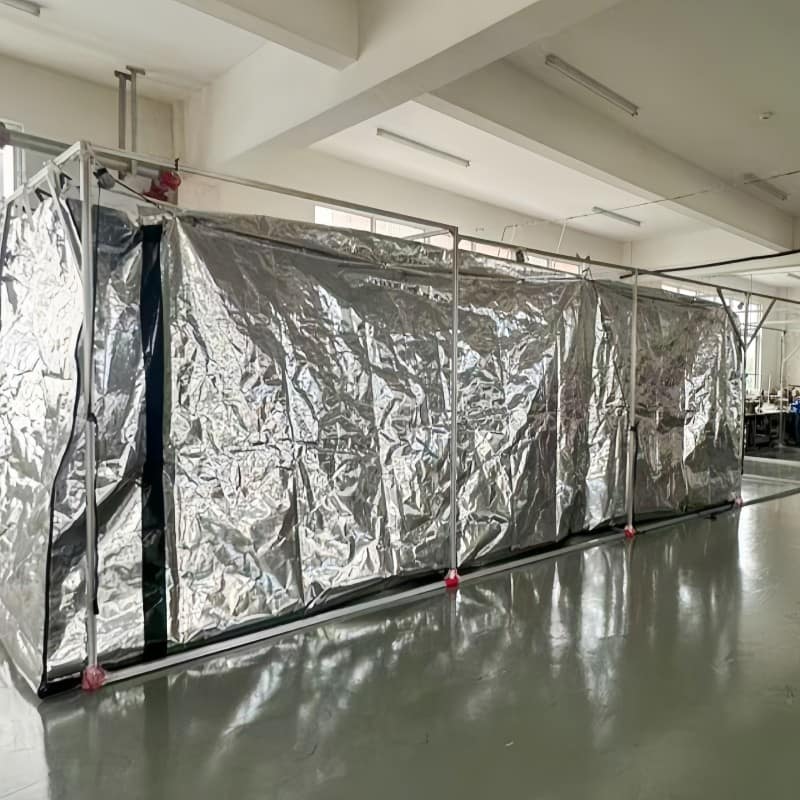
No. The regulatory requirements depend on the liner’s material composition and the cargo type, not on its thermal performance. A TL-02 EPE foam thermal liner used for cocoa beans must meet the same food-contact migration limits as a DBL-F01 PE film liner used for sugar. The additional layers—aluminum foil, MPET, bubble film—must be individually assessed for REACH and food-contact compliance. We test the complete composite structure as a whole, because that is what contacts or influences the cargo environment. If your shipment involves a combination of insulation layers, ask for the full composite test report, not just the food-contact layer’s certificate.
How do I confirm compliance documentation availability before ordering?
Share your specific cargo, destination member state, and any buyer-specific requirements with our technical team. We will confirm which test reports and declarations apply to your case and provide the current versions for your review. Send an inquiry with your part numbers and EU destination to [email protected] or call +86 523 87683880, and we will return a documentation package that you can submit directly to your customs broker.
 English
  German
  Spanish