
Shipping bulk cargo in an ISO container without matching the liner to the cargo’s specific physical and chemical properties is one of the most common causes of in-transit damage. Container liner compatibility means more than picking a standard polywoven bag. It requires evaluating moisture sensitivity, particle size, temperature thresholds, and food-safety certifications. I have seen cocoa bean shipments ruined by condensation inside an incompatible liner, and heavy mineral powders tear through liners never designed for abrasive loads. This guide outlines how to choose the right container liner for your cargo type, drawing on real-world liner specifications and performance data so you can avoid those costly mistakes.
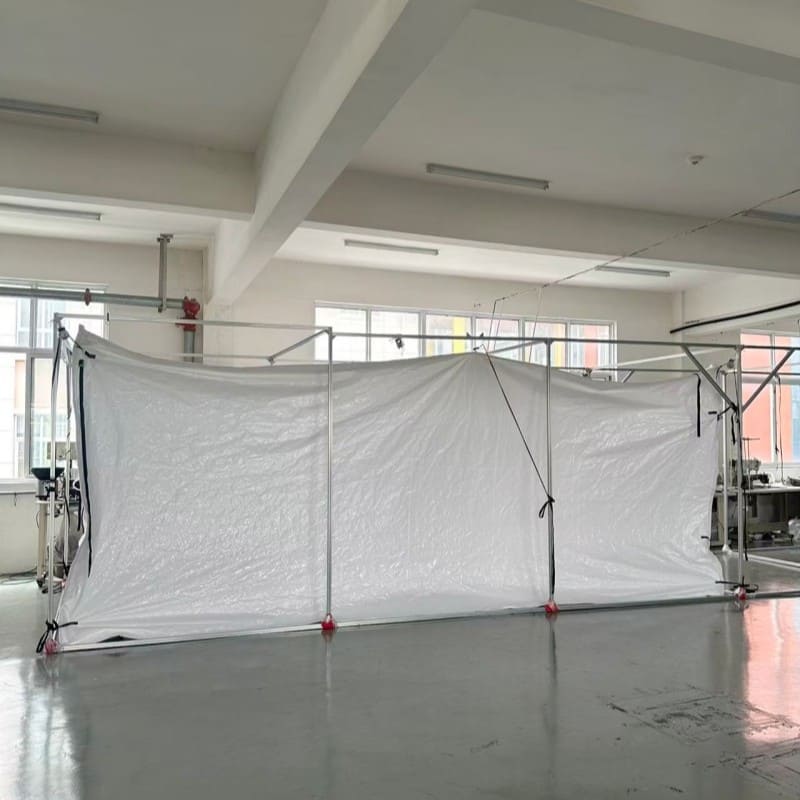
How Do Cargo Characteristics Determine Container Liner Compatibility?
A liner that works perfectly for plastic pellets may fail completely with fine titania powder. The first step in determining container liner compatibility is to list your cargo’s physical profile: particle size distribution, bulk density, angle of repose, moisture content, and any tendency to cake or bridge. Free-flowing granules like PE resin can be loaded and discharged efficiently from a standard PE film container liner without complex venting. By contrast, a cohesive powder such as titanium dioxide with sub-45-micron fines demands a seam-sealed, sift-proof woven liner whose seams are taped with high-adhesion polyurethane to eliminate particle leakage.
Beyond particle size, you must consider chemical interaction. Certain plasticizer-rich compounds can migrate into low-density polyethylene films over a 30-day ocean voyage, compromising liner integrity. In those cases, a laminated woven PE structure with a barrier layer is a safer choice. Moisture uptake is another critical variable. Hygroscopic cargo like sugar or kaolin clay, shipped from humid ports in Southeast Asia, can absorb 3 to 8 percent of its weight in water vapor if the liner allows any vapor transmission. A moisture-proof container liner with a multi-layer film or aluminum-foil laminate blocks that pathway and prevents caking or mold.
Which Container Liner Materials Suit Dry Bulk Powders vs Granules?
The difference between a 200-mesh powder and a 5-millimeter granule dictates entirely different liner architectures. Granules like coffee beans, soybeans, or polymer pellets usually load and flow well through a basic top-loading spout and a bottom discharge port. A 140-gsm woven PP dry bulk container liner with uncoated fabric provides enough strength and breathability for agricultural beans while controlling dust. For granulated sugar or malt, a food-grade laminated liner with a double-sided PE coating adds a full moisture and odor barrier without complicating the discharge flow.
Fine powders are far less forgiving. Cement, lime powder, or pigment powders will escape through needle-punched stitching lines the moment the container is jostled on rough road. A sift-proof woven liner with 100 percent PU-tape-sealed seams and double-side PE coating is the minimum standard here. For sticky powders such as certain grades of PVC resin, a smooth-surface LDPE film liner at 140 micron offers easier clean-out and faster discharge because the cargo slides off the surface rather than clinging to weave interstices. In our factory trials, we have measured up to a 25-minute reduction in pneumatic unloading time simply by switching from a standard uncoated woven liner to a low-friction film liner for a sticky polyester powder.
When Does Your Cargo Require a Food-Grade Certified Container Liner?
Any bulk cargo that will become a food ingredient or contact food directly needs a liner certified to the destination market’s food-contact standards. For exports to North America, FDA 21 CFR compliance is non-negotiable. For the European Union, a LFGB certified container liner and EU Regulation 1935/2004 compliance are required, often supported by migration testing data. A liner that carries both FDA and LFGB certificates, alongside REACH and RoHS declarations, gives you a single SKU that can serve multiple trade lanes without requalification.
If your program involves organic food or specialty ingredients, ask your liner manufacturer to provide lot-specific traceability documents and third-party lab reports showing overall migration below 10 mg/dm². This is not theoretical. I have worked with a Northwest European malt importer whose shipment was quarantined at port because the liner’s adhesive contained a trace amine not listed on the EU positive list. The cost of that delay exceeded the liner price by a factor of forty. Following that case, we adopted a policy of pre-screening all adhesive and additive formulations with our extrusion partners before accepting any new film for food-grade applications. If your destination market regulations differ from the country of origin, it is worth confirming that the liner’s certification stack matches each target regulator. Sending your full destination list to us early avoids surprises.
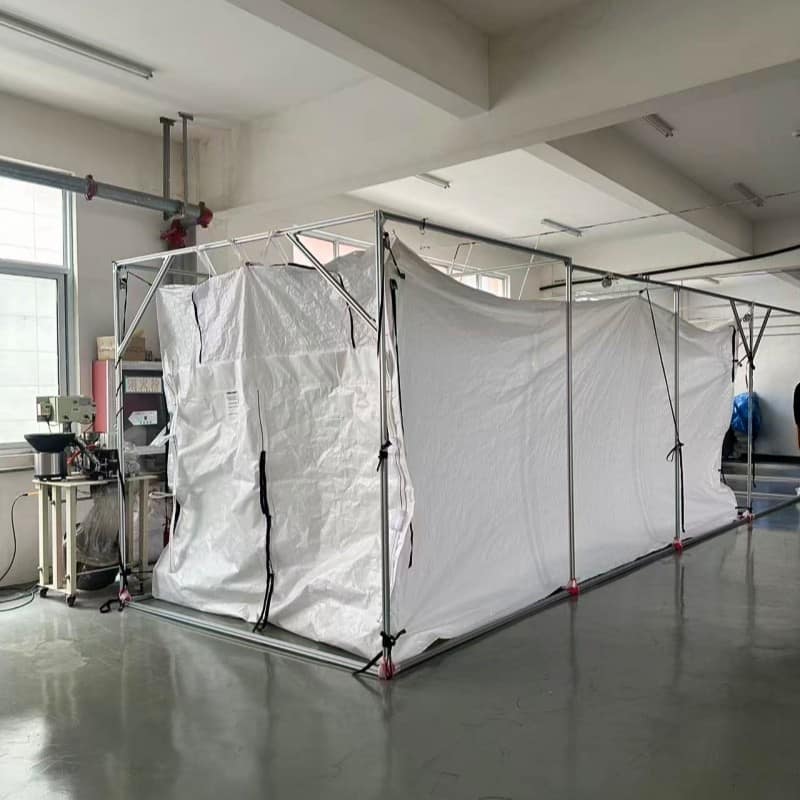
How to Choose Between Thermal and Non-Thermal Container Liners
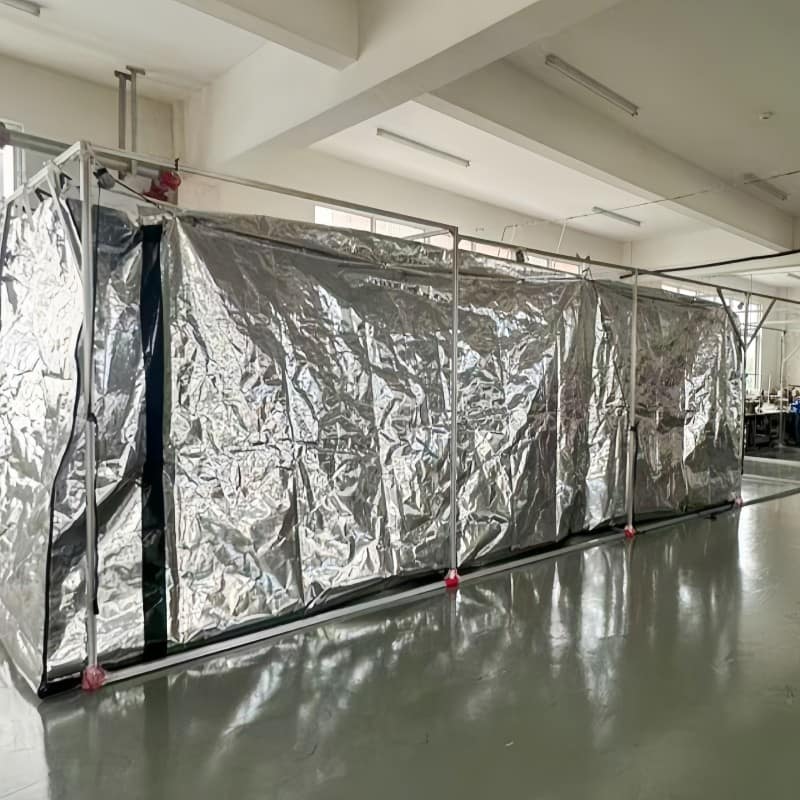
Cargo that is sensitive to temperature excursions needs more than a physical barrier. A passive thermal container liner reflects up to 97 percent of radiant heat and, depending on the structure, adds conductive insulation through a foam or bubble layer. For shipments of chocolate or confectionery crossing the equator, a four-layer EPE foam liner with 3mm foam and aluminum-foil facings keeps the internal temperature swing within ±5°C. For lower-budget applications where cargo stays within 10 to 30°C, a lightweight MPET/PE composite liner at 175 micron offers 24 to 48 hours of protection at a fraction of the cost of a refrigerated container.
The decision to add thermal insulation should be based on actual temperature logs, not worst-case assumptions. If your logistics provider can share data-logger readings from six representative voyages, you can map the thermal exposure hours against your cargo’s upper and lower tolerance limits. Wool, pure aluminum foil facings, and metalized films all behave differently across humidity ranges, so choose a structure whose reflectivity and thermal resistance stay stable at the expected dew point. For extreme heat environments, the MPET/double bubble/MPET liner achieves up to 98 percent radiant heat reflection with a cushion layer that also absorbs road vibration, which helps with shock-sensitive products like precision electronics.
What Are the Right Container Liner Types for Abrasive or Heavy Cargo?
High-density bulk cargo such as crumb rubber, mineral ores, or construction aggregates imposes two demands: high tensile strength to resist tear propagation and abrasion resistance to survive loading impact. A woven dry bulk container liner in 140-gsm HDPE with warp-direction tensile above 1,800 N/5cm is suited for most abrasive cargo up to 30 metric tons. For railway wagon applications carrying alumina powder, a heat-welded woven liner with no stitched seams eliminates weak points at the sewing line and withstands static pressure above 5 tons per square meter during transit.
Loading method is just as important as the liner material when dealing with abrasive cargo. Pneumatic loading at high velocity can erode the inner surface of a film liner within minutes if the impact angle is too sharp. In those cases, a laminated woven liner with an internal PE coating or a reinforced barless woven liner designed for granular impact distributes the force without delamination. I learned this lesson the hard way on a crumb rubber shipment where a 120-micron PE film liner perforated at the loading spout within two minutes. Replacing it with a 140-gsm laminated woven liner ended the problem.
How to Verify Container Liner Compatibility Before Ordering
A structured pre-order checklist eliminates guesswork. Begin by documenting your cargo’s five critical parameters: particle size range, bulk density, moisture content at loading, temperature sensitivity ceiling, and any chemical incompatibilities with polyethylene or polypropylene. Next, confirm the container type and dimensions. A 30FT European container, for example, requires a liner cut to 9.14 meters internal length with four European-standard 25-centimeter filling spouts. A standard 20GP liner will not fit properly and will form folds that trap cargo.
| Cargo Type | Recommended Liner | Key Feature |
|---|---|---|
| Plastic pellets (PE, PP, ABS) | DBL-F01 PE Film Liner or DBL-W01 Dry Bulk Liner | Smooth discharge, anti-static option available |
| Fine powder (TiO2, cement, pigment) | DBL-W06 Sift-Proof Liner | PU tape-sealed seams, dust-tight |
| Granulated sugar, salt, starch | DBL-F01 PE Film Liner (food-grade) | Moisture barrier, FDA/LFGB certified |
| Cocoa beans, coffee beans | DBL-W05 Barless Woven Liner | Breathable, anti-mold, no bar damage |
| Temperature-sensitive food or pharma | TL-02 EPE Foam Thermal Liner | ±5°C stability, FDA-certified |
Sampling remains the most reliable way to confirm container liner compatibility. Request a pre-production liner, fill it to 20 percent capacity with actual cargo in a static test, and then purge it through your planned discharge method. Inspect the seams, spout welds, and inner surface for any sign of abrasion, delamination, or pinholes. Replicate the worst-case humidity and temperature if possible. A half-day test on the factory floor costs far less than a claim after a rejected consignment.
Confirm Your Container Liner Compatibility Before Shipment
The gap between a standard liner and a rightly chosen one shows up months later, when the container is opened at the consignee’s dock and the cargo is either pristine or spoiled. If moisture reached the product, if certification paperwork does not satisfy the importer’s auditor, or if torn liner fragments contaminated the bulk load, the cost of rectification dwarfs any savings from choosing a generic liner. Getting the liner specification right at the sourcing stage is, in practical terms, the cheapest insurance you can apply to a bulk export.
Review your cargo’s physical profile, your container type, and your destination market regulations, then reach us directly with those specifications. Our engineering team will cross-reference the data against our liner portfolio and confirm the precise model and certification stack that matches your shipment. Send your cargo specifications and loading diagrams to [email protected] or call +86 523 87683880. We will respond with a documented liner recommendation, including material structure and certification details, typically within one working day.
Common Questions About Container Liner Compatibility
Can one container liner be used for multiple cargo types?
A liner can handle different cargoes only when their physical properties, chemical compatibility, and regulatory requirements overlap tightly. A 140-gsm woven HDPE liner may work for both polycarbonate resin and dried lentils, provided both loads are granular, moisture-tolerant, and require no food-contact certification. As soon as one cargo introduces fine dust, oil residue, or a lower contamination tolerance, a dedicated liner becomes necessary. In practice, most international shippers find that separating liners by regulatory class (food vs industrial) and particle size eliminates hidden cross-contamination risk and simplifies documentation.
How do I know if my cargo needs a moisture barrier liner?
Test the cargo’s equilibrium moisture content at the highest expected relative humidity of the voyage, typically above 85 percent RH in tropical lanes. If the material gains more than 1 percent moisture over a 30-day simulated exposure, a moisture barrier liner is warranted. Hygroscopic cargoes such as sugar, salt, malt, and certain starches absorb water vapor aggressively and cake into a solid block when rewetted. A PE-laminated woven liner or a full PE film liner with a vapor transmission rate below 0.5 g/m²/24h stops moisture ingress and preserves free-flowing properties at discharge.
What certification matters most for food-grade liners?
The answer depends on the destination market. FDA 21 CFR is the baseline for the United States; EU Regulation 1935/2004 and LFGB govern the European Union; Japan and Korea have their own positive lists. The most universally accepted combination is a liner that holds current FDA, LFGB, and EU 1935/2004 certificates backed by specific migration test reports and a statement of composition listing all monomers, additives, and colorants. Any single certificate can be checked with the issuing lab. If the liner is to be used for organic goods, ask your manufacturer for a statement confirming no GMO-derived raw materials were used.
How long before shipping should I test liner compatibility?
Allow a minimum of three weeks from sample request to final approval. A compatibility test should cycle between dry and humid conditions over at least seven days, expose the liner to actual cargo at the expected loading temperature, and simulate the discharge pressure and angle. Rushing this process creates blind spots. Early-stage testing lets you iterate on a spout position or a seam reinforcement detail that might otherwise fail during the first commercial load. Manufacturers who offer pre-production samples and rapid adjustment of liner geometry can save you from a multi-year quality claim.
What happens if I use the wrong liner for my cargo?
A mismatch typically triggers one of three failure modes: moisture invasion causing caking or mold, particle leakage through seams or film punctures, or chemical degradation of the liner material that contaminates the cargo. Each of these results in a claim, a rejected consignment, or costly rework at the destination port. In one documented case, a titanium dioxide shipment lost over 1.5 metric tons of product through stitch holes before the problem was caught. Switching to a sift-proof liner stopped the loss entirely. If your cargo characteristics have changed since your last liner specification was written, it is worth having a fresh compatibility review. Share your updated cargo profile and I will confirm whether your current liner remains adequate.
 English
  German
  Spanish