
Shippers lose thousands of dollars when a container liner tears during filling or cargo spills from an improperly secured liner, yet most of these incidents trace back to avoidable loading errors. In over fifteen years of container liner manufacturing and on-site troubleshooting, I have seen the same mistakes repeat across industries: a PE film liner overheated by a pneumatic loader, a woven bulk liner untensioned against a 40ft container wall, static discharge igniting dust in a powder fill. Container liner loading tips that account for liner construction, filling equipment, and ambient conditions can stop these failures before the container doors close. This article outlines practical loading procedures and checks that protect dry bulk and thermal cargo.
How Should You Select a Container Liner That Prevents Cargo Damage?
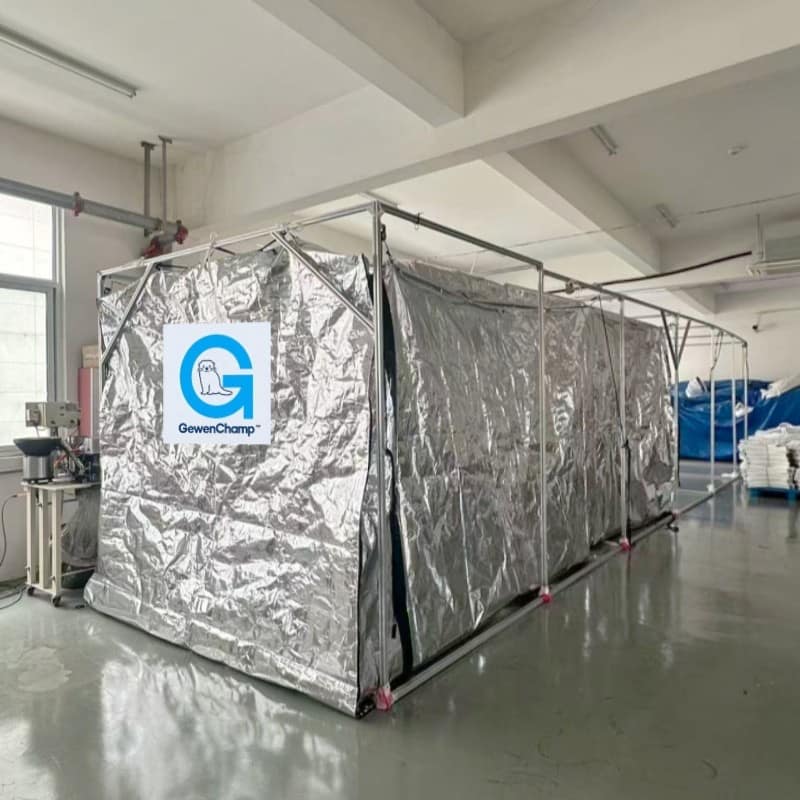
Choosing a liner that matches both your cargo and loading equipment is the first defense against damage. The three main categories are dry bulk woven PP liners, PE blown film liners, and thermal insulated liners. Woven PP liners, like our DBL-W01, handle granular and pelletized cargo with load capacities up to 30 tons, but they need adequate tension to avoid tearing at the seams. PE film liners provide 100% moisture and dust barrier and suit powders and food ingredients, yet they are more vulnerable to puncture and require careful filling spout alignment. Thermal liners from the TL series incorporate reflective foil and insulation layers for temperature-sensitive products; these demand slower, manual-style loading to prevent layer delamination.
A common error I have observed is using a PE film liner for sharp-edged mineral granules, which leads to perforation during fill. Selecting a liner with the correct tensile strength and seam construction for the cargo’s physical characteristics is non-negotiable.
| Liner Type | Best For | Loading Method | Critical Loading Precaution |
|---|---|---|---|
| Woven PP (DBL-W01) | Plastic pellets, grains, minerals | Pneumatic, auger, gravity | Apply even tension; avoid sharp protrusions |
| PE Film (DBL-F01) | Powders, food ingredients, fine chemicals | Pneumatic with regulator, auger | Static grounding; avoid overstretching |
| Thermal (TL-01) | Temperature-sensitive goods | Manual fill, gentle auger | Protect reflective layers from abrasion |
| Sift-Proof Woven (DBL-W06) | Cement, talc, fine powders | Controlled pneumatic | Slow fill rate to protect sealed seams |
What Pre-Loading Checks Are Critical Before You Fill a Container Liner?
Before any cargo enters the liner, the container itself must be inspected. Rust spots, protruding nails, or previous cargo residue can tear the liner fabric. I recall a shipment of polycarbonate resin where a single sharp corner inside the container wall cut a DBL-W01 liner during the initial load, causing a 22-ton re-stuffing that delayed the vessel departure by three days. Now our team requires a full interior sweep and a tactile check of all surfaces, plus a protective floor covering when the liner does not include an integrated base.
Additionally, confirm the liner orientation: the filling spout must align with the loading equipment, and the discharge side must face the container door opening direction. For 20ft containers, the liner may need specific securing points, while 40ft liners often require extra mid-point strapping loops. Ambient humidity also matters for hygroscopic cargo: loading in high moisture conditions can later cause condensation inside the liner, even if the liner itself is waterproof. Deploy desiccants or select a liner with an anti-condensation layer if the route passes through tropical zones.
What Is the Correct Step-by-Step Container Liner Loading Procedure?
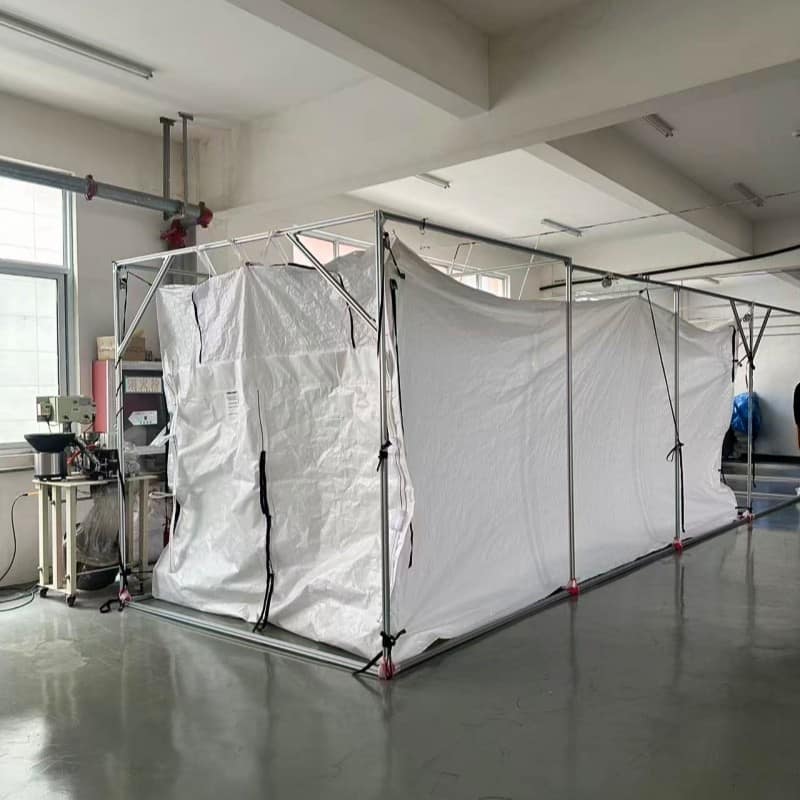
The loading process has clear steps that, when followed, minimize damage risk. First, loosely position the liner inside the container, attaching the top securing straps without fully tightening them to allow expansion. Connect the filling spout to your loading chute, ensuring a tight seal to prevent dust escape. Begin filling at a moderate rate; for pneumatic systems, an air pressure below 2 bar is generally safe for most PE and woven liners. As the liner fills, pause periodically to adjust the tension straps so the liner wall contacts the container sides evenly. Overfilling beyond the liner’s rated capacity can stretch seams beyond their tensile limit, particularly at the discharge end.
Using the Filling Spout for Top Loading
Top loading spouts direct cargo into the upper part of the liner, which then settles naturally. The spout must be centered over the liner mouth and clamped to avoid misdirected flow that can abrade the sidewall. With fine powders, a drop tube inside the spout reduces dust generation and static buildup. Never force the spout into the liner opening to the point of creasing the fabric; a slight gap for airflow actually reduces internal pressure.
Pneumatic vs Auger Loading Methods
Pneumatic loading uses air pressure to propel cargo, which generates heat and static. I have seen a PE film liner soften and weld to itself when the pneumatic stream ran at 3 bar for an extended fill, because the friction heat exceeded the LDPE softening point. Auger loading is gentler and more controllable for pelletized or granular cargo, but it requires alignment with the liner’s discharge geometry to avoid off-center weight that can cause the liner to twist during transport.
How Do You Secure and Tension a Container Liner to Stop Cargo Shift?
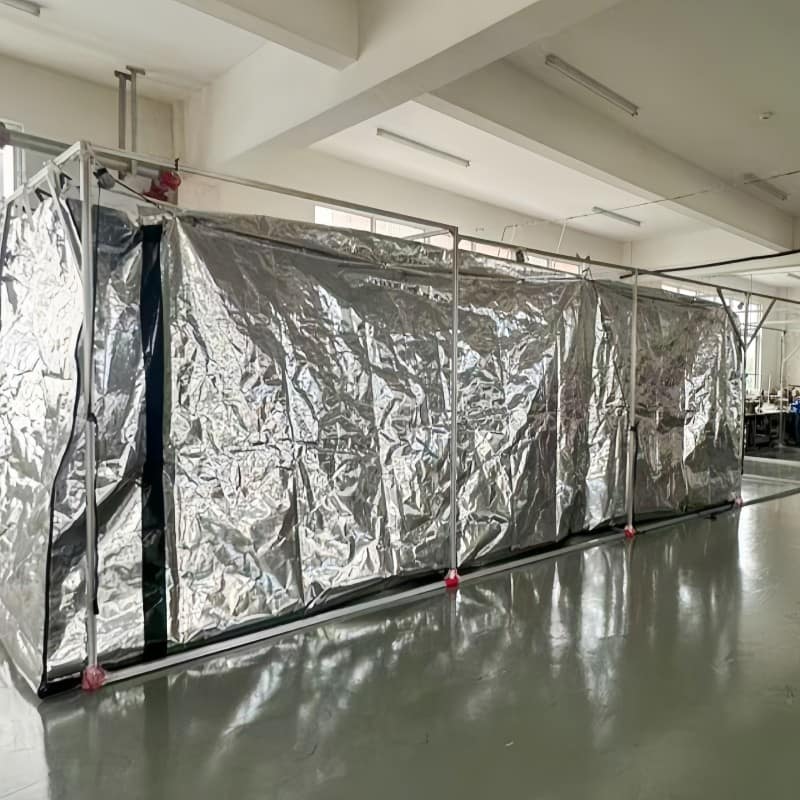
Once the desired fill level is reached, the liner must be secured to prevent cargo movement. Most liners feature lifting loops and tie-down points; use these to tension the liner against the container walls. For a 20ft container, typically four corner straps and two mid-side straps suffice. For a 40ft unit, adding two extra straps at the midpoint prevents the middle of the liner from billowing outward, which can tear the fabric at the seams under vibration.
Strapping Methods for 20ft and 40ft Containers
In a 20ft container, cross-strapping from the upper front corners to the lower rear corners creates a diagonal lock that distributes forces evenly. For 40ft containers, a central strap anchored to the roof rail prevents the middle section from sagging when the container negotiates uneven road or rail beds. All straps must be tightened after the final fill, not before, because the liner will stretch slightly under static load.
Why Improper Tension Causes Liner Tears
When a liner is left loose, cargo shifts during transit, repeatedly rubbing the liner against the container wall. Over thousands of miles, this abrasion can wear through even high-tenacity woven PP. Conversely, over-tensioning a liner before filling is complete can create stress concentrations at the seam, which is where most field failures occur. Our manufacturing testing shows that a correctly tensioned liner leaves a small, even gap of 5–10cm between the liner fabric and the container roof, which allows for cargo settling without overstretching.
If your cargo involves high-density materials like titanium dioxide or kaolin clay that exert greater lateral pressure on the liner walls, the strapping pattern and liner grade must be engineered accordingly. Discussing these load dynamics with a manufacturer can prevent a liner failure that would otherwise go unnoticed until discharge. Email [email protected] with your cargo density and container size for a loading tension recommendation.
What Post-Loading Inspections Verify Cargo Safety Before Departure?
After loading and securing, walk through a final checklist. Verify that the discharge spout is securely folded and tied, not hanging loose where it could snag on container doors. Check all strapping points for slippage; a dropped strap can cause an instant shift. Look for any visible tears or thin spots in the liner fabric, especially near the filling spout and the top corners. Document the condition with photos; these are valuable if a cargo claim arises later.
Ventilation considerations: if the cargo is prone to off-gassing or moisture release, ensure the container vents are not blocked by the liner. In some thermal liner setups, a small air gap at the top helps equalize pressure. Close the container doors carefully, ensuring they do not pinch the liner material.
Which Loading Mistakes Most Often Cause Container Liner Failure?
The most destructive loading mistakes are often simple but not obvious. Overfilling beyond the liner’s weight rating remains the number one cause. A liner rated for 25 tons will fail at the bottom seam if filled to 28 tons, regardless of material quality. Static discharge is a hidden threat: loading plastic pellets at high speed in low-humidity conditions can generate enough static to create pinholes in a PE liner, which later allow moisture ingress. I once investigated a claim where cocoa beans arrived moldy, and the root cause was micro-perforations from static during loading that acted as condensation points through the tropical transit.
Using the wrong filling equipment without consulting the liner specifications also leads to failure. A high-pressure pneumatic loader can rupture a sift-proof liner’s sealed seams within seconds if the operator does not throttle the pressure. Finally, ignoring the interaction between liner material and cargo temperature: ultra-fine carbon black loaded hot into a thermal liner can soften the PE layers, compromising the insulation structure. A pre-loading temperature check and appropriate liner selection prevents these thermal mismatches.
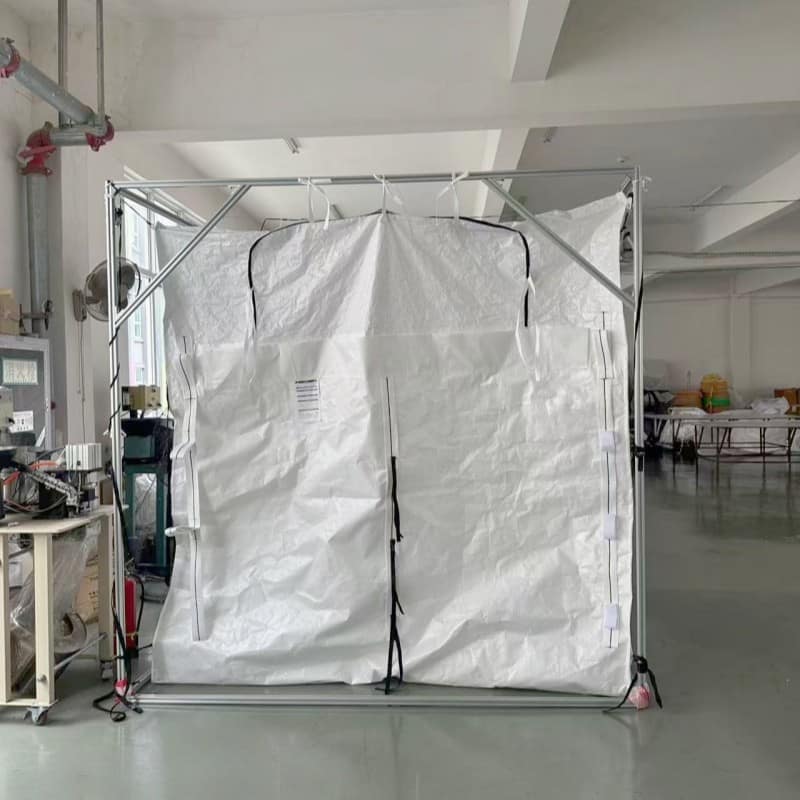
Even an experienced loading crew can miss subtle liner stress points that lead to damage. Working with a container liner specialist who understands both material behavior and loading dynamics removes that uncertainty. Send your cargo type and container specifications to [email protected] or call +86 523 87683880 for a loading recommendation tailored to your operation.
Common Container Liner Loading Questions Answered
What happens if I overfill a container liner?
Overfilling forces cargo against the liner seams beyond their tensile capacity. The bottom seam bears the most pressure and is the typical failure point in a 20-ton rated liner loaded to 23 tons. Immediately reduce the load weight to within the liner’s specification, and inspect the seams for elongation or thread separation before resealing. A single overfill event can permanently weaken the liner, making it unsafe for reuse even if no rupture is visible.
Can I reuse a container liner after a partial load?
It depends on the liner type and the previous cargo. Woven PP liners with minimal contamination can be reused 3–5 times for the same compatible cargo, provided no tears or chemical residue is present. PE film liners are generally single-use due to stretching and potential micro-tears. Thermal liners may be reused if the insulation layers remain intact and clean. Always inspect the liner’s interior and seams thoroughly before attempting a second fill, and never reuse a liner that held food-grade cargo for non-food applications without a validated cleaning process.
Is pneumatic loading safe for all container liner types?
Many assume pneumatic loading works for any liner, but woven PP and thick PE films tolerate it better than light-gauge PE or sift-proof sealed liners. Pneumatic pressure above 2.5 bar can overheat thin films and pop PU-taped seams. If you must use pneumatic loading for fine powders, opt for a liner rated for pneumatic use and ground the filling line to dissipate static. Auger or gravity loading is safer for heat-sensitive and static-sensitive cargo.
How do I know if my liner is properly tensioned?
In our loading tests at the factory, a correctly tensioned liner shows these signs: the liner walls touch the container sides uniformly without bulges; the roof gap measures about 5–10cm; the strapping points are taut but not stretched; and the liner does not shift when the container is rocked slightly. If you can push the liner inward more than 10cm by hand, it is under-tensioned. If the seams show visible white stress marks, it is over-tensioned. Adjust straps incrementally after filling.
Does humid weather affect container liner loading?
Rather than a simple yes or no, the more precise concern is the combination of cargo moisture content and the ambient dew point during loading. Loading hygroscopic cargo like sugar or starch on a humid day can trap moisture inside the liner, which condenses when the container passes through cooler climates. PE film liners provide a moisture barrier, but if humidity is sealed inside, desiccants become necessary. In monsoon season, we recommend loading only when relative humidity is below 60% or using a liner with an integrated anti-condensation layer. If your loading site lacks climate control, email [email protected] and we can suggest liner modifications for high-humidity environments.
 English
  German
  Spanish