
Container liner REACH compliance determines whether your bulk shipment clears EU customs or sits detained at port accumulating demurrage charges. Exporters shipping dry bulk commodities, food ingredients, or industrial powders in container liners must demonstrate that their packaging materials meet the EU’s Registration, Evaluation, Authorisation and Restriction of Chemicals regulation. The requirement is straightforward in principle but creates practical friction at the documentation stage. Having spent over fifteen years manufacturing container liners that carry REACH, RoHS, FDA, and LFGB certifications, I have seen too many shipments delayed because the compliance paperwork was vague or incomplete. The following sections break down exactly how REACH applies to container liners and what documentation protects your cargo.
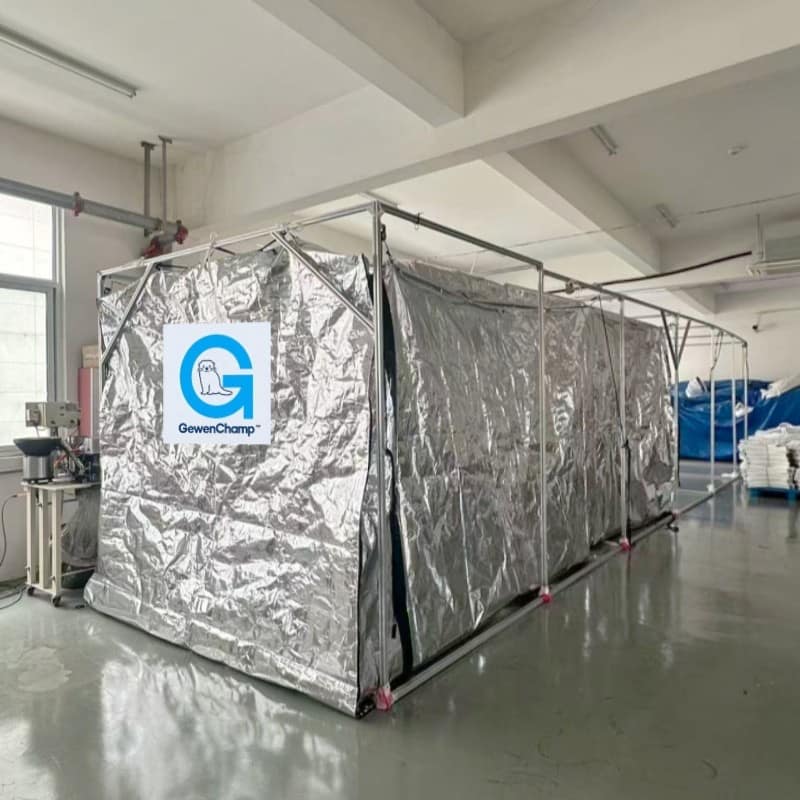
How Does REACH Apply to Container Liner Materials?
Under REACH, container liners are classified as articles — objects whose chemical composition is fixed and which do not release substances during use. This classification matters because it determines which REACH obligations apply. Unlike chemical substances or mixtures that require full registration dossiers, articles face two main requirements: they must not contain Substances of Very High Concern (SVHCs) on the Candidate List above 0.1% weight by weight, and importers must provide information to downstream users if SVHCs are present above that threshold.
Container liners manufactured from woven PP, woven PE, LDPE film, or composite thermal materials fall squarely into the article category. The ECHA (European Chemicals Agency) does not issue a REACH certificate for articles — a point that causes persistent confusion. What suppliers can provide is a REACH compliance statement supported by material test data confirming SVHC levels remain below the 0.1% threshold for each component material. For exporters, understanding this distinction between certified and compliant prevents accepting documentation that looks official but carries no regulatory weight.
Which Substances Raise REACH Concerns in Container Liners?
The SVHC Candidate List, updated twice yearly by ECHA, contains over 240 substances as of 2025. For container liner manufacturers, the practical concern centers on a narrower set of substances that historically appear in plastic materials, printing inks, adhesives, and surface treatments used during production.
| Substance Category | Common Sources in Container Liners | REACH Status |
|---|---|---|
| Phthalates (DEHP, DBP, BBP, DIBP) | PVC components, plasticizers in flexible films | SVHC, Authorization List |
| Heavy metals (lead, cadmium, hexavalent chromium) | Pigments, stabilizers, surface coatings | SVHC, some restricted |
| Short-chain chlorinated paraffins (SCCPs) | Flame retardants, secondary plasticizers | SVHC, restricted |
| Bisphenol A (BPA) | Polycarbonate components, epoxy coatings | SVHC |
| UV stabilizers (specific benzotriazoles) | Outdoor-grade PE films, anti-UV treatments | SVHC (select compounds) |
The most common REACH failure point in container liners is not the base fabric — woven PP or PE film is chemically straightforward and rarely contains SVHCs when sourced from reputable resin suppliers. The risk concentrates in accessories and treatments: colored tie-down ropes using cadmium-based pigments, anti-static coatings containing restricted phthalates, or UV-stabilized outer layers relying on non-compliant benzotriazole compounds. We run third-party SVHC screening through SGS on every production batch for this reason. The test covers over 240 Candidate List substances across all liner components, not just the main fabric panel.
For food-contact container liners, REACH compliance intersects with food safety regulations. A liner that passes REACH SVHC screening still requires separate compliance with EU food contact material regulations (Regulation (EC) No 1935/2004) if it contacts food directly. Exporters shipping food commodities should request both REACH and food-contact compliance documentation from their liner supplier.
What REACH Documentation Do Exporters Need from Suppliers?
A generic REACH-compliant statement on a supplier’s website carries no regulatory weight at EU customs. Exporters need specific documentation that can be presented during inspection. Here is the minimum documentation package we recommend requesting from any container liner supplier before shipment.
Third-party SVHC test report. A laboratory test report from an accredited body — SGS, TÜV, Bureau Veritas, or Intertek — confirming SVHC content below 0.1% w/w for each component material. The report must reference the Candidate List version tested against and list the detection limits for each substance screened. A report from 2022 tested against only 200 substances is outdated and insufficient.
REACH compliance declaration. A signed document from the manufacturer stating that the container liners supplied comply with Regulation (EC) No 1907/2006, including all amendments, and that no SVHC above 0.1% w/w is present. This should reference specific test report numbers, not just general compliance language.
Material composition breakdown. A bill of materials listing all components — fabric, lamination, coatings, printing, adhesives, drawstrings, webbing — with their chemical composition. This demonstrates due diligence by showing the supplier has analyzed every component, not just the main fabric.
SCIP database confirmation. Since January 2021, EU importers of articles containing SVHCs above 0.1% must submit information to the SCIP database maintained by ECHA. If a container liner contains no SVHCs above threshold, no SCIP submission is required, but the supplier should confirm this in writing. If SVHCs are present above threshold, the SCIP submission number must be provided.
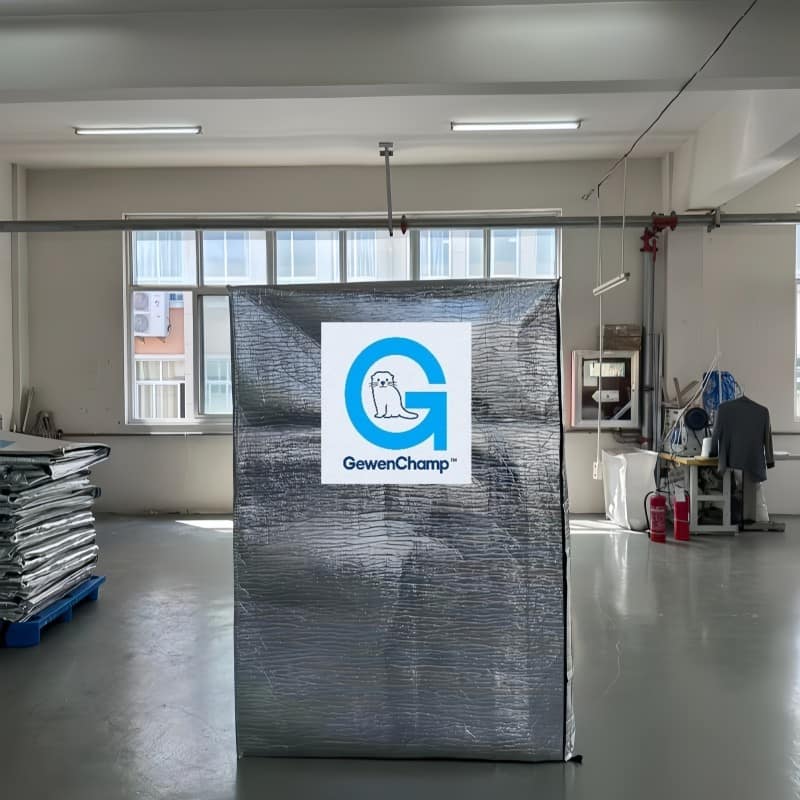
For programs involving food-contact applications or dual REACH and FDA compliance requirements, confirm the full scope of testing your supplier provides before finalizing your order — send your specifications to [email protected].
How Can Exporters Verify a Supplier’s REACH Compliance?
Paper documentation is only as reliable as the testing and quality systems behind it. Exporters can take several practical steps to verify that a supplier’s REACH compliance claims are backed by genuine capability rather than marketing language.
Request the raw test data, not just the summary page. A single-page pass certificate tells you nothing about detection limits or which substances were screened. The full analytical report includes chromatograms, detection limits, and substance-by-substance results. A supplier unwilling to share this level of detail should raise a flag.
Check the testing scope against the full Candidate List. The Candidate List grows with each ECHA update. If a supplier’s test report references a 2023 Candidate List version, ask when they last re-tested against the current version. Manufacturers committed to compliance re-screen with each SVHC addition, typically on an annual cycle.
Confirm the test covers all liner components. A valid REACH screening tests the complete product assembly — fabric, lamination layers, webbing, drawstrings, and any printing or coatings. I have seen cases where a supplier’s test covered only the base PE film, while the colored webbing straps contained phthalates above threshold. The failure was invisible because testing was selective rather than comprehensive.
Verify the testing laboratory’s accreditation. The laboratory should hold ISO/IEC 17025 accreditation for chemical analysis. Reports from non-accredited labs or in-house testing using uncalibrated XRF analyzers do not satisfy EU customs requirements. Most major testing organizations make their accreditation status publicly verifiable through online directories.
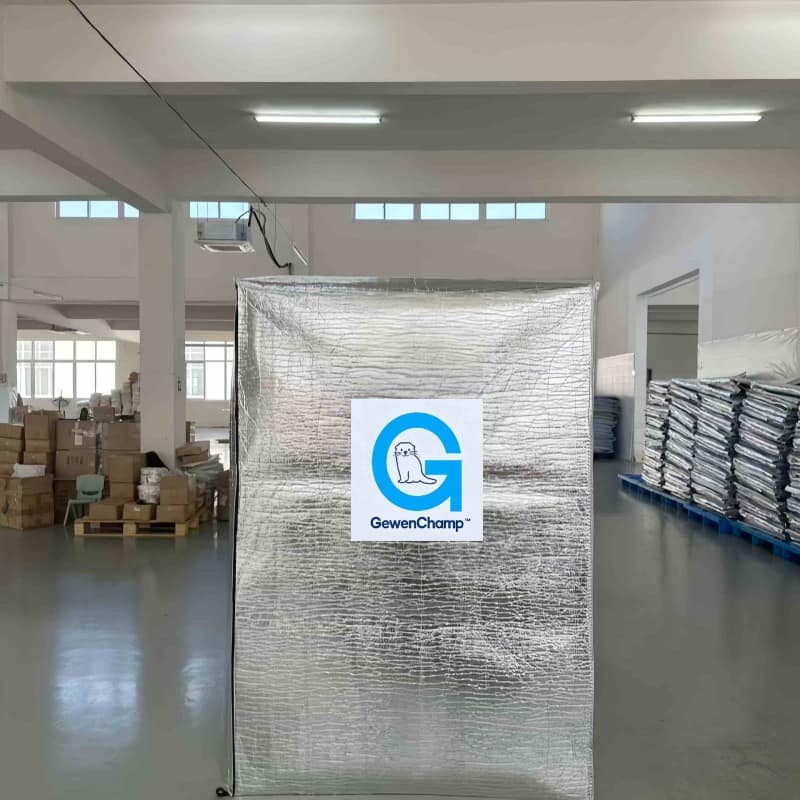
Giant Flexpack maintains current REACH compliance across our full GewenChamp thermal liner and dry bulk liner product lines, with SVHC screening conducted through SGS at least annually and after each Candidate List update. Each production batch carries a unique compliance documentation package that links back to the specific test report.
Why Does REACH Compliance Require a Broader Quality System?
REACH compliance does not exist in isolation. The same manufacturing discipline that produces a container liner free of SVHCs also produces liners that meet food-contact standards, physical performance specifications, and durability requirements. Exporters benefit from approaching compliance as one dimension of an integrated quality management system rather than as a standalone checkbox.
ISO 9001 certification, which all Giant Flexpack production lines hold, provides the process control framework for consistent REACH compliance. Under an ISO 9001 system, raw material receiving includes verification of supplier REACH declarations. Production batches are traceable to specific resin lots. Finished product testing follows documented procedures with defined pass/fail criteria. This traceability matters when a customs inspector asks to see the chain of documentation from raw material to finished liner — a request that is difficult to satisfy without a formal quality management system backing the compliance claims.
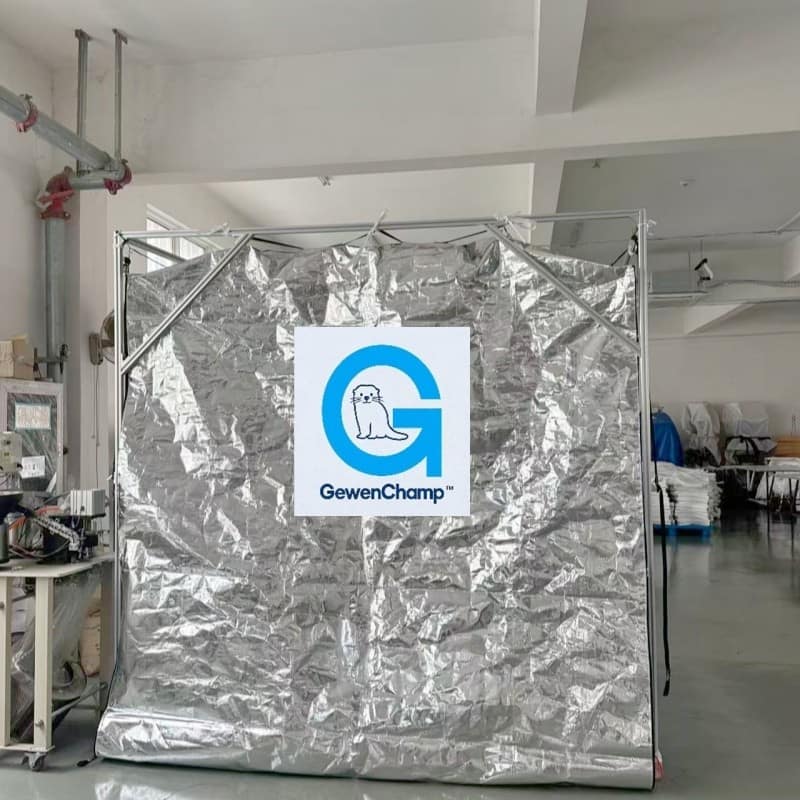
For exporters, selecting a container liner supplier certified to both ISO 9001 and REACH standards reduces the administrative burden of verifying compliance on a per-shipment basis. The quality system ensures consistency. REACH compliance becomes a routine output of the manufacturing process rather than a special request that disrupts production flow.
Shipping Container Liners into the EU? Verify Your Compliance Documentation First
Customs delays caused by incomplete or outdated REACH documentation can cost more in demurrage and lost customer trust than the liner purchase itself. Before your next EU-bound bulk shipment, confirm your container liner supplier can provide a current third-party SVHC test report, a signed REACH compliance declaration, and a full material composition breakdown — all linked to your specific production batch.
Our GewenChamp thermal liners and dry bulk container liners carry REACH compliance supported by SGS testing against the latest Candidate List, with full documentation packages available for every shipment. Send your liner specifications and target export timeline to [email protected] or call +86 523 87683880, and we will confirm the compliance documentation package applicable to your cargo.
What Container Liner Compliance Documentation Covers EU Exports
Does REACH require a specific certificate for container liners?
No. ECHA does not issue REACH certificates for articles. What exporters need is a combination of third-party SVHC test reports showing compliance below 0.1% w/w, a manufacturer’s REACH compliance declaration, and material composition documentation. A supplier offering a generic REACH certificate without supporting test data is providing a marketing document, not a compliance document.
Are PE film container liners automatically REACH compliant?
Not automatically. While LDPE and HDPE base resins from major producers typically contain no SVHCs above threshold, the final liner product includes lamination layers, printing inks, webbing straps, and drawstrings that may introduce restricted substances. Full-product testing, not resin certification alone, confirms compliance. We test the complete assembled liner — every component — against the current Candidate List.
How often should REACH compliance testing be updated?
It depends on shipping frequency and which commodities you export. For regular EU-bound shipments, re-testing annually or after each ECHA Candidate List update — whichever comes first — keeps documentation current. ECHA adds new SVHCs typically twice yearly, in January and July. A test report from 18 months ago may have missed substances now on the Candidate List. For exporters shipping once per year, verify your supplier’s most recent test date before each shipment.
What happens at EU customs if REACH documentation is insufficient?
In programs we have supported, customs authorities typically detain the shipment pending documentation review when REACH paperwork is inadequate. If the importer cannot produce satisfactory SVHC compliance evidence within the allowed period, the shipment faces refusal, re-export, or destruction — all at the exporter’s expense. The specific consequences depend on the member state’s enforcement procedures, but documentation-related delays of one to three weeks are common and avoidable.
Can container liners be both REACH compliant and food-contact safe?
Yes, but these are separate requirements. REACH addresses SVHC content in all articles regardless of end use. Food-contact compliance under EU Regulation (EC) No 1935/2004 addresses substance migration into food. A container liner can pass REACH screening while failing food-contact migration testing, or vice versa. Exporters of food commodities should confirm both compliance scopes with their supplier. Share your requirements and we will confirm the compliance documentation package for your specific cargo and destination market.
 English
  German
  Spanish