
Shipping bulk cargo across continents comes with non-negotiable cost pressures. One area many logistics managers overlook is whether container liners can be reused instead of discarded after a single voyage. The short answer is yes, but only under strict conditions. Improper cleaning or reuse of a compromised liner can lead to cargo contamination, regulatory violations, and costly rejections at the receiving end. In this article, we explain which container liner reuse scenarios are viable, outline step-by-step cleaning procedures, and provide inspection guidelines to help you decide when reusing makes sense without risking load integrity.
What Types of Container Liners Can Be Reused?
Not every container liner is built for multiple trips. Heavy-duty woven polyethylene (PE) fabric liners, like our DBL-W01 standard dry bulk container liner, are engineered with tensile strengths of at least 1,800 N/5cm in the warp direction and 1,500 N/5cm in the weft. That structural integrity allows them to withstand three to five loading and discharge cycles if they are handled correctly and the cargo is not excessively abrasive.
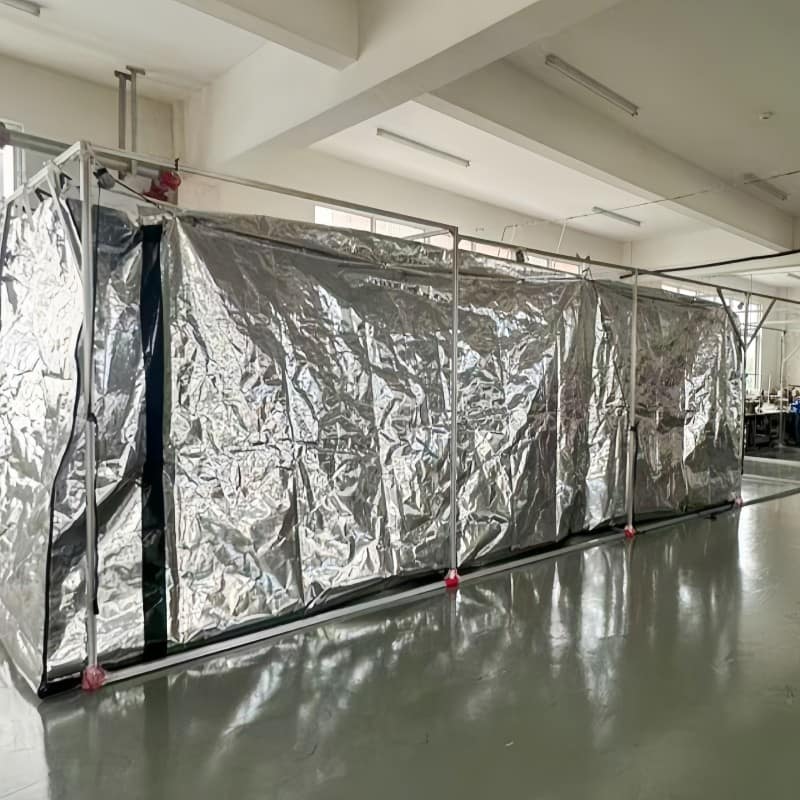
PE blown film liners, such as the DBL-F01, are a different story. At 140 microns, the LDPE film provides a reliable moisture barrier for a single trip, but the material is more prone to puncture, stretch, and tear during unloading. In our manufacturing experience, we have seen a small subset of PE film liners used a second time—only when the first load was a dry, non-abrasive powder like virgin plastic pellets and a thorough inspection verified zero damage. For any general-purpose dry bulk operation, treating PE film liners as single-use is the safest default.
Woven liners with a double-sided polyethylene laminate or a food-grade coating add an extra layer of protection that makes reuse more viable, especially when the liner has not been exposed to oils, fats, or reactive chemicals. The key is assessing the original construction and the demands of the previous cargo.
When Should You Avoid Reusing a Container Liner?
Even a robust woven liner must be retired immediately if certain red flags exist. The decision to discard should be automatic in these situations:
- The liner carried a load classified as hazardous, toxic, or a known allergen. Cleaning cannot reliably remove all traces from the fabric weave, and cross-contamination of the next cargo is unacceptable.
- Any tear longer than 3 cm, punctures, or seam separation is present. A small defect can propagate under the weight of bulk cargo and create a catastrophic failure during loading or transit.
- Chemical staining, oil residues, or persistent odors remain after cleaning. These indicate that the liner absorbed substances incompatible with the next shipment.
- The liner was exposed to high moisture for an extended period and shows visible mold growth or ingrained damp odor. Mold spores can contaminate food-grade cargo even after surface disinfection.
- The liner has already completed the maximum recommended reuse cycles stated by the manufacturer. For our woven container liners, we typically advise replacing after four cycles, though that figure can vary with cargo abrasiveness and handling conditions.
When any of those conditions apply, the cost savings of reuse disappear the moment a contaminated load is rejected at port.
Step-by-Step Cleaning Procedures for Container Liners
Cleaning a container liner for reuse is not the same as washing a truck trailer. The liner must be treated as a semi-sterile environment when it will contact food or pharmaceutical products. The following sequence has been refined over years of supporting customers who operate liner reuse programs:
- Dry residue removal – Open the liner completely and use compressed air or a soft-bristle brush to dislodge all dry powder, pellets, or fibrous residue. Avoid metal tools that can scratch the PE coating or cut the woven substrate.
- Low-pressure water wash – Wash the interior surfaces with potable water at a pressure no higher than 5 bar. High-pressure jets can delaminate the coating or open seam gaps. We use filtered water in our facility to avoid introducing mineral deposits that could react with sensitive cargo later.
- Detergent application – Apply a pH-neutral, non-foaming detergent approved for food-contact surfaces if the liner will return to food-grade service. For industrial reuse, an alkaline degreaser may be required for oil traces, but it must be fully rinsed to prevent chemical carryover.
- Thorough rinse – Rinse until water runs completely free of detergent and no surface film remains. Any residual cleaning agent can become a contaminant in the next load.
- Disinfection (food-grade liner) – Spray a sanitizer registered with FDA, EFSA, or the relevant regional authority. Allow the prescribed contact time, then rinse with potable water if the chemistry requires it. We recommend a surface hygiene verification using ATP swabs to confirm cleanliness.
- Complete drying – Hang the liner in a dust-free, ventilated area until completely dry to the touch, including seams and corners. Any trapped moisture can initiate mold growth inside a sealed container during the next voyage.
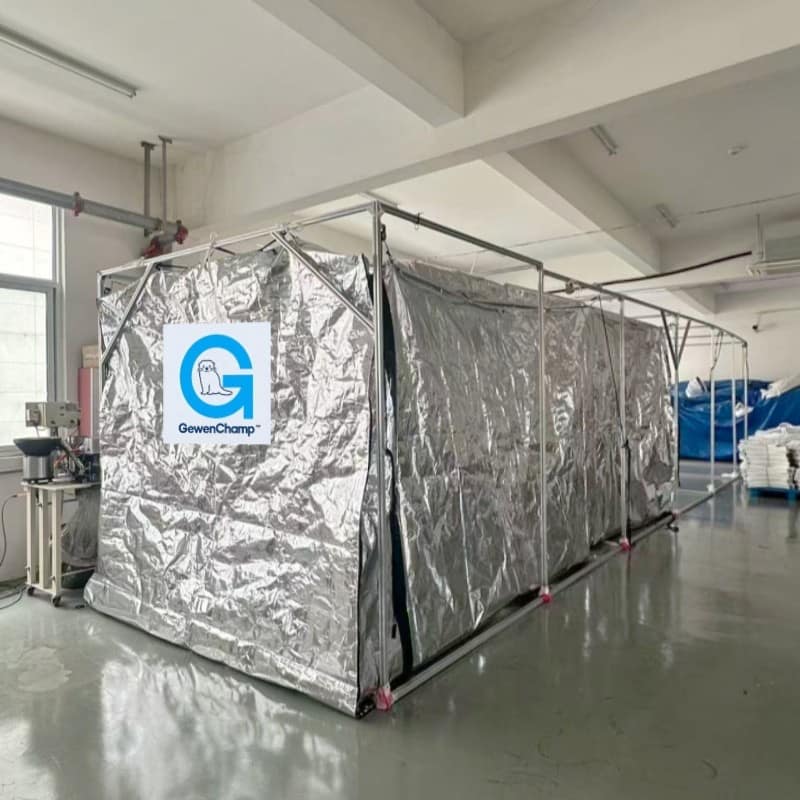
For cargoes that are strictly non-food and low-risk—sand, certain mineral powders, or PE resin pellets—the disinfection step can be omitted, but the cleaning, rinsing, and drying sequence must still be followed without shortcuts. The labor and consumable cost of a comprehensive cleaning cycle typically runs between $20 and $40 per liner, depending on local wage rates and water treatment costs.
Sanitation and Contamination Control
Reusing a container liner in food or pharmaceutical supply chains raises the bar significantly. A liner that looks clean to the naked eye can harbor microscopic residues that trigger an import rejection or a food safety audit failure. Our GewenChamp™ thermal liners and dry bulk liners are produced under ISO 9001-certified quality management, and many carry FDA and LFGB food-grade certifications. Those certifications apply to the liner as-manufactured; after a cleaning cycle, the responsibility shifts to the operator to prove continued compliance.
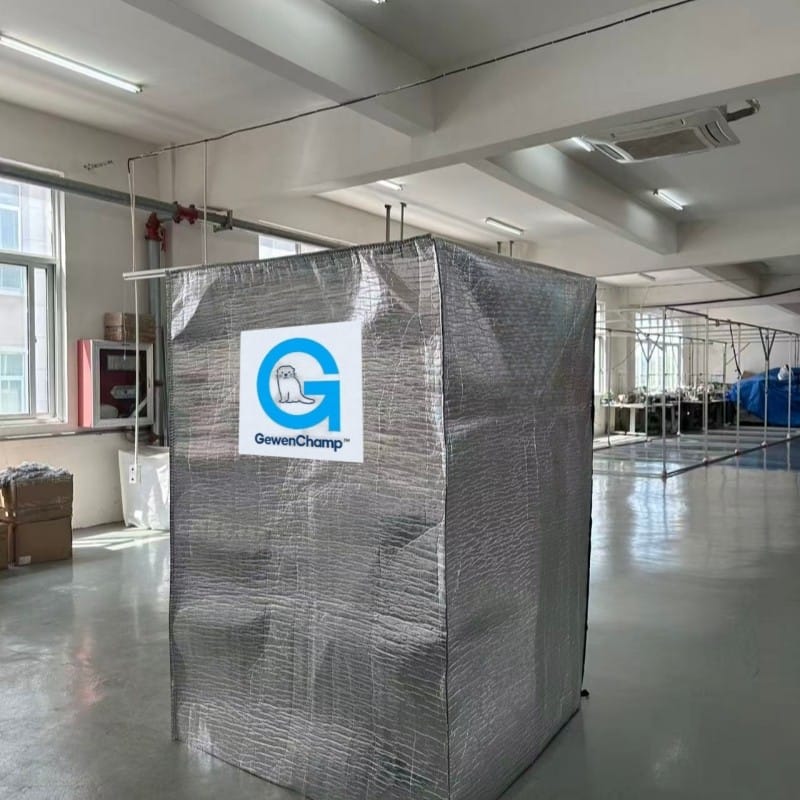
The most reliable approach is to mirror the sanitation protocols already in use for reusable food processing equipment. After cleaning, swab multiple interior surface points and test for adenosine triphosphate (ATP) as a proxy for organic residue. A reading of less than 10 relative light units (RLU) is a common benchmark. Additionally, periodic microbiological testing for coliforms, yeast, and mold provides evidence for auditing bodies.
For non-food industrial reuse, the contamination risk centers on cross-cargo mixing. Carrying kaolin clay followed by titanium dioxide, for example, can ruin a full batch if white pigment is tinted by colored residues. A visual inspection after cleaning combined with a white-glove wipe test is usually sufficient as a gate check.
| Cargo type | Cleaning benchmark | Verification method |
|---|---|---|
| Food-grade (sugar, flour, cocoa) | No detectable organic residue | ATP swab < 10 RLU, microbiological panel |
| Chemical powders (TiO2, carbon black) | No visible color transfer | White-glove wipe test |
| Polymer pellets (PE, PP, ABS) | Dry, dust-free surface | Visual + compressed air check |
Inspection Criteria After Cleaning
Once a liner is dry, every square meter of the inner surface must be inspected under bright light before it is folded for storage or fitted into the next container. An inspection that misses a small tear near a seam can turn a cost-saving reuse into an insurance claim.
Our standard inspection checklist covers:
– Seam integrity – Pull test each seam at a 45-degree angle to verify no stitch degradation or coating separation. For woven liners, we accept no more than a 5% reduction in seam strength compared to the original specification.
– Coating uniformity – Look for bubbles, delamination, or thinning of the PE lamination, especially in the bottom third of the liner where cargo abrasion is highest.
– Odor check – Any lingering smell that does not disappear after 24 hours of ventilation likely indicates chemical absorption and disqualifies the liner.
– Hardware and attachment points – Lifting loops, discharge spouts, and loading spouts must be free of cuts, stretching, or UV degradation.
– Moisture content – A handheld moisture meter can confirm the fabric is below 8% moisture content before storage, reducing the risk of mildew during warehousing.
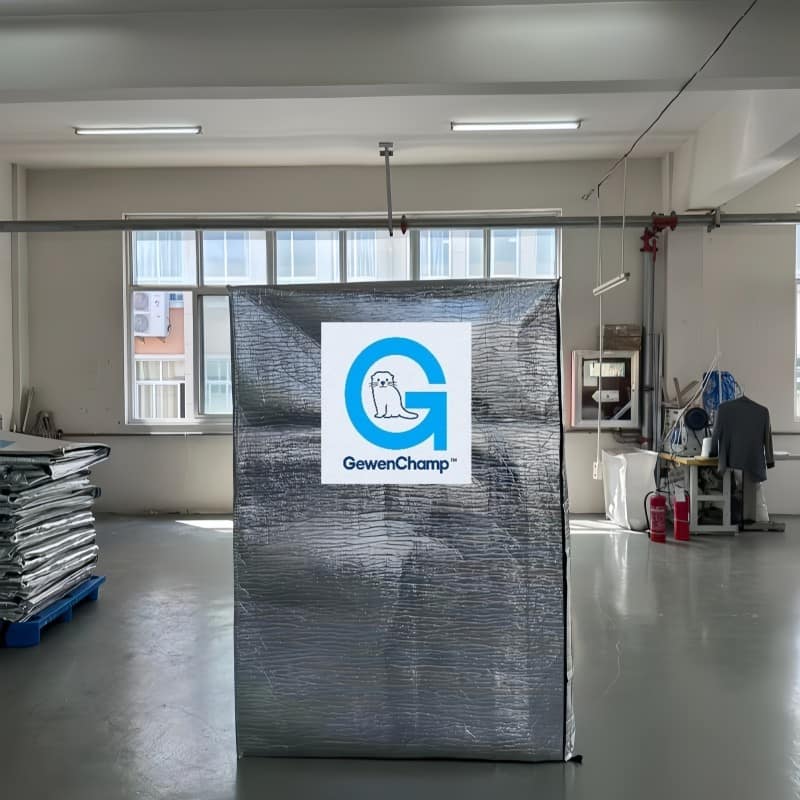
If your operation involves high-value cargo with zero tolerance for foreign material, we recommend performing a pull test on a sacrificial sample liner from the same batch instead of the production liner itself, to avoid compromising the liner in service.
Cost Analysis: Reuse vs New Liners
The economic argument for container liner reuse depends on a straightforward equation: the cost of a new liner versus the total cost of cleaning, inspection, and risk. A high-quality woven dry bulk liner suited for a 20-foot container typically costs several hundred dollars on an OEM contract. A full cleaning cycle, including labor, water, and consumables, adds roughly $20 to $40. When that liner completes three safe trips, the per-trip liner cost drops by 50% or more.
That math changes sharply if a single contaminated load is rejected. A cocoa bean shipment worth $50,000 rejected at a European port for foreign matter erases a decade of liner reuse savings. The same holds for pharmaceutical powder or food ingredient exports where a Certificate of Analysis is required. In those contexts, the conservative approach—using a new, certified liner for every critical shipment—is often less expensive than the reputational cost of a failed audit.
For industrial cargoes where hygiene demands are lower and the cargo value per container is less than, say, $5,000, a disciplined reuse program on woven liners can deliver meaningful logistics cost reduction without adding unacceptable risk. The key is building a documented, auditable cleaning and inspection process that makes the reuse decision a structured one, not a guess made at the loading dock.
Questions Shippers Ask About Container Liner Reuse
Will the manufacturer still stand behind the liner after cleaning?
Manufacturers provide performance specifications based on the liner in its as-manufactured condition. After cleaning, the liner’s warranty status depends on the producer’s terms. We generally recommend that customers operating a reuse program contact us to establish a documented cleaning protocol and agree on acceptable wear limits before reuse. That way, any later quality discussions are grounded in a shared set of measurable criteria rather than an after-the-fact dispute.
How does reusable liner performance compare after multiple cycles?
We have sampled woven liners returned after three full cycles and observed average tensile strength reductions of 10%–15% in the warp direction, with seam performance holding relatively stable. The primary degradation mechanism is abrasion from granular cargo, not chemical breakdown. This is consistent with what a shipper should expect: a liner that started at 1,800 N/5cm might measure around 1,530 N/5cm after three trips, still above the 1,200 N/5cm minimum we consider safe for 30-ton loads. The drop accelerates after the fourth cycle, which is why we cap reuse recommendations at three to five uses.
Are PE film liners ever reused in practice?
In controlled internal logistics loops—where a manufacturer ships material between its own facilities and the liner never leaves the company’s custody—we have seen 140-micron PE film liners reused once for identical, non-food cargo. The liner is visually inspected, wiped down with a dry cloth, and repacked immediately. This is the only scenario where PE film reuse is practical. For any cross-border or third-party supply chain, we consider PE film liners single-use because the verification gap is too wide to close cost-effectively.
What documentation should a reuse program maintain?
A defensible reuse program should generate a cleaning log per liner that records the date, cleaning procedure used, sanitizer type and contact time, any repairs performed, inspection results (including ATP readings if food-grade), and the next cargo intended. For shipments under a recognized food safety scheme such as FSSC 22000 or BRC, the cleaning records form part of the prerequisite program documentation and can be requested during an audit. We help customers build templated logs that align with their specific supply chain requirements.
Can I reuse a container liner that previously held a food cargo for a non-food load?
Yes, and this is the most straightforward reuse case. If the previous cargo was food-grade and the liner remains intact, a basic cleaning and drying cycle is all that is needed before loading a non-food industrial cargo such as plastic pellets or construction minerals. The main precaution is ensuring no hygroscopic residue remains that could clump or react with the next load. For assistance setting up a reuse program tailored to your specific cargo types and cleaning infrastructure, send your liner specifications and typical shipment details to [email protected], or call +86 523 87683880.
 English
  German
  Spanish