
In bulk logistics, most cargo damage prevention focuses on what happens during transit, but we have seen liners fail before a container ever leaves the warehouse yard. Container liner storage before use is not a housekeeping afterthought. A woven dry bulk liner left against a sunlit wall can lose tensile strength at its fold points; a thermal liner with a compressed foam core from heavy stacking delivers a fraction of its rated R-value. The real failure mechanism is rarely obvious until the cargo arrives wet, caked, or outside temperature specification. Our team audits storage conditions regularly, and the pattern is consistent: the liners that perform best are the ones stored as carefully as the cargo they will protect.
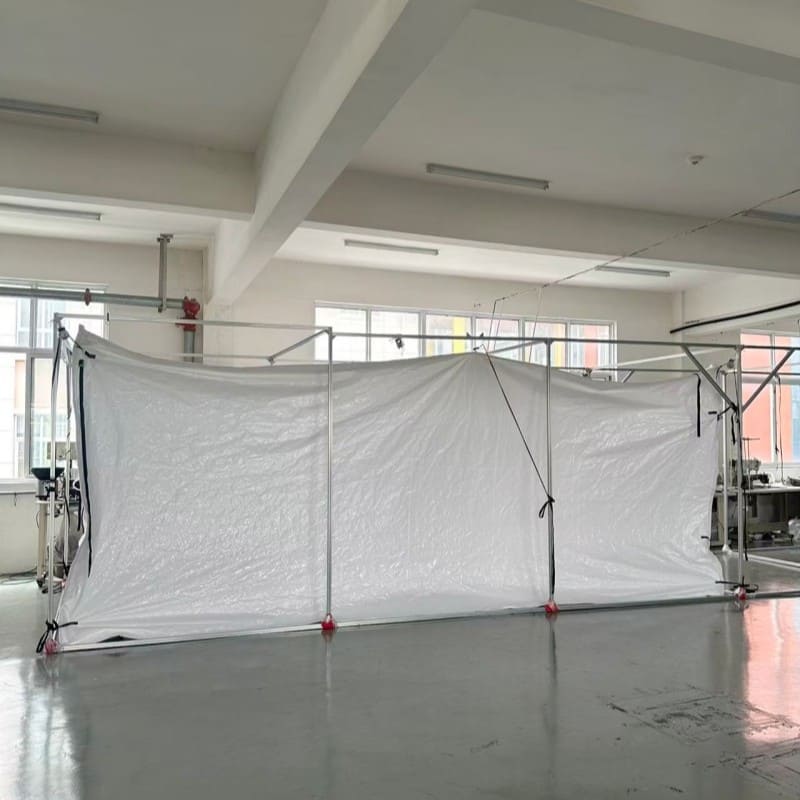
Nearly every liner material reacts to storage conditions over time, and the rate of degradation is often underestimated. For thermal liners like the TL-02 EPE Foam construction, the 3mm cross-linked polyethylene foam will permanently compress by 20 to 40% if stored under sustained point loads abov 200kg/m². Once compressed, the foam’s thermal conductivity rises from ≤0.038 W/(m·K) toward 0.06 W/(m·K), meaning the same liner that held a ±5°C variance will now drift beyond ±8°C. For MPET-based liners such as the TL-03 MPET / Double Bubble / MPET, UV exposure matters just as much. The metallized polyester layer reflects up to 98% of radiant heat when intact, but 200 hours of direct sunlight can oxidize the aluminum coating, dropping reflectivity to below 85%. We recommend a simple rule: if a thermal liner’s outer surface appears dull or patchy rather than uniformly reflective, do not install it before verifying internal temperature stability with a datalogger cycle. PE film dry bulk liners present a different failure mode; they are highly resistant to moisture but will elongate permanently under tension in ambient temperatures above 45°C. A 140-micron LDPE liner stored inside a container yard container in summer can see interior temperatures exceeding 55°C, causing the film to stretch and lose its form fit against the container walls. The result is an air gap that allows condensation to form behind the liner during the voyage.
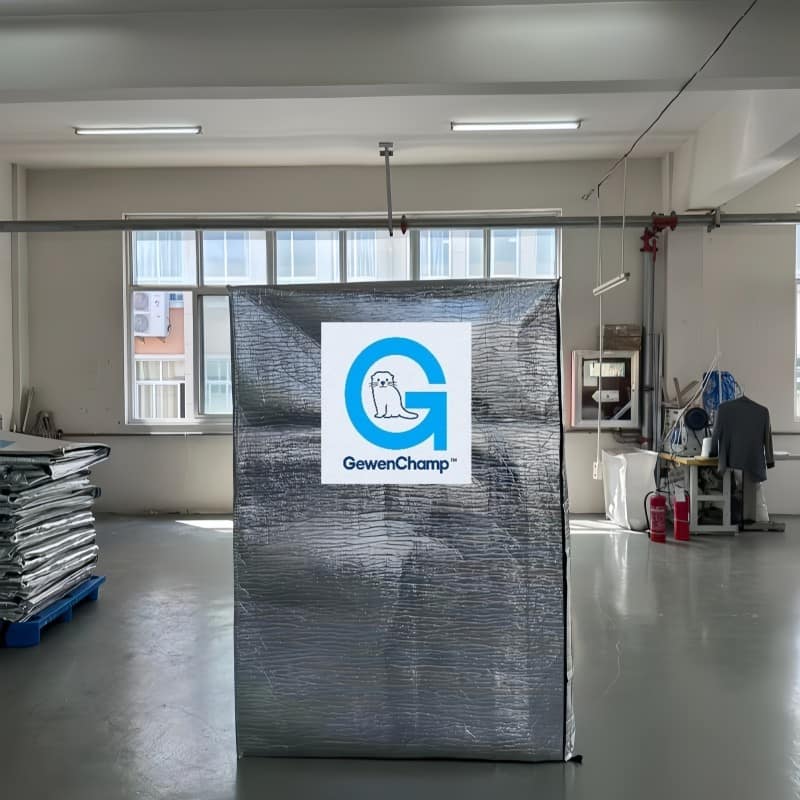
Threading storage parameters into daily warehouse operations pays back the first time a high-value shipment clears arrival inspection without a claim. The table below summarizes safe storage limits for the most common liner constructions.
| Liner Type | Temperature Range | Max Relative Humidity | UV Tolerance | Stacking Limit | Notes |
| — | — | — | — | — | — |
| Woven PP/PE Dry Bulk (DBL-W01, DBL-W03) | -20°C to 50°C | 80% | Moderate — cover if stored >6 months | 5 units high | Avoid folding at crease points more than twice |
| PE Film (DBL-F01, DBL-F02) | -10°C to 40°C | 90% | Low — store inside cartons or under opaque covers | 3 units high | Film can stick to itself in heat; interleaf with kraft paper if stacking |
| TL-01 Woven Thermal Fabric | -20°C to 60°C | 85% | High — aluminum foil resists UV but adhesive may degrade | 4 units high | Check for delamination at edges after 6 months of storage |
| TL-02 EPE Foam Thermal | -50°C to 80°C | 80% | Medium — outer PET film provides partial UV barrier | 3 units high | Foam compression recovery is slow; do not store with sharp objects on top |
| TL-03 MPET / Double Bubble | -20°C to 60°C | 85% | Medium — MPET surface degrades under prolonged UV | 3 units high | Bubble layer can deflate under sustained heavy load |
| TL-04 MPET / PE Composite | -10°C to 30°C (storage) | 90% | Low — always store in original packaging | 2 units high | Thin film construction; handle only at ambient to avoid tearing |
A rack system dedicated to liner storage is ideal, but flat pallet storage with adequate clearance from walls and direct heat sources works for most sites. We also recommend placing desiccant units inside any sealed packaging to keep local relative humidity under 50%.
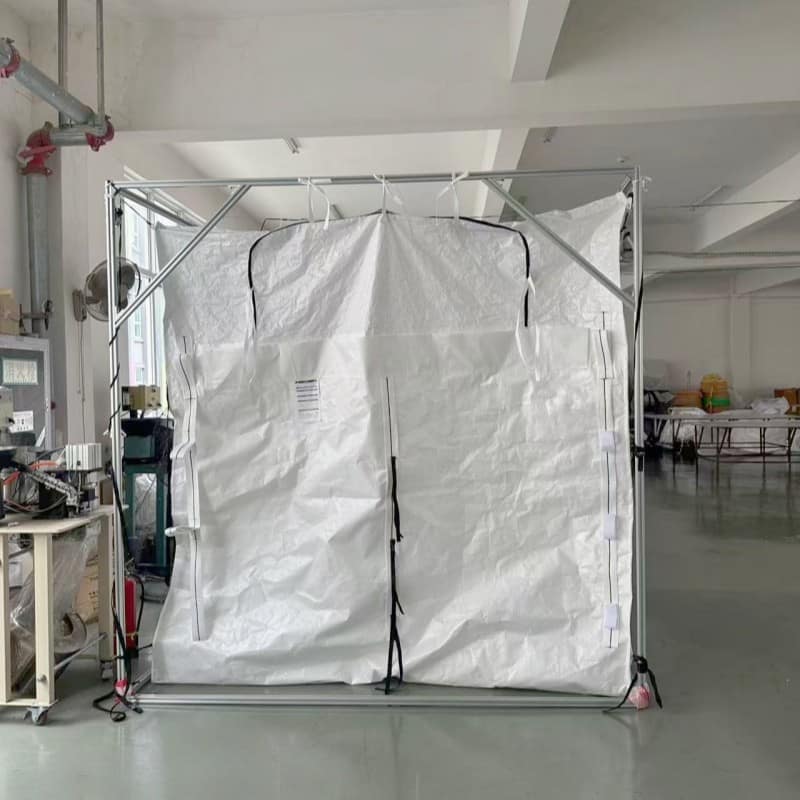
Before any liner moves from warehouse to loading dock, a structured inspection sequence catches the failure precursors that visual checks miss. For thermal liners, run your hand along the sealed edges first. If you can feel a difference in thickness or a soft spot, the lamination bond has started to separate. This is most common in TL-01-style liners where the PE-woven layer and aluminum foil are bonded with LDPE adhesive that loses adhesion after repeated temperature cycles. For foam-core liners, press a section of the foam with your thumb for 5 seconds. If the depression remains after release, the foam has taken a compression set and will not insulate to its labeled R-value. On woven dry bulk liners, inspect seam stitching under tension by gently pulling the fabric perpendicular to the seam. If any thread appears to stretch or the stitch holes widen, moisture has already entered the fiber and weakened it. PE film liners require a different check: hold the film up to light and look for localized thinning. Film stored in high heat can thin unevenly, creating areas that will burst at loading pressures as low as 0.5 bar. We also verify that lifting loops are not brittle or cracked by flexing one loop fully; any snap sounds indicate polymer degradation and the liner should be condemned.
A thermal liner stored for more than three months, particularly in a non-climate-controlled warehouse, needs a conditioning period before installation. Foam and bubble-wrap liners become stiff in cold storage. A TL-02 liner stored at 5°C will not conform to container wall corrugations correctly until it reaches at least 15°C. Allow 4 to 6 hours inside a controlled environment at 20°C to 25°C to restore full flexibility. For MPET composite liners, the film becomes brittle below 10°C; unrolling one immediately from cold storage can create micro-tears along the fold lines. For dry bulk liners, conditioning is less about temperature and more about shape memory. A woven liner left folded in packaging for over a year can develop permanent creases that obstruct the loading spout. Spreading the liner flat on a clean warehouse floor for 30 minutes before rigging eliminates most crease-related flow problems.
When there is no single standard that covers storage for all liner constructions, our quality team at Giant Flexpack documents storage requirements per liner SKU because the materials dictate the threat model. A TL-01 thermal liner with an aluminum foil outer layer can tolerate warehouse UV levels that would degrade a TL-04 MPET/PE composite liner within weeks. That is not a defect; it is a materials decision. The foil-heavy liner costs more up front and survives rougher storage, while the thinner composite liner demands controlled storage but delivers cost-per-shipment efficiencies that matter for high-volume programs. We have seen buying teams apply the same storage protocol to all liner types, only to reject perfectly functional liners or worse, approve liners that should have been scrapped. Manufacturer storage sheets specify stacking load, temperature envelope, and allowable storage duration before recertification. If your supplier does not provide a storage datasheet with the shipment, ask for one before accepting the order. It is the fastest way to ensure your storage operation aligns with the warranty terms that cover your cargo.
When a container liner fails mid-ocean, the resulting cargo claim routinely exceeds the liner cost by fifty to one hundred times. The root cause traces back to a storage decision made weeks or months earlier, yet most logistics teams never connect the two. Identifying whether your current storage conditions match the requirements of the specific liners in your inventory is not a project; it is a stack of numbers: temperature logs, humidity readings, stacking loads, and liner age. If your program involves long warehousing periods, fluctuating ambient conditions, or multiple liner types sourced from different manufacturers, the interaction between storage environment and liner performance is worth a technical review before the next shipment. Send your liner part numbers and your typical storage temperature and humidity range to [email protected] or call +86 523 87683880. We will confirm whether your storage conditions fall within each liner’s certified envelope and identify any risk areas that could affect cargo integrity.
What Storage Conditions Cause the Most Liner Degradation?
High heat combined with sustained mechanical load is the most aggressive combination. A thermal liner stacked under heavy boxes in a 45°C container will degrade faster than the same liner stored loosely on a rack at 35°C. UV exposure ranks second, particularly for metallized films and PE constructions. Moisture is a concern but mainly for woven liners with exposed fiber, not for laminated or film liners that are inherently waterproof.
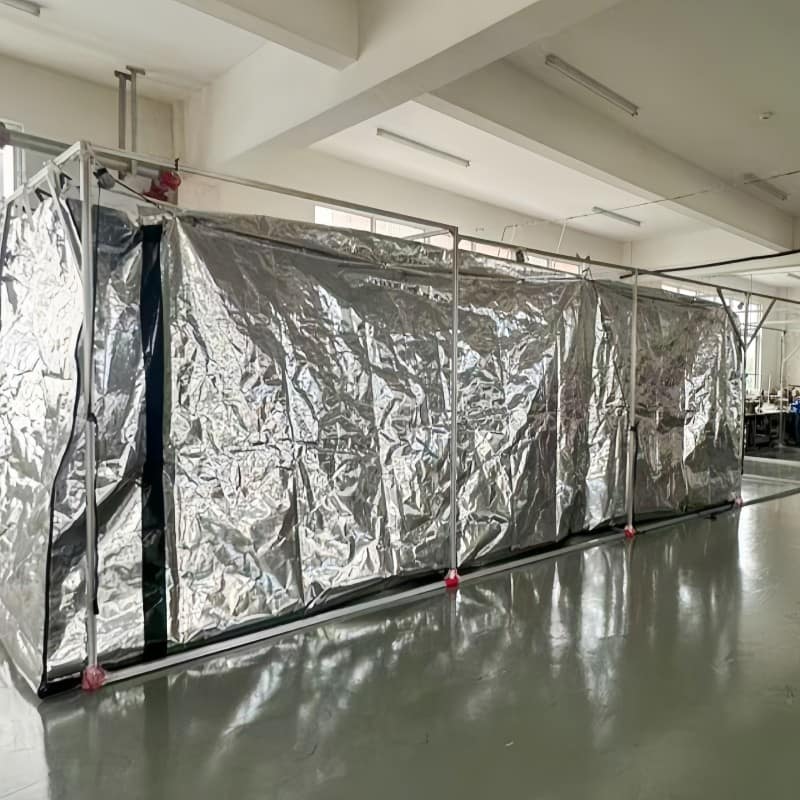
Can We Store Different Liner Types Together in One Warehouse?
Yes, provided the ambient conditions fall within the most restrictive liner’s tolerance. If you stock both TL-04 MPET/PE liners, which need protection from UV and heat, and TL-01 woven thermal liners, which have broader tolerances, set your storage climate to meet the TL-04 limits. Another practical approach is to zone the warehouse: keep UV-sensitive liners in a covered rack section and permit broader conditions for the more robust types. A simple color-coded floor tape system works reliably.
Do Container Liners Have a Shelf Life?
Most liner constructions carry a shelf life of 12 to 24 months under recommended storage conditions. After that, performance begins to degrade in measurable ways. We have tested TL-02 foam liners stored for two years at 25°C and 60% RH and found foam thickness remaining within 95% of original, while TL-04 composite films showed a 10% reduction in tensile strength over the same period. Visual inspection alone will not detect these shifts; a functional test with temperature dataloggers is the only confirmation.
How Do I Know If a Stored Liner Needs to Be Replaced Rather Than Used?
Three criteria override all others. First, any delamination between layers on a thermal liner is a definitive rejection. Second, any tear longer than 2 cm on a woven or film liner that penetrates the full thickness means the barrier is compromised. Third, if a liner has been exposed to conditions outside its certified storage envelope for more than 72 cumulative hours, assume it has degraded. The liner cost is negligible compared to the cargo loss. We advise logistics teams who are unsure about a specific liner to document the storage history, take clear photos, and send the information for a technical evaluation before loading. Email your liner spec and storage history to [email protected] and we can help assess whether the liner can be safely deployed.
 English
  German
  Spanish