
Installation instructions for bulk container liners often gloss over the single step that causes more cargo claims than any other: securing the liner inside the container. A liner loaded with 20 tons of polymer pellets exerts enormous force during transit, and without proper strapping, it can shift, tear at the seams, or pull away from the container walls, exposing the cargo to moisture and contamination. Over 15 years in container liner manufacturing, I have seen strapping failures destroy shipments that were otherwise packed correctly. The problem is not always obvious at the loading dock — it reveals itself after two weeks at sea when the vessel hits heavy weather and the liner’s anchor points give way.
What Happens When a Container Liner Is Not Properly Secured
A bulk container liner functions as a flexible barrier between the cargo and the container structure. It is not designed to contain dynamic loads independently. When a container decelerates, corners, or rolls, the cargo mass continues moving. If the liner is not adequately strapped, three failure modes appear. The first is seam rupture. Woven PP or PE fabric liners are engineered with high tensile strength — warp direction over 1,800 N/5cm in our DBL-W01 standard liner — but that strength depends on the load being distributed through the lifting loops and anchor straps, not concentrated at a single seam. I have inspected returned liners where the bottom discharge spout had torn away from the body simply because the liner slid forward during braking and the spout snagged on a floor anchor. The second failure is liner collapse inward. A bulging liner that is not restrained against the container walls reduces the breathable air gap, and on long voyages, condensation builds up between the liner and the container roof — what the industry calls “container rain.” The third, and most costly, is cargo spillage. A shifted liner can block the rear doors, making discharge dangerous and time-consuming.
These failures are preventable with the right strapping sequence, correct anchor point selection, and a clear understanding of the forces involved.
How to Strap a Container Liner: The Step-by-Step Process
Most container liners arrive with integrated lifting loops, fixing ropes, and sometimes an anti-slip base. The strapping process should begin before the liner is fully expanded.
- Inspect the container interior. Remove any protruding nails, splinters, or debris. The liner fabric, even high-gsm woven HDPE, can abrade if pressed against a sharp edge during transit. Pay particular attention to the floor and lower side rails.
- Position the liner loosely. Pull the liner into the container without unfolding it completely. Align the pre-installed fixing ropes with the container’s lashing rings. On a standard 20ft container, you typically have four to six lashing points per side; use at least four per side for the liner.
- Secure the top corners first. Hook the uppermost fixing ropes to the container’s roof lashing rings. This prevents the liner from sagging before filling. Tighten each rope until the liner fabric is flat against the roof but not under tension — over-tightening at this stage can pull seams before the load is in place.
- Expand the liner and attach side ropes. Gradually unfold the liner and attach the middle and lower ropes to the side lashing rings. The goal is to distribute the liner’s weight evenly along the container walls. A common mistake is to tie only the top corners and ignore the midpoint; the resulting belly in the liner causes uneven loading and increases the risk of tearing at the filling spout.
- Check the anti-slip base. If your liner includes a textured or coated anti-slip bottom, confirm it lays flat against the container floor without folds. Folds create pockets where granular cargo can accumulate and shift load balance.
- Final rope check after loading. After filling, re-tension all ropes. The added weight will stretch the fabric slightly. Loose ropes after filling are the single most frequent cause of liner displacement at sea.
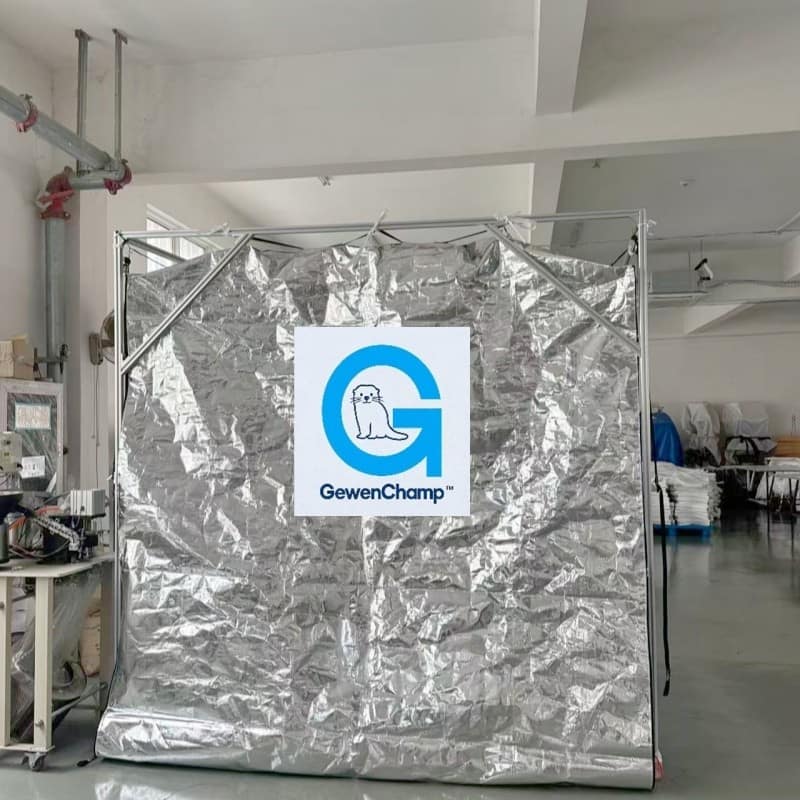
Choosing the Right Straps and Hardware for Different Liner Materials
The type of strapping matters as much as the method. Polyester strapping is standard for heavy bulk cargo because it retains tension and resists elongation under load, unlike polypropylene which can stretch up to 50% before breaking. For liners carrying 25 to 30 tons, polyester straps rated at 5,000 kg breaking strength are common. However, the strap material must be compatible with the liner fabric. Woven PP fabric liners have a coarse surface that grips straps well, whereas PE film liners have a smooth, low-friction surface. On PE film liners, I recommend using straps with a textured or rubberized backing to prevent slippage. Additionally, always place protective sleeves or corner guards between the strap and any sharp-edged lashing ring. A nylon strap under tension can cut through a thin PE film liner in a matter of hours if it rubs against an unprotected ring.
| Strap Material | Breaking Strength | Best Used With |
|---|---|---|
| Polyester | 3,000–8,000 kg | Woven HDPE/PP liners |
| Polypropylene | 1,500–3,000 kg | Light-duty liners under 15 tons |
| Nylon | 2,500–5,000 kg | PE film liners (with protective sleeves) |
The table is a general guide; actual selection depends on container length, cargo density, and expected sea conditions.
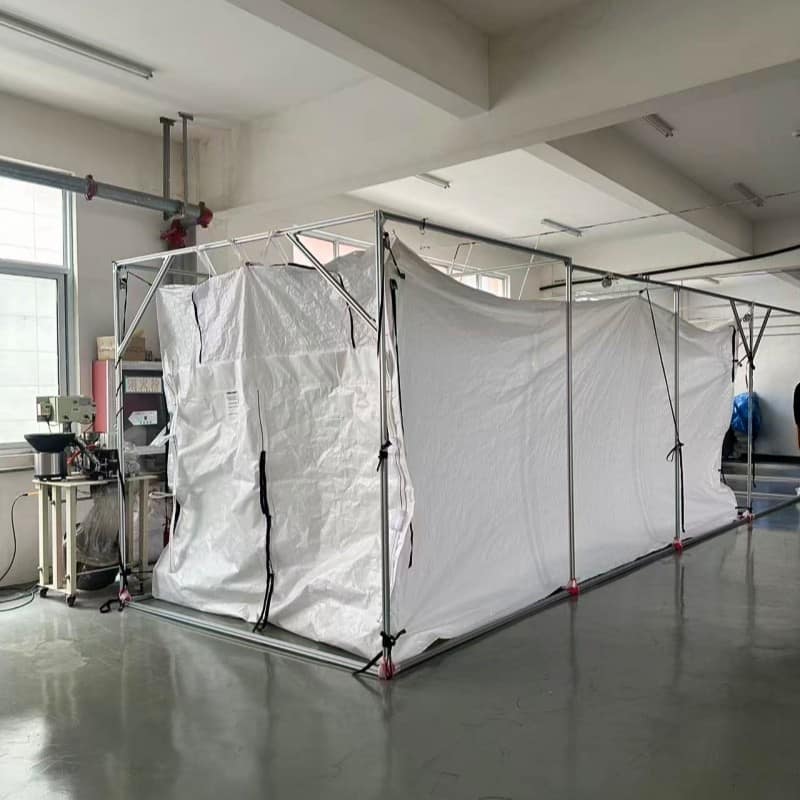
Common Securing Mistakes That Lead to Cargo Claims
The most frequent error I encounter is not an absence of straps but an over-reliance on the liner’s own weight to hold it in place. Some operators assume that because the liner is filled to capacity, it will not move. That assumption fails the first time the ship rolls more than 15 degrees. Another mistake is tying ropes directly to the container floor lashing points without any vertical component. A liner needs upward tension as well as lateral restraint; otherwise, the bulk of the cargo in the lower half can push the liner outward and strain the seams. Finally, reusing damaged straps is a false economy. A strap with a frayed edge or a bent buckle will not hold its rated load. Replace it — the cost of a new strap is negligible compared to a contaminated shipment of food-grade resin.
If your shipment involves food-grade or pharmaceutical cargo, a strapping failure does more than shift product; it exposes the liner interior to container wall contamination, potentially voiding FDA or LFGB compliance. In these cases, we recommend a double-strap configuration at the rear door section to create a redundant restraint. I have seen this practice prevent a complete liner collapse on a shipment of cocoa beans that encountered a Force 10 storm in the North Atlantic — the primary strap broke, but the secondary held.
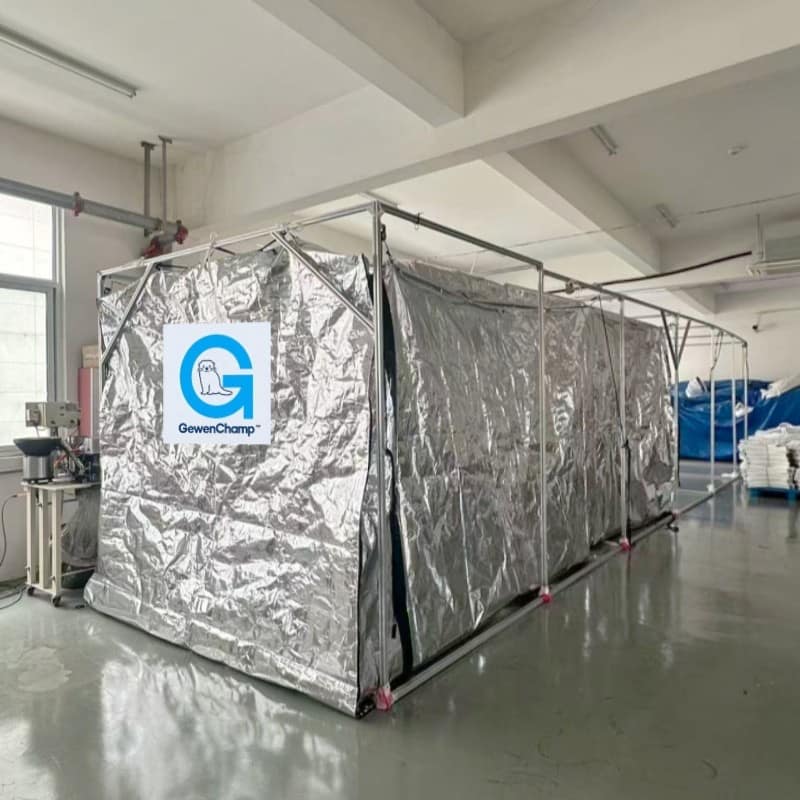
Securing Practices for Woven vs. PE Film Liners
The liner material dictates the strapping approach. Woven PP or HDPE liners, like our DBL-W01, have integrated lifting loops rated at 5 tons each, and the fabric itself has a higher coefficient of friction. You can strap these liners with fewer contact points — typically four per side is sufficient for a 20ft container — and apply higher tension without risking puncture. PE film liners, such as the DBL-F01 standard LDPE film liner, require a gentler touch. The 140-micron film provides an absolute moisture barrier, but its tensile strength is lower (warp 1,500 N/5cm), and its smooth surface reduces friction. For PE film liners, I advise using wider straps — 50mm minimum — and increasing the number of anchor points to six per side. Distribute the pressure over a larger area to prevent the film from deforming under point loads. Also, ensure the straps pass over seams rather than across unsupported film sections. A seam doubles the material thickness and triples the local strength.
Even with thermal container liners like the GewenChamp TL-02 (EPE foam composite), the strapping principle remains: secure the liner to the container, not just the cargo. The foam core provides insulation, not structural reinforcement, so all dynamic loads must still transfer to the container structure.
Questions Exporters Ask About Container Liner Securing
Is strapping necessary if the container is packed completely full?
A full container does not eliminate the need for strapping. Bulk cargo behaves as a fluid during transit; even a fully filled liner can shift within the fabric envelope. The liner itself must be anchored to the container walls to prevent the entire assembly from moving. Strapping is about restraining the liner, not just the cargo inside it.
Can I reuse straps from a previous shipment?
Polyester straps that show no visible wear, fraying, or buckle deformation can be reused for non-food shipments if they pass a manual pull test. For food-grade shipments, I recommend using new straps each time. A contaminated strap can introduce foreign material into a sealed liner environment, compromising hygiene certifications.
How do I know if my strapping is tight enough after loading?
After filling, tighten each strap until the liner fabric is taut but not drum-skin tight. You should be able to press your thumb into the fabric and feel slight give. Over-tensioning is as harmful as under-tensioning — it can pull seams apart at the loading spout. If your cargo requires extra security, such as shipping on high-humidity routes, consider specifying liners with additional lashing points and a reinforced top section. Share your route and cargo type with us at [email protected] and we can recommend the appropriate lashing configuration.
 English
  German
  Spanish