
Container liner testing standards are the foundation of quality assurance in bulk packaging, but a certification stamp tells you nothing about how that liner will perform on a tropical sea route or with fine-grained powders. I’ve reviewed thousands of test reports over fifteen years in thermal and dry bulk liner manufacturing, and the gap between a laboratory result and real cargo protection is where most sourcing mistakes happen. From tensile strength to moisture vapor transmission rate, every data point has a practical implication for your cargo’s safety. This article explains what key testing metrics mean, why they matter for specific cargo types, and how to use them to evaluate suppliers with confidence.
The Purpose of Container Liner Testing
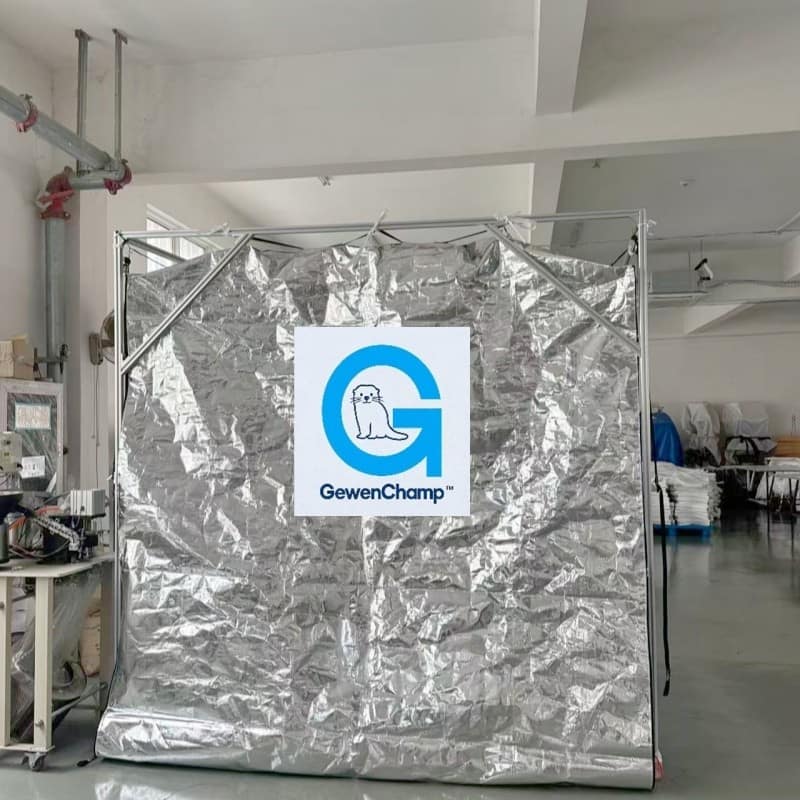
Testing standards for container liners cover three critical areas: structural durability, barrier performance, and regulatory compliance. Structural tests like tensile strength and tear resistance confirm the liner can survive loading, transport vibration, and discharge without ripping. Barrier tests measure how well a liner blocks moisture, gases, or light — the most common being moisture vapor transmission rate (MVTR) and oxygen transmission rate. For thermal liners, insulation performance is quantified by thermal conductivity or R‑value. On top of these, food‑contact liners must pass migration testing to meet FDA, LFGB, or EU directives.
We test every production batch at our facility, but we also commission impartial third‑party verification from labs like SGS and Intertek. This dual layer is important because an in‑house test can optimize conditions to flatter a product. True confidence comes from independent lab data that matches the real batch you’ll receive.
What are the key testing standards for container liners?
The main international standards include ASTM D882 for tensile properties of thin plastic sheeting, ASTM E96 for moisture vapor transmission, and ISO 527‑3 for tensile test on films. For thermal performance, ASTM C518 or ISO 8301 determine thermal conductivity. Food‑grade verification follows FDA 21 CFR 177.1520 for olefin polymers, EU 10/2011 for plastic materials intended for food contact, and LFGB sections 30 and 31 for sensory and migration tests in Germany. A trustworthy supplier will reference the exact standard and test method on their data sheet, not just a logo.
Key Performance Metrics in Container Liner Testing
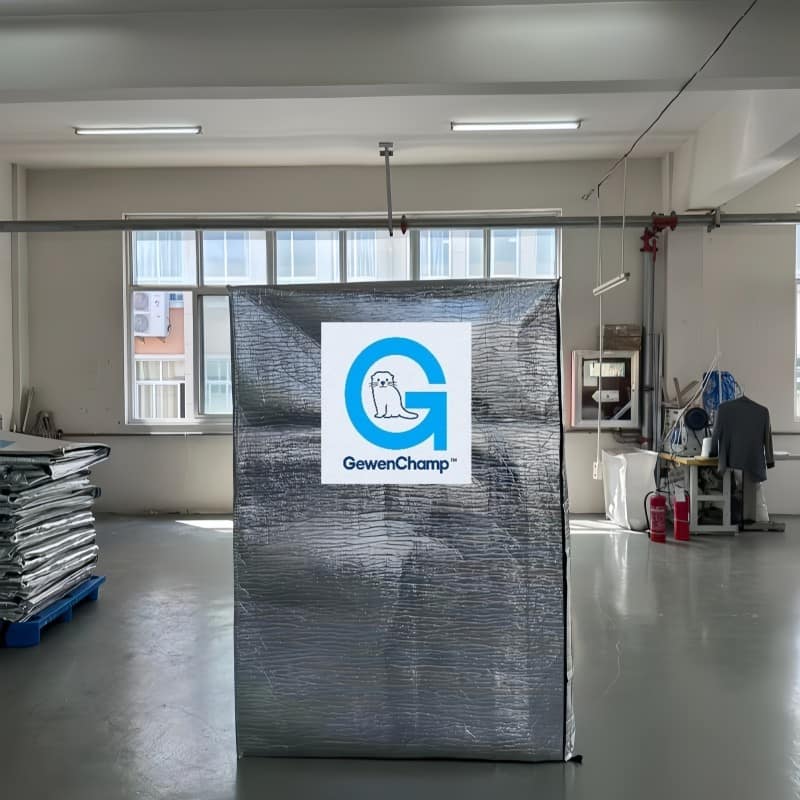
Understanding a test report means tying each number to a real‑world failure mode. Here are the four metrics I find most decisive in my daily work.
| Metric | Standard reference | What it indicates | Typical requirement from our TL series |
|---|---|---|---|
| Tensile strength (warp/weft) | ASTM D882 / ISO 527‑3 | Resistance to pulling forces during filling and movement | Woven: warp ≥1,800 N/5 cm; weft ≥1,500 N/5 cm |
| Tear resistance | ASTM D1004 | Ability to stop a small puncture from spreading | ≥ 20 N/mm for film liners |
| Moisture vapour transmission rate (MVTR) | ASTM E96 | The barrier against container condensation and moisture damage | ≤ 0.033 g/(m²·h·kPa) for our EPE foam liner |
| Thermal conductivity (λ) / R‑value | ASTM C518 | Insulation efficiency; determines temperature stability | λ ≤ 0.038 W/(m·K) for 3 mm EPE foam core |
Tensile strength and tear resistance are non‑negotiable for any liner. A liner that tears during loading can expose an entire container of hygroscopic cargo to ambient moisture. I’ve seen cases where a textile‑grade PE film liner — with tensile values under 1,000 N/5 cm — ripped when a pneumatic loader surged, and the resulting moisture damage exceeded 10% of the cargo value.
MVTR is the silent killer. It’s not about keeping liquid water out; it’s about preventing water vapour from diffusing through the film and condensing on the cargo surface when the container cools at night. A liner with MVTR below 0.05 g/(m²·h·kPa) is generally sufficient for short hauls, but for ocean voyages exceeding 30 days, especially across equatorial routes, aim for ≤ 0.033 g/(m²·h·kPa) or pair the liner with desiccants.
If your program involves temperature‑sensitive cargo or food‑grade requirements, confirming the liner’s MVTR and thermal conductivity before finalizing your BOM is essential — reach out at [email protected] for batch‑specific data.
What is the difference between tensile strength and tear resistance?
These are related but not the same. Tensile strength measures the force needed to stretch the material until it breaks. Tear resistance gauges the force required to propagate an existing cut. A liner can have high tensile strength but poor tear resistance, meaning a small nick during installation can zip open under load. Always check both values on the test report; they are tested differently and tell you separate things about real‑world handling.
Regulatory and Food‑Grade Compliance Testing for Container Liners
Regulatory testing is more than a checkbox. For food‑grade container liners, the primary concern is migration — chemical substances from the liner material migrating into the foodstuff. FDA 21 CFR requires specific extraction tests using food simulants (e.g., 10% ethanol for aqueous foods, fatty food simulants for oils) and sets limits on overall migration. LFGB is often stricter on sensory properties — the liner must not impart any taste or odor to the food. In Europe, EU Regulation 10/2011 specifies a positive list of authorised monomers and additives.
Beyond food contact, REACH covers chemical substance registration in the EU, and RoHS restricts hazardous substances in electrical and electronic equipment — which matters for liner components like antistatic additives or metalized layers. Our GewenChamp liners carry FDA, LFGB, REACH, and RoHS certifications, verified by SGS and TÜV. When evaluating a supplier, ask for a copy of the full test report, not just the certificate. The report shows the actual pass/fail margins and the test conditions.
I recall a European chocolate importer who rejected a shipment because the liner’s LFGB migration test showed a borderline result for overall migration at 40°C — the tested temperature was 40°C, but the transport route sometimes reached 45°C. The supplier hadn’t tested at the higher temperature. That single oversight cost them a €200,000 contract. The lesson: regulatory compliance must match your worst‑case transport scenario, not just the standard lab condition.
How do FDA and LFGB food‑grade tests differ?
FDA is based on the concept of a functional barrier and overall migration limits, while LFGB adds strict organoleptic (sensory) evaluation. For instance, LFGB requires that the liner not transfer any perceptible taste to a food simulant after 24 hours at 40°C — something many FDA‑compliant liners fail. If you’re exporting to Germany or other EU markets, LFGB certification is practically essential, and you should request the sensory test report explicitly.
Bridging Lab Data and Real‑World Container Conditions
A test chamber at 23°C and 50% relative humidity does not replicate a 40‑foot container baking under the Arabian sun or sweating through a cold North Atlantic night. In the field, temperature swings of 30°C in a few hours are common, and these drive condensation even when a liner has an excellent MVTR — because condensation depends on dew point crossing, not just vapour transmission.
I worked with a resin producer shipping PE pellets to Jebel Ali. The liner they used had an MVTR of 0.04 g/(m²·h·kPa) and passed all lab tests. Yet after 28 days at sea, they reported caking and moisture contamination. Our investigation revealed that the loading spout had been tied off with a zip tie instead of heat‑sealed, creating a micro‑vent that allowed humid air to enter during temperature cycles. The MVTR test doesn’t account for installation quality, so even a premium liner can fail if sealing isn’t executed correctly.
This is why we train loading crews, supply heat‑sealing tools, and recommend pre‑shipment inspection before gate‑in. When reviewing a supplier’s test data, ask for case studies or reference routes that mirror your own logistics. Spec sheets tell a partial story; proven performance on a comparable route tells the rest.
How can I estimate real‑world condensation risk from lab MVTR data?
You cannot calculate it directly, but you can compare the liner’s MVTR with the expected moisture load. For instance, a 20‑ft container loaded with 24 MT of hygroscopic powder at 12% moisture content will release roughly 288 kg of water vapour over a 40‑day voyage. A liner with MVTR 0.03 g/(m²·h·kPa) lets through about 15 g of water per square meter per day — which seems small, but over 150 m² of liner surface and 40 days, that’s 90 kg of water that can condense on cold spots. So even a high‑barrier liner needs supplementary desiccant for extreme routes.
Verifying Liner Quality with Testing Standards
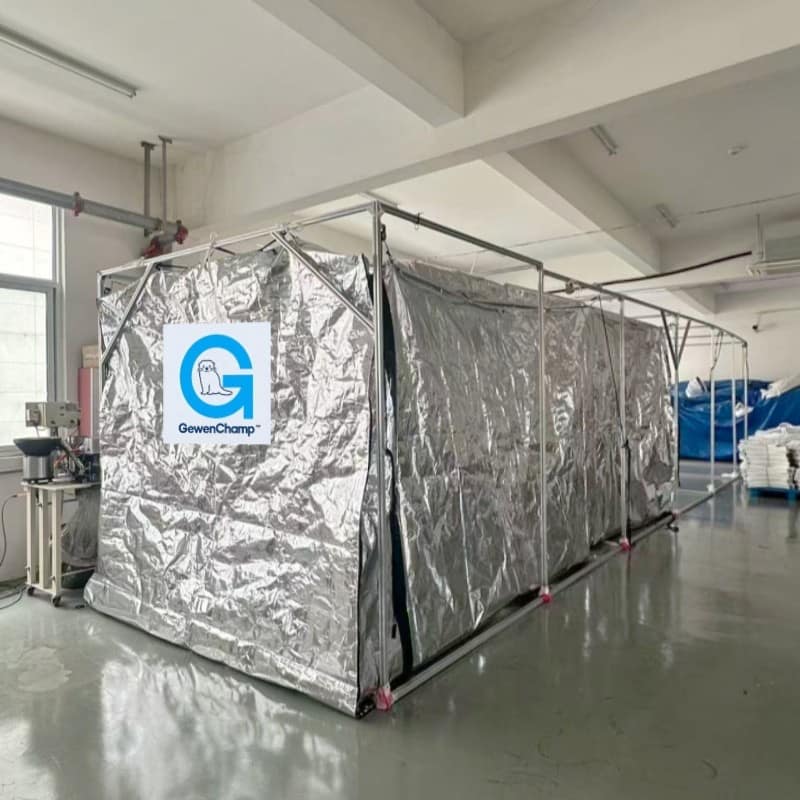
I recommend buyers take three steps to turn test data into a reliable sourcing decision.
First, request up‑to‑date, third‑party test reports for the exact liner model and batch you intend to purchase. Reports older than 12 months, or from a different production lot, carry risk because raw material batches vary. Check that the test laboratory holds ISO 17025 accreditation.
Second, map the test conditions against your actual transport environment. If the liner’s MVTR test was run at 38°C and 90% RH, and your vessel crosses the Bay of Bengal where conditions can hit 45°C and 95% RH, you need a safety margin. Ask the manufacturer for a bridging statement or additional test at the extreme.
Third, ask for reference shipments — ideally with cargo similar to yours and a route that matches your trade lane. A supplier who can connect you with a satisfied client using the same liner spec has actual performance evidence that goes beyond a certificate.
If your route involves high humidity, extreme temperatures, or sensitive food cargo, confirming the liner’s MVTR, R‑value, and food‑grade certification at the quoting stage is critical. At Giant Flexpack, we provide batch‑matched SGS test reports, installation training, and route‑specific performance recommendations as part of our standard pre‑sales process.
Choosing a liner backed by verified performance
Most container liner failures are preventable — not because the liner was inherently weak, but because the testing data wasn’t interpreted in the context of the actual logistic chain. By demanding the right test reports, cross‑checking test conditions, and selecting a supplier who stands behind their data, you shift from hoping your cargo arrives safely to knowing it will.
For a detailed review of your specific cargo and route, reach out with your requirements and we’ll provide the relevant testing documentation along with a liner recommendation tailored to your transport conditions. Send your cargo type, container size, and target temperature range to [email protected] or call +86 523 87683880. We’ll match you with a tested, certified liner and back it with the data you need to make the decision with confidence.
Common Questions About Container Liner Testing and Performance
Can I trust a manufacturer’s in‑house test results?
In‑house testing is standard for production quality control, but I always recommend requesting third‑party reports from an ISO 17025‑accredited lab like SGS or Intertek. I’ve seen in‑house tests show an ideal MVTR only to discover the film sample was a specially prepared coupon, not cut from a production roll. Ask for batch‑matched third‑party certificates that correspond to the lot number on your purchase order; this links the test data to the actual product you’ll receive.
How often should I request updated test certificates?
At a minimum, once per year. Many food‑contact certifications require annual re‑testing to remain valid, and raw material suppliers sometimes change formulations without notice. If you’re importing high‑value or regulated goods — infant formula, pharmaceuticals — request a new test with each batch. I’ve seen suppliers still quoting a five‑year‑old certificate, and in that time the film thickness tolerance drifted enough to affect MVTR.
What’s the difference between a test report and a certificate of compliance?
A test report provides the raw numerical data from a specific test method and sample, while a certificate of compliance states that the product meets a given standard — often based on internal testing or a supplier declaration. I’ve reviewed certificates that omitted the test results entirely, which makes it impossible to verify margin of safety. Always request the underlying test report so you can see the actual numbers and test parameters.
If a liner passes all lab tests, can it still fail in transit?
Yes, and I’ve witnessed it more than once. Lab conditions simulate steady‑state environments, not the vibration, humidity spikes, and rough handling of a container crossing the Pacific. A liner with excellent lab MVTR can still fail if the discharge spout is tied off loosely, if the container door seal leaks, or if the cargo itself generates heat. That’s why we offer installation training and pre‑shipment inspection support — because the best test data is worthless without a correct setup. If you’re unsure whether your chosen liner will perform on your specific route, share your requirements with us at [email protected]. We can walk through the data and flag any risks before you ship.
 English
  German
  Spanish