
RoHS compliance in packaging materials has moved from a niche European requirement to a baseline expectation in global bulk commodity trade. When procurement teams evaluate container liner suppliers, RoHS certification directly confirms that liner materials contain none of the six restricted hazardous substances at levels that could compromise product safety or regulatory standing. I have spent over fifteen years in container liner manufacturing, and the most consistent compliance gap I see is not the absence of testing, but incomplete documentation that fails to trace RoHS compliance through every material layer in a liner’s construction.
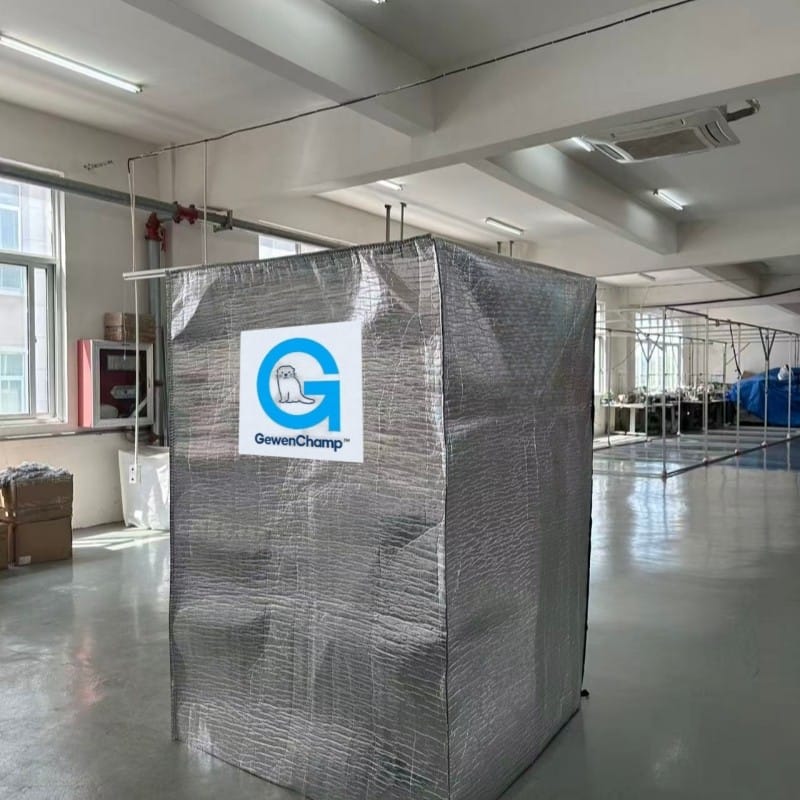
What RoHS Compliance Actually Requires of Packaging Materials
The Restriction of Hazardous Substances directive, originally EU Directive 2002/95/EC and now recast as 2011/65/EU, restricts six substance categories: lead, mercury, cadmium, hexavalent chromium, polybrominated biphenyls (PBB), and polybrominated diphenyl ethers (PBDE). While RoHS originated in electronics manufacturing, its scope has expanded to include any product entering the EU market where these substances could be present in materials.
For packaging materials and container liners, the practical question is straightforward: do the polymer films, woven fabrics, coatings, laminations, adhesives, and printing inks used in the liner’s construction contain restricted substances above the maximum concentration values? The threshold is 0.1% by weight in homogeneous materials for lead, mercury, hexavalent chromium, PBB, and PBDE, and 0.01% for cadmium. A container liner is not one homogeneous material. It is a composite of several layers, each requiring separate assessment.
The most common risk points in container liner manufacturing are not the base polyethylene or polypropylene resins, which are typically clean. The risk lies in additives: pigments that use cadmium or lead-based colorants, stabilizers containing heavy metals, and certain flame retardant treatments that historically used brominated compounds. A liner that meets RoHS standards has had every additive, every colorant, and every lamination layer verified against these thresholds.
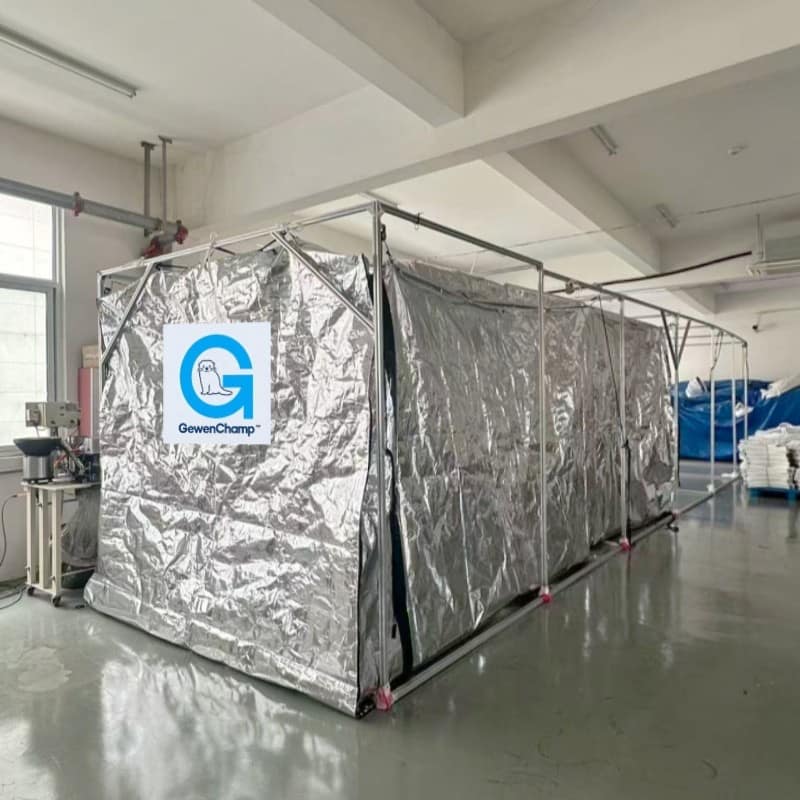
How Container Liner Materials Map to RoHS Restricted Substances
The material pathways through which restricted substances can enter a container liner are specific and well-understood in manufacturing. Here is how the six RoHS substance categories relate to the materials commonly used in dry bulk and thermal container liners:
| Restricted Substance | Risk Level in Container Liners | Primary Source |
|---|---|---|
| Lead (Pb) | Moderate | Pigment stabilizers in colored PE films, PVC additives |
| Mercury (Hg) | Low | Rarely used; possible in certain catalysts |
| Cadmium (Cd) | Moderate | Yellow, orange, and red pigments, PVC heat stabilizers |
| Hexavalent Chromium (Cr VI) | Low-Moderate | Corrosion inhibitors, certain surface treatments |
| PBB | Low | Legacy flame retardants; uncommon in modern liners |
| PBDE | Low | Legacy flame retardants; phased out in most production |
For woven polypropylene and polyethylene liners, which make up the majority of dry bulk container liner products, the base polymer itself is not a RoHS concern. Our DBL-W01 standard dry bulk liner uses 140 gsm HDPE woven fabric, and the raw HDPE resin we source carries supplier declarations confirming RoHS compliance at the resin level. The verification work shifts to the coating layers, the printing inks used for product marking, and any lamination films.
Thermal container liners introduce more material layers and therefore more verification points. A TL-02 liner combines PET aluminum foil, woven PE, a 3mm EPE foam core, and an inner PET aluminum foil layer. Each of these four layers represents a separate homogeneous material under RoHS assessment rules. The aluminum foil layers are not a concern for heavy metals, since aluminum is not restricted, but the metallization process and any adhesion promoters must be confirmed clean. The EPE foam core, at 25 kg/m³ density with thermal conductivity ≤0.038 W/(m·K), uses blowing agents that must be verified free of restricted substances.
Supplier documentation becomes the critical differentiator at this point. A manufacturer who provides RoHS test reports at the individual material layer level, not just a single certificate for the finished product, gives the buyer a defensible compliance record.
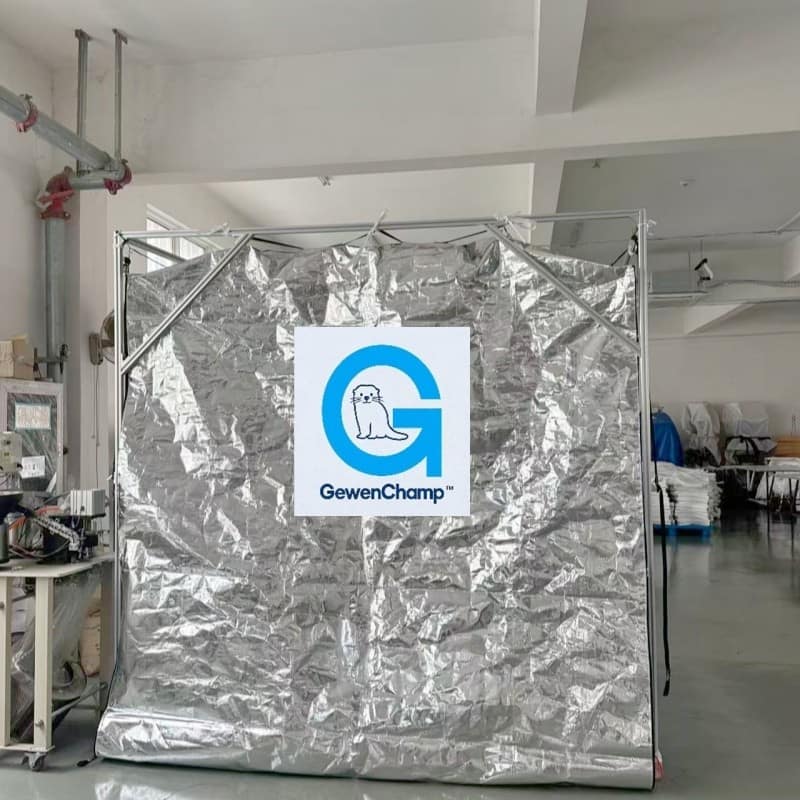
Why RoHS Certification Matters for Your Bulk Cargo Supply Chain
The commercial consequence of non-compliant packaging materials is not theoretical. EU customs authorities detain shipments where packaging is suspected of containing restricted substances. For food-grade cargo such as cocoa beans, sugar, flour, and milk powder, the stakes are higher because RoHS compliance intersects with food contact material regulations like FDA 21 CFR and EU Regulation (EC) No 1935/2004.
I worked with a trading company that discovered during pre-shipment documentation review that their container liner supplier could not produce RoHS test reports for the inner layer of a multi-layer liner. The cargo was food-grade PE resin destined for a European food packaging manufacturer. The liner’s outer layer had a valid RoHS certificate, but the inner PE film, the layer in direct contact with the cargo, had never been independently tested. The shipment was delayed by three weeks while testing was arranged. The cost of the delay exceeded the liner cost by a factor of thirty.
Beyond customs enforcement, RoHS compliance serves as a proxy indicator of manufacturing discipline. A factory that systematically tests its raw material inputs against RoHS thresholds is almost certainly controlling other quality parameters with similar rigor: dimensional tolerance, tensile strength consistency, and seam integrity. When I evaluate a container liner manufacturer for long-term supply partnerships, I look at their RoHS documentation structure before I look at their pricing. The documentation reveals whether compliance is embedded in their procurement process or treated as an afterthought.
For buyers sourcing from Asia, where much of the world’s container liner manufacturing capacity is concentrated, RoHS certification from an accredited third-party laboratory carries more weight than a manufacturer’s self-declaration. Look for test reports issued by ISO 17025 accredited labs, with the lab’s accreditation scope explicitly covering RoHS substance analysis in polymer materials.
If your program involves food-grade cargo entering the EU market, the intersection of RoHS and food contact regulations creates a documentation requirement that is easy to miss during supplier qualification. Before finalizing your container liner specification for a European-bound shipment, confirm that your supplier can provide both RoHS and food-grade certifications covering the exact material grade in contact with your cargo. Send your cargo type and destination to [email protected] and we can confirm which documentation package applies to your shipment.
Reading a RoHS Test Report for Container Liners
Reading a RoHS compliance document requires attention to details that are easy to overlook. The first thing I check is whether the report names each homogeneous material separately. A single-page certificate stating “Product X is RoHS compliant” with no supporting test data is insufficient for any serious supply chain.
A proper RoHS test report for a container liner identifies each material layer tested, the test method used, and the measured concentration of each restricted substance against the regulatory threshold. Most laboratories use X-ray fluorescence screening followed by confirmatory wet chemistry for any borderline results. The test standard matters: look for references to IEC 62321, the internationally recognized test method series for RoHS substance determination.
The second detail is the scope of materials covered. Many container liners incorporate accessories: lifting loops, tie-down ropes, filling spouts, discharge spouts, and in some designs, internal baffles. Each of these components is a separate article under RoHS assessment, and each requires its own compliance verification. I have seen well-documented liner body certifications undermined by untested polypropylene lifting loops that contained cadmium-stabilized pigments.
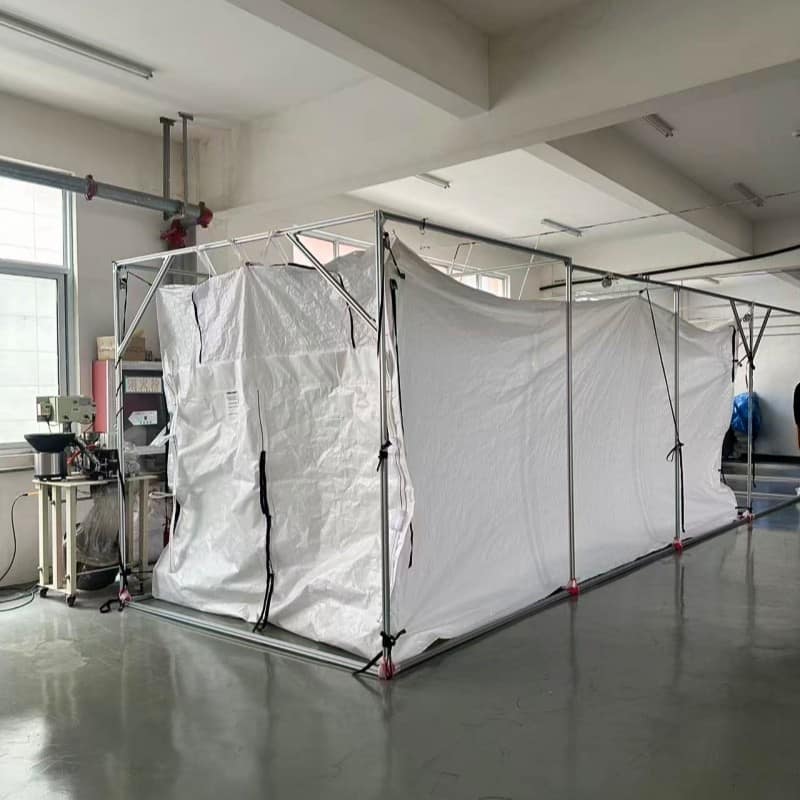
How to Verify RoHS Compliance When Sourcing Container Liners
The verification process starts before you request a quotation. Here is the approach I recommend to procurement teams evaluating container liner suppliers for RoHS compliance.
Request the supplier’s RoHS compliance documentation package as a pre-qualification step, not a post-order formality. The package should include third-party test reports for each material family the supplier uses: PE films, woven PP and HDPE fabrics, aluminum foil laminates, EPE foam cores, and accessories such as lifting loops and filling spouts. Confirm that the testing laboratory holds ISO 17025 accreditation with RoHS substance analysis within its accredited scope.
Ask specifically about pigment and additive supply chains. The most common RoHS failure mode in container liners is not the base polymer. It is a colored liner where the pigment supplier substituted a cadmium-based formulation for cost reasons without the liner manufacturer’s knowledge. A manufacturer who audits their pigment suppliers for RoHS compliance and maintains incoming material verification records is operating at a different level of supply chain control than one who relies on supplier declarations alone.
For thermal container liners with multiple bonded layers, request test data for each individual layer, not just the finished composite. The bonding adhesives and lamination processes introduce additional material inputs that fall under RoHS scope. Our GewenChamp TL-03 liner uses an MPET, double bubble, MPET construction with a total bubble layer thickness of 5mm. RoHS test data covers the outer MPET film, the double bubble polyethylene layer, the inner PET MPET layer, and the adhesion promoters used to bond them.
Compare the documentation date against the production batch. A RoHS test report from three years ago does not verify today’s production. Raw material sources change, additive formulations change, and testing should be refreshed on a defined schedule. We maintain a rolling twelve-month testing cycle across all product families and re-test whenever a raw material supplier changes.
If your cargo falls under food contact regulations in addition to RoHS, verify that the supplier’s RoHS documentation aligns with their food-grade certifications. FDA-compliant and LFGB-certified liners from our product range carry both sets of documentation. The testing protocols overlap partially but not completely. Do not assume that one certificate covers the other.
Common Questions About RoHS and Container Liners
Is RoHS compliance mandatory for container liners shipped to non-EU destinations?
RoHS is an EU regulation, so the direct legal obligation applies to products placed on the EU market. In practice, the requirement has become globalized. Many multinational buyers, including food and pharmaceutical companies based in North America, the Middle East, and Asia-Pacific, include RoHS compliance in their supplier qualification criteria regardless of destination. If your cargo is ultimately destined for an EU-based manufacturer or consumer, RoHS compliance on packaging materials may be required under your customer’s supply chain policy even if your shipment port is outside the EU.
Can I rely on a supplier’s ISO 9001 certification as proof of RoHS compliance?
ISO 9001 confirms that the manufacturer operates a quality management system. It does not verify RoHS compliance. A factory can be ISO 9001 certified and still use a non-compliant pigment in a colored liner because their incoming material inspection did not include RoHS substance screening. Use ISO 9001 as a positive indicator of overall quality discipline, but demand separate RoHS test reports from an accredited laboratory as the actual compliance evidence.
What is the difference between RoHS and REACH for container liners?
RoHS restricts six specific hazardous substances and applies to electrical and electronic equipment plus associated materials. REACH, the Registration, Evaluation, Authorisation and Restriction of Chemicals regulation, is broader. It regulates chemical substances across all products sold in the EU and maintains a candidate list of Substances of Very High Concern that runs to over 200 entries. A container liner that is RoHS compliant may still contain substances that require REACH registration or are subject to REACH restrictions. For full EU market access, both standards should be addressed. Our DBL-W01, DBL-W03, DBL-W06, DBL-04W, and DBL-F01 liner products carry both RoHS and REACH certifications because European buyers consistently require both.
How often should RoHS compliance testing be renewed?
Annual testing is the minimum standard. More frequent testing is warranted when the manufacturer changes a raw material supplier, introduces a new pigment or additive, or modifies a lamination process. If you are placing a large order for a multi-month shipping program, confirm that the RoHS test reports are dated within the twelve months preceding your shipment date. For our long-term supply agreements, we provide updated RoHS documentation at each annual renewal and flag any material changes to the buyer before they affect production.
Do anti-static container liners introduce additional RoHS risks?
Anti-static treatments can introduce RoHS risks depending on the chemistry used. Some older anti-static formulations relied on heavy metal compounds or brominated additives. Modern anti-static container liners typically use carbon-based or amine-based anti-static agents that do not trigger RoHS restrictions, but this should be verified through testing, not assumed. If your application requires anti-static properties, request RoHS test data specifically covering the anti-static treated material, since the base liner’s compliance documentation does not necessarily cover the treated variant. Share your anti-static requirements along with your destination market, and we can confirm which liner products carry both the anti-static performance and RoHS documentation you need.
Why Documentation Quality Defines a Reliable Container Liner Supplier
The documentation package you receive from a container liner supplier is not a formality. It is the paper trail that protects your cargo from regulatory detention, your customer relationships from compliance disputes, and your supply chain from avoidable disruptions. In fifteen years of working with global buyers, the suppliers who invested in thorough, layer-level RoHS documentation were the same suppliers who delivered consistent product quality shipment after shipment. Compliance documentation reveals how a manufacturer thinks about quality, not just whether they passed a test. If your current liner supplier cannot produce layer-level RoHS test reports from an ISO 17025 accredited laboratory, evaluate alternatives before your next shipment. Share your product specifications and destination market requirements with our team at [email protected] or call +86 523 87683880, and we can confirm which GewenChamp liner products match your compliance profile with the corresponding documentation.
 English
  German
  Spanish