
Choosing a thermal container liner isn’t just about picking the thickest option or the lowest price. It’s about matching the material structure to the physical realities of your shipping route, your cargo sensitivity, and your acceptable risk of temperature excursion. Most liner failures happen not because a product is “bad” but because the wrong material architecture was selected for the job.
This comparison breaks down the four material categories you’ll encounter when sourcing insulated container liners—foil-based, foam-based, woven-based, and composite—so you can make a choice backed by performance data, not supplier claims.
What “Thermal Liner Material” Really Means
A thermal container liner is never a single material. It’s always a layered system. Even a “foil liner” typically includes a structural backing layer. The performance comes from how those layers are combined: which material handles radiant heat, which one slows conductive heat transfer, and which one provides mechanical strength and moisture resistance.
For practical decision-making, we group liners into four material families, based on the dominant insulation mechanism:
- Reflective foil systems — using metalized film or aluminum foil to reflect radiant heat
- Foam insulation systems — using closed-cell foam to resist conductive and convective heat transfer
- Woven fabric systems — using woven polyolefin fabric as a flexible structural base, often combined with reflective layers
- Composite systems — layering multiple distinct materials (foil, foam, bubble cushion, film) to target multiple heat transfer modes simultaneously
The table below shows real-world material combinations from the GewenChamp™ thermal liner series to illustrate how these categories play out in manufactured products.
| Material Category | Real-World Example | Core Insulation Mechanism | Typical R-Value (approx.) | Best For |
|---|---|---|---|---|
| Reflective foil + woven base | TL-01 (Woven PE + double-sided Al foil) | Radiant heat reflection (95–97%) | 0.8–1.2 m²·K/W | Moderate climates, short to medium voyages |
| Foam composite | TL-02 (PET Al foil / Woven PE / 3mm EPE / PET Al foil) | Conduction resistance via 3mm EPE core | 1.5–2.0 m²·K/W | Long-haul, extreme temperature swings, moisture-prone routes |
| Reflective bubble composite | TL-03 (MPET / Double bubble / PET MPET) | Reflective + static air pockets | 1.2–1.8 m²·K/W | Frozen goods, high-value pharma, multi-modal transport |
| Lightweight composite film | TL-04 (MPET / PE composite film) | Reflective only, thin barrier | 0.5–0.8 m²·K/W | Short protective windows, non-critical temperature control |
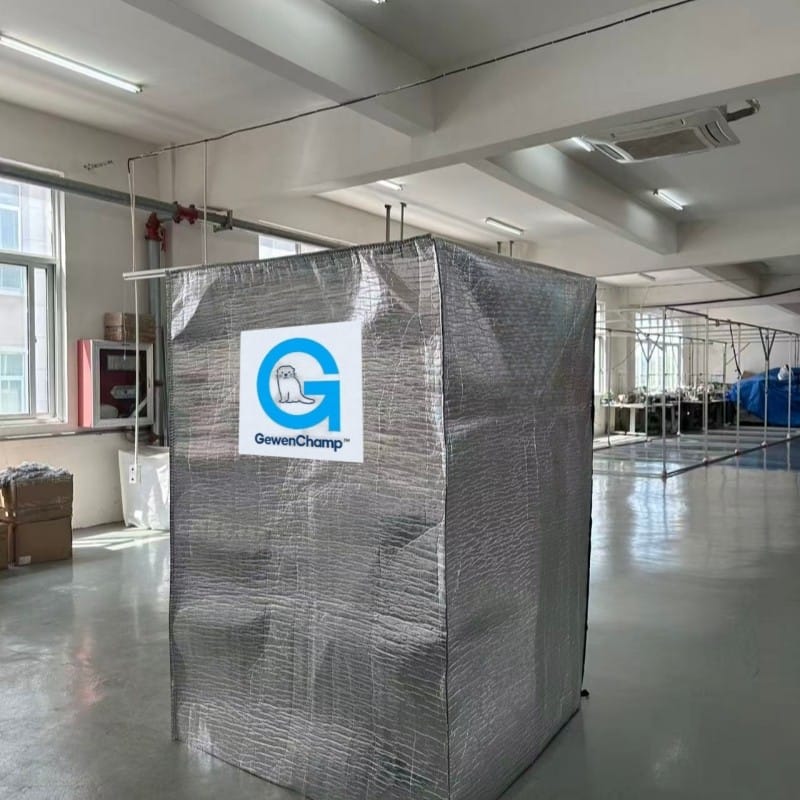
Reflective Foil Materials: Radiant Heat Control
Reflective liners work on a simple principle: around 93–98% of incoming radiant heat can be reflected away from the cargo space by a low-emissivity surface. The reflective layer is typically either genuine aluminum foil (8–12μm) or metalized PET (MPET) film (12–18μm).
Aluminum Foil vs MPET
- Aluminum foil reflects 95–97% of radiant heat and is more durable against flex cracking, but adds weight and cost.
- MPET (metalized PET) reflects 92–98% depending on metal deposition quality and is lighter and more economical, but can degrade under repeated folding or high humidity if not properly laminated.
Neither material stops conductive or convective heat on its own. A pure foil liner without an insulating core will perform poorly when the container wall is cold-soaked after days at sea. That’s why practical foil liners are always laminated to a structural backing, typically woven polyethylene fabric, as in the TL-01 configuration.
When Foil Liners Work Best
Foil-backed woven liners are most effective when the primary threat is direct solar radiation on the container roof and side walls during daytime transit. They are less effective against sustained ambient temperature differences of more than 15–20°C. Choose this type for shipping routes where average daily temperature fluctuations are the concern, not extreme polar cold or tropical heat holding for weeks.
Foam Insulation Materials: Conduction Resistance
Closed-cell polyethylene foam (EPE) is the workhorse of passive thermal packaging. Its job is not to reflect heat but to slow down heat transfer through the liner wall. A 3mm EPE layer with density around 25 kg/m³ has a thermal conductivity of ≤0.038 W/(m·K), which means heat moves through it roughly 10 times slower than through solid plastic film.
EPE Foam in Container Liners
In a high-performance foam liner like the TL-02, the EPE core is sandwiched between reflective layers. The outer reflective layer rejects solar radiation; the foam core delays heat ingress; the inner reflective layer blocks re-radiation from the liner itself. This four-layer architecture (PET Al foil / Woven PE / 3mm EPE / PET Al foil) is what makes it possible to maintain stable cargo temperatures inside a 40ft container on a 30-day ocean voyage.
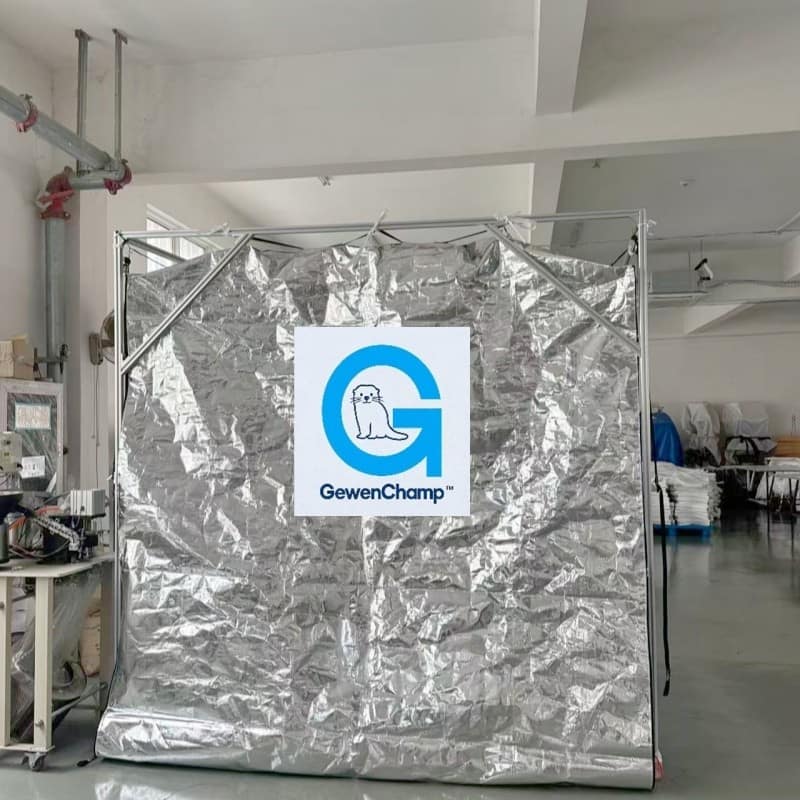
Another key advantage of foam composites is condensation control. The EPE core acts as a thermal break, keeping the inner liner surface temperature above the dew point longer than a thin film liner would. The TL-02’s moisture vapor transmission rate is ≤0.033 g/(m²·h·kPa), effectively eliminating “container rain” in most sea freight scenarios.
When Foam Liners Are Necessary
You need a foam-based liner when:
– Voyage duration exceeds 2–3 weeks.
– Temperature difference between ambient and cargo requirement exceeds 20°C.
– The cargo is hygroscopic (sugar, cocoa, grains) and moisture damage is as big a risk as temperature damage.
– You’re shipping through multiple climate zones (e.g., Shanghai to Rotterdam in winter).
The trade-off is weight and folded volume. Foam liners are bulkier to store and install, but that’s a minor cost compared to a spoiled shipment.
Woven Fabric Materials: The Structural Backbone
Woven polyethylene or polypropylene fabric rarely appears alone as a thermal liner material—its primary role is structural. However, it’s the foundation that makes a container liner installable, reusable, and tear-resistant.
A high-quality woven PE fabric (40–120 gsm) provides:
– Tensile strength: ≥1,800 N/5cm warp, ≥1,500 N/5cm weft (for 140 gsm grades)
– Tear propagation resistance during installation and cargo movement
– A stable base for laminating reflective films or bonding foam layers
Without a strong woven layer, a thermal liner can tear during the 10–15 minute installation process inside a rough-surfaced container. If the liner tears, the thermal performance collapses because the air gap between liner and container wall is lost—and that air gap is part of the insulation system.
Woven Fabric in Thermal Liners: TL-01 Example
The TL-01 uses double-sided PE aluminum foil lamination on a woven PE core. The aluminum foil handles radiation; the woven PE handles the physical stress of a 20–30 ton bulk load shifting during transit. This liner is reusable 3–5 times, which is only feasible because the woven core withstands multiple installation/removal cycles without losing integrity.
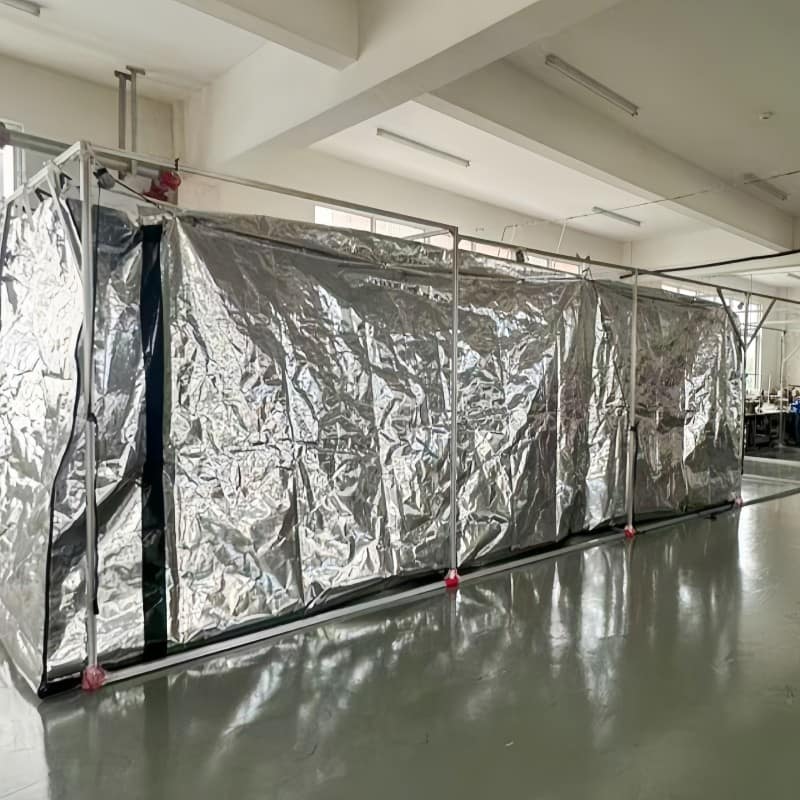
Composite Materials: Layering for Multi-Mode Protection
The most advanced thermal container liners are composites that combine reflective, conductive, and sometimes even convective barriers in a single engineered structure. Examples from the GewenChamp range include:
- TL-03 (MPET / Double Bubble / PET MPET): The double bubble layer (5mm total, 10–15mm bubble diameter) traps static air between two reflective MPET layers. This creates a secondary insulation barrier without adding the weight of foam. It also provides some shock absorption, which matters for rigid but brittle cargo like chocolate blocks or electronic components.
- TL-04 (MPET / PE Composite Film): A lighter, thinner alternative that combines a reflective metallized PET outer layer (≥92% reflectivity) with a polyethylene film inner barrier. It’s waterproof (IPX6), cost-effective, and suitable when you only need 24–48 hours of thermal protection inside a standard ambient range.
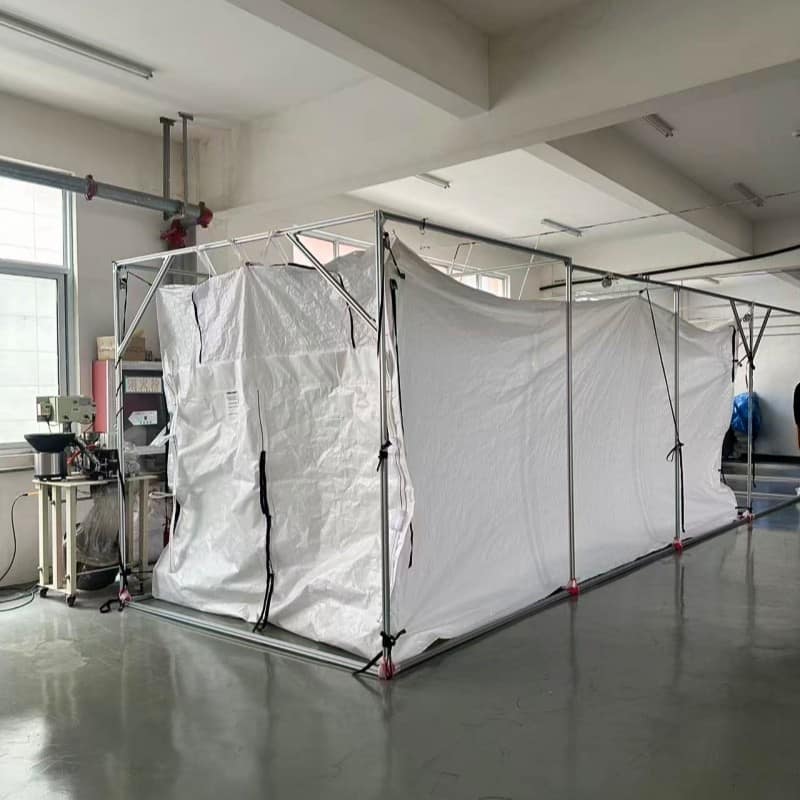
Composite liners allow you to fine-tune the balance of thermal performance, weight, cost, and mechanical durability. A frozen food exporter shipping from Brazil to the Middle East might choose TL-03 for its radiant + static air insulation. A fresh produce exporter moving from California to Japan might find TL-04 sufficient because the voyage is short and the temperature delta is manageable.
How to Compare Thermal Liner Materials Objectively
Rather than relying on vague terms like “premium insulation” or “high-quality material,” use these four measurable parameters when comparing suppliers:
1. Thermal Resistance (R-Value)
Ask for the R-value (m²·K/W) of the liner system, not just the individual material. An R-value of 1.5 means the liner reduces heat flow by a factor of 1.5 compared to bare container walls. For long-haul tropical routes, aim for R ≥ 1.5. For moderate routes, R ≥ 0.8 may be acceptable.
2. Moisture Vapor Transmission Rate (MVTR)
If your cargo is moisture-sensitive, MVTR matters as much as thermal performance. A liner that keeps temperatures stable but lets moisture through will still cause condensation damage. Acceptable MVTR for food-grade applications is typically ≤0.05 g/(m²·h·kPa).
3. Tear and Tensile Strength
A liner that’s thermally excellent but tears easily during loading is useless. Check tensile strength in both warp and weft directions (≥1,500 N/5cm is a good baseline for woven-backed liners). For foam-only liners without a woven layer, verify tear propagation resistance.
4. Reusability and Total Cost of Ownership
A more expensive composite liner that lasts 5 voyages may have a lower cost per trip than a cheaper liner that fails after one use. Factor in installation labor, disposal costs, and cargo value at risk when comparing prices.
Selecting the Right Material for Your Cargo Profile
The decision tree is straightforward once you separate the different heat transfer modes and match them to your shipping reality:
- High solar radiation, short voyage, rugged cargo (e.g., plastic pellets, resin): Start with a foil-on-woven structure like TL-01. Cost-effective and handles frequent handling.
- Long ocean voyage, high temperature delta, food or pharma cargo (e.g., cocoa beans, vaccines, dairy): Move directly to a foam composite like TL-02. The cost adder is small compared to spoilage risk.
- Frozen or deep-chilled goods, multi-modal transport (e.g., IQF seafood, frozen dough): The double bubble composite (TL-03) gives you both radiant reflection and static air insulation without the bulk of foam.
- Short protective window, ambient temperature range, cost-sensitive cargo (e.g., fresh vegetables, consumer packaged goods): A lightweight composite film (TL-04) provides a thermal buffer at minimal cost and storage space.
In all cases, verify that the supplier can provide independent test data—not just material specifications, but whole-liner performance under simulated shipping conditions. Certifications like FDA, LFGB, and ISO 9001 indicate the manufacturer has a quality system that supports consistent material production, which is essential when you’re buying container liners by the container-load.
The Risk of Oversimplifying Material Choice
One final reality check: a material that performs well in one liner architecture can fail in another. Metalized PET is an excellent reflective surface, but if it’s laminated to a flimsy backing film, the entire liner can wrinkle and lose reflectivity during installation. EPE foam provides superb conduction resistance, but if the outer reflective layer is perforated, the foam becomes a moisture trap. The system matters more than the individual material.
When you compare thermal liners, compare complete constructions, not just ingredient lists. That’s the difference between buying a material and buying a thermal protection solution that arrives intact at the destination port.
FAQ: Thermal Liner Materials
Q: Is aluminum foil always better than MPET for reflection?
A: Aluminum foil reflects 95–97% of radiant heat and is mechanically more robust, but MPET can achieve 92–98% reflectivity at a lower weight and cost. For applications where the liner is installed once and not flexed repeatedly, MPET often matches foil performance practically. For reusable liners, foil-backed constructions tend to last longer.
Q: Can a foam liner also provide moisture protection?
A: Yes, a well-designed foam composite liner like the TL-02 uses an outer reflective film and a closed-cell foam core to block both heat and moisture vapor. The foam itself does not absorb water, and the laminated layers create a continuous moisture barrier. However, a damaged outer layer can compromise this.
Q: Do I need a woven fabric layer in my thermal liner?
A: If the liner will be reused, or if the cargo load exceeds 15 tons and may shift, a woven reinforcement layer significantly reduces tearing risk. For single-use, lightweight applications, a film-only composite may be sufficient, but you lose durability.
Q: How do I verify a supplier’s material performance claims?
A: Request third-party test reports for the complete liner, not just raw material data sheets. Look for thermal conductivity values, MVTR, tensile strength, and ideally a thermal simulation of a representative shipping route. ISO 9001 certification indicates process control but does not itself prove thermal performance.
Q: What is the cost difference between a basic foil liner and a full foam composite?
A: A lightweight reflective film liner (TL-04 type) might cost roughly half to one-third of a full foam composite (TL-02 type). However, if a thermal failure leads to cargo rejection, the liner cost becomes irrelevant. Calculate cost per protected metric ton, not cost per liner.
When you’re ready to specify a thermal liner material, contact Giant Flexpack to discuss your route, cargo, and temperature data. Our technical team will help you select the right composite construction from the GewenChamp™ series, backed by 20+ years of container liner manufacturing and real-world performance data across global shipping lanes.
 English
  German
  Spanish