
Relying on an ISO 9001 certificate alone to judge a container liner factory is a mistake I see procurement teams make regularly. The standard provides a framework, but what matters is how a manufacturer applies that framework to the specific materials, production steps, and performance testing that determine whether a liner protects your cargo or fails mid-voyage. Over fifteen years in thermal packaging and bulk liner manufacturing, I have walked through dozens of factory audits and seen firsthand that two factories holding the same certificate can produce liners with vastly different seam strengths, moisture barrier integrity, and thermal resistance. This article explains what ISO 9001 quality assurance actually looks like inside a container liner operation, including the material controls, production tests, and compliance integration points that separate a dependable supplier from a paperwork-only operation.
The Scope of ISO 9001 Certification in Container Liner Production
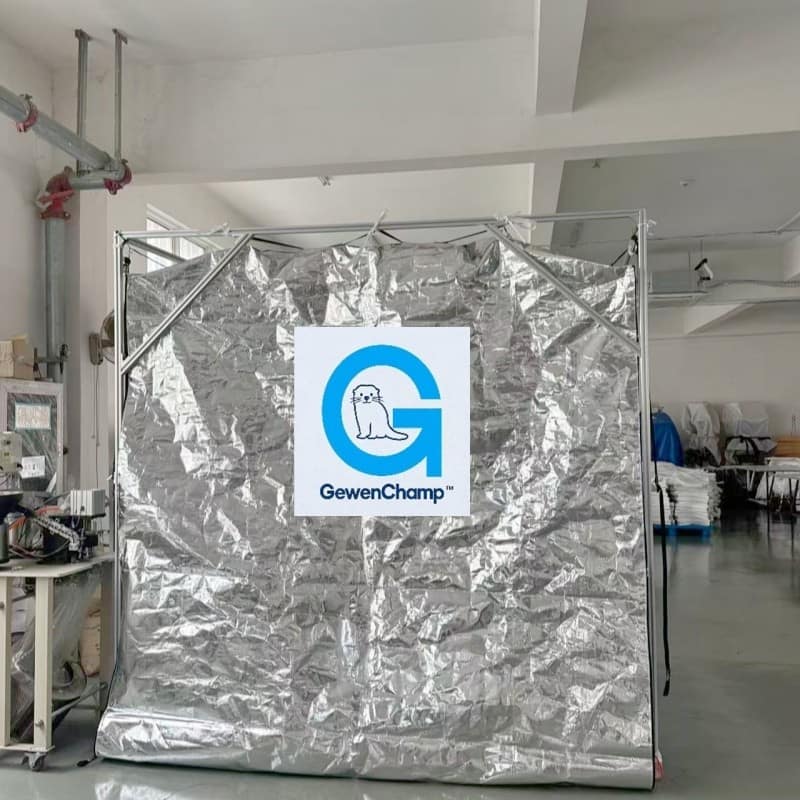
ISO 9001 defines a quality management system that covers design, raw material procurement, production, inspection, and customer feedback. In container liner manufacturing, the scope extends across several critical control points that directly affect cargo safety. A certified factory must maintain documented procedures for each material lot that enters production. For instance, the woven PE fabric used in a TL-01 Thermal Container Liner or a dry bulk liner must arrive with batch-specific test certificates showing tensile strength values—warp ≥1,800 N/5cm and weft ≥1,500 N/5cm for standard HDPE woven fabric. The factory’s incoming quality control team is required by the standard to sample each shipment and verify those values before the material reaches the cutting table.
Beyond raw materials, ISO 9001 demands that every production step—lamination, heat welding, spout attachment, lifting loop fixation—follows controlled work instructions with defined acceptance criteria. This is not just about having clean documentation. When we built our quality system at Giant Flexpack, we learned that the difference between a liner that holds 25 metric tons and one that fails at 15 tons often comes down to whether the operator checks the seam temperature gauge every thirty minutes, a requirement documented in the control plan. The standard also mandates that non-conforming product be identified, segregated, and analyzed for root cause. In practice, that means a liner with a sealing defect found during a post-production air-leak test does not get shipped after a quick patch; it triggers a corrective action report that traces the defect back to machine settings, operator training, or material defects. For buyers, this translates to fewer surprise failures in the field.
How Certified Factories Control Material Quality and Consistency
Container liner performance is material-dependent. Whether you are specifying a PE film liner for food-grade sugar transport or a multilayered thermal liner for temperature-sensitive resins, the raw materials must meet precise chemical and physical specifications that go beyond generic supplier data sheets. A factory operating under ISO 9001 must maintain an approved vendor list with periodic requalification audits. In our own sourcing, we require LDPE film suppliers to provide melt flow index and density certificates alongside tensile elongation reports for every delivery of the 140-micron film used in DBL-F01 liners. We then conduct in-house verification using a universal testing machine, comparing results against the 1,500 N/5cm warp tensile benchmark before the material is released to production.
This gatekeeping function is not optional under the standard. Documentation alone does not satisfy the clause on externally provided processes and products. The factory must demonstrate that it evaluates the impact of incoming material variation on the final liner quality. For example, the EPE foam layer in the TL-02 Thermal Container Liner has a specified density of 25 kg/m³ and thermal conductivity ≤0.038 W/(m·K). If a batch arrives with a density of 22 kg/m³, the thermal resistance drops measurably. An ISO 9001-certified factory will catch that through its incoming inspection plan and either reject the batch or initiate a deviation review with documented justification. Buyers who source from factories without this discipline risk container liners that underperform even though the material looks identical to the approved sample.
Production Testing and Performance Verification for Container Liners
Most container liner failures that I have investigated—seam rupture during discharge, condensation inside a thermal liner, powder leakage—trace back to insufficient in-process testing, not to an inherent material flaw. The ISO 9001 standard requires the factory to implement monitoring and measurement at appropriate stages to verify that product requirements are met. For container liners, the key testing stages include weld seam integrity, dimensional verification, load capacity, and, for thermal liners, thermal performance evaluation.
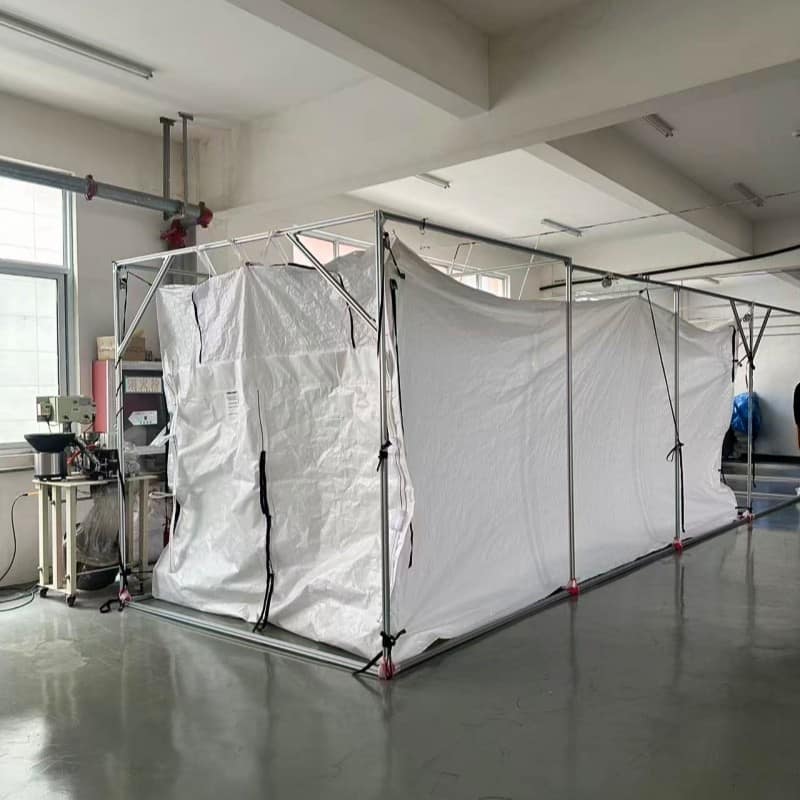
A practical example from our facility illustrates the depth required. The TL-03 Thermal Container Liner uses an MPET/double bubble/MPET four-layer structure with heat-welded seams. During production, we pull samples every two hours and perform a seam peel test using a tensile tester to confirm that bond strength exceeds 15 N/15mm. If the reading drops, we stop production and adjust the welding temperature or pressure. This is not a third-party certification requirement; it is a factory-level production control mandated by a functioning quality management system. Similarly, for sift-proof liners like the DBL-W06, every completed liner undergoes a pressurized air test with PU-taped seams to confirm zero leakage for particles above 50 mesh. A factory that merely holds the certificate but skips these process controls will pass an annual audit because the procedures are documented, but the actual product consistency will be poor. As a buyer, you should ask not just “are you ISO 9001 certified?” but “what in-process tests do you perform, and at what frequency?”
Bridging ISO 9001 with Product Certifications and Compliance
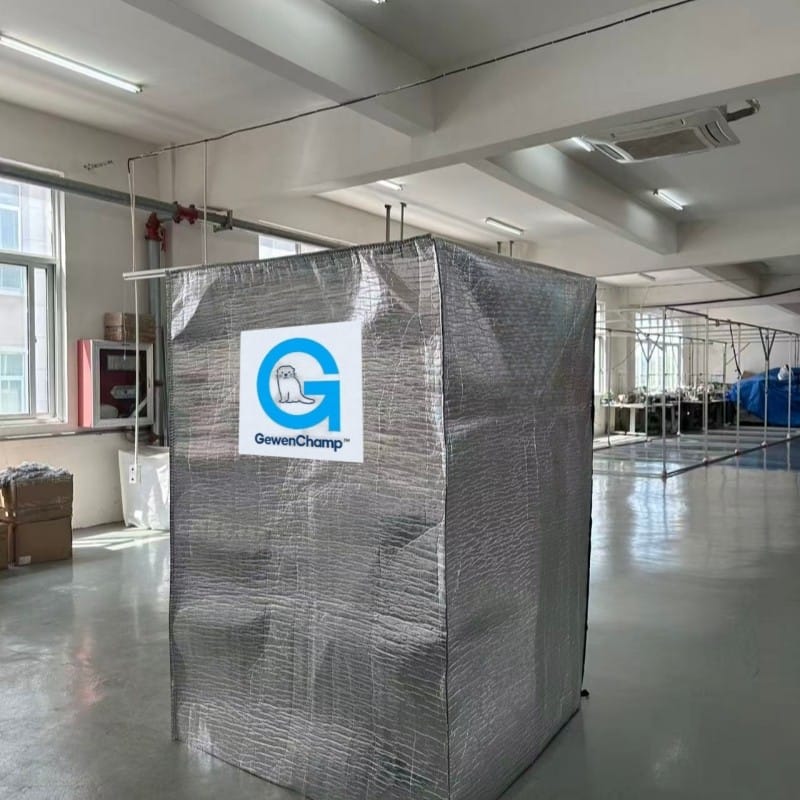
A container liner factory rarely ships product with only an ISO 9001 certificate. Food-contact liners carry FDA and LFGB approvals. Liners entering the European market need REACH and RoHS compliance documentation. Thermal liners may have SGS test reports. ISO 9001 serves as the management backbone that ensures these product-level certifications are not just initial one-time achievements but are maintained through ongoing compliance activities.
The standard’s clause on preservation requires that the factory control the handling and storage of finished liners to prevent contamination that would compromise food-grade status. That means dedicated, clean storage areas with pest control and humidity monitoring, not just a shared warehouse floor. When we produce FDA-compliant PE film liners for beverage or sugar transport, the film is segregated from industrial-grade materials throughout production, and cleaning records between runs are maintained. The REACH compliance for products like the DBL-F02 30FT PE film liner involves more than an absence of restricted substances; it requires documented traceability from resin supplier to final liner, which the ISO 9001 quality system enforces through batch tracking. If a buyer requests a REACH declaration, the factory retrieves the raw material lot numbers used in that production order and cross-references supplier assurance letters. Without the quality management infrastructure, this traceability collapses, and the buyer receives a generic certificate that may not correspond to the actual liner received.
Evaluating a Factory’s Quality System Beyond the Certificate
I have entered factories that proudly display an ISO 9001 certificate in the reception area while the production floor tells a different story. Evaluating a supplier’s quality system requires going beyond the paper and looking at operational evidence. Start with the calibration status of measurement equipment. A tensile tester with an expired calibration sticker means the factory is accepting raw material based on unverified data. Walk the production line and observe whether operators follow documented settings. If the heat-seal temperature displayed on the machine differs from the value written in the control plan and nobody can explain why, the documented system has de-coupled from reality.
Another powerful indicator is how the factory handles non-conformances. Ask to see a recent corrective action report. A healthy system will have open reports with root cause analysis and verified corrective actions, not a closed report that says “operator retrained” every time. When we audited a potential subcontractor for woven liners, we reviewed their complaint log and found a spike in seam failures traced to a specific welding machine. Their corrective action included replacing the heating element, re-validating the weld settings, and increasing in-process sampling frequency for two weeks until the data showed the process had stabilized. That is the level of systemic response that ISO 9001 intends. A supplier that cannot show that kind of specific, data-driven improvement is relying on the certificate as a marketing badge rather than an operational discipline.
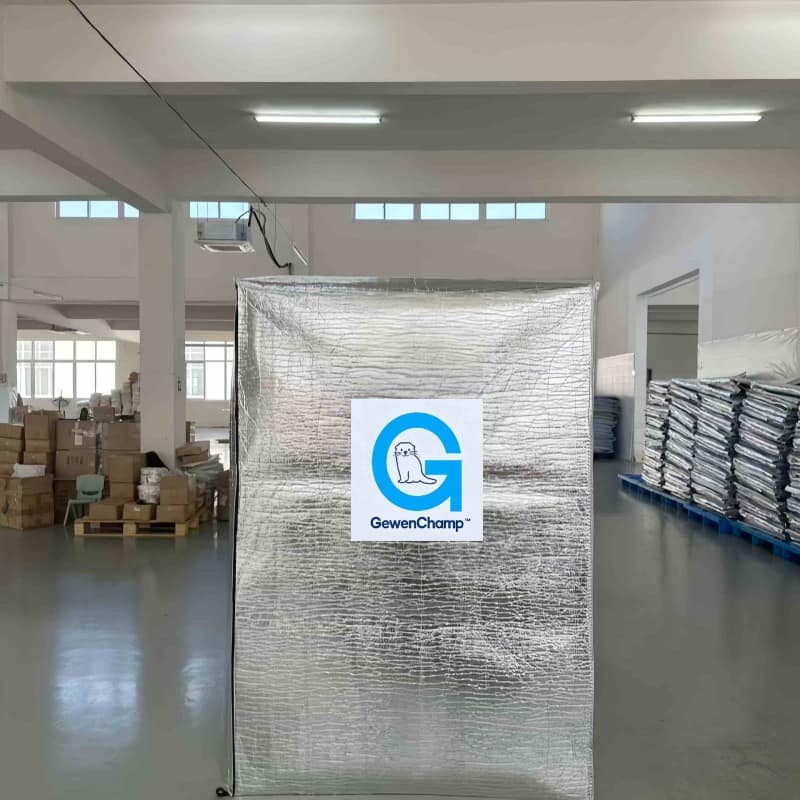
Container liner manufacturing involves multiple interdependent processes—lamination, cutting, welding, fitting attachment, packaging—and a quality system that only exists in the quality manager’s laptop will not deliver consistent cargo protection. The factories worth partnering with treat ISO 9001 as the operating rhythm of the plant, not a preparation exercise for the annual audit. When you evaluate suppliers, prioritize those who can discuss real production data, testing frequencies, and failure analysis examples over those who can only produce a certificate and a well-formatted quality manual.
Common Questions About ISO 9001 Container Liner Factories
What does ISO 9001 actually require from a container liner factory?
It requires a documented quality management system covering everything from customer requirements review to delivery. For container liners specifically, it demands incoming material inspection, process control, final inspection, traceability, and corrective action processes. The standard does not set product specifications; it mandates that the factory define and consistently meet them.
Is an ISO 9001 certificate alone enough to guarantee liner quality?
No. Without evidence of in-process testing—seam strength verification, air-leak checks, thermal resistance measurement—the certificate confirms that a system exists, not that it functions effectively. I have seen certified factories ship liners with inconsistent weld quality because their inspection sampling plan was too sparse to catch intermittent failures.
How does ISO 9001 relate to FDA or REACH compliance for container liners?
ISO 9001 provides the management structure to maintain ongoing compliance. It ensures that raw materials are sourced from approved suppliers, traceable to production batches, and that any changes—like a new resin source—are reviewed for regulatory impact before implementation, preventing accidental non-compliance.
What documentation should a buyer request from an ISO 9001 certified factory?
Request the current ISO 9001 certificate with scope statement, a sample incoming material inspection record, and a sample in-process test report for the specific liner type you are sourcing. These documents reveal whether the quality system produces actual data, not just procedures. Also ask for the most recent internal audit summary, which often exposes systemic issues more honestly than the external audit report.
Can a factory be ISO 9001 certified but still produce poor-quality liners?
Yes. The standard certifies the quality management system, not the product. If the system allows wide tolerance or inadequate testing frequency, the product can be inconsistent while satisfying the documented requirements. The certification body audits conformity to the standard, not design adequacy or testing rigor. This is why buyer-side evaluation must go deeper than the certificate.
If your team is sourcing container liners and you need to verify that a factory’s quality system actually controls the critical parameters that matter for your cargo, we can walk you through what to look for and what to ask. Reach out to our technical team at [email protected] or call +86 523 87683880 with your part number and load requirements—we will help you map the testing and documentation points that matter for your specific application.
 English
  German
  Spanish