
When procurement managers evaluate bulk packaging suppliers, one model consistently delivers unexpected technical depth: the Sino-American packaging joint venture. These enterprises do more than pool capital; they merge the stringent quality management frameworks and innovation mandates typical of U.S. engineering cultures with the manufacturing discipline and material expertise characteristic of China’s advanced industrial clusters. The result is a class of thermal container liners, dry bulk liners, and pallet covers that outperform what either side could produce alone. At Giant Flexpack (Taixing) Co., Ltd., a Sino-American joint venture founded in 2004, we have spent two decades proving that cross-border engineering partnerships produce packaging innovation that directly reduces cargo loss, simplifies regulatory compliance, and shortens supply chain response times.
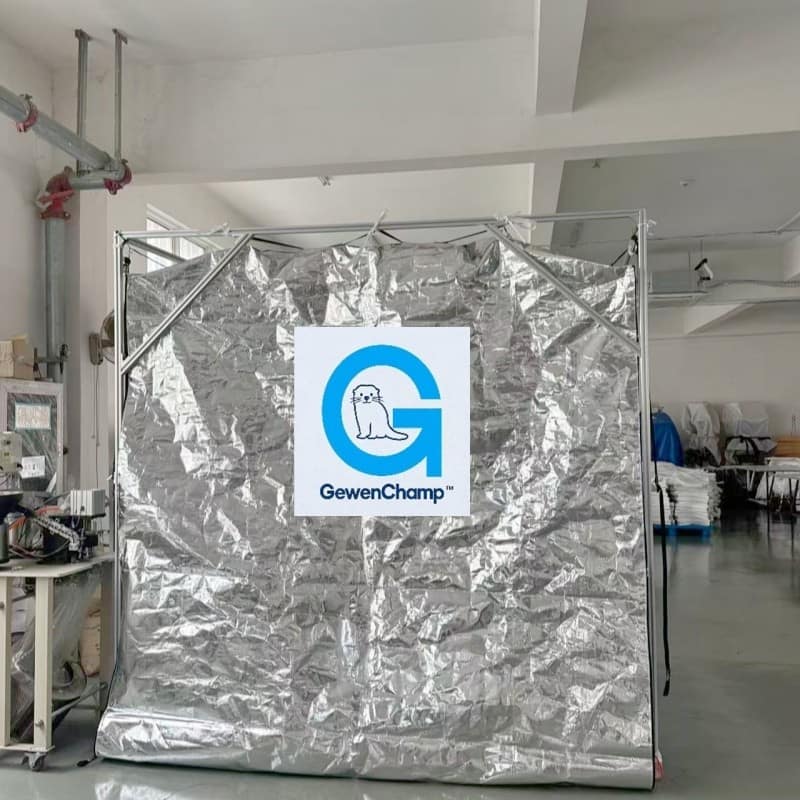
The Unique Foundation of Sino-American Packaging Joint Ventures
A Sino-American packaging joint venture is not simply a factory with dual ownership. It is an active collaboration where design specifications, testing protocols, and continuous improvement cycles are shaped by both sides. In our experience, the American influence brings a rigorous approach to failure mode analysis and documentation, while the Chinese team contributes deep hands-on process control and rapid prototyping at scale. This combination addresses a weakness that frequently undermines single-origin suppliers: the gap between design intent and production reality. When our engineering teams in Taixing receive a custom specification for a cocoa bean liner that must withstand 40 days at equatorial humidity, the American-origin validation protocols ensure that every seam, every reflective layer, and every anti-condensation barrier is tested to documented criteria before the first production run. Chinese manufacturing proficiency then delivers that validated design consistently across high-volume orders without the cost escalation that would accompany a purely Western production facility.
In practical terms, this joint ownership structure forces accountability in three areas that matter most to professional buyers: material traceability, certification integrity, and customization responsiveness. Because both partners have equity at risk, neither tolerates shortcuts. We track raw polymer batches back to resin suppliers, we maintain third-party lab reports for every product series, and we staff R&D with engineers who can discuss multilayer composite performance in terms of thermal conductivity (≤0.038 W/(m·K) for our EPE foam core) rather than marketing adjectives.
How Cross-Border Expertise Produces Thermal Packaging Breakthroughs
Thermal container liners illustrate how Sino-American joint ventures accelerate innovation in ways that go far beyond ordinary product development. Consider the challenge of shipping temperature-sensitive polymer resins from Shanghai to Rotterdam, where a container’s internal temperature can swing by more than 30°C over a three-week voyage. Protecting that cargo without resorting to expensive reefer containers demands a passive insulation system that reflects radiant heat, blocks conductive transfer, and resists moisture ingress simultaneously. Achieving all three in a single, foldable liner that installs in 15 minutes requires a design process that integrates material science from both sides of the Pacific.
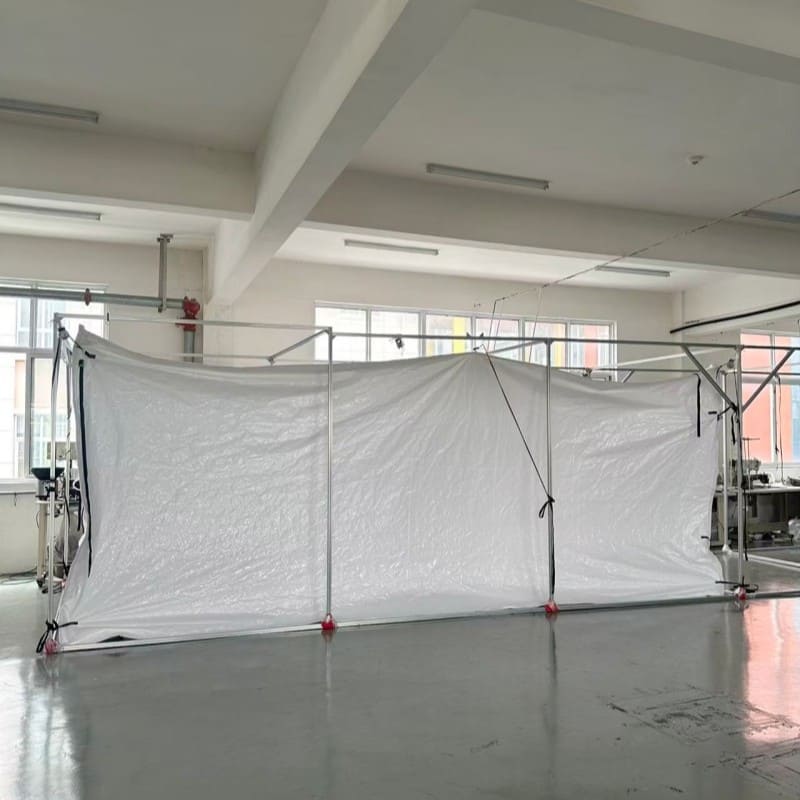
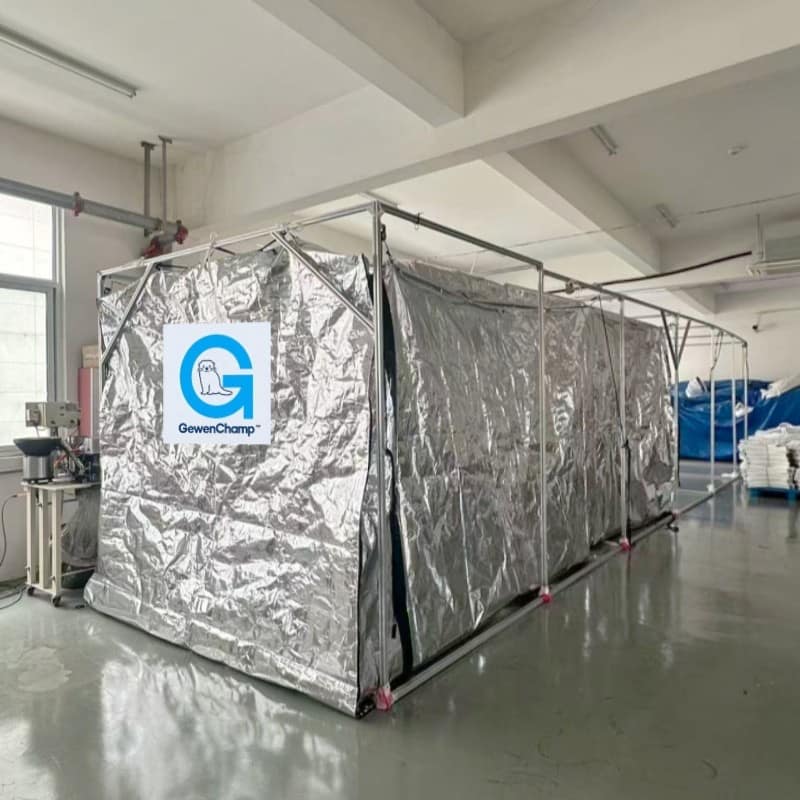
Our GewenChamp™ series did not emerge from a catalog. The TL-01 woven thermal fabric liner, for instance, uses double-sided PE aluminum foil lamination on a woven PE substrate to reflect 95–97% of radiant heat. The TL-02 adds a 3mm EPE foam core, dropping thermal conductivity to ≤0.038 W/(m·K) and extending the operational range down to -50°C. The TL-03 replaces the foam with a double-bubble MPET cushion that simultaneously insulates and absorbs vibration. These material combinations were developed because our American partners challenged the engineering team to push rejection rates below 0.3% while the Chinese side provided rapid iteration through pilot-scale production runs that a Western lab alone could not match.
The table below compares the core thermal liner solutions available through a well-integrated joint venture. Each variant addresses a different set of trade-offs between cost, thermal performance, reusability, and installation speed.
| Model | Material Structure | Key Performance | Best Application |
|---|---|---|---|
| TL-01 | Woven PE + Double-Sided PE Aluminum Foil | Reflects 95–97% radiant heat; reusable 3–5 times | General thermal protection for food, pharma, chemicals |
| TL-02 | PET Aluminum Foil / Woven PE / 3mm EPE Foam / PET Aluminum Foil | ≤0.038 W/(m·K); working range -50°C to 80°C | Long-haul frozen or high-heat cargo |
| TL-03 | MPET / Double Bubble / PET MPET | 98% radiant heat reflection; 5mm bubble cushion | Vibration-sensitive electronics and biologics |
| TL-04 | MPET / PE Composite Film | Lightest weight; 92% heat reflection; waterproof IPX6 | Fresh produce, standard pharma, cost-sensitive lanes |
These products demonstrate a pattern: the joint venture model enables a richer technical design space because it removes the informational distance between market requirements and manufacturing capabilities. When a North American beverage exporter recently asked us to optimize a top-loading liner for bulk wine in 40HQ containers to reduce oxidation risks, our product team combined U.S.-originated oxygen barrier testing protocols with Chinese in-house extrusion expertise to prototype a modified PE film liner within six weeks. That speed would be unrealistic for most single-origin manufacturers without similar cross-border engineering integration.
If your program involves temperature-sensitive cargo with narrow excursion tolerances, it is worth confirming a liner’s thermal conductivity and moisture vapor transmission rate figures against independent lab reports rather than relying on supplier claims alone. We encourage procurement teams to request these data sheets early in the evaluation process to avoid discovering performance gaps after shipment, and you can reach our technical team at [email protected] to discuss your specific lane conditions.
Certification Rigor: Meeting Global Standards as a Baseline
For food and pharmaceutical exporters, certification is not a marketing checkbox; it is a legal requirement. Sino-American packaging joint ventures are structurally advantaged in maintaining multiple international certifications because the U.S. partner typically imposes documentation standards that exceed minimum audit criteria. At Giant Flexpack, every GewenChamp thermal liner and each PE film container liner carries FDA, LFGB, ISO 9001, REACH, and RoHS certifications not as accumulated badges but as integrated requirements that shape raw material selection, production line hygiene, and batch testing frequency. That layered compliance is a direct consequence of the joint venture’s governance model.
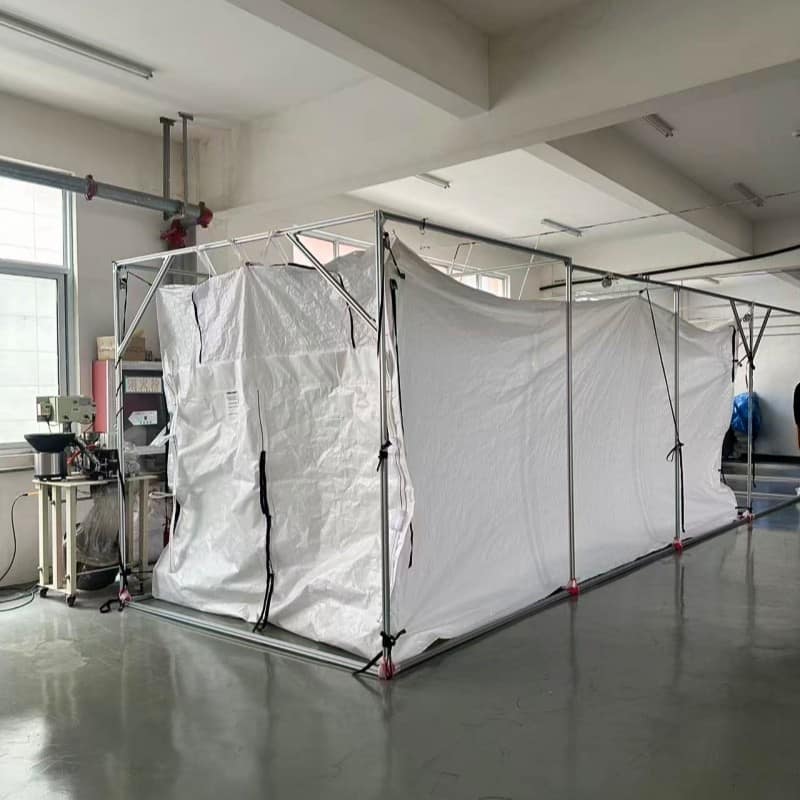
The American side of our partnership views FDA 21 CFR compliance as a starting point, not a stretch goal, because the U.S. food packaging market demands it. The Chinese side contributes detailed process documentation that satisfies ISO 9001 auditors and EU REACH substance tracking requirements simultaneously. A purely Chinese manufacturer might approach European certification as a one-off project, incurring significant consulting fees and lead time. A purely American manufacturer might struggle with the unit-level traceability that REACH and RoHS substance restrictions demand across complex multilayer products. Our internal system handles both daily. When we ship a DBL-W02 malt-grade container liner to a German brewery, we provide SGS migration test reports, LFGB conformity statements, and ISO 22000 process certificates in a single package because the quality system was built to satisfy both regulatory environments from inception.
The practical takeaway for buyers is that verifying a supplier’s certifications should go beyond checking logos on a website. Ask how the certifications interrelate: does the supplier’s ISO 9001 system automatically trigger REACH substance reviews? Are FDA and LFGB material grades segregated in production? A genuine Sino-American packaging joint venture can demonstrate that these systems operate simultaneously, not sequentially. This integration matters because a recall caused by a single noncompliant lot can erase years of supply chain trust.
From Design to Deployment: Customization That Reduces Supply Chain Risk
Standard container liners solve standard problems. But anyone who has shipped kaolin clay through the Gulf of Aden in August or transported polycarbonate resin to a cleanroom facility in Singapore knows that standard solutions often leave critical risks unaddressed. Customization is where the Sino-American joint venture model shows its strongest advantage.
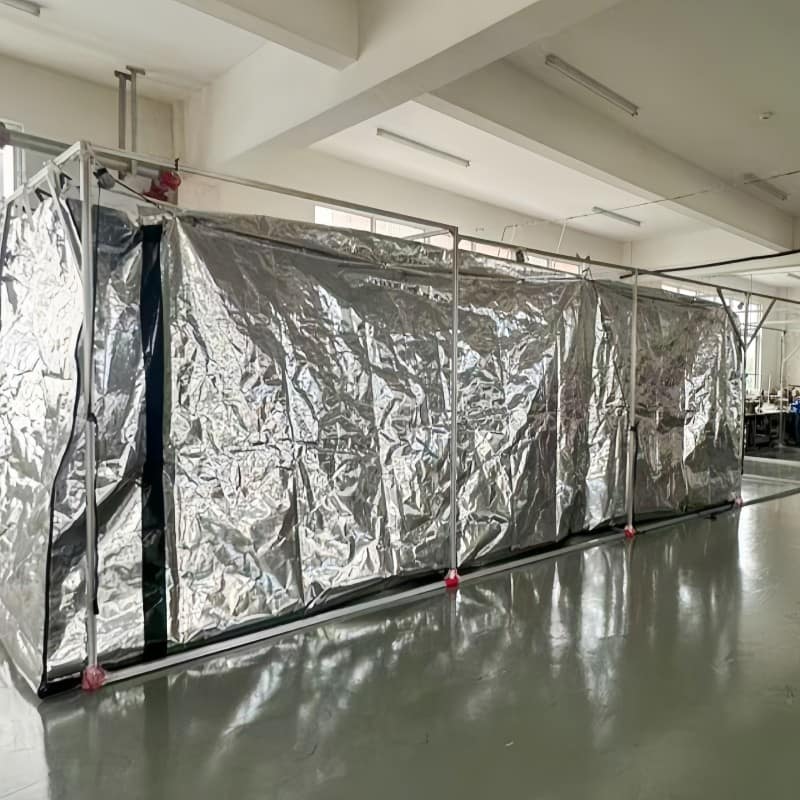
The OEM and ODM projects we handle typically begin with a detailed lane analysis: What are the origin and destination climates? Is the cargo hygroscopic, dusty, or prone to electrostatic discharge? Does unloading use gravity discharge, pneumatic systems, or manual labor? These questions cannot be answered by a catalog selection. Our engineering team, drawing on both American-origin risk assessment frameworks and Chinese production floor experience, designs liners that account for specific discharge port sizes, lifting loop ratings (each DBL-W01 loop bears ≥5 tons), and anti-static treatments for combustible powders. We have produced sift-proof woven liners for titanium dioxide powder that use PU-taped seams to achieve zero-leak performance for particle sizes ≥50 mesh, a specification that emerged from a joint development between our American client’s quality team and our Taixing process engineers.
This custom approach changes the buyer’s risk profile. Instead of adapting logistics operations to fit an existing liner, procurement teams can specify the liner to match their existing container loading equipment, discharge infrastructure, and regulatory filing requirements. The result is fewer cargo contamination claims, lower insurance costs, and shorter demurrage times at the destination port. When a cocoa bean trading company came to us with persistent moisture damage claims on their West Africa-to-Europe route, the joint venture’s ability to prototype a double-coated woven liner with enhanced anti-condensation properties, test it in a simulated monsoon environment, and ship the first container within 90 days directly reduced their cargo loss ratio from 1.2% to under 0.2%. That speed-to-market is difficult to replicate without the combined design authority and manufacturing control that a well-structured joint venture provides.
How to Evaluate a Sino-American Packaging Partner
Not every entity calling itself a Sino-American joint venture operates as a true engineering partnership. Some are marketing constructs with separate legal entities and minimal technical integration. Buyers need a structured evaluation approach to distinguish genuine innovation capability from rebranded standard products.
First, examine the product development pipeline. A real joint venture will have co-owned intellectual property and products that could not exist without both partners’ contributions. Ask to see the design history of a specific liner model: who specified the material layers, who conducted the accelerated aging tests, and how the feedback loop between field performance and design revision works. At Giant Flexpack, our GewenChamp series originated from a joint decision to target the gap between high-cost reefers and minimal barrier films, a strategic direction that required both sides’ market intelligence.
Second, verify certification integration rather than individual certificates. Request the quality manual and ask how the system handles simultaneous compliance with FDA, LFGB, REACH, and RoHS. The answer should involve documented material flow segregation and periodic retesting, not a promise.
Third, assess the R&D lead time for a modest customization. A strong joint venture can propose a specification change, produce a sample, and complete in-house testing within weeks, not months. This speed reflects deep engineering collaboration, not just production speed.
Fourth, look for direct access to the engineers who will design your solution. If the sales process filters all technical questions through a non-technical account manager, the partnership depth is probably shallow. In a mature Sino-American packaging joint venture, procurement managers and quality engineers can speak directly to the product development team because that transparency is part of the governance model.
Common Questions About Working with Sino-American Packaging Joint Ventures
Are all Sino-American packaging joint ventures equally innovative?
No. Innovation depends on whether the partnership operates at an engineering level or merely a financial one. The most substantial technical output comes from ventures where both sides contribute to product specification, validation, and iteration, not just cost sharing. Look for companies that can explain the development history of their product lines in terms of specific design decisions, such as why a 3mm EPE foam core was chosen over a 5mm alternative based on thermal modeling results. If the supplier cannot provide that depth, the joint venture may be more of a legal structure than a technical collaboration.
I already have a packaging supplier. Why should I consider switching to a joint venture?
The decision to evaluate a Sino-American packaging joint venture often follows a specific event: a surprise cargo rejection at the destination port due to undocumented moisture exposure, a certification audit finding that the existing liner’s material origin could not be traced, or a repeated need for custom modifications that the current supplier takes too long to deliver. If your current packaging performs reliably and your compliance documentation is always audit-ready, switching may not be urgent. But if you face recurring variability in liner quality, slow response on customization requests, or mounting demurrage costs caused by installation complexity, the joint venture model tends to address those issues systematically rather than case by case.
How do I verify that a joint venture’s certifications are legitimately linked to the products I would receive?
Request a batch-specific certificate of analysis for a recent shipment that includes the full material disclosure and testing lab details. A genuine joint venture will be able to provide this within hours because its quality system generates such documents automatically. Additionally, ask whether the supplier can ship directly to EU or North American markets without a third-party importer of record performing supplementary testing. A supplier whose certifications are integrated into its operational system will have a clear path for direct market access.
Will a joint venture’s products always cost more than a domestic Chinese manufacturer’s equivalent?
The upfront unit price may be slightly higher, particularly for multilayer thermal liners with complex material stacks. However, the total cost of ownership often favors the joint venture product when you account for cargo loss reduction, certification compliance cost, and the engineering support included in the relationship. The cocoa bean trader mentioned earlier reduced moisture damage claims by over 80% in the first year, which more than offset the liner price differential. For standardized low-risk shipments, a simpler product from any reputable manufacturer may suffice. For lanes with temperature, humidity, or regulatory complexity, the performance differential tends to justify the investment.
Can a Sino-American packaging joint venture support OEM projects without requiring large minimum order quantities?
Yes, but the details matter. At Giant Flexpack, our OEM and ODM timelines depend on the complexity of the specification, not just volume. A modified DBL-W06 sift-proof liner with an adjusted discharge port might require a few hundred units as an initial trial order, after which the MOQ can be adjusted. We work with trading companies and manufacturers alike because the engineering value lies in solving the shipment integrity problem, not pushing volume. If your trial order needs to be small, specify the validation phase clearly, and a capable joint venture will structure the initial run accordingly. For most bulk liner projects, sharing your part number, annual volume estimate, and target delivery schedule with our team at [email protected] is the fastest way to get a tailored feasibility assessment and quotation.
 English
  German
  Spanish