
When sourcing container liners, many procurement teams focus on price and MOQ while overlooking the factor that most directly determines supply chain reliability: the factory’s actual production capacity. But capacity is more than a number; it is a function of structural stability, quality management maturity, and technological integration. In my experience, evaluating production capacity correctly prevents last-minute shortages, missed sailings, and quality drift. This article explains what container liner production capacity really means for your business and outlines the structural indicators that separate reliable manufacturers from those that struggle to deliver on time.
The Role of Production Capacity in Container Liner Supply Chains
A container liner factory’s rated capacity is often the first figure a procurement team sees on a supplier questionnaire. That number, stated in annual liner units or tons of output, tells you how many liners the facility can theoretically produce. But theoretical capacity and reliable supply are two different things entirely. Actual production capacity depends on whether the factory can sustain throughput when multiple large orders arrive simultaneously, when raw material lead times stretch, or when a key lamination line requires maintenance.
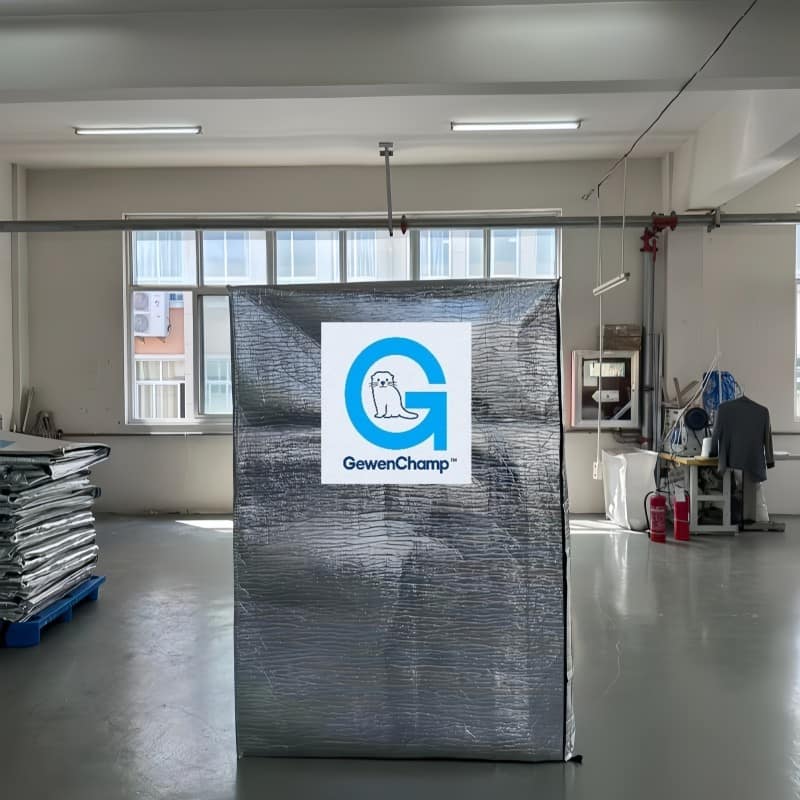
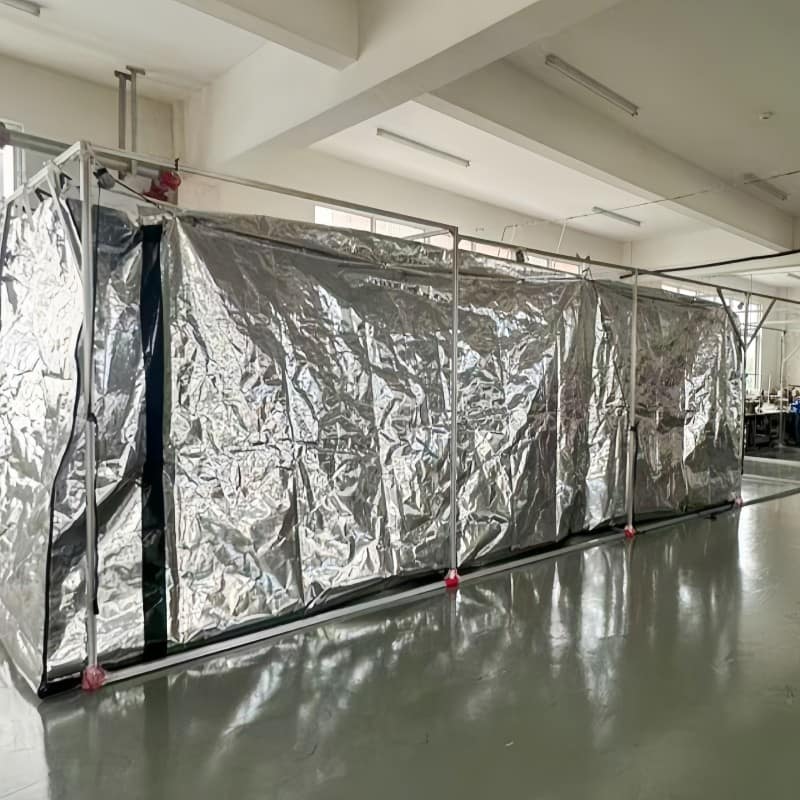
In the thermal insulation container liner segment, for example, production capacity is not just about sewing floor space. It involves controlled-environment lamination of reflective films like MPET onto woven substrates, followed by precise cutting and sealing. A factory that produces thermal container liners across diverse material structures, from woven thermal fabric to multi-layer foam composites, demonstrates capacity depth that a single-product workshop cannot match. The same principle applies to woven dry bulk container liner and pe film container liner manufacturing, where different extrusion and weaving lines represent distinct capacity assets.
I have visited factories where the “capacity” figure on paper was based on running three shifts seven days a week, but in reality, skilled operator availability and equipment downtime made that figure unattainable for more than a few weeks per year. That is why procurement professionals should read capacity claims as a starting point, not a guarantee.
Evaluating Container Liner Production Capability: Key Indicators
So how do you assess a factory’s real production capability? I look for a set of structural indicators that correlate strongly with on-time, in-spec delivery at scale.
How to verify output claims versus actual throughput?
Start by asking the factory to provide three months of actual production data against original schedules. The difference between planned and actual output, measured as a percentage, is more revealing than any headline capacity number. If the factory cannot or will not share this data, that is itself a signal of poor production control. Next, look at the diversification of their product range. A manufacturer that produces thermal insulation pallet cover products alongside container liners likely has more flexible production scheduling because they can shift orders between product categories to balance workloads. The table below summarizes the indicators I use when evaluating a factory’s capability.
| Indicator | What It Signals | How to Verify |
|---|---|---|
| ISO 9001 Registration | Standardized processes and quality management | Request certificate number and audit provider |
| Product Diversification | Flexible production scheduling | Review product catalog for distinct product categories |
| Joint Venture Structure | Stable capital investment and technology transfer | Verify ownership structure and partnership duration |
| In-House Testing Laboratory | Quality control independence | Ask for testing reports for recent batches |
| R&D Department | Ability to scale custom solutions | Request case studies of custom development |
How can you test scalability before placing a large order?
Request a trial run of a smaller order that mimics the specifications of your full order. The factory’s performance on a 5% trial, measured in terms of lead time adherence, quality consistency, and communication responsiveness, is often predictive of what they will deliver at full scale. If they resist a trial order or cannot guarantee the same production line and team for the trial, anticipate issues when you scale up.
What role do certifications play in verifying capacity?
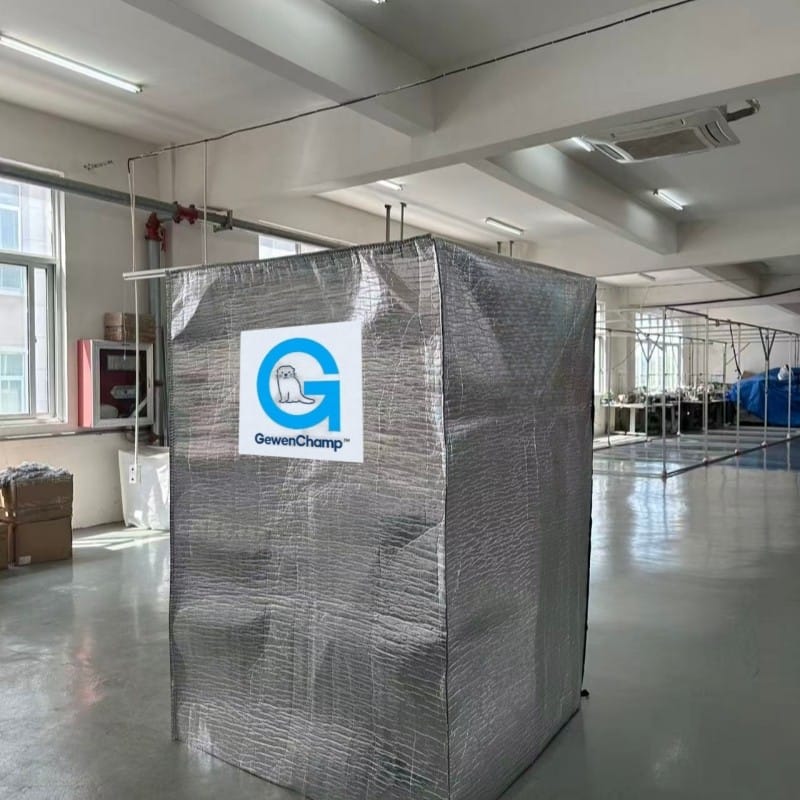
Certifications like ISO 9001 are not just marketing badges; they require audited procedures for production planning, preventive maintenance, and corrective action. A factory with a tl 01 thermal container liner that passes regular ISO surveillance audits has demonstrable systems for maintaining output quality under stress. Similarly, FDA, REACH, and RoHS compliance in products like tl 02 thermal container liner and tp 01 thermal pallet cover indicate that the factory manages raw material traceability and process documentation at a level that supports consistent, scalable production.
The Joint Venture Advantage in Container Liner Manufacturing
Factory structure is a capacity indicator that most buyers overlook. As a Sino-American joint venture, Giant Flexpack’s production capability is not just the sum of its machines; it is the product of sustained technology transfer, global quality expectations, and long-term investment stability. When a multinational partner has a stake in a Chinese manufacturing facility, the pressure to maintain capacity and quality does not come solely from customers, it comes from the boardroom.
This structural stability directly influences production scheduling. Standalone factories may prioritize short-term orders to maximize cash flow, potentially bumping long-term contract orders. A joint venture factory, with commitments to international partners, typically maintains more disciplined production planning and capacity reservation for scheduled orders. The result is more predictable lead times and fewer sudden shortages.
Why do Sino-American joint ventures deliver more reliable production?
In my experience working inside a joint venture operation, the integration of Western quality management systems with Chinese manufacturing scale creates a unique reliability profile. For example, the tl 03 thermal container liner mpet double bubble mpet and tl 04 thermal container liner mpet pe composite film lines at our facility were developed with joint R&D input, meaning the production processes were validated for scalability before market launch. This contrasts with factories that copy a design without understanding the process control parameters needed for volume production.
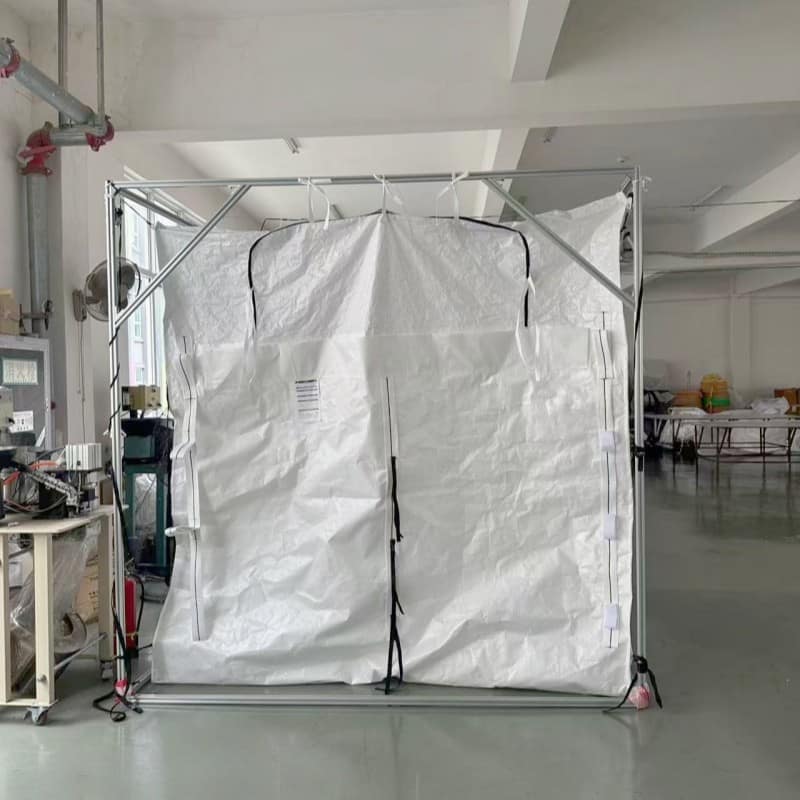
The same pattern holds across our dry bulk liner range. Products like dbl w01 dry bulk container liner and dbl w02 dry bulk container liner for malt are manufactured on dedicated lines with documented changeover procedures, a direct result of joint venture process discipline. For importers, this translates into the ability to scale orders without quality drift. If your business involves shipping powders, the dbl w06 woven sift proof container liner line is another example where joint venture engineering solved a persistent leakage problem through sealed seam technology, now reliably produced at volume.
If your procurement involves complex thermal protection requirements, verifying that a factory has the in-house R&D to scale custom solutions can prevent project delays. Reach out at [email protected] for guidance on evaluating a supplier’s technical depth.
Quality Systems as Capacity Indicators
A factory’s quality management system is perhaps the most underappreciated capacity indicator. When a factory has invested in ISO 9001 certified quality processes and maintains FDA, REACH, and RoHS compliance for food- and chemical-contact applications, it signals that production is not an ad hoc activity. It is a systematically managed operation where capacity is forecast, raw materials are pre-qualified, and production scheduling is integrated with quality hold points.
Consider the range of products covered by these certifications at our facility: from tp 02 thermal pallet cover and tp 03 thermal pallet cover to tp 04 thermal pallet cover aluminum foil woven pe aluminum foil, each requires different raw materials and processes, yet all must comply with the same quality system. Maintaining this level of compliance across multiple product lines forces a maturity of production planning that directly benefits buyers. You are less likely to receive a substandard batch from a factory that runs ISO 9001 compliant production because non-conformance triggers a documented corrective action loop.
Third-party testing adds another layer of capacity transparency. A factory that submits its dbl f01 pe film container liner and dbl f02 30ft pe film container liner to independent labs for tensile strength and barrier testing is demonstrating confidence in its process control. For European buyers, the fact that the DBL-F02 is specifically designed for 30ft containers and complies with EU REACH and RoHS standards is a direct indication that production capacity is aligned with market-specific requirements, not a generic export approach.
Integrating Capacity Evaluation into Supplier Selection
Putting these indicators into practice requires a structured evaluation, not a price-first comparison. When I work with buyers to qualify a container liner supplier, I recommend a five-point capacity assessment: first, request the last three months of actual versus planned production data; second, verify ISO 9001 certification and the scope of coverage; third, examine the product range for diversification that indicates flexible capacity; fourth, assess the factory’s structural stability through ownership and partnership history; fifth, run a trial order under real conditions.
A factory that clears these five points is not guaranteed to be problem-free, but the likelihood of capacity-related supply disruptions drops dramatically. In my experience, the cost of a missed shipment due to capacity shortfall often exceeds the price difference between a lower-cost supplier and one that charges a small premium for structural reliability.
If you are currently evaluating container liner suppliers and want to apply these capacity criteria to your situation, share your volume requirements and lead time targets with our team. We can walk you through a capacity assessment that reflects actual manufacturing dynamics, not just a supplier’s marketing claims. Reach out at [email protected] or call +86 523 87683880.
Common Questions About Container Liner Production Capacity
Is a higher stated production capacity always better?
Not necessarily. A factory claiming very high capacity may be running equipment beyond its optimal duty cycle, which raises the risk of unplanned downtime. It is more important that the factory’s capacity matches your demand profile. A mid-sized facility with modern equipment and documented preventive maintenance often delivers more predictable supply than an overextended large factory.
How does production capacity affect lead time for custom liners?
Custom liners require line changeover, which consumes capacity that could otherwise be used for standard production. A factory with dedicated R&D and quick-change tooling can absorb custom orders without disrupting standard output. Ask specifically about changeover time and whether custom orders are batched or run in-line.
What is a reasonable minimum order quantity for a factory with good capacity?
This varies by liner type and material, but a factory with stable capacity typically offers flexible MOQs, especially for trial orders. Fixed, high MOQs can be a sign that the factory cannot absorb small runs without losing production efficiency, a capacity limitation, not a policy choice. Our PE film liners like the dbl f01 pe film container liner can be produced in smaller batches because the extrusion and sealing lines are scheduled to allow short runs between large orders.
Can a factory lose production capacity over time?
Yes. Capacity can erode through equipment degradation, loss of skilled staff, or shifting of production resources to other product lines. That is why re-checking a factory’s capacity on an annual basis, not just during initial qualification, is a sound procurement practice. Look for signs like increasing quality rejections or creeping lead times as early warnings.
Should I visit the factory to verify capacity?
A factory visit is one of the most effective verification methods. Walking the production floor lets you observe whether machines are actually running, how organized the workflow is, and whether the stated number of production lines is operational. If a visit is not practical, a live video audit conducted by a third-party inspection service can substitute. If you need help arranging a factory assessment, share your requirements at [email protected].
 English
  German
  Spanish